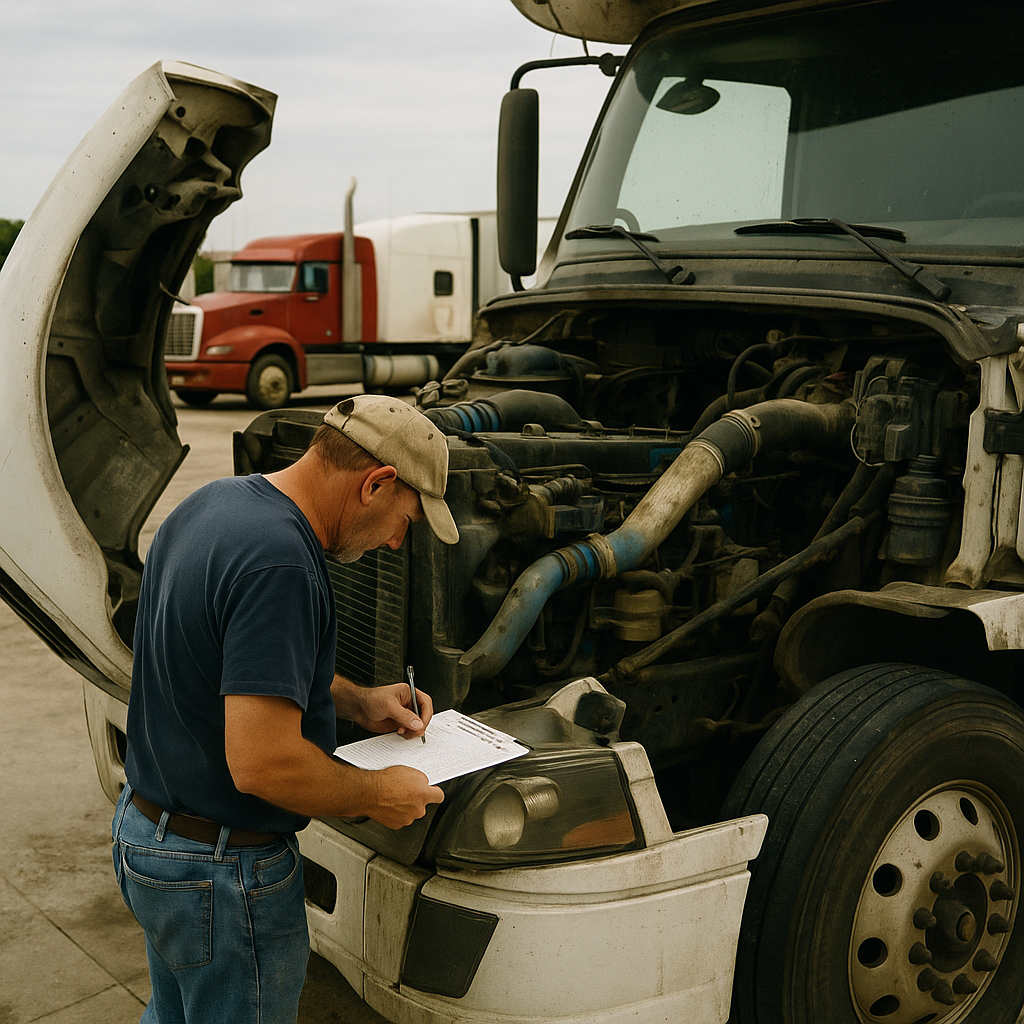

If you’ve ever looked at the stack of inspection paperwork in your truck and wondered which form actually matters, you’re not alone. The FMCSA Driver Vehicle Inspection Report gets mixed up with pre-trip checks, roadside inspection reports, and annual inspections all the time.
This guide separates them. You’ll see what a DVIR is, when you need one, what to do when you find a defect, and how to keep your records straight without turning your cab into a filing cabinet.
What Is an FMCSA Driver Vehicle Inspection Report?#
A Driver Vehicle Inspection Report (DVIR) is a driver-completed record of defects or deficiencies found during a day’s operation that could affect safe operation or cause a mechanical breakdown. Its job is to feed the motor carrier’s maintenance process, not to replace other inspection records or prove you passed a DOT roadside inspection.
The purpose of a DVIR#
A DVIR exists so defects don’t die in a notebook, a text thread, or your memory after a long run. If you find a problem with brakes, tires, lights, steering, coupling equipment, or other safety-related items, the report creates a trackable record that maintenance or the carrier can act on.
Under the FMCSA, a motor carrier is the company or person responsible for commercial motor vehicle operations. For many owner-operators, that may be your own business if you’re running under your own authority and USDOT number.
Who uses the report#
The driver fills out the DVIR, and the carrier uses it to review reported issues, document repairs, and decide whether the vehicle can return to service. A USDOT number is the identifier tied to a carrier’s safety and compliance records with the U.S. Department of Transportation.
A DVIR isn’t the same as a roadside inspection report from an officer. It also isn’t your annual inspection form.
What information a complete report includes#
A complete DVIR identifies the vehicle, the date, the driver, and the defects or deficiencies found. The key is that the note has to be useful. “Truck problem” won’t help anybody fix an air leak, bad marker light, or loose gladhand.
Paper forms still work, but they aren’t your only option. An electronic DVIR system is fine if it preserves the required information and the review-and-repair workflow the rules expect.

Which Vehicle Inspection Record Do You Need?#
Not every inspection record in a truck serves the same purpose. A pre-trip check, a post-trip DVIR, a roadside inspection report, and an annual inspection record are different documents completed by different people at different times, and each one triggers a different next step.
Post-trip DVIRs#
A post-trip DVIR is the driver’s defect report at the end of the day’s operation. It’s about what you found while operating the vehicle and what the carrier needs to address before the truck goes back out.
Pre-trip inspection requirements#
A pre-trip inspection is your duty to make sure the vehicle is in safe operating condition before you drive it. Under FMCSA rules in 49 CFR 396.13, the driver must be satisfied that key parts and accessories are in good working order before operating the vehicle.
That duty exists whether you’re using paper, an app, or your own routine. The pre-trip is the act of checking the truck. The DVIR is the record of defects found during operation and reported after.
Roadside inspection reports#
A roadside inspection report is issued by an enforcement officer after a DOT inspection stop. The Commercial Vehicle Safety Alliance (CVSA) is the group tied to the roadside inspection levels used across North America, but the report itself comes from enforcement, not from the driver.
That’s why a roadside form can’t stand in for your daily vehicle-condition workflow. FMCSA’s Roadside Inspection Program resources treat roadside reports as separate enforcement documents, not driver-completed daily reports.
Annual and periodic inspections#
A periodic inspection is the required formal inspection of an applicable commercial motor vehicle at least once every 12 months. Under 49 CFR 396.17, that record shows the vehicle passed a required inspection; it doesn’t replace daily checks or defect reporting.
| Record type | Who completes it | When it’s used | What it triggers |
|---|---|---|---|
| Pre-trip inspection | Driver | Before operating the vehicle | Decision to operate or correct issue first |
| Post-trip DVIR | Driver | End of day when defects are found | Carrier review, repair, or repair decision |
| Roadside inspection report | Enforcement officer | After a DOT roadside inspection | Enforcement record, possible repairs or follow-up |
| Annual or periodic inspection record | Qualified inspector | At least every 12 months | Proof vehicle passed required periodic inspection |
Treating all four as interchangeable is where drivers get burned. One clean roadside inspection doesn’t erase your daily duties, and a clean DVIR doesn’t prove annual inspection compliance.
When Is a Post-Trip DVIR Required?#
Post-trip DVIR rules depend on the type of operation. Under FMCSA rules, property-carrying carriers generally do not need a post-trip report when no defect or deficiency is found, but defects that affect safety or could cause a breakdown must still be reported, and passenger-carrying operations follow a stricter daily reporting rule.
The property-carrying carrier exception for defect-free vehicles#
This is where a lot of forum advice goes sideways. Under FMCSA guidance tied to 49 CFR 396.11, a property-carrying commercial motor vehicle generally does not require a driver to prepare a post-trip report if no defect or deficiency is discovered.
That doesn’t mean “no inspection needed.” It means the federal post-trip reporting exception may apply when the vehicle is defect-free.
When defects or deficiencies must be reported#
If you find a defect or deficiency that could affect safe operation or lead to a mechanical breakdown, you need to report it. That report kicks off the next part of the process: carrier review, repair certification, or documentation that immediate repair wasn’t necessary under the rule.
A defect or deficiency is a condition on the vehicle that affects safe operation or may lead to a mechanical failure. If the condition makes the truck unsafe, the answer isn’t “finish the week and fix it later.”
Why passenger-carrying operations follow a different rule#
Passenger-carrying carriers don’t get treated the same way here. Their daily reporting obligations are stricter, so don’t assume advice for a freight hauler applies to a bus or other passenger operation.
Why owner-operators should confirm their operating setup#
The safest move is to scope your process to your actual setup: property or passenger, your authority or leased on, your company policy, and whether your carrier requires a report even when the federal exception would allow a defect-free day to go undocumented.
When this gets fuzzy, the paperwork problem usually spills into bigger compliance problems. If you’re not sure how your inspection workflow lines up with your operating documents and trucking coverage, [](https://www.logrock.com/?utm_source=BLOG&utm_campaign=FMCSA-Driver-Vehicle-Inspection-Report).
How to Complete a DVIR When You Find a Defect#
When you find a defect, complete the DVIR in a way that lets the carrier or maintenance team identify the problem, act on it, and document the outcome before the vehicle returns to service. The goal is a clean chain: report the issue, review it, certify the repair or repair decision, and confirm the truck is safe before it rolls again.
Step 1 – Record the vehicle and inspection details#
Start with the basics: date, unit or trailer number, and driver identification. If you run multiple pieces of equipment, make sure the report clearly ties the defect to the right truck or trailer.
Step 2 – Describe the defect clearly#
Write what failed, where it is, and what you observed. “Left rear trailer marker light out” is useful. “Air leak at red gladhand when charged” is useful. “Truck problem” is not.
This matters whether you use paper or an electronic DVIR. The person reviewing it should know what to inspect without calling you three times.
Step 3 – Notify the motor carrier or maintenance contact#
Send the report through your normal process right away. For an owner-operator under your own authority, that may mean pushing it into your own maintenance file and contacting your repair shop immediately.
Under 49 CFR Part 396 on eCFR, reported defects have to move through a repair and review process. The report isn’t the end of the job.
Step 4 – Document repair or the decision that repair is unnecessary#
The carrier must review the reported defect and certify that repairs were completed, or certify that repair was unnecessary before the vehicle is operated again when the rule applies. That certification is what closes the loop.
A repair certification is the carrier’s written confirmation that a reported defect was fixed, or that immediate repair was not necessary under the regulation. If you skip this step, you’ve got an open issue sitting in your records.
Step 5 – Review the vehicle before returning it to service#
Before operating the vehicle again, the driver should review the certification where required and make sure the truck is actually safe to run. Under 49 CFR 396.13, the driver still has the separate duty to be satisfied the vehicle is in safe operating condition.
Don’t let a paperwork signature talk you into driving an unsafe truck. If the condition still affects safe operation, park it until it’s fixed.
How Long Must You Keep DVIR and Inspection Records?#
Different inspection records have different retention rules. A DVIR, a repair certification, a roadside inspection report, and a periodic inspection record do not all live under one universal timeline, so don’t assume keeping one document covers the rest of your maintenance file.
Retention for DVIRs and repair certifications#
Under 49 CFR Part 396, carriers must keep required DVIRs and the related repair certifications for the retention period the rule specifies. That’s separate from other vehicle maintenance records, so don’t treat your DVIR folder as your full compliance file.
If you want the exact federal text, go straight to 49 CFR Part 396 on eCFR. That’s better than relying on a generic printable template you found online.
Retention for periodic inspection records#
The annual or periodic inspection record has its own role. Under FMCSA guidance tied to 49 CFR 396.17, applicable commercial motor vehicles must pass a periodic inspection at least once every 12 months, and that documentation must be available as required.
Keeping roadside inspection reports organized#
Roadside inspection reports should be kept in their own lane. They’re enforcement records, not substitutes for DVIRs or annual inspections. Keep them organized so you can show what happened during an inspection stop and what corrective action followed, if any.
Paper versus electronic records#
For most owner-operators, simple beats fancy. Keep current registration and insurance documents in the truck, keep the current annual inspection record accessible, store roadside reports together, and back up DVIRs electronically even if you also use paper.
Owner-Operator DVIR Checklist Before You Roll#
A practical DVIR routine is simple: check the truck before you move, document defects when they happen, close out repairs before the next trip, and keep your annual inspection record easy to reach. A clean daily routine helps prevent the small misses that turn into roadside delays, out-of-service problems, or ugly claim situations later.
Before starting the day#
Check the basics that most often put a truck on the shoulder or on a violation report:
- Brakes
- Tires
- Lights and reflectors
- Steering and suspension
- Coupling equipment
- Cargo securement equipment, if applicable
- Required safety equipment
A CDL, or Commercial Driver’s License, is the license class required to operate certain commercial vehicles, but CDL status doesn’t change the need to inspect a truck before operating it.
During the trip#
If something shows up during the day, document it then. Don’t trust yourself to remember a light issue, brake feel change, or tire problem after ten more hours, a shipper delay, and two phone calls.
At the end of the day#
If you found a reportable defect, complete the DVIR and move it into your repair workflow. If you didn’t find a defect, don’t assume every carrier policy matches the federal property-carrier exception, so verify your own process.
Keep your annual inspection record current and accessible. A passed annual inspection doesn’t replace your daily checks.
If you are stopped for a roadside inspection#
A clean DVIR does not replace a roadside inspection report. A passed roadside inspection also does not replace your daily safety checks or your periodic inspection requirement.
If your operation is growing and your paperwork is starting to sprawl, [](https://www.logrock.com/?utm_source=BLOG&utm_campaign=FMCSA-Driver-Vehicle-Inspection-Report).
FMCSA Driver Vehicle Inspection Report FAQ#
How do I get a copy of my vehicle inspection report in Texas?#
First figure out which report you mean, because Texas drivers often lump different records together. If it’s a roadside DOT inspection report, get it from the inspecting agency, your carrier files, or the enforcement record tied to that stop. If it’s a DVIR, get it from your motor carrier or your electronic DVIR system. If you mean a state inspection record, check with the appropriate Texas agency, which may involve the Texas Department of Public Safety. These are separate records and one usually won’t substitute for another.
What is a vehicle inspection report (CDL)?#
For a CDL driver, “vehicle inspection report” can mean more than one thing, which is why the term causes confusion. It may refer to a driver-completed DVIR, an officer-issued roadside inspection report, or an annual inspection document. Check who created the form and why it exists before you rely on it as proof of compliance. A driver-completed DVIR reports defects found during operation. A roadside report documents an enforcement inspection. An annual inspection record shows the vehicle passed a required periodic inspection.
What is the most common DOT inspection violation?#
There isn’t one permanent answer. The most common DOT inspection violation changes based on the year, inspection type, vehicle class, and the FMCSA data set you’re looking at. That’s why blanket claims about the “number one” violation usually age badly or ignore context. A better approach is to prevent the repeat offenders: inspect brakes, tires, lights, and securement daily; document defects clearly; fix them promptly; and review current FMCSA enforcement trends instead of relying on old shop talk.
How long is a FMCSA inspection good for?#
It depends on which inspection you mean. The annual or periodic inspection required under 49 CFR 396.17 is generally due at least once every 12 months. A roadside inspection report does not create a universal period where no other inspections are needed, and it does not replace your daily duty to check the vehicle’s condition. A DVIR also doesn’t function like a time-stamped pass that’s “good for” a set period. Daily safety duties, defect reporting, and periodic inspection requirements all continue on their own tracks.