
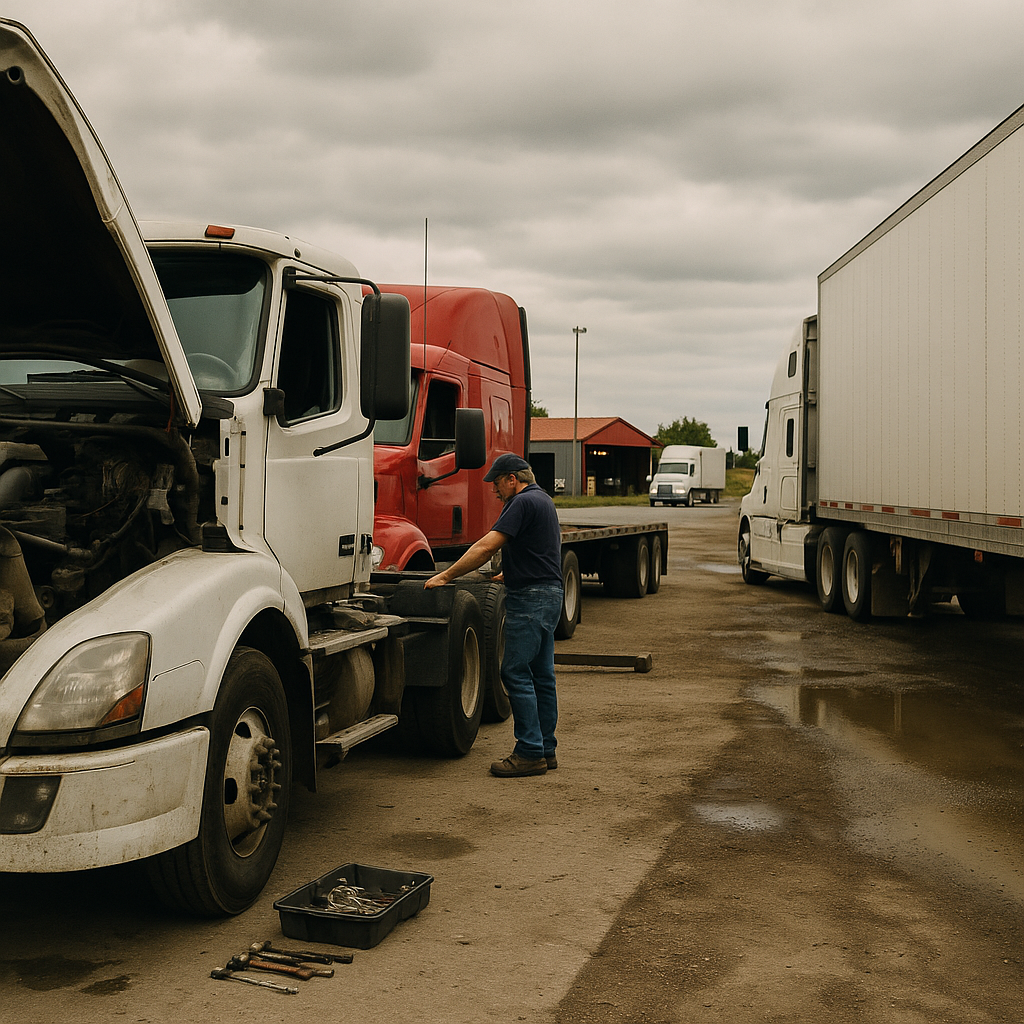

Harrisburg truck insurance depends more on how you run than where you park. If you haul freight for hire, cross state lines, lease on, or run heavier equipment, your insurance setup can look very different from a local business auto policy in Pennsylvania.
This guide breaks down what owner-operators and small fleets in Harrisburg need to sort out first: whether you need commercial trucking insurance instead of personal auto, when FMCSA rules apply, what coverages matter, and what actually affects cost.
Harrisburg Truck Insurance: Start With Your Actual Operation#
Harrisburg truck insurance starts with your operation, not your ZIP code. The right policy depends on business use, for-hire status, where you travel, what the truck weighs, what you haul, and whether you run under your own authority or someone else’s. That’s why two trucks in the same yard can need different coverage.
A lot of confusion starts with the words people use. Personal auto insurance is coverage meant for private, non-business driving. Commercial auto insurance is vehicle insurance for business use. Commercial trucking insurance is commercial auto built around trucking risks like for-hire hauling, cargo, filings, trailers, and lease or authority issues.
Why personal auto coverage usually is not enough#
If you use a truck in a business, personal auto usually isn’t the right fit. Once the truck is tied to hauling, dispatch, paid loads, business contracts, or motor carrier operations, the insurer may expect a commercial policy built for that exposure.
That doesn’t mean every business vehicle needs the same trucking setup. A contractor’s pickup, a local box truck, and a for-hire tractor all create different risks and often face different insurance and regulatory expectations.
The questions that determine your insurance needs#
Start with a simple operating-profile checklist:
- Do you have a USDOT number, meaning your federal safety identifier issued through FMCSA?
- Do you have an MC number, meaning operating authority for certain for-hire interstate operations?
- Are you for-hire or private?
- Do you run interstate or only intrastate in Pennsylvania?
- What does the truck weigh?
- What cargo do you haul?
- Do you own the truck and trailer, or are you leased on?
- Are you insuring one truck or a small fleet?
Harrisburg-area operations that may change the policy setup#
Harrisburg location matters for garaging, radius, and local underwriting context, but it doesn’t decide federal insurance requirements by itself. Your authority status, cargo, weight class, and whether you operate interstate are what usually drive the compliance side.
A local owner-operator hauling general freight under someone else’s authority may need a very different setup than a Harrisburg carrier running under its own MC number. That’s the piece to get right first.

Pennsylvania Intrastate Rules vs. FMCSA Interstate Requirements#
Pennsylvania intrastate rules and FMCSA interstate requirements are not the same thing. If you’re a for-hire interstate carrier, federal financial-responsibility rules can apply based on carrier type, vehicle weight, and what you haul. If you stay Pennsylvania-only, you still need to confirm state-level obligations instead of assuming FMCSA rules apply the same way.
This is where many owner-operators get tripped up. They hear one number from another driver, another number from a state registration office, and assume both mean the same thing. They don’t.
When federal financial-responsibility rules may apply#
49 CFR Part 387 is the federal framework that sets minimum levels of financial responsibility for certain motor carriers. Under 49 CFR Part 387 at eCFR, for-hire interstate carriers hauling general freight in vehicles over 10,001 lbs must carry at least $750,000 in public liability. Other operations can require different amounts, including higher limits for auto haulers or certain hazardous materials.
Public liability means liability coverage for bodily injury, property damage, and environmental restoration arising from motor carrier operations. It’s not the same thing as saying every trucker needs the same policy limit.
An MCS-90 is a federally required endorsement on certain motor carrier liability policies that helps show financial responsibility under federal rules. It’s not a substitute for understanding what your operation actually requires.
What changes for Pennsylvania-only operations#
If you operate only within Pennsylvania, check state-specific commercial vehicle and motor carrier requirements with the Pennsylvania Department of Transportation and confirm how they apply to your operation. Pennsylvania-only operators shouldn’t assume federal interstate authority rules automatically govern their setup in the same way.
Just as important, don’t confuse ordinary state vehicle insurance minimums with federal motor-carrier financial responsibility. A state minimum tied to vehicle registration is not automatically enough for a for-hire trucking operation.
Why cargo, vehicle weight, and carrier type matter#
A USDOT number identifies a carrier for safety and regulatory tracking. An MC number is operating authority issued for certain interstate for-hire operations. They’re related, but they are not interchangeable.
Your requirement can change based on whether you’re for-hire or private, over or under common federal weight thresholds, and hauling general freight, autos, or hazmat. That’s why “all truckers need $750K” is wrong. Harrisburg truck insurance has to be scoped to the actual operation.
Choose Coverage for Your Truck, Freight, and Contract Requirements#
Most Harrisburg owner-operators need more than one coverage line. Auto liability handles third-party injury and property damage from covered truck operations, but cargo, physical damage, trailer responsibility, and lease-related liability gaps often sit outside that core policy. The right package depends on your truck, freight, contracts, and whether you’re under your own authority or leased on.
A policy that satisfies one broker packet may still leave a gap for a trailer, a reefer unit, or a non-dispatch use situation. That’s why coverage has to be matched line by line.
Auto liability and required filings#
Auto liability covers bodily injury or property damage you cause to other people in a covered accident. For many for-hire trucking operations, this is the core coverage tied to authority, contracts, and filings.
If you’re subject to FMCSA authority requirements, liability limits and filings have to match the operation. If you’re leased on, the motor carrier’s primary liability may apply while under dispatch, but that doesn’t automatically solve your off-dispatch or equipment-related exposures.
Motor truck cargo and freight exclusions#
Motor truck cargo covers covered loss or damage to freight you’re hauling. Coverage depends on the cargo type, limit selected, policy conditions, and exclusions.
Cargo is where operators often assume too much. High-theft commodities, temperature-sensitive freight, unattended vehicle conditions, shortage disputes, and certain commodities can all change how the policy works. Always review what isn’t covered, not just the limit on the declarations page.
Physical damage, collision, comprehensive, and CAC#
Physical damage covers your truck for direct loss like crash damage, theft, fire, weather, or vandalism, depending on the options selected. Collision covers damage from impact or upset. Comprehensive covers non-collision causes like theft, weather, or vandalism. CAC, or combined additional coverage, is a bundled add-on package available in some policies.
Collision usually isn’t written by itself. It generally pairs with comprehensive or with fire and theft plus CAC, depending on the policy structure.
General liability, trailer interchange, and non-owned trailer coverage#
General liability covers certain non-driving business exposures, such as incidents around loading areas, offices, or premises, subject to the policy. For trucking, it’s often driven by shipper, broker, terminal, or contract requirements.
Trailer interchange covers physical damage to a trailer you don’t own when you have it under a signed trailer interchange agreement. Non-owned trailer physical damage covers certain trailers you don’t own when no interchange agreement applies. Many non-intermodal owner-operators actually need the second one, not the first.
Bobtail and non-trucking liability for leased operators#
Bobtail coverage generally applies when a truck operates without a trailer, depending on the policy wording. Non-trucking liability generally applies to certain non-business, non-dispatch use. It does not cover paid hauling.
If you’re leased on, these coverages need to line up with your lease and the motor carrier’s primary liability arrangement. That’s where a lot of expensive misunderstandings happen.
Before you choose limits or endorsements, review insurance requirements in shipper, broker, carrier, terminal, and lease contracts. A low premium doesn’t help if the policy doesn’t match what your freight partners require.
If you’re not sure which coverages fit your operation,
New Authorities: Get Insurance Filings Right Before You Book Loads#
For new interstate authorities, having a policy in hand is not always the same as being ready to haul. Certain carriers need insurer-filed proof of financial responsibility before FMCSA will grant or activate operating authority. If the filing, payment, underwriting, or FMCSA processing status is off, load pickup can get delayed.
That catches a lot of first-time authority holders. They think “insured” means “active,” then find out the filing or authority status isn’t complete yet.
Policy issuance is not the same as an active filing#
FMCSA requires certain regulated interstate carriers to have proof of financial responsibility filed by the insurer. FMCSA’s insurance filing information explains the filing process used for applicable operating authority.
A declarations page in your inbox doesn’t guarantee your authority is active in FMCSA systems. Underwriting approval, down payment, effective date, and filing acceptance can all affect timing.
What the BMC-91 or BMC-91X filing does#
A BMC-91 is an electronic filing from the insurer showing proof of liability insurance for a single carrier. A BMC-91X is a similar filing used for certain layered or multiple-insurer arrangements.
These filings tie to FMCSA authority requirements for applicable carriers. If the legal name, USDOT, MC information, or effective date doesn’t line up, the filing can fail or delay activation.
How to avoid preventable activation delays#
Before submitting anything, gather:
- Legal business name
- USDOT number
- MC number, if assigned
- Garaging address
- Vehicle details
- Driver history
- Cargo type
- Operating states
- Requested effective date
Then verify your status through FMCSA’s SAFER system, which shows carrier identification, safety, and authority-related information. Don’t rely only on an emailed certificate or policy packet.
What Affects Harrisburg Truck Insurance Costs#
Harrisburg truck insurance costs vary because insurers price the operation, not just the truck. Driver experience, MVRs, claims, authority age, CSA and inspection history, radius, cargo, truck value, parking, and coverage choices can all change eligibility and premium. That’s why two operators carrying the same liability limit can pay very different amounts.
A stated limit like $1,000,000 doesn’t create a universal monthly price. The rest of the risk profile still matters.
Driver experience and MVR history#
Insurers usually want a clear picture of who will drive the truck and how they’ve driven in the past. A clean MVR, meaning motor vehicle record, can help support better underwriting options than a file with major violations, recent suspensions, or a short commercial-driving history.
New CDL holders or operators changing equipment classes may still have options, but fewer markets may fit. Experience matters because underwriters are trying to estimate how stable the operation is likely to be.
Authority age, claims, inspections, and CSA data#
CSA refers to FMCSA’s Compliance, Safety, Accountability program data used to monitor safety performance. Insurers may review CSA context along with roadside inspection history, out-of-service patterns, and prior claims.
That said, CSA isn’t the only factor. A newer authority with clean drivers, a clear business plan, and straightforward freight may underwrite differently from an older authority with losses or serious violations.
Truck value, radius, parking, and equipment#
The truck itself changes pricing. Higher stated values, specialized equipment, overnight street parking, and long operating radius can all affect how insurers view risk.
A Harrisburg-area operator running short regional lanes and parking in a secured lot may present differently than one running wider lanes with expensive attachments and less controlled parking.
Cargo, limits, deductibles, and contract requirements#
Cargo type matters because not every load creates the same theft, damage, or spoilage exposure. Liability limits, cargo limits, physical damage deductibles, and contract-driven add-ons all shape the total policy cost too.
Cost control usually comes from accurate applications, stable driving records, safety habits, realistic deductibles, and reviewing changes before renewal. It also helps to right-size coverages instead of copying another trucker’s setup.
Does an LLC Change Your Truck Insurance Requirements?#
An LLC can change who the policy is written for, but it does not replace trucking insurance requirements. If your truck, authority, contracts, or registrations are tied to an LLC, the named insured and records usually need to match that structure. But forming an LLC does not automatically satisfy commercial auto, cargo, or FMCSA filing obligations.
This matters most when an owner-operator starts as an individual, then forms a company later. Name mismatches can create delays or filing problems.
What an LLC can change#
An LLC is a limited liability company, a legal business entity recognized by the state. It can affect the named insured, vehicle title, contract party, banking setup, and authority records.
If the LLC owns the truck or holds the authority, the policy usually needs to reflect that correctly. The same goes for certificates, lease agreements, and applications.
What an LLC does not replace#
An LLC doesn’t replace commercial auto coverage. It doesn’t replace cargo. It doesn’t replace any required FMCSA filing. And it doesn’t override shipper, broker, or lease contract insurance requirements.
The legal structure may help define who is operating the business, but the insurance still has to match the actual trucking operation.
Matching the named insured to ownership and authority records#
Keep the legal name and address consistent across policy documents, registrations, FMCSA records, lease agreements, and certificates of insurance. If you plan to change ownership structure or swap the named insured mid-policy, discuss that before binding or making the change.
That helps avoid a mismatch between who owns the truck, who runs the authority, and who the insurer believes it’s covering.
A Practical Harrisburg Truck Insurance Checklist Before You Buy or Switch#
Before you buy or switch Harrisburg truck insurance, gather your operation details and compare policies line by line. The fastest way to waste time is to request quotes with incomplete information, then compare only the premium while missing exclusions, filings, or contract requirements. A clean checklist makes the process faster and reduces surprise gaps.
This is especially true if you’re switching before renewal, adding a truck, or moving from leased-on to your own authority.
Information to gather before requesting quotes#
Pull together:
- Authority status
- Current declarations page
- Vehicle schedule
- Driver list
- Loss runs
- MVR consent
- Cargo details
- Operating radius
- Garaging location
- Contracts or lease requirements
- Requested effective date
If you’re a new venture, have the truck details, ownership structure, and planned operating states ready too. Good information up front usually leads to more accurate underwriting.
Questions to ask about exclusions and filings#
Ask practical questions, not just price questions:
- Is this policy structured for my for-hire or leased-on status?
- Are my cargo and equipment types covered?
- Are required filings available for my operation?
- What documents are needed to switch without a lapse?
- Are there exclusions that commonly affect my freight or trailer use?
Those answers matter a lot more than a quick verbal number.
How to compare policies beyond the premium#
Compare limits, deductibles, exclusions, endorsements, filing capability, payment terms, cancellation provisions, and the claims-reporting process. If one quote looks much lower, find out what’s missing before you decide.
A useful worksheet is simple: compare who is insured, what units are scheduled, what cargo is covered, what contracts are satisfied, what filings can be made, and what happens if a claim comes in after hours.
FAQ#
Who has the cheapest truck insurance?
No insurer is the cheapest for every Harrisburg trucker. Pricing depends on your operation, including driving history, authority age, cargo, radius, truck value, claims, garaging, and whether you’re leased on or running under your own authority. One company may look competitive for a seasoned owner-operator hauling general freight, while another may fit a newer authority or a different equipment profile better.
The smarter comparison is equivalent coverage, not just the lowest premium. Make sure the quotes use the same limits, deductibles, filings, and cargo assumptions. Otherwise you’re comparing different products, not different prices.
What is the average cost for truck insurance?
A single average isn’t very useful for trucking. A one-truck new authority, a leased-on owner-operator, and a small fleet in Harrisburg can all price very differently even if the trucks look similar. Underwriters usually look at driver history, cargo, radius, authority age, claims, equipment value, parking, and coverage structure before producing real numbers.
For budgeting, gather your truck details, driver list, operating territory, cargo type, and current or requested limits. That produces an operation-specific estimate that’s much more useful than a generic statewide average.
How much is $1,000,000 liability insurance a month?
A $1,000,000 liability limit by itself doesn’t tell you what the monthly cost will be. Insurers also look at whether you’re for-hire or private, interstate or intrastate, what cargo you haul, how far you run, your authority age, your driving record, prior losses, and the truck’s garaging and use pattern.
It also matters whether liability is the only line being quoted or part of a package with cargo, physical damage, trailer coverage, or general liability. The same liability limit can produce very different premiums depending on the full underwriting picture.
Do I need an LLC to get commercial insurance?
No, an LLC is not universally required to get commercial insurance. Plenty of operators insure trucks as individuals, while others insure under an LLC or another business entity. The key is that the policy accurately reflects who owns the truck, who operates it, and who holds any applicable authority or contracts.
Where people get into trouble is inconsistency. If the truck title, authority, lease, and insurance application show different names or addresses, that can create delays or filing issues. Choose the legal structure that fits your business, then make sure the policy matches it.
Is a USDOT number the same as an MC number for insurance?
No. A USDOT number is a safety identifier used by FMCSA, while an MC number is operating authority for certain interstate for-hire operations. Some carriers have a USDOT number but no MC authority, and that affects what filings or coverages may be needed.
For insurance, that distinction matters because authority-related filings are tied to the regulated operation, not just to having a truck on the road. If you’re unsure which status applies, check your records before you bind coverage or submit authority paperwork.





