
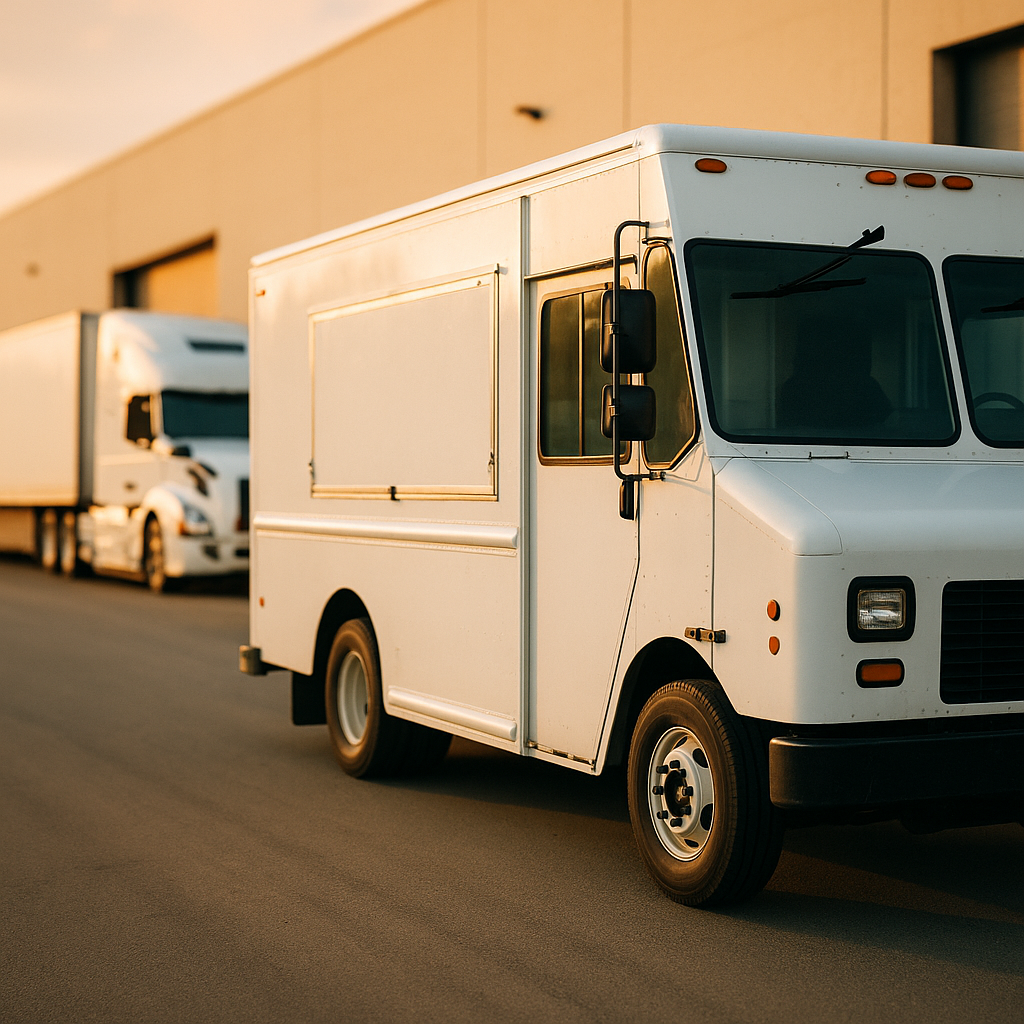
How much does insurance cost for a food truck in 2026? See typical monthly & annual ranges by policy, real bundles, and ways to save—get quotes.

If you’re asking how much does insurance cost for a food truck, here’s the budgeting number most owners need first: in 2026, many food trucks land around $3,000–$9,500 per year total (about $250–$800 per month) for a practical bundle of liability + commercial auto + optional add-ons.
That total isn’t “one policy”—it’s usually a stack of coverages that protect your customers, your truck, and your cash flow when something goes wrong. If you want a fast foundation before you price anything, start with business insurance basics for new owners.
Table of Contents
Reading time: 8 minutes
- Introduction: your menu isn’t the only thing that can wipe out margin
- Key takeaways (save this for budgeting)
- 2026 average food truck insurance cost (quick table)
- Cost breakdown by policy (what you’re paying for)
- What insurance is required for a food truck? (And why cost varies by state)
- Real-world bundle examples + how to lower food truck insurance costs
- Frequently Asked Questions
- Conclusion: price the bundle you actually run
Introduction: your menu isn’t the only thing that can wipe out margin
In 2026, many U.S. food trucks pay roughly $250–$800 per month ($3,000–$9,500 per year) because “food truck insurance” is typically a bundle of general liability, commercial auto, and sometimes workers’ comp.
Food truck cash flow is simple: you have a great weekend event, you make money; you miss service because of a breakdown or a claim, you don’t. Insurance is one of those fixed costs that can feel expensive right up until the day you need it.
This guide lays out practical ranges, what actually drives the price, and how to lower the bill without creating a coverage gap that can put you out of business.
Key takeaways (save this for budgeting)
A realistic 2026 food truck insurance budget usually starts at $250–$800 per month and increases when contracts require limits like $1M per occurrence / $2M aggregate for general liability.
- Most food trucks land roughly between ~$250 and ~$800/month for a realistic bundle, depending on auto, limits, payroll, and where you operate.
- Commercial auto is often the biggest line item, and it’s the main reason “cheap” quotes can be misleading.
- Venues, commissaries, and cities often require $1M/$2M general liability and a COI—those contract requirements can raise your minimum spend.
- You can often cut costs 10–25% by tightening radius, improving driver eligibility, bundling smartly, and shopping apples-to-apples.
2026 average food truck insurance cost (quick table)
Many food trucks pay about $3,000–$9,500 per year total (roughly $250–$800 per month), depending on the mix of liability + auto + payroll-driven coverage.
Here’s the most useful way to think about cost: you’re not buying one policy—you’re buying a set of protections that behave like a “bundle price.”
Typical food truck insurance costs by policy (2026 ranges)
National ranges; your ZIP code, claims, and contracts can move these materially.
| Policy | What it covers (1 line) | Typical monthly range | Typical annual range | Who usually needs it |
|---|---|---|---|---|
| General liability (incl. product liability) | Slip-and-fall + alleged food illness | $25–$125 | $300–$1,500 | Nearly everyone |
| BOP (GL + property/equipment) | GL plus equipment/property package | $150–$350 | $1,800–$4,200 | Common if you want equipment coverage |
| Commercial auto | Liability + physical damage for the truck | $150–$500+ | $1,800–$6,000+ | Nearly everyone who drives the truck |
| Workers’ comp | Employee injury coverage | $50–$250+ | $600–$3,000+ | If you have employees (rules vary) |
| Liquor liability (optional) | Alcohol-related claims at events | $25–$150+ | $300–$1,800+ | If you serve beer/wine |
| Cyber (optional) | POS/online ordering/card data exposures | $10–$60 | $120–$720 | If you take card payments (most do) |
If you want to understand why two similar-looking food trucks can get very different pricing, review the main rating factors in what affects business insurance premiums.
Cost breakdown by policy (what you’re paying for)
Food truck insurance pricing is usually the sum of at least two core policies—general liability (often $300–$1,500/year) and commercial auto (often $1,800–$6,000+/year)—plus payroll- or contract-driven add-ons.
Food truck operators get frustrated here because the pricing can feel arbitrary. It’s not arbitrary—it’s underwriting. Here’s how insurers typically look at each piece.
General liability + product liability
What it is: Covers third-party claims like a customer slipping near your serving window, or alleging illness from your food.
Why it’s essential: Most venues, commissaries, and event organizers won’t let you park without proof of coverage and limits (often $1M per occurrence / $2M aggregate).
Who needs it: Basically every food truck, even if you’re “small” and only do local service.
Pro tip: Claims frequency goes up with high-volume events. If you’re doing festivals every weekend, don’t budget like a weekday office-park truck.
Commercial auto (the “commercial truck insurance” part of a food truck)
What it is: Coverage for the vehicle itself—liability to others, and (if you buy it) physical damage to your truck.
Why it’s essential: If the truck is used primarily for business, personal auto coverage can be the wrong tool, and coverage can be denied or limited depending on your policy terms and state rules.
Who needs it: If the truck moves on public roads, you almost always need it.
To see how this is typically structured (and what to watch for), read commercial auto insurance for a food truck.
Pro tip: Your garaging ZIP, driver MVR, vehicle value, and how far you travel (radius) can change this cost fast.
Workers’ comp (if you have employees)
What it is: Covers employee medical bills and lost wages for on-the-job injuries (burns, cuts, slips).
Why it’s essential: In many states, once you have employees—even part-time—you may be required to carry it.
Who needs it: Any operator with staff, depending on state rules and role classifications.
Pro tip: Payroll drives premium. If you staff up seasonally, plan for workers’ comp to rise with it.

Optional coverages that can spike the total
- Liquor liability: If you serve beer/wine at events, this can add real premium (and some contracts require it).
- Cyber: If your POS, online ordering, or customer data gets compromised.
- Equipment/property coverage: Often folded into a BOP; critical if you can’t replace a generator, fridge, or hood system out of pocket.
What insurance is required for a food truck? (And why cost varies by state)
Food truck operators are commonly required to carry commercial auto for road use and, in many states, workers’ compensation once they have employees, while venues often require $1M/$2M general liability and a Certificate of Insurance (COI).
Two “required” buckets
Legally required (often):
- Commercial auto (if you drive the truck)
- Workers’ comp (if you have employees, depending on state)
Contract-required (very common):
- General liability with specific limits (often $1M/$2M)
- Additional insured wording for venues
- Certificate of Insurance (COI) on demand
This is where owners get surprised: you thought you were buying “affordable” coverage, but the event contract quietly forces higher limits and specific wording. The best primer on limits, COIs, and how venues think is general liability insurance limits and COIs.
Food truck insurance cost by state (directional snapshot)
Publishing exact “$X by state” numbers without a verified carrier dataset is usually marketing—not budgeting—but claim frequency, theft, catastrophe exposure, and litigation trends can push totals up or down materially.
| State | Typical cost tendency | Main driver (common) | Note |
|---|---|---|---|
| CA | Higher | Auto + litigation + metro density | Big-city garaging ZIPs swing it hard |
| TX | Mid | Mileage + metro exposure | Houston/Dallas can price higher |
| FL | Higher | Auto severity + litigation | Event-heavy schedules can add mileage |
| NY | Higher | Density + claims costs | NYC area often materially higher |
| IL | Mid | Metro density | Chicago-area ZIPs can increase auto |
| GA | Mid | Metro density + theft | Atlanta-area ZIPs can increase auto |
| WA | Mid | Weather + metro | Seattle-area tends to price higher |
| AZ | Mid | Heat + metro growth | Phoenix-area ZIPs can affect rates |
Edge case: crossing state lines and federal rules
FMCSA publishes federal insurance filing requirements for regulated motor carriers, and you should verify compliance if your operations trigger motor-carrier-style rules (for example, specific interstate commercial operations). Reference: https://www.fmcsa.dot.gov/registration/insurance-filing-requirements.
Real-world bundle examples + how to lower food truck insurance costs
Realistic 2026 bundle scenarios commonly range from about $2,450 to $14,000 per year depending on mileage, vehicle value, payroll, required limits, and whether you serve alcohol.
The best way to budget is to price a bundle that matches how you actually run.
Scenario A: Solo operator, local radius, no alcohol
Assumptions: 1 truck, local events, $1M/$2M GL, moderate vehicle value
- GL: ~$300–$900/yr
- Commercial auto: ~$2,000–$4,500/yr
- Optional cyber: ~$150–$400/yr
Estimated total: ~$2,450–$5,800/yr (~$200–$485/mo)
Scenario B: Two employees, more events, higher limits
Assumptions: 2 part-time employees, more mileage, some venues require higher limits
- BOP: ~$2,000–$4,200/yr
- Commercial auto: ~$2,500–$6,000/yr
- Workers’ comp: ~$800–$2,500/yr (payroll-driven)
Estimated total: ~$5,300–$12,700/yr (~$440–$1,060/mo)
Payroll context: BLS wage data can help you sanity-check payroll assumptions before you estimate workers’ comp impacts. Reference: https://www.bls.gov/oes/.
Scenario C: Alcohol at festivals + catering contracts
Assumptions: beer/wine, contract-heavy work, higher limits
- BOP with higher limits: ~$2,800–$5,500/yr
- Commercial auto: ~$2,500–$6,500/yr
- Liquor liability: ~$500–$2,000/yr
Estimated total: ~$5,800–$14,000/yr (~$485–$1,165/mo)
10 levers that actually lower your premium (without playing games)
- Bundle smartly: A BOP can be cheaper than buying GL + equipment separately. Start here: business owner’s policy (BOP) bundling.
- Tighten your radius: Less time on the road usually means less auto exposure.
- Clean driver eligibility: MVR/claims history is make-or-break for pricing.
- Choose deductibles you can actually afford: Don’t “save” $40/month and then eat a $5,000 deductible you can’t float.
- Secure the truck after hours: Garaging, cameras, gated storage—especially for theft-heavy ZIPs.
- Document safety controls: Fire suppression maintenance, hood cleaning logs, training on burns/cuts.
- Get venue requirements early: Don’t buy higher limits “just in case” if your real contracts don’t require them.
- Avoid lapses: New ventures already get priced cautiously; lapses usually make it worse.
- Pay annually if fees are killing you: Monthly payment plans can add finance charges.
- Shop at renewal (apples-to-apples): Same limits, same deductibles, same drivers—then compare.
If you’re ready to compare pricing the right way (and avoid buying the wrong “cheap” policy), use compare business insurance quotes apples-to-apples as your checklist.
Frequently Asked Questions
These answers cover the most common food truck insurance questions using 2026 budgeting ranges like $250–$800/month and common contract limits like $1M/$2M general liability.
Most food trucks budget about $250–$800 per month in 2026, with the biggest swing factor usually commercial auto (commonly $150–$500+/month by itself). A lean setup might be general liability plus commercial auto, while a fuller bundle adds a BOP (equipment/property), workers’ comp if you have staff, and optional coverages like cyber or liquor liability. Your garaging ZIP, driving records (MVR), radius/mileage, required liability limits (often $1M/$2M), and payroll can move the total materially, so your “real” number comes from matching coverage to your actual operations.
In most cases, yes—if your food truck is driven on public roads for business, you typically need a commercial auto policy because personal auto is not designed for primary business use. Commercial auto usually provides liability to others and can include physical damage for the truck, and it’s commonly the largest premium line item (often $1,800–$6,000+/year). If you want to see how policies are structured, what “radius” means, and what underwriting will ask for, read commercial auto insurance for a food truck.
If you have employees, many states require workers’ compensation, and premium is largely driven by payroll and job classification (for example, kitchen/food service roles). A common budgeting range is about $600–$3,000+ per year, but staffing up for a busy season can push that higher quickly. Even if your state’s threshold is based on employee count or hours, venues and contracts may still expect proof of coverage when staff is on site. For state-by-state triggers and payroll-driven pricing basics, see workers’ compensation insurance for small crews.
Yes—selling beer or wine often increases total insurance cost because events may require liquor liability and sometimes higher underlying limits, and liquor liability can add roughly $300–$1,800+ per year (or more for frequent festivals). Alcohol-related claims are typically higher severity, which is why carriers price the exposure separately instead of treating it like standard product liability. If alcohol is part of your profit plan, price the coverage change before you commit to a calendar of events and contracts. A good explainer is liquor liability insurance for festivals.
Conclusion: price the bundle you actually run
A workable 2026 food truck insurance budget is usually built from general liability or a BOP, commercial auto, and workers’ comp if you have employees, which is why many operators land around $3,000–$9,500 per year.
The fastest way to avoid bad surprises is to confirm your contract requirements early (limits, COIs, additional insured wording) and then shop renewal quotes on identical inputs.
Key Takeaways:
- Budget $250–$800/month for many food truck bundles, with commercial auto often the largest line item.
- Expect venues to ask for $1M/$2M general liability and a COI, which can raise your minimum spend.
- Lower costs by tightening radius, improving driver eligibility, bundling with a BOP, and shopping compare business insurance quotes apples-to-apples.
If you want quotes that match your real schedule (radius, events, payroll, and limits), price the full bundle—not just one line item.





