
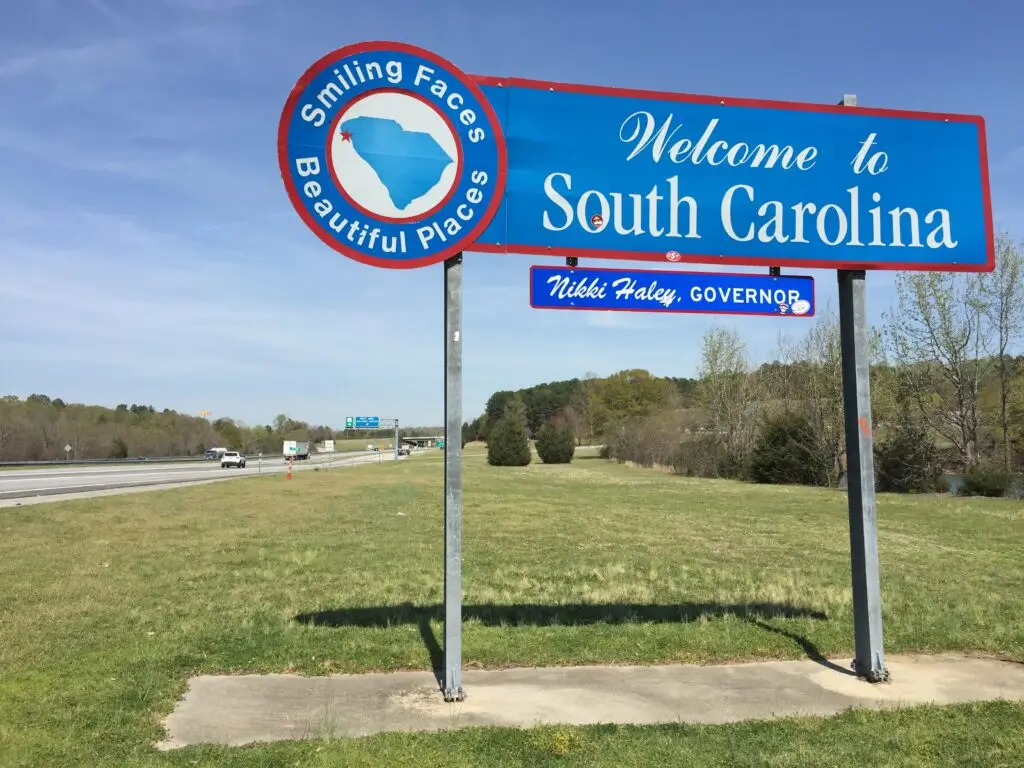

South Carolina commercial truck insurance costs in 2026: $8,500–$14,500 per year, PSC filings, UIIA port access, Loggers Broad Form, and coverage requirements.
From the container yards of Charleston to the pine forests of the Midlands and the manufacturing hub of the Upstate, South Carolina keeps truckers busy.
If you operate strictly within the state, you fall under South Carolina intrastate rules. For-hire carriers generally need the right operating authority, active insurance filings, and proof that the coverage on paper matches the work they actually perform.
Additionally, if you haul containers out of the Port of Charleston, standard auto liability is not enough. You need Intermodal or UIIA-ready coverage and often General Liability to satisfy steamship line and equipment-provider requirements.
In South Carolina, the average commercial truck insurance premium typically lands between $8,500 and $14,500 per year. This guide breaks down what you need to pay to keep your South Carolina authority and port access active.
Table of Contents
Reading time: 8 minutes

Key Takeaways: South Carolina Truck Insurance Costs
- The Price Tag: Expect to pay around $11,500 annually for a semi truck with a clean record. For owner-operator-specific ranges, see our SC owner-operator truck insurance breakdown.
- Port Access: To enter the SC Ports Authority (Charleston/Greer), many port operators need $1,000,000 Auto Liability, $1,000,000 General Liability, and a UIIA-ready endorsement package.
- PSC Authority: Intrastate carriers usually need the right Class E or Class F certificate and an active Form E filing.
- Logging: Timber is a major South Carolina industry. Log trucks often need Log Truck Insurance with Loggers Broad Form because losses may happen on dirt roads or loading sites that standard policies can exclude.
Real Numbers: Estimated Costs by Truck Type
Let’s look at the hard data. The following estimates represent the average annual cost for Auto Liability ($1M limit) for a driver with a clean record in South Carolina. While base rates are relatively affordable, Intermodal Insurance for container haulers costs more because of UIIA contract requirements.
| Vehicle Type | Limit $300,000* | Limit $750,000 | Limit $1,000,000 (Standard) |
|---|---|---|---|
| Hotshot | $6,800 | $8,500 | $9,800 |
| Box Truck | $5,500 | $7,200 | $8,500 |
| Dump Truck | $7,200 | $9,800 | $11,500 |
| Semi (General) | $8,800 | $11,200 | $12,800 |
| Semi (Intermodal) | N/A | $12,500 | $14,500 |
Last updated: July 2026.
Logrock Reality Check: If you plan to haul containers, do not just buy “truck insurance.” Tell your agent you need UIIA coverage. This adds the policy language needed to cover non-owned intermodal equipment, such as the container chassis, while it is attached to your truck. Without it, the port may not give you an interchange badge.
Not sure how to get UIIA-approved for port access? Here’s a step-by-step walkthrough:
Liability Limits: Intrastate vs. Interstate
South Carolina rules change depending on whether you cross state lines. We have broken this down into two tables to make it clear. For a deeper state-specific overview, see Cheapest Commercial Truck Insurance in South Carolina.
Table 1: Intrastate Requirements (SC PSC / ORS)
For trucks that never leave South Carolina (for example, Charleston to Columbia).
| Vehicle Weight / Type | Minimum Liability Limit | Filing Required? |
|---|---|---|
| Freight < 10,000 lbs GVW | $300,000 CSL | Yes (Form E) |
| Freight > 10,001 lbs GVW | $750,000 CSL | Yes (Form E) |
| Hazmat (Gas/Oil) | $1,000,000 – $5,000,000 | Yes (Form E) |
| Household Goods (Class F) | $300k – $750k + Cargo | Yes (Form E + H) |
| Passenger (16+ seats) | $5,000,000 CSL | Yes (Form E) |
Note: CSL means Combined Single Limit. Intrastate carriers apply for a Class E Certificate (general freight) or Class F Certificate (movers) and use Form E to prove liability insurance.
Table 2: Interstate Requirements (FMCSA / Federal)
For trucks that cross state lines (for example, Greenville, SC to Charlotte, NC).
| Vehicle Weight / Type | Minimum Liability Limit | Filing Required? |
|---|---|---|
| Freight < 10,000 lbs | $300,000 CSL | No (unless Hazmat) |
| Freight > 10,001 lbs | $750,000 CSL | Yes (BMC-91X) |
| Hazmat (Gas/Oil/Explosives) | $1,000,000 – $5,000,000 | Yes (MCS-90) |
| Passenger (16+ seats) | $5,000,000 CSL | Yes (BMC-91X) |
Wondering why port contracts can require both Auto Liability and General Liability? This video explains the difference:
South Carolina Requirements & Critical Filings
To operate legally, your insurance agent may need to submit specific forms to South Carolina regulators or contract platforms depending on your operation. South Carolina’s Certificate of Compliance process ties intrastate for-hire operation to matching insurance filings and safety requirements through state systems.
- Form E: Mandatory for many intrastate for-hire carriers (Class E & F). It proves that you have valid liability insurance as part of your operating authority.
- Form H: Mandatory for Household Goods Movers (Class F) to prove cargo insurance coverage.
- UIIA Endorsement: Required for container/intermodal access. IANA explains that UIIA motor carriers must meet all insurance requirements for the equipment providers they want to work with.
- Loggers Broad Form: Essential for timber haulers to cover loading/unloading accidents in the woods.
- USDOT Number: If you need one, here is how to apply for a USDOT number.
Need a refresher on DOT versus MC numbers? Watch this quick explainer: MC Number vs. USDOT Number: What You Need to Know.
Your Questions Answered: People Also Ask FAQs
Yes. South Carolina adopts federal safety regulations, and commercial vehicles over 10,001 lbs GVW generally need a USDOT number even if they never cross state lines. You can apply through FMCSA’s Unified Registration System, then make sure the USDOT number, legal entity name, and insurance documents match before you operate.
Intermodal insurance usually costs more because you are responsible for equipment you do not own, such as the chassis and container, and because the UIIA contract adds specific insurance and indemnity requirements. Port and rail environments also create frequent low-speed claims, especially backing and equipment-damage incidents.
No. Private carriers hauling their own goods are generally exempt from South Carolina PSC economic authority and do not need a Class E Certificate or Form E filing. You still need the right USDOT number, liability insurance, and safety compliance if your vehicle and operation trigger those requirements.
A Class E Certificate is for general for-hire freight carriers operating intrastate. A Class F Certificate is for household goods movers and usually requires proof of cargo coverage through Form H in addition to Form E. If you haul general freight and not household goods, Class E is usually the relevant category.
Trailer Interchange coverage for container chassis usually adds cost on top of your base auto liability policy, but the exact premium depends on your carrier, radius, loss history, and contract requirements. Treat it as a required add-on for port access, not an optional “nice to have,” and quote it while you are setting up UIIA approval.
If your insurer cancels coverage or does not keep Form E current, your intrastate operating certificate can be suspended or revoked. That means you lose the legal authority to haul for hire inside South Carolina until the insurance filing is corrected and accepted.
Yes, if timber hauling creates off-road or loading-site exposure. Standard commercial auto policies can exclude or limit losses away from public roads, so Loggers Broad Form helps close the gap for logging sites, dirt roads, and loading/unloading accidents even if timber is only part of your freight mix.
Yes, if you are leased to a motor carrier and only need coverage for non-dispatch miles. Bobtail or non-trucking liability is usually narrower and cheaper than full primary liability, but it only works when your lease and dispatch status fit the coverage. Confirm the terms before assuming it replaces full-time commercial coverage.
The Logrock Difference: We Know the Port
South Carolina is a gateway to the world. If your agent does not understand the difference between Bobtail Liability, General Liability, Trailer Interchange, and UIIA coverage, you can get stuck at the terminal gate.
At Logrock, we handle the compliance heavy lifting. We help file your Form E for intrastate work, check whether your operation needs UIIA-ready wording, and review whether your policy has the General Liability and Trailer Interchange limits required for port and intermodal work.
For a deeper look at the chassis exposure, see Trailer Interchange Insurance for Small Fleets.
Conclusion & Get Your South Carolina Quote
From the Upstate to the Lowcountry, South Carolina offers prime opportunities for truckers. Make sure your paperwork is as solid as your driving, especially if you need PSC filings, UIIA port access, or Loggers Broad Form coverage.
Whether you’re sorting out PSC filings, UIIA port access, or logging coverage for a South Carolina operation, LogRock can help you review your setup and close gaps before they cost you a load or a port badge.
Key Takeaways:
- Port work changes the policy: UIIA and Trailer Interchange are not the same as basic liability.
- Intrastate authority matters: Class E/Class F filings can determine whether you can legally haul for hire.
- Logging needs special attention: off-road and loading-site exposures can create gaps if the policy is too generic.





