
Georgia hot shot trucking insurance usually means commercial coverage for a pickup-and-trailer freight operation, not a personal auto policy with a business use add-on. If you haul for money in Georgia, the real question is which rules apply to your operation and whether your policy matches what you actually haul.
A lot of hot shot operators get tripped up in two places. First, they mix up Georgia state rules with FMCSA federal requirements. Second, they buy a policy that looks cheap until a cargo, trailer, or liability claim exposes a gap.
👉 Ready to save on your hot shot truck insurance?
Watch the video below for a quick overview of hot shot insurance rules, how much it costs, and practical ways to save. Or give us a call: (704) 290-3630
What Georgia Hot Shot Trucking Insurance Covers#
Georgia hot shot trucking insurance covers the liability, cargo, truck, and trailer risks that come with hauling freight for pay in a pickup-and-trailer setup. Most operators need more than one coverage part, because one policy section can handle road liability while another handles cargo, truck damage, or a customer’s trailer.
What counts as hot shot trucking#
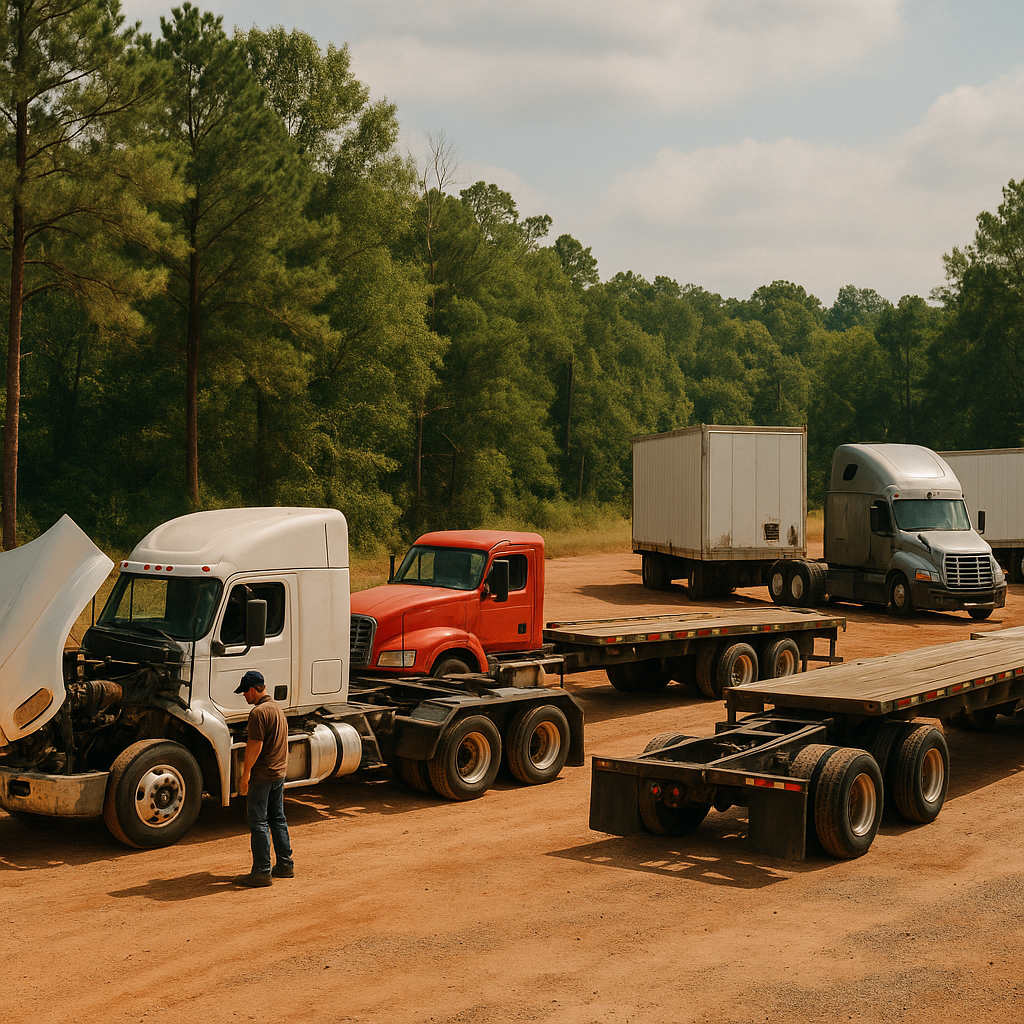
Hot shot trucking is commercial freight hauling that often uses a pickup and trailer instead of a semi, usually for faster, smaller, time-sensitive loads. If you’re moving freight for hire, that is still a commercial trucking operation even if the truck looks more like a heavy-duty pickup than a road tractor.
That matters because personal auto insurance is built for personal driving, not paid hauling. A hot shot operator hauling steel to a jobsite, moving a customer’s skid steer, or pulling a loaded trailer between jobs needs coverage written for commercial use.
Core coverages most operators consider#
The core hot shot coverages are commercial auto liability, cargo, truck damage, and trailer-related protection matched to how you operate. The exact mix depends on whether you haul interstate or intrastate, what freight you carry, whether you own the trailer, and whether you ever pull someone else’s trailer.
commercial auto liability pays for bodily injury and property damage you cause to others in an at-fault crash. For many hot shot operators, this is the foundation because it ties directly to operating authority and legal responsibility.
motor truck cargo insurance covers the freight you’re hauling, subject to policy terms, covered commodities, and exclusions. If you say you haul general freight but end up regularly moving something outside the policy’s freight description, that can become a problem fast.
physical damage coverage covers damage to your insured truck from collision and other causes like theft, fire, or some weather losses, depending on the form. If your dually and trailer are your whole business, this is the part that protects the equipment itself.
Non-trucking liability is liability coverage for non-business use only. Trailer interchange applies when you use a non-owned trailer under a signed interchange agreement, while non-owned trailer physical damage is often the more relevant option when a hot shot operator is responsible for a trailer they do not own but does not have a formal interchange setup.
Common coverage gaps to watch#
The biggest hot shot coverage gaps usually come from a mismatch between the policy and the real operation. A policy can look complete on paper and still fail where it counts.
A common example is hauling a customer’s skid steer on a trailer while assuming cargo automatically covers every kind of equipment. Another is borrowing or renting a trailer, damaging it, and then finding out your policy did not include the right non-owned trailer protection.
NAIC consumer guidance is useful for plain-language insurance definitions, but in trucking the key issue is not just what a coverage is — it’s whether the policy form fits your actual operation, commodities, and trailer use. That is where cargo and equipment claims often get denied.
Georgia Rules vs. FMCSA Requirements#
Georgia rules and FMCSA rules are not the same thing, and hot shot operators need to sort out both before they buy insurance. Georgia handles state-level registration and intrastate concerns, while FMCSA rules come into play when your operation involves interstate commerce, federal authority, or a carrier type that triggers federal filings.
When Georgia rules apply#
Georgia rules usually matter first when you’re based in the state, registering vehicles, and operating only within Georgia. State agencies like the Georgia Department of Driver Services and Georgia Department of Revenue can affect licensing, registration, and tax or title issues tied to your truck and trailer setup.
If you stay intrastate, the fact that you’re in Georgia does not automatically put you under every federal for-hire authority rule. But it also does not mean you can treat the truck like a personal-use vehicle if you’re hauling freight for money.
When federal FMCSA rules apply#
FMCSA rules apply when your hot shot operation meets federal triggers such as interstate commerce, for-hire status, vehicle weight, or commodity type. Whether you need a USDOT number, MC number, federal filings, or a specific liability minimum depends on how your business is set up and what you haul.
Under 49 CFR Part 387, for-hire interstate carriers hauling general freight in vehicles over 10,001 lbs must carry at least $750,000 in public liability. That is not a universal rule for all truckers, and it changes if the operation is under the weight threshold, involves different commodities, or hauls regulated hazmat. FMCSA also uses filings such as the MCS-90 endorsement and BMC-91 proof of financial responsibility in the authority process, which is why the insurance setup has to match the operating plan.
If you’re trying to sort out those thresholds, this breakdown of FMCSA insurance requirements can help connect the federal rules to your operation. Federal authority and registration details also come from FMCSA.
CDL vs non-CDL hot shot differences#
Not needing a CDL does not mean you are outside commercial insurance rules or federal trucking requirements. CDL is a license question; insurance and authority are operation questions.
A non-CDL hot shot operator might run a lighter pickup-and-trailer combination, stay under a CDL threshold, and still haul freight for hire. If that operator crosses state lines or otherwise falls under federal rules, the operation can still need commercial trucking coverage, a USDOT number, and possibly MC authority depending on the business model.
A simple example: one operator hauls equipment only within Georgia on a lighter setup and stays intrastate. Another runs a heavier truck and trailer into Alabama carrying general freight for hire. Those are not the same insurance problem, even if both call themselves hot shot truckers.

How Much Hot Shot Insurance Costs in Georgia#
Georgia hot shot trucking insurance cost is quote-based, not one-size-fits-all, because underwriters price the operation, not just the truck. Two owner-operators with similar pickups can get very different quotes if their freight, authority status, radius, and loss history are different.
Typical cost drivers#
The biggest cost drivers are driving record, prior insurance, years in business, operating radius, interstate versus intrastate use, cargo type, equipment value, and trailer setup. A newer authority hauling across multiple states usually presents a different risk than an established intrastate operator with clean history and narrower lanes.
Vehicle and trailer details matter too. A newer dually with higher stated value, plus a newer gooseneck trailer, creates a larger physical damage exposure than an older paid-off setup.
Your freight mix matters just as much. Hauling steel, construction materials, machinery, or higher-value equipment can price differently from lower-severity general freight because the cargo claim potential changes.
Why quotes vary so much#
Hot shot quotes vary because the label “hot shot” covers a wide range of real operations. One driver may run short Georgia lanes a few days a week, while another runs interstate under authority with tighter delivery windows and more time on the road.
Insurance companies also look closely at whether the policy matches the business model. If your application says general freight but your loads regularly include something more specialized, the quote can change or the risk may no longer fit the carrier.
This guide to trucking insurance cost factors is useful if you want to see how underwriters think beyond the truck itself.
Practical examples of higher- and lower-risk setups#
A lower-risk example might be a Georgia-only owner-operator with a clean MVR, stable lanes, older equipment with moderate values, and straightforward general freight. That setup can still be expensive compared with personal auto, but it is usually easier to place than a brand-new interstate authority.
A higher-risk example might be a new venture crossing state lines, hauling time-sensitive equipment, using a newer pickup with a larger loan balance, and insuring both truck and trailer for higher values. If there is no prior commercial insurance history, that can push the quote further.
Another example: two operators both haul with a one-ton pickup and flatbed trailer. One moves construction materials within Georgia. The other runs multi-state loads with a broader radius and higher-value jobsite equipment. Same style of rig, very different insurance picture.
If you want help matching your quote to the operation before you bind the wrong thing,
How to Reduce the Risk of Buying the Wrong Policy#
The cheapest-looking hot shot policy can be the wrong policy if it misses your freight type, trailer exposure, or operating authority. The goal is not just to get proof of insurance — it is to have coverage that can actually respond when cargo, equipment, or liability losses happen.
Common coverage mismatches#
One common mismatch is using a policy written around a different trucking class than the loads you really haul. Another is assuming borrowed or customer-owned trailers are covered automatically when the policy does not include the right trailer protection.
A lot of operators also misunderstand non-trucking liability insurance. It covers non-business use only, not paid hauling, not dispatch to a load, and not regular business operations.
Claims scenarios that expose gaps#
Picture a hot shot operator hauling a loaded trailer between jobs, jackknifing in rain, and damaging both the cargo and the trailer. If the cargo form excludes that commodity or the trailer is non-owned and not properly scheduled or covered, the loss can turn into two separate out-of-pocket problems.
Another example is a customer’s skid steer being damaged during transit. On paper, the operator may think, “I have cargo.” In reality, the claim can turn on the commodity description, securement facts, policy exclusions, and whether the load fits the insured operation. These kinds of cargo insurance claims are where policy wording starts to matter.
Questions to ask before binding#
Before you bind, answer these clearly:
- Are you hauling for hire, and are you operating interstate or only in Georgia?
- What is your truck-and-trailer weight setup in real use?
- What commodities do you actually haul most often?
- Do you ever pull a trailer you do not own?
- Do you need cargo, physical damage, or trailer-related protection beyond liability?
- Are any filings required for your authority setup?
Those answers drive whether the quote fits your business or just sounds affordable.
How to Get a Quote for Georgia Hot Shot Trucking Insurance#
Getting a useful Georgia hot shot trucking insurance quote starts with accurate operation details, not guesswork. The more precisely you describe the truck, trailer, lanes, cargo, and authority status, the more likely the quote will reflect your real exposure instead of a generic trucking profile.
Information to have ready#
Have your USDOT and MC details ready if you have them or are applying for them. A USDOT number identifies a carrier in federal systems, while an MC number is tied to operating authority for certain for-hire interstate operations.
Also gather truck and trailer specs, VINs, stated values, driver’s license information, MVR details, prior insurance history, operating radius, and a plain-language description of what you haul. If you’re already active, it also helps to know whether your carrier record appears correctly on SAFER.
What an underwriter will ask#
Underwriters usually ask where you operate, what commodities you haul, whether you cross state lines, whether you own or pull non-owned trailers, and whether the business is new authority or established. They want the real picture because a pickup hauling occasional local freight is not rated the same way as an interstate hot shot operation moving equipment across several states.
Be specific. “General freight” is not always enough if you regularly move machinery, jobsite materials, or higher-value equipment.
What happens after the quote#
After the quote, review the actual coverages, exclusions, deductibles, scheduled vehicles and trailers, and any needed filings before you bind. If your operation needs federal proof of financial responsibility, that part matters just as much as the price.
This is also the time to confirm whether the quote fits your freight and trailer use, not just your truck. If you’re not sure what coverage fits your operation, LogRock can help you scope it.
How Hot Shot Income Relates to Insurance Affordability#
Hot shot income in Georgia affects affordability only in the sense that your lanes, load mix, and revenue have to support commercial insurance along with every other truck expense. Insurance is part of the business math, not a separate decision.
Why income matters to planning#
A driver looking at hot shot work should compare expected weekly gross revenue against fuel, truck payment, trailer payment, maintenance, tags, taxes, and insurance. A load board number by itself does not tell you whether the setup makes sense.
What expenses compete with insurance#
Insurance competes with every fixed and variable expense in the operation. That is why a cheaper premium is not automatically better if it leaves out cargo, equipment, or trailer protection you will probably need.
Georgia-specific decision context#
A practical example: an owner-operator considering a Georgia-based hot shot setup might plan mostly short regional lanes with a pickup and gooseneck, then compare likely revenue to annual business costs before buying the truck. If the business only works on optimistic load assumptions, the insurance bill will feel heavy fast.
FAQ#
How much does a non CDL hotshot make in Georgia?
A non-CDL hotshot in Georgia can make very different amounts depending on the freight type, lane mix, deadhead, seasonality, and how consistently the truck stays loaded. There is no fixed Georgia number that applies to every operator. A driver doing short intrastate equipment runs may see a very different revenue pattern than someone running longer regional lanes.
The better way to look at it is net business performance, not gross load revenue. Insurance, fuel, maintenance, trailer costs, and downtime can change the picture quickly. Before you buy a truck, test whether your expected loads can support those costs.
How much does insurance cost for a Hotshot business?
Hotshot insurance cost is quote-based and depends on the operation more than the truck alone. Underwriters look at your driving record, prior insurance, authority status, cargo type, operating radius, interstate versus intrastate use, vehicle and trailer values, and whether the business is new or established.
That is why two hot shot operators in Georgia can have very different premiums even with similar pickups. One may stay in-state hauling basic freight, while another crosses state lines with higher-value equipment and a broader radius. Your actual premium depends on your operation, cargo, radius, driving history, and other factors.
Do non-CDL hot shot operators still need commercial insurance?
Yes, in most real-world hauling situations they still need commercial insurance because non-CDL status does not turn a for-hire freight operation into personal use. CDL rules deal with licensing thresholds, while insurance requirements depend on the business activity, weight, cargo, and whether you operate interstate or intrastate.
If you haul freight for money using a pickup and trailer, a personal auto policy is usually the wrong fit. Even if your setup stays under a CDL threshold, you may still need commercial auto liability and other trucking coverages depending on the operation.
Do Georgia hot shot truckers need a DOT number or MC number?
Some do, and some do not. It depends on whether the operation is for-hire or private, interstate or intrastate, and whether federal authority applies. A USDOT number is tied to carrier identification and safety oversight, while an MC number is tied to certain operating authority requirements for for-hire interstate carriers.
That means a Georgia-only operator may have a different compliance path than a hot shot business crossing state lines. If you plan to haul interstate for hire, check the federal setup carefully through FMCSA and confirm that your insurance and filings line up with the authority you need.
What coverage do hot shot truckers most often miss?
The most common misses are cargo forms that do not match the freight being hauled, non-owned trailer exposures, and confusion around non-trucking liability. Operators also sometimes assume a policy written for another trucking class will respond the same way for a hot shot setup.
That can cause problems after a crash, theft, or cargo loss. A good quote review should confirm what commodities are covered, whether truck and trailer values are accurate, whether you ever pull someone else’s trailer, and whether your operation needs filings tied to authority before the policy is bound.





