
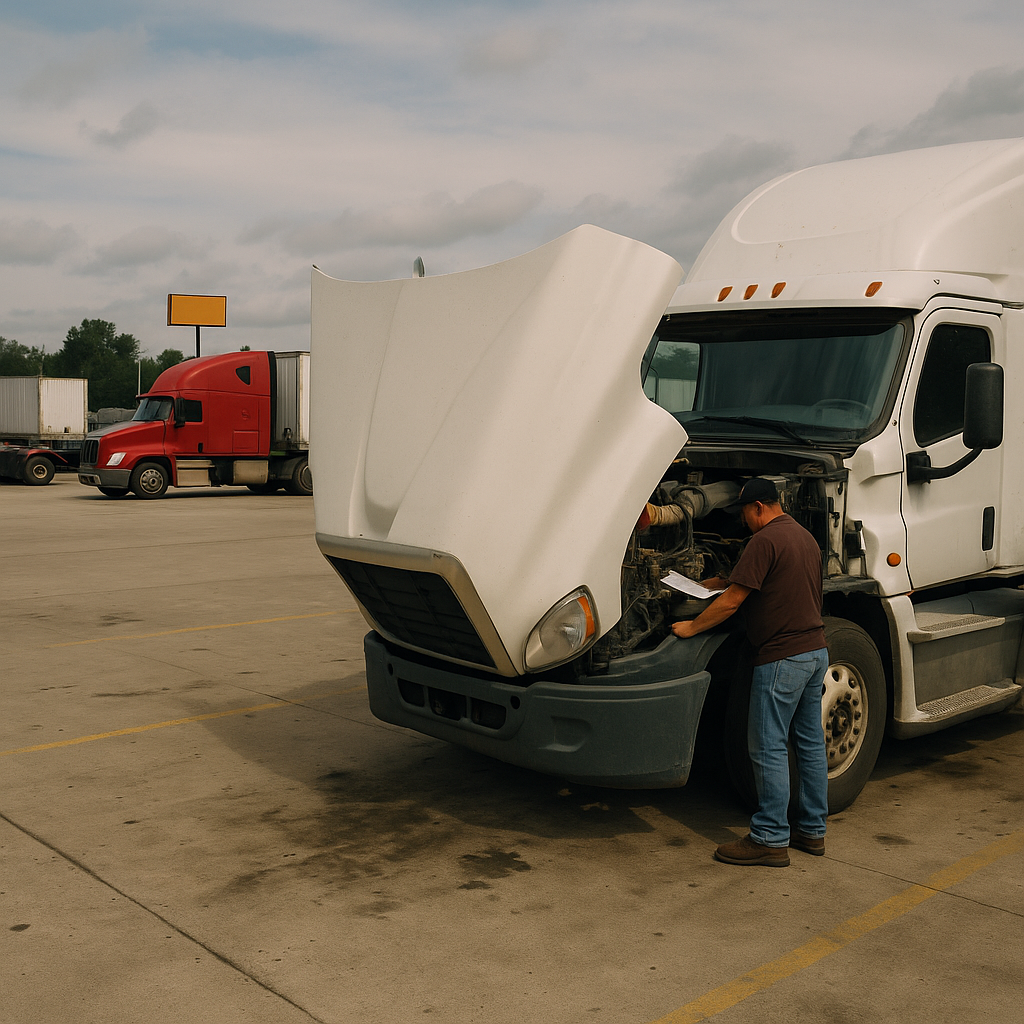

If you’re shopping for Greenville truck insurance, don’t start with price alone. Start with the facts of your operation: which Greenville you’re based in, whether you run for-hire, what you haul, where you travel, and whether you’re under your own authority or leased on. Those details decide what coverage fits and what rules may apply.
Start by identifying which Greenville you operate from#
If you search for Greenville truck insurance, the first thing to clear up is which Greenville you mean. Greenville, South Carolina and Greenville, Kentucky are different insurance markets, and your truck’s primary garaging address matters to underwriting, rating, and sometimes eligibility.
A garaging address is the main location where the truck is normally kept when it’s not working. Insurers look at that address along with where the truck travels, what it hauls, and how it’s used in the business.
Greenville, South Carolina and Greenville, Kentucky are different insurance markets#
A quote built for Greenville, South Carolina isn’t automatically useful if your truck is actually based in Greenville, Kentucky. Even if the truck runs similar freight, the base location can change how an insurer looks at exposure, travel patterns, and state-specific requirements.
That’s why a useful quote starts with the correct address and operation details, not a generic online form that treats every truck the same.
Why your garaging address and operating territory matter#
Your operating territory is the area where the truck actually runs, whether local, regional, or multi-state. A truck based in Greenville but regularly crossing state lines presents a different risk picture than one that stays intrastate.
Insurers also care about cargo type, vehicle value, annual mileage, and who is driving. If those facts are off, the quote may be off too.
Commercial trucking insurance is not personal auto insurance#
Commercial auto insurance is insurance built for business vehicle use, including covered liability tied to trucking operations. Personal auto coverage generally isn’t designed for for-hire trucking, business hauling, or the contract requirements that come with commercial freight.
That’s a common mistake for first-time owner-operators. A pickup used for errands is one thing. A truck used to haul freight for pay is another.

The operating facts that determine your insurance needs#
The fastest way to sort out Greenville truck insurance is to build a clean operating checklist first. For most owner-operators, the big facts are your USDOT number, MC number if applicable, authority status, truck weight, cargo, states traveled, annual mileage, and whether you’re leased on or running under your own authority.
A USDOT number is the identifier used by the U.S. Department of Transportation for safety and operating records. An MC number is the operating-authority identifier tied to certain for-hire interstate operations.
For-hire or private carriage#
A for-hire carrier hauls property for someone else in exchange for payment. A private carrier hauls its own goods as part of its own business.
That difference matters because insurance requirements and contract expectations often change based on whether you’re hauling for the public or moving your own property.
Interstate or intrastate operation#
Interstate commerce means crossing state lines or hauling freight that is part of a movement across state lines. It’s not just about distance, and it’s not limited to whether your truck physically leaves the state.
A truck can stay inside one state and still be tied to interstate commerce depending on the freight movement. That’s why “I only run local” doesn’t always settle the question.
Truck weight, cargo, radius, and authority#
Your truck’s gross vehicle weight rating, cargo type, radius, equipment value, and authority status all shape both coverage needs and quote results. Hazardous materials, refrigerated loads, higher-value equipment, and wider operating radius usually change the insurance conversation quickly.
If you’re running under your own authority, check your federal status through FMCSA’s SAFER system and make sure the operation shown there matches reality.
Owner-operator under a lease versus operating under your own authority#
A lease-on owner-operator is an owner-operator contracted to run under another motor carrier’s authority. That setup can shift who provides primary liability and what coverages the owner-operator still needs by contract.
An owner-operator with their own authority usually has a different insurance setup from a leased driver. Lease agreements, dispatch arrangements, and trailer responsibility all matter here.
Separate federal, state, and contract insurance requirements#
Greenville truck insurance gets confusing when people mix together state minimums, FMCSA filings, and customer contract requirements. They are not the same thing, and treating them like one rule is how owner-operators end up underinsured or noncompliant.
A certificate of insurance is a document that shows certain policy information for a customer or contractor, while an insurance filing is a regulatory filing an insurer makes for compliance when required.
When federal financial-responsibility rules may apply#
Under 49 CFR Part 387, certain interstate motor carriers must meet federal financial-responsibility requirements based on carrier type, vehicle weight, and cargo. For example, for-hire interstate carriers hauling general freight in vehicles over 10,001 lbs must carry at least $750,000 in public liability, while some operations require different limits.
That means there is no single universal liability number for every trucker. Requirements vary by for-hire or private status, weight threshold, commodity, and whether the operation is interstate or intrastate.
What intrastate requirements can change#
Intrastate operations may be governed by state rules instead of, or in addition to, federal authority-related rules. South Carolina and Kentucky are not interchangeable, and state minimums are not automatically the same as FMCSA requirements.
If you’re unsure which rules apply, verify the current requirement with the appropriate state agency before you rely on a quote or certificate.
Why broker, shipper, and lease agreements may require more#
A broker or shipper may ask for more coverage than the legal minimum. A lease agreement may also require cargo, physical damage, trailer-related coverage, or specific certificates before you can pull loads.
That means “legal minimum” and “enough to haul this freight” are not always the same thing. Many quote comparisons go wrong because the operator compares only the liability limit and ignores contract requirements.
If you’re trying to match your route, authority, and contract demands to the right policy structure,
How insurance filings differ from carrying a policy#
An MCS-90 is a federal endorsement tied to certain motor-carrier financial responsibility requirements; it is not the same thing as your full policy. FMCSA guidance at fmcsa.dot.gov makes the bigger point: the policy, the filing, and the certificate each serve different jobs.
Check all three separately. If operating authority is involved, confirm federal status, confirm any needed filing, and make sure the policy itself matches the actual truck and operation.
Build the coverage mix around your trucking operation#
The right Greenville truck insurance setup depends on how the truck actually works, not on a canned bundle. Most owner-operators need to think in layers: auto liability for the truck’s road exposure, then cargo, truck value, trailer responsibility, and any contract-driven coverage on top.
Below is the practical difference between the coverages owner-operators ask about most.
Auto liability for eligible for-hire operations#
Auto liability covers covered bodily injury and property damage liability arising from truck operation, subject to the policy’s terms and limits. This is the core coverage tied to operating the truck on the road.
For many for-hire interstate general-freight carriers over the federal weight threshold, the FMCSA minimum under 49 CFR Part 387 is $750,000. But that’s not a universal rule for every trucker, and many shippers or brokers want more.
Motor truck cargo and general liability#
Motor truck cargo covers covered freight for loss or damage while it’s in the carrier’s care, custody, or control. If you haul customer freight, cargo coverage often matters just as much as liability because the contract may require it before you can book loads.
General liability covers certain non-driving business liability exposures. It does not replace commercial auto liability, and it doesn’t cover truck accidents the way auto liability does.
Physical damage and CAC protection#
Physical damage covers covered damage to the insured truck itself, including collision and comprehensive causes such as fire or theft. Collision pays for covered impact damage, while comprehensive handles certain non-collision losses.
CAC means combined additional coverage for certain trucking equipment-related exposures packaged with physical damage options, depending on the policy structure. If the truck has meaningful value, skipping physical damage to chase a lower upfront number can create a painful gap fast.
Non-trucking liability for qualifying leased owner-operators#
Non-trucking liability is liability coverage for certain non-business use by a qualifying leased owner-operator when not under dispatch. It’s often called bobtail by drivers, but the key point is the use of the truck at the time of loss.
It is not a substitute for primary liability while hauling freight. If you’re under dispatch or doing business use, non-trucking liability generally is not the coverage that responds.
Trailer interchange, non-owned trailer physical damage, and reefer breakdown#
Trailer interchange covers physical damage to a non-owned trailer when you’re responsible for it under a signed interchange agreement. Non-owned trailer physical damage covers certain trailer damage exposures when you don’t own the trailer, often without that formal interchange setup.
Most non-intermodal owner-operators care more about non-owned trailer physical damage than true interchange wording, but the contract controls. Reefer breakdown covers certain losses tied to refrigeration unit breakdown for qualifying refrigerated operations.
| Coverage | What it generally protects | Often matters most when |
|---|---|---|
| Auto liability | Covered BI and PD from truck operation | Running for-hire or operating authority |
| Motor truck cargo | Covered freight in your care | Hauling customer loads |
| General liability | Certain non-driving business exposures | Contracts require broader business coverage |
| Physical damage | Covered damage to your truck | Truck has significant value or financing |
| Non-trucking liability | Certain non-business use | Leased owner-operator off dispatch |
| NOTPD or trailer interchange | Damage to non-owned trailer | You’re responsible for someone else’s trailer |
| Reefer breakdown | Certain refrigerated cargo losses | You haul temperature-controlled freight |
Compare Greenville truck insurance quotes beyond the liability limit#
A good Greenville truck insurance comparison checks whether each quote was built on the same operation facts. If the garaging address, cargo, authority status, drivers, units, or prior losses differ between applications, the numbers may look comparable while the coverage is not.
That is why the cheapest-looking quote on page one can become the most expensive mistake after a claim, roadside inspection issue, or certificate request.
Confirm the operation was quoted correctly#
Match the basics first: garaging location, states traveled, radius, truck type, GVWR, cargo description, authority status, lease status, and loss history. One wrong answer can lead to a quote that doesn’t reflect the actual operation.
If you’re leased on, make sure the quote reflects that. If you’re under your own authority, make sure the filing and coverage structure line up with that reality.
Compare deductibles, exclusions, and endorsements#
A deductible is the amount you pay out of pocket before covered insurance kicks in on certain claims. An endorsement is a policy change that adds, removes, or clarifies coverage terms.
Don’t stop at the liability limit. Compare deductibles, exclusions, named-driver terms, endorsements, cancellation terms, payment structure, and whether the policy restricts certain cargo or use.
Check cargo, trailer, and equipment details#
Look closely at cargo limits, trailer responsibility, reefer needs, and any equipment attached to the truck. If one quote includes trailer-related protection or broader equipment treatment and another does not, they are not equal even if the top-line premium looks lower.
An incomplete or inaccurate application can create delays, gaps, or a quote that falls apart when underwriting reviews the file.
Evaluate claims support and document access#
Ask how claims are reported from the road, what information is needed right away after a loss, and how fast certificates are turned around when a broker needs proof. For an owner-operator running from the cab, document access matters almost as much as coverage language.
If you want help organizing your route, cargo, truck, authority, and contract details before you compare policies,
Control insurance costs without creating coverage gaps#
The main way to control Greenville truck insurance cost is to make sure the quote matches the real operation from the start. Your actual premium depends on your operation, cargo, radius, authority, garaging location, vehicle value, driving history, prior losses, limits, deductibles, and payment structure.
That means the lowest initial number isn’t always the lowest-risk choice for your business.
Give accurate operating information from the start#
Fix bad business details before shopping harder. If your radius, cargo, or authority status is wrong on the application, the quote may be unusable or leave you with a bad surprise later.
Use deductibles and limits deliberately#
Higher deductibles can lower upfront cost, but only if you can actually absorb that out-of-pocket hit after a loss. Lower limits or stripped-down options may also conflict with contracts even if they look attractive on paper.
Maintain safety, maintenance, and claims records#
Keep driver records, maintenance logs, inspection files, and claims details organized. Clean documentation helps at renewal time and can speed up issue resolution when something goes wrong.
Review changes before they become a problem#
Tell your insurance contact before you add a driver, change authority, haul a new cargo type, take responsibility for a trailer, add a truck, or start running new states. Small operating changes are often what turn a workable policy into a mismatch.
Keep a road-ready claims and insurance contact checklist#
The best claims plan is simple: keep the right contacts and documents ready before anything goes wrong. For owner-operators, that means storing current insurance information in the cab and on your phone, along with the truck, trailer, cargo, and claims details you may need on the road.
A claims reporting instruction is the carrier or broker’s process for reporting a covered loss and providing first details after the event.
What to keep in the cab and on your phone#
Keep your policy number, insurer contact details, broker contact details, claims reporting instructions, certificate request process, truck identification, trailer details, and cargo paperwork accessible. Also keep a way to store photos, dashcam files, and witness information quickly.
Make sure the documents are current for the actual truck and operation, not just old PDFs still sitting on your phone.
What to do immediately after an accident or cargo incident#
Safety comes first. Handle emergency response, protect life and property, and follow law-enforcement instructions where needed.
Then report the covered event as soon as practical according to policy instructions. Gather photos, location details, witness names, police report information where applicable, and any cargo-specific documentation tied to the load.
How to prepare for certificates, filings, and roadside requests#
Know who requests certificates, how you ask for them, and what turn time to expect. If your operation involves authority-related compliance, keep filings and policy records straight so you don’t confuse a certificate with a regulatory filing.
Your next step before binding coverage#
Before you bind anything, review the route, cargo, truck value, authority status, trailer responsibility, and contract requirements one more time. That’s the last chance to catch a mismatch before it becomes a live coverage problem.
FAQ#
Who has the cheapest truck insurance?
No insurer is consistently the lowest-cost option for every owner-operator. Truck insurance pricing depends on the actual operation: for-hire or private use, authority status, garaging location, cargo, travel radius, truck value, driver history, prior losses, limits, deductibles, and payment plan. A quote that looks cheaper may also have different exclusions, driver terms, cargo treatment, or trailer coverage. The better question is which quote gives you the right coverage for the same operation details. Compare equivalent applications side by side before deciding.
How much is $1,000,000 liability insurance a month?
You can’t responsibly estimate a monthly price from the liability limit alone. A $1,000,000 liability quote for one truck can look very different from another based on garaging address, interstate or intrastate use, authority status, truck type, cargo, radius, driver records, and loss history. Contract requirements can also affect the overall package, not just the liability line. If you want a useful comparison, make sure each quote uses the same operating facts and the same supporting coverages, deductibles, and policy terms.
What is the average cost for truck insurance?
Average numbers can be misleading because commercial truck insurance is individually underwritten. Two owner-operators with similar trucks can see very different pricing if one hauls refrigerated freight across several states under its own authority and the other is leased on and runs a tighter lane with a cleaner loss record. The total package may also include cargo, physical damage, trailer-related coverage, and other pieces beyond liability. Focus on the operation-specific quote, not a generic average that may not match your business.
Which insurance is best for a truck?
The best insurance for a truck is the policy structure that matches how that truck actually operates. For an owner-operator, that usually means starting with the right auto liability setup, then adding the cargo, physical damage, trailer, reefer, or non-trucking protection that fits the operation and any contract requirements. Personal auto coverage is generally not built for for-hire trucking. The goal isn’t finding a one-size-fits-all policy. It’s building the right mix for your truck, route, authority, and freight.
Do I need the same insurance if I’m leased to a carrier instead of running my own authority?
Not always. A leased owner-operator may have different responsibilities under the lease than a carrier operating under its own authority. The motor carrier may provide certain primary liability arrangements while the owner-operator still needs other coverages, such as physical damage or qualifying non-trucking liability for certain non-dispatched use. Trailer responsibility can also change based on the lease or dispatch setup. Don’t assume your lease covers everything. Read the contract and compare it against the actual policy structure before you start hauling.





