
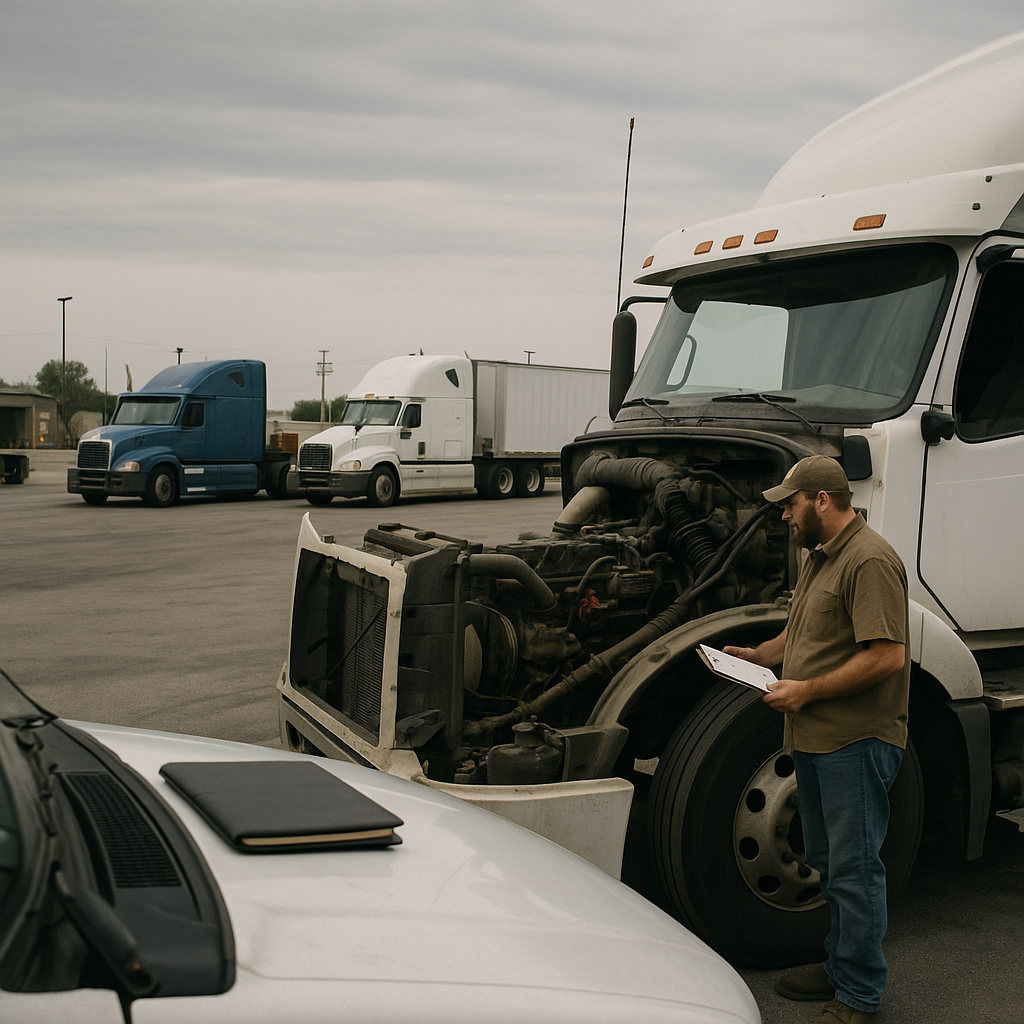

A load can disappear, get stolen off a parked trailer, or arrive ruined after a wreck even when the truck itself is repairable. That’s where truck insurance for lost cargo usually means motor truck cargo insurance, not your auto liability policy and not physical damage on the tractor.
This guide breaks down what cargo coverage actually does, when it applies, where it commonly falls short, who gets reimbursed, and how to review a policy before you trust it with a load.
What Motor Truck Cargo Insurance Is#
Motor truck cargo insurance is coverage for the freight your trucking business is hauling for someone else. It protects the cargo in transit, not the tractor itself, and it sits separately from both auto liability and physical damage coverage.
Motor truck cargo insurance is a policy that covers freight loss or damage while a motor carrier transports cargo. If you haul customer loads as an owner-operator or small fleet, this is the policy people usually mean when they ask whether lost freight is insured.
How cargo coverage works in plain English#
Think of the policy as being built around the load, not the truck. If freight is stolen, damaged in a crash, burned in a fire, or ruined by another covered cause of loss, the cargo policy may respond based on the terms, limits, and exclusions in the policy.
That matters because a truck can have one covered problem while the freight has another. Your tractor might be covered under physical damage coverage, which pays for damage to your insured truck from collision or other covered causes, while the cargo claim gets handled under a completely different section or separate policy.
How it differs from commercial auto insurance#
Commercial auto insurance covers liability arising from truck operation and, when selected, damage to the insured vehicle. It does not automatically cover the customer’s freight just because the truck was involved in an accident.
That’s one of the biggest owner-operator mix-ups. A truck can have liability coverage, physical damage, and even non-trucking liability, yet still leave a gap for the load if there’s no cargo policy or the shipment falls outside the policy scope.
Who typically buys it#
Motor truck cargo insurance is common for for-hire carriers hauling customer freight. That includes single-truck operators, leased-on or independent owner-operators depending on contract setup, and small fleets that need to meet broker or shipper requirements before they can book loads.
When Cargo Coverage Applies to Lost Freight#
Cargo coverage usually applies when freight is lost or damaged by a covered cause during transportation, such as theft, collision, overturn, or fire. The catch is that coverage often turns on the exact policy wording, especially for parked loads, temporary storage, refrigeration breakdown, and delay-related losses.
Theft, collision, and accidental damage#
A pretty standard cargo claim looks like this: a driver gets rear-ended, the trailer shifts, and the load is damaged. Another common scenario is an overturn or roadway accident that destroys part of the freight. Fire claims also show up when a tractor or trailer fire spreads to the cargo.
Theft is where things get trickier. A full trailer theft may be covered under some policies, but unattended vehicle conditions, location restrictions, or security requirements can change the outcome. If the load vanished from a drop lot or during a stop, the adjuster will look hard at where it was, how it was secured, and whether the policy allows that situation.
Parked loads and temporary storage#
Parked load losses are a major gray area. Some policies cover theft from a parked truck only under certain conditions, while others limit coverage if the vehicle was left unattended for too long or in an unapproved place.
Temporary storage can also break coverage. Freight sitting overnight in the ordinary course of transit may be treated differently than freight left in a warehouse or yard. If the load stops being “in transit” under the policy definition, the claim can get denied even though the cargo never reached delivery.
When that happens, the problem gets expensive fast because the shipper still wants answers and the broker still wants the load issue resolved. If you’re not sure whether your policy really covers these situations,
Delays, spoilage, and uncovered losses#
A late load is not automatically a covered cargo claim. If freight arrives behind schedule but isn’t physically damaged, many cargo policies won’t pay just because the customer lost time or a contract was missed.
Refrigerated freight adds another layer. Spoilage may need a specific reefer or refrigeration breakdown option rather than standard cargo terms alone. The same goes for losses tied to temporary warehousing, rejected loads, or penalties charged under a shipping contract.
What Cargo Insurance Does Not Cover#
Motor truck cargo insurance does not cover every reason a load goes missing or loses value. Common exclusions include wear and tear, improper packing, some unattended theft situations, delay-only losses, and cargo or operations that fall outside the policy’s listed scope.
Common exclusions to watch for#
Exclusions are situations the policy specifically says it will not cover, a standard insurance concept also used by NAIC consumer materials. In cargo coverage, that often includes ordinary wear, inherent vice, temperature issues without the right endorsement, and losses caused by poor packing if the carrier didn’t control how the freight was prepared.
Some policies also restrict certain commodities. High-theft cargo, very high-value items, electronics, alcohol, tobacco, or special classes of freight may need separate approval, tighter limits, or different terms.
Why some losses turn into coverage disputes#
Many disputed claims aren’t about whether cargo was lost. They’re about whether the policy covered that kind of cargo, that cause of loss, and that point in the trip.
An unattended truck theft is a good example. The driver may think, “My load was stolen, so cargo insurance should pay.” The insurer may ask whether the tractor was locked, where it was parked, whether the trailer was dropped, and whether the loss happened during covered transit.
How policy wording changes the outcome#
A declarations page is the summary page showing the insured, limits, covered vehicles or operations, and major policy settings. It won’t tell the whole story by itself, so you also need the exclusions, endorsements, and cargo class language.
An endorsement is a policy add-on that changes the standard terms. That’s often where parked-load conditions, spoilage terms, or contract-related protections get added or limited.
Who Pays When Freight Is Lost#
When freight is lost, the cargo policy usually reimburses the insured party with an insurable interest if the claim is covered. In practice, the shipper often looks first to the motor carrier, but the final payment path depends on the contract, the claim facts, and the policy wording.
Who the policy reimburses#
An insurable interest means a real financial stake in the covered property or loss. In cargo claims, that usually means the insured carrier or trucking business has coverage because it can be held responsible for the freight while transporting it.
That doesn’t always mean the insurer writes a check directly to the shipper. Often the carrier handles the cargo claim with its insurer, and then the financial responsibility gets sorted out according to the bill of lading, shipper agreement, broker-carrier contract, and claim documentation.
Shipper, broker, or carrier responsibilities#
The shipper owns the freight or has the main loss interest in it. The carrier may be legally liable for damage or loss during transit. The broker may have contract requirements about cargo limits, reporting, or claim handling, but that doesn’t make the broker’s policy the one that automatically pays the load.
So when someone asks, “Which insurance reimburses the loss of freight to the shipping company?” the practical answer is usually cargo coverage carried by the motor carrier, if the loss is covered and the carrier is responsible.
What happens after a claim is filed#
The basic flow is straightforward: report the loss fast, gather shipment records, document the condition of the freight, preserve evidence, and respond to the insurer’s investigation. The carrier may need the rate confirmation, bill of lading, photos, police report, temperature records, or delivery exception notes.
From there, the insurer reviews whether the loss falls within the policy terms and issues a settlement decision. Fast reporting helps because cargo claims get harder to prove once freight is salvaged, dumped, resold, or moved again.
Who Needs Motor Truck Cargo Insurance#
Many trucking businesses need cargo insurance because they haul other people’s freight and can be on the hook if that freight is lost or damaged. Even where law doesn’t universally require it, brokers and shippers often do, and the right setup depends more on what you haul than on how many trucks you own.
Owner-operators versus fleets#
A one-truck owner-operator may need the same cargo protection as a small fleet if both haul similar freight under similar contracts. Truck count matters less than the exposure on the trailer.
That’s why cargo insurance is common for both independent owner-operators and fleets with a handful of power units. If your business earns money moving customer freight, a cargo gap can turn one bad load into a direct hit to your operation.

Interstate versus intrastate operations#
Operating scope matters. Interstate means transportation crossing state lines or moving in interstate commerce, while intrastate means transportation staying within one state under that state’s rules.
Your operating status and authority can shape what contracts require and how underwriters view the risk. You can check carrier authority and operating status through SAFER, which is useful when matching insurance needs to how the business is actually registered and operating.
Cargo type and weight considerations#
Cargo value, cargo class, and truck size all affect how much protection makes sense. A carrier hauling low-value general freight may have a different limit need than one moving refrigerated product or theft-prone loads.
Requirements also vary by carrier type, vehicle weight, cargo, and whether you operate interstate or intrastate. The point isn’t to chase a generic number. It’s to match the cargo policy to the freight you actually haul and the contracts you sign.
Is Cargo Insurance Required#
Cargo insurance is not the same thing as federal auto liability insurance, and it is not subject to one blanket national rule for every trucking business. In many cases, cargo coverage becomes a practical requirement through shipper and broker contracts rather than a universal FMCSA minimum.
Federal requirements versus state rules#
FMCSA financial responsibility rules mainly address public liability, not cargo. Under 49 CFR Part 387, for-hire interstate carriers hauling general freight in vehicles over 10,001 lbs must carry at least $750,000 in public liability, with different minimums depending on carrier type, weight, and commodity. That is separate from cargo insurance.
FMCSA materials at FMCSA are useful for understanding operating authority, insurance filings, and federal terminology. But federal liability filings should not be confused with cargo protection for the load itself.
When contracts create a practical requirement#
Even when cargo insurance isn’t imposed as a universal federal minimum, many brokers and shippers won’t tender loads without it. They may require a certain cargo limit, certain endorsements, or theft protections before they’ll work with a carrier.
That’s why “optional” can be misleading in real operations. You may not be legally forced into the same rule everywhere, but commercially you may still need cargo coverage to book freight.
How to verify what applies to your operation#
Start with your operating authority, what freight you haul, where you run, and what your contracts require. Then verify whether the policy matches that operation before assuming your state minimums or federal liability filings cover the cargo problem.
How Cargo Insurance Pricing Usually Works#
Cargo insurance pricing depends on the risk profile of the freight and the operation, not just the limit printed on the quote. Cargo type, radius, claim history, theft exposure, endorsements, and selected limits all influence premium, so there is no universal price for truck insurance for lost cargo.
What affects the premium#
Underwriters look at what you haul, where you haul it, how often the truck is parked loaded, and how claims have gone in the past. High-value or theft-prone freight usually prices differently than ordinary general freight.
Operation size matters too, but it’s not the whole story. A single truck hauling sensitive cargo can present more cargo risk than a small fleet hauling lower-risk commodity loads on shorter runs.
Why limits and cargo class matter#
The question “How much does $100,000 cargo insurance cost?” sounds simple, but the limit alone doesn’t tell the story. A $100,000 limit for one type of freight and route may price very differently than the same limit for another class of cargo.
Broader terms also affect price. If you want stronger theft wording, temporary storage protection, or reefer-related coverage, that can change the premium along with deductibles and claim history.
What to compare before buying#
Don’t compare quotes on price alone. Compare the cargo limit, deductible, covered commodities, unattended vehicle wording, territory, temporary storage treatment, and any endorsements that broaden or restrict the policy.
That’s usually where the “cheap” quote turns expensive later. If you want help comparing terms instead of just staring at declarations pages,
How to Check a Cargo Policy Before You Buy#
Before you buy cargo insurance, check the declarations page, exclusions, endorsements, commodity restrictions, and territory details line by line. The goal is simple: make sure the policy matches the loads you actually haul and the ways claims really happen in trucking.
Questions to ask the broker#
Ask whether theft is covered for parked loads and under what conditions. Ask whether dropped trailers, overnight stops, and temporary storage are covered or limited.
If you haul refrigerated freight, ask whether spoilage or refrigeration breakdown is included. If you switch commodities, ask whether the policy only covers listed cargo classes or if approval is needed before taking different freight.
Documents to review#
Review the declarations page first for the named insured, limit, deductible, and covered operation. Then read the exclusions and endorsements, because that’s where many claim surprises live.
Confirm the operating region too. A policy written around one radius or territory can create trouble if your actual runs are wider than what was quoted.
Red flags in policy language#
Watch for vague assumptions like “all freight is covered” or “the truck is insured, so the load is insured.” That’s not how these policies work.
Red flags include strict unattended theft conditions, missing spoilage language for reefer work, narrow cargo descriptions, and no clarity on whether temporary storage stays within transit coverage.
FAQ#
How much does $100,000 cargo insurance cost?
The cost of a $100,000 cargo limit varies by what you haul, how far you run, where the truck is parked, your claims history, your authority setup, and any endorsements added to the policy. A higher-risk commodity can price very differently from standard general freight even at the same limit.
The better question is whether the policy terms fit your operation. Two quotes with the same $100,000 limit can have very different theft conditions, cargo class restrictions, or storage language. Your actual premium depends on your operation, cargo, radius, driving history, and other factors.
What does trucking cargo insurance cover?
Trucking cargo insurance typically covers physical loss or damage to freight being transported by the insured carrier when the loss comes from a covered cause. Common examples include collision damage, overturn, fire, and some theft losses, subject to the policy terms.
What it covers depends heavily on the wording. Some policies are broader than others on parked loads, temporary storage, reefer losses, and high-value commodities. The truck having a covered claim does not automatically mean the cargo does too, so the policy details matter.
Which insurance reimburses the loss of freight to the shipping company?
In most trucking situations, motor truck cargo insurance is the policy that responds to covered freight loss or damage. Usually the insured carrier makes the claim under its cargo policy, and then reimbursement is sorted out based on the contract, the shipment documents, and the insurer’s coverage decision.
That doesn’t always mean the insurer pays the shipping company directly. The carrier may be the insured party under the policy, while the shipper is the party that suffered the cargo loss. The claim outcome depends on carrier responsibility, policy terms, and who has the insurable interest under the facts.
What are the two types of cargo insurance?
The two common policy structures people mean are all-risk and named-perils cargo coverage. All-risk generally means the policy covers a broad range of causes of loss unless a specific exclusion removes them. Named-perils means the policy covers only the causes of loss that are specifically listed.
Neither label means “everything is covered.” Even all-risk forms still have exclusions and conditions. In trucking, that can include theft restrictions, commodity exclusions, temperature-loss limitations, or transit definitions that affect whether a claim is covered.
Is cargo insurance the same as commercial auto insurance?
No. Commercial auto insurance covers liability arising from truck operation and may cover damage to the insured truck if physical damage is included. Motor truck cargo insurance covers the freight being hauled, not the tractor or trailer itself.
That distinction matters in real claims. A truck can have collision coverage for the tractor and still have no usable coverage for the customer’s freight if there is no cargo policy or if the load falls outside the policy terms. Owner-operators often find this out only after a loss, which is why reviewing the policy scope upfront matters so much.





