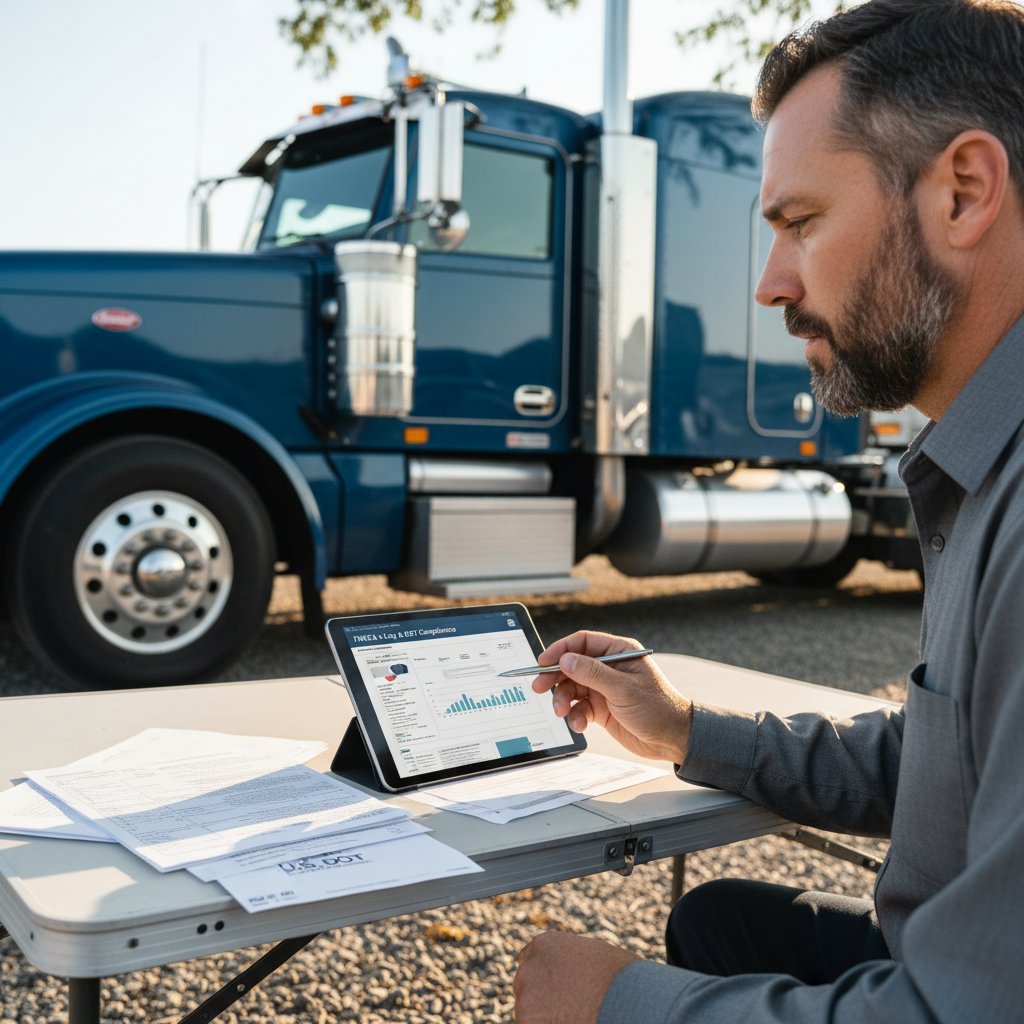
See hotshot insurance requirements, 7 key coverages, FMCSA filings, DOT/CDL notes, and 2026 costs of $7K–$15K.

Hotshot insurance requirements in 2026 are what decide whether you can book loads or get load-rejected when a broker asks for a compliant COI. In plain terms, most hotshot carriers need (1) primary liability, (2) cargo insurance, and (3) physical damage, plus commonly required add-ons like (4) general liability, (5) trailer interchange (power-only/non-owned trailers), (6) bobtail/non-trucking liability (off-dispatch use), and (7) occupational accident/workers’ comp (by contract/state).
Hotshot insurance isn’t “one policy.” It’s a package of coverages plus proof (filings and COIs) that matches your authority setup, cargo, and what brokers actually require. If you want the bigger-picture overview first, start with commercial hotshot insurance.
Table of Contents
Reading time: 8 minutes
Key takeaways
Hotshot insurance requirements are the specific policies, limits, and proof (COIs/filings) that FMCSA/state rules, brokers/shippers, and lenders use to decide whether you’re legal, dispatchable, and funded in 2026.
- Legal minimums aren’t the same as “bookable” coverage: Many brokers standardize to $1,000,000 liability and often want $100,000 cargo even when minimums differ.
- Filings and COIs are where hotshots get stuck: A policy can be paid and active, but authority and load access can still stall if filings/COI wording are wrong.
- Your setup drives the package: Leased-on vs own authority, power-only vs own trailer, cargo type, and radius can change requirements fast.
- Cheap doesn’t help if it fails onboarding: The lowest premium is useless if it doesn’t pass a broker packet or leaves key gaps.
Hotshot insurance requirements (2026) — the quick checklist (what you show a broker)
Hotshot insurance requirements most often come from three sources—(1) legal rules (FMCSA/state), (2) contracts (broker/shipper/facility), and (3) lenders (if the truck/trailer is financed)—and brokers typically verify them using a COI and endorsements.
If you want quick definitions for common coverages and limits (so this checklist makes sense), review commercial truck insurance requirements explained.
Think in three buckets (so you don’t miss anything)
- Legal: What you must carry to operate under your authority and stay compliant.
- Contract: What a broker/shipper demands to tender freight (often stricter than the minimum).
- Lender: What’s required to keep financing in force (usually physical damage with deductible limits).
The 7 items most hotshot carriers need to show
| Requirement | Who typically requires it | Common limit you’ll see | When you might skip it |
|---|---|---|---|
| Primary auto liability | FMCSA/state + brokers | $1,000,000 | Almost never (core commercial truck insurance) |
| Cargo insurance | Brokers/shippers | $100,000 (varies) | If you truly aren’t hauling brokered freight (you’ll still lose most loads) |
| Physical damage (comp/collision) | Lenders + smart operators | Based on truck value | Only if you can self-insure repairs/total loss (rare) |
| General liability | Facilities/shippers | $1,000,000 | Some lanes/clients won’t ask—until they do |
| Trailer interchange | Brokers/carriers (power-only) | Often $20K–$50K+ | If you never pull non-owned trailers |
| Bobtail / non-trucking liability | Carriers (leased-on) or personal risk mgmt | Varies | If you never operate off-dispatch (most still do) |
| Occupational accident / workers’ comp | Some contracts + certain states | Varies | Depends on business structure/state/contract; check your state labor department or the NCCI state resource center. |
Watch how equipment choices and insurance requirements connect in practice:
Requirements vs. recommendations (don’t overbuy—or underinsure)
Broker packet “requirements” usually matter more day-to-day than legal minimums because they decide whether you can actually get dispatched.
- Legal minimums: keep you legal.
- Broker packet requirements: keep you dispatchable.
- Lender requirements: keep you funded.
Operator tip: Before you bind coverage, ask the broker/onboarding team for their required COI wording and limits. That document is your real checklist.
FMCSA baseline + filings: what’s required federally (and what delays new authority)
FMCSA requires for-hire interstate motor carriers to maintain proof of financial responsibility on file via insurer-submitted filings, and authority can be delayed or deactivated when filings are missing, incorrect, or canceled.
FMCSA’s overview of insurance filings and proof requirements is here: https://www.fmcsa.dot.gov/registration/insurance-filing-requirements.
For the non-insurance compliance workflow (UCR, BOC-3, audits, etc.), keep a separate checklist using LogRock’s guide to DOT compliance requirements.
Minimum liability depends on what you haul (don’t guess)
Federal minimum liability requirements for motor carriers are defined in 49 CFR Part 387; the exact amount depends on operation type and commodity.
- Why it matters: Being underinsured for your operation type can trigger compliance problems and broker rejections.
- Market reality: Many brokers standardize to $1,000,000 auto liability because it simplifies onboarding.
Filings vs. policy coverage (the thing that confuses new hotshots)
Insurance filings are electronic proof your insurer submits to FMCSA/state, while the policy is your contract and billing arrangement—so a paid policy can exist even when filings aren’t accepted or matched.
Common real-world delay points:
- Name mismatch: Your business name must match FMCSA registration exactly (punctuation and “LLC” formatting can matter).
- Wrong DOT/MC: A single digit error can stall authority activation.
- VIN errors: Wrong or incomplete VIN can create underwriting and filing issues.
- Payment lapse: Cancellations and reinstatements often trigger load boards and brokers to drop you.
If you’re still setting up your authority, this step-by-step walkthrough covers the MC and DOT application process:
Coverage-by-coverage: what each hotshot policy should include (and when it applies)
Hotshot insurance policies apply differently depending on dispatch status, equipment ownership, and cargo type, so two carriers can both say “I’m insured” while only one package actually passes broker packets.
Primary liability (the non-negotiable)
Primary auto liability pays for bodily injury and property damage to others when you’re at fault while operating commercially.
- Why it’s essential: It’s the foundation of commercial trucking insurance and the first thing brokers verify on a COI.
- Practical standard: If you want consistent access to brokered freight, treat $1,000,000 as the common market requirement.
Cargo insurance (and the exclusions that surprise people)
Cargo insurance covers the freight you’re responsible for while in transit, subject to commodity restrictions, conditions, and exclusions that can lead to denial if you don’t follow policy requirements.
For a deeper dive into limits, exclusions, and how claims are evaluated, review LogRock’s guide to hot shot trucking cargo insurance requirements.
Common exclusions that trip up hotshots:
- Improper securement: “insufficient dunnage” or poor tie-down practices.
- Theft conditions: unattended vehicle language and required security steps.
- Commodity restrictions: electronics, vehicles, hazmat-related items, or other excluded classes.
- Temperature claims: if you aren’t set up for temp control, don’t accept loads that assume you are.
Operator tip: If you haul oilfield equipment, vehicles, or high-value construction materials, $100,000 cargo may not match the load values you’re accepting.
Physical damage (collision + comprehensive)
Physical damage pays to repair or replace your truck (and sometimes scheduled trailers) after covered events like collision, theft, hail, fire, and vandalism, minus the deductible.
- When it’s required: Most lenders require comp/collision on financed equipment.
- Real-world pricing impact: Higher equipment value and lower deductibles typically raise premium.
Operator tip: Pick a deductible you can pay without missing bills; a high deductible only works if you keep reserves.

General liability, trailer interchange, and bobtail/non-trucking (why they’re separate)
General liability, trailer interchange, and bobtail/non-trucking liability are separate coverages because they address different risk categories: non-auto exposure, non-owned trailer damage, and off-dispatch driving.
- General liability (GL): Non-auto premises/operations coverage; some facilities require $1,000,000 to enter and work on-site.
- Trailer interchange: Damage to non-owned trailers in your care/custody/control; common for power-only work and frequently required before pickup.
- Bobtail vs. non-trucking liability: Liability coverage when you’re operating not under dispatch (often relevant for leased-on drivers).
Reality check: Write down your “real operating day.” If you drive to the shop, store, or home off-dispatch, your insurance setup has to match that.
Hotshot insurance cost in 2026: typical ranges ($7K–$15K+) and how to keep it affordable
Hotshot insurance cost in 2026 commonly lands in the $7,000–$15,000+ per year range for a broker-usable package, with higher totals for new ventures, long radius, higher-risk commodities, and high-value financed equipment.
Industry cost benchmarking is commonly tracked by the ATRI Operational Costs of Trucking research series.
If you want the “why” behind pricing swings (new venture, radius, MVR, garaging ZIP), read everything that affects truck insurance costs.
Cost table: what each coverage tends to add (market ranges)
These are typical market patterns (not a quote), and your numbers depend on MVR, claims, authority age, cargo, radius, and equipment value.
| Coverage | Typical effect on premium | What pushes you to the high end |
|---|---|---|
| Primary liability | Biggest driver | New authority, long radius, poor MVR/claims, higher-risk cargo |
| Cargo | Moderate | High value/commodity restrictions, higher limits, theft-exposed lanes |
| Physical damage | Moderate to high | Expensive truck, low deductible, high-theft ZIP |
| General liability | Usually smaller add-on | Contract-required higher limits |
| Trailer interchange | Add-on | Power-only / frequent non-owned trailers |
| Bobtail/non-trucking | Add-on | Leased-on setups + off-dispatch use |
| Occ/acc or workers’ comp | Varies a lot | State/contract requirements, number of drivers |
Real-world budgeting: Plan for a down payment up front and don’t underestimate cash flow impact in your first year.
3 operator profiles (why quotes are all over the map)
- Profile A (lower end): Clean MVR, regional radius, general freight, consistent prior insurance.
- Profile B (higher end): New venture + multi-state radius + higher cargo exposure + no prior coverage history.
- Profile C (variable): Experienced driver with a financed late-model truck (high physical damage) and a tight deductible, garaged in a high-theft metro area.
Before you finalize your coverage, watch these 2026 strategies hotshots are using to lower their premiums:
State-by-state nuance (what changes and what doesn’t)
Interstate operations generally follow FMCSA baseline rules, while intrastate-only operations must verify state-specific carrier rules and insurance minimums with the state agency.
Texas is a good example of a state resource to verify intrastate insurance requirements: https://www.txdmv.gov/motor-carriers/insurance-requirements.
| State | Where to verify intrastate rules | Practical note |
|---|---|---|
| Texas | TXDMV motor carrier insurance page | Don’t assume interstate rules = intrastate rules |
| California | State DOT/DMV motor carrier portal | Often stricter enforcement/document expectations |
| Florida | State highway safety/MC section | Verify filings and business registration alignment |
| Georgia | State DOT motor carrier page | Check intrastate thresholds |
| Illinois | State commerce/transport page | Confirm local requirements if staying in-state |
| North Carolina | State DOT motor carrier portal | Confirm intrastate minimums and documentation |
Frequently Asked Questions
Primary auto liability is the minimum insurance required to operate commercially, and most brokers also require cargo insurance (often $100,000) before they’ll tender hotshot freight. A “broker-ready” hotshot package commonly adds physical damage (especially if financed), general liability (often $1,000,000 for facility access), and trailer interchange if you pull non-owned trailers in power-only work. Bobtail/non-trucking liability is often required or strongly recommended when you drive off-dispatch, especially in leased-on setups. Always confirm the broker’s COI wording and limits before binding coverage, because “legal” and “dispatchable” aren’t the same thing.
No—insurance does not legally require a CDL by itself, but CDL requirements depend on your truck/trailer GVWR/GCWR, your configuration, and how you operate under federal and state rules. Insurers underwrite risk using driver experience, MVR/violations, claims history, and operating radius whether you’re CDL or non-CDL, so “non-CDL hotshot” doesn’t automatically mean “cheap insurance.” If you’re near weight thresholds, confirm your licensing and compliance setup before shopping coverage so your application matches your real operation and doesn’t create underwriting or claims problems later.
Hotshot insurance cost in 2026 commonly runs $600–$2,500 per month for a broker-ready package, though the range extends higher for new ventures, long-haul routes, high-value financed equipment, or higher-risk cargo. The biggest cost driver is primary liability; physical damage adds a significant second line if you’re financing your truck. For a more granular breakdown by coverage type, read LogRock’s hotshot insurance cost guide.
If you run under your own for-hire interstate authority, FMCSA requires proof of financial responsibility on file through insurer-submitted filings, and authority can be delayed when filings are missing, incorrect, or canceled. Filings are separate from the policy you pay for, so a paid policy does not guarantee your DOT/MC record shows active proof. The most common problems are business-name mismatches, wrong DOT/MC numbers, VIN errors, and payment lapses that trigger cancellations. New entrants should use a full setup checklist like LogRock’s starting a trucking company checklist to keep registration and insurance details aligned.
Often no—many interstate commercial operations require a USDOT number, and many intrastate operations also require one depending on the state, weight, and business type. FMCSA publishes a “Do I need a USDOT number?” guide here: https://www.fmcsa.dot.gov/registration/do-i-need-usdot-number. If you’re staying intrastate, you still need to verify your state’s motor carrier rules because intrastate thresholds and documentation can differ from interstate expectations. When in doubt, verify before you buy a policy so your operation and filings match.
Trailer interchange insurance covers physical damage to a non-owned trailer that’s in your care, custody, or control under a trailer interchange agreement. If you run power-only loads—picking up trailers you don’t own—most brokers and carriers will require it before they release the trailer to you. Without it, you’re personally responsible for damage to that trailer while it’s hooked to your truck, even if you didn’t cause the damage. Common limits run $20,000–$50,000+. If you never pull non-owned trailers, you can skip it—but confirm that’s actually your operation before leaving it off your package.
Both cover you when you’re driving off-dispatch, but they’re structured differently. Bobtail insurance typically covers the truck operating without a trailer. Non-trucking liability (NTL) is broader—it covers personal use or off-dispatch driving, whether or not a trailer is attached. Which one you need depends on how your carrier or lease agreement defines coverage and what gaps your primary policy leaves. In many leased-on setups, the carrier’s policy only covers you while dispatched, so off-dispatch exposure falls on you. Read LogRock’s breakdown of bobtail vs. non-trucking liability before deciding which to add.
Yes, but your options are narrower and your premiums will be higher. New ventures—typically defined as less than 1–2 years in business or no prior insurance history—are considered higher risk by most standard carriers, which limits the number of markets willing to write the policy. You may pay 20–40% more than an established carrier with a clean record. The key is working with an agent who regularly places new authority accounts. See LogRock’s guide to truck insurance for new authority for what to expect.
A certificate of insurance (COI) is the document your agent sends to brokers proving your coverage is in force. Brokers typically look for the correct insured name matching your MC/DOT registration, the right coverage types and limits—often $1M auto liability and $100K cargo as a starting point—the broker listed as additional insured or certificate holder when required, active policy dates, and correct endorsement language. COI wording issues are a common reason hotshots fail broker onboarding even when they’re fully paid up. Request the broker’s COI template before binding coverage so your agent can issue it correctly the first time.
Conclusion: confirm your hotshot insurance requirements before you book loads
Hotshot insurance requirements come down to three realities: your legal setup, broker/shipper contracts, and your equipment/cargo risk. If any one of those doesn’t match your COI and filings, you’ll feel it fast—rejected loads, delayed authority, or uncovered losses.
Key Takeaways:
- Build for “dispatchable,” not just “legal”: Many brokers expect $1M liability and $100K cargo as a baseline.
- Don’t ignore filings and COI wording: A paid policy can still fail onboarding if filings or names/numbers don’t match.
- Match the package to your real operation: Power-only, non-owned trailers, and off-dispatch driving change what you need.
If you’re tightening your budget without breaking broker requirements, read affordable trucking insurance: how to save big on coverage and, if you’re operating in a high-interest state, see Texas owner-operator truck insurance guide.
If you’re pulling together your hotshot insurance package—whether you’re starting fresh, switching carriers, or trying to pass a broker packet—LogRock can review your operation, identify coverage gaps, and match you with the right markets for your setup. Talk to our team, ask your questions, and get a quote built around how you actually run.