
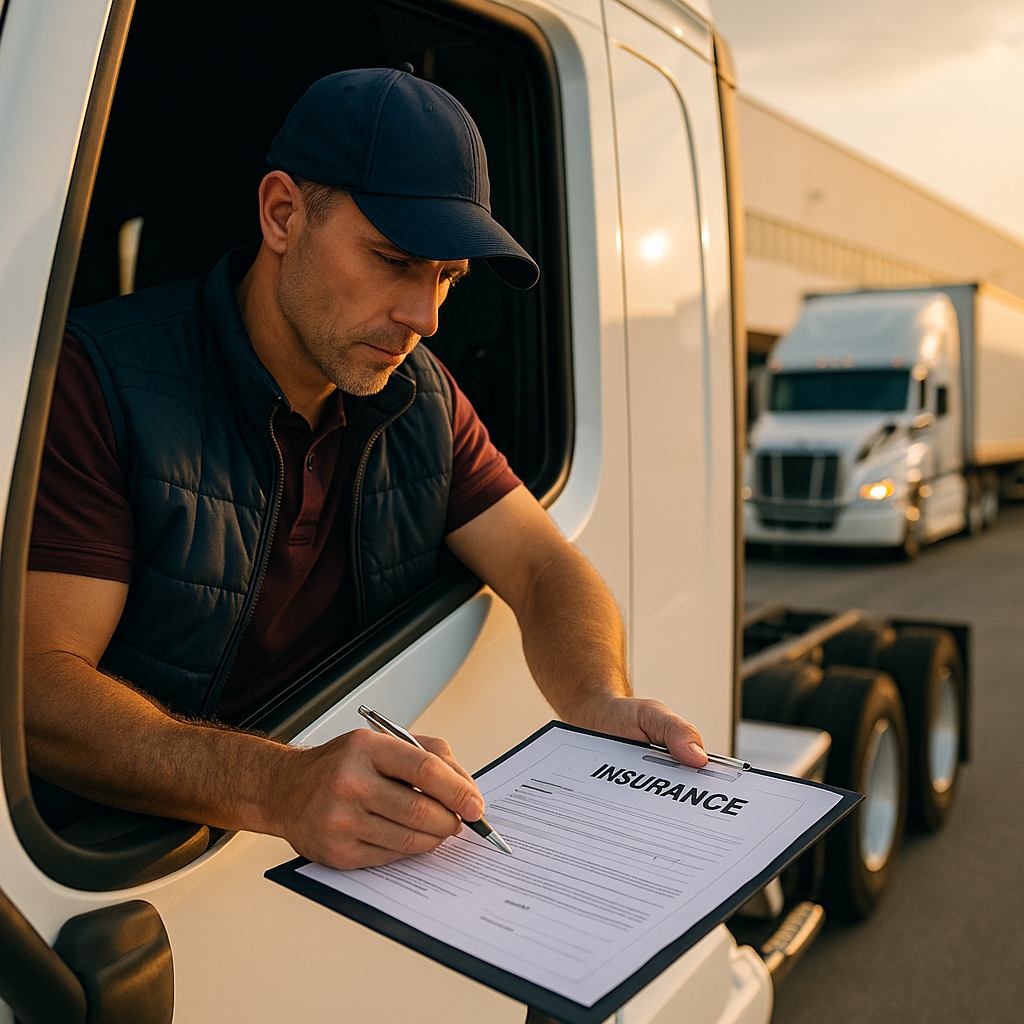
Searching “INC Insurance”? Learn common services, how to verify the right agency, and how to shop trucking insurance + semi truck insurance. Get a checklist.

If you searched INC Insurance while shopping commercial coverage, you’re not alone—and you’re also not guaranteed to be looking at one specific company. “Inc.” is a corporate suffix, so search results can show multiple unrelated agencies with similar names. This guide explains what “INC Insurance” usually means, the services these agencies commonly offer, and the fastest way to get a solid commercial truck insurance quote without leaking sensitive info to the wrong place.
If you’re not sure how agencies work behind the scenes, start with independent insurance agency vs. captive agent so you know whether you’re dealing with one carrier or a broker who can shop several.
Featured-snippet answer (What services does INC Insurance offer?):
INC Insurance search results usually point to an insurance agency offering a mix of business coverages (general liability, workers’ comp, commercial auto), and sometimes personal lines (life and health). Exact services vary by state licensing, carrier appointments, and whether the agency focuses on personal insurance or commercial accounts like trucking.
Key takeaways
- Verify the exact agency: “INC Insurance” isn’t always one company—confirm licensing, address, and the real domain before you share DOT/VIN details.
- Business policies aren’t enough for carriers: Trucking often needs auto liability, cargo, physical damage, and sometimes filings and special endorsements.
- Speed comes from paperwork: A current dec page, loss runs, vehicle list, and driver info usually cut quote time the most.
- Compare coverage, not just premium: Limits, deductibles, exclusions, COI turnaround, and claims support matter as much as monthly cost.
Table of Contents
Reading time: 8 minutes
What “INC Insurance” usually means in search results (and why it gets confusing)
“Inc.” is a legal business suffix meaning incorporated, so “INC Insurance” / “Insurance Inc.” can refer to multiple unrelated agencies across different states with similar names and branding.
What it is (plain English)
When you type “inc insurance” into Google, you may get directory listings, map results, and agency sites that look official but aren’t the same business. Sometimes “Inc.” is just part of a company’s registered name, not a unique brand.
Why it’s essential (business risk)
If you’re an owner-operator, giving the wrong shop your DOT/MC, VINs, driver info, or payment details wastes time at best. At worst, it can lead to quotes that don’t match your operation—or a policy that can’t be bound in your state.
- Operational mismatch: wrong radius, wrong vehicle use, wrong commodities, or wrong garaging state.
- Paperwork gaps: missing COI wording (additional insured, waiver of subrogation), slow endorsements, or wrong certificate holder details.
- Placement failure: the agent can’t write trucking with the carriers they have, so the quote never turns into a bindable policy.
Quick ID checklist before you request a quote (2 minutes)
- Confirm the domain: use the agency’s actual website (don’t rely on directories alone).
- Confirm the state(s) served: licensing is state-based, and availability varies.
- Confirm the line of business: personal, commercial, or both.
- Confirm trucking capability: ask directly if they write commercial truck insurance and what filings/COIs they can support.
If you’re specifically shopping truck coverage, get the terms straight first with commercial truck insurance basics—because trucking “auto insurance” is not the same as a personal policy.
INC Insurance services: common business coverages (and what they actually do)
Most agencies that show up for “INC Insurance” searches sell standard commercial policies like general liability, workers’ compensation, and commercial auto, but trucking usually needs additional coverages and paperwork beyond a typical small-business package.
General Liability (GL)
General liability insurance typically covers third-party bodily injury and property damage claims arising from non-auto operations, such as customer premises incidents or accidental damage at a dock.
GL is not a substitute for auto liability, and it usually won’t pay to repair your own truck or trailer. It’s most valuable when you have a yard, office, or exposure outside the cab.
- Common contract requirement: leases, shipper agreements, and some broker setups may ask for GL limits and certificates.
- Common misunderstandings: GL doesn’t replace auto liability, and exclusions (pollution, professional services, etc.) can matter.
For trucking-focused GL details, use general liability insurance for trucking companies.
Workers’ Compensation
Workers’ compensation pays for employee work injury medical costs and partial wage replacement, and it usually includes employer liability coverage—requirements vary by state and payroll setup.
If you have W-2 drivers, mechanics, or yard staff, workers’ comp is often the policy that keeps a single injury from becoming a cash-flow emergency.
- Who commonly needs it: fleets with W-2 drivers, shops with payroll, or any operation using paid helpers.
- Why it matters even when small: a serious injury claim can exceed what most small carriers can self-fund.
Other commercial coverages you may see bundled in
Depending on the agency, you may also see quotes for property/BOP, professional liability (E&O), and cyber coverage—especially if you store customer data or use dispatch/payment systems.
Trucking-specific note: If the agency doesn’t routinely write trucking, they may miss essentials like motor truck cargo, physical damage, or the COI/endorsement workflow brokers expect. Ask whether they regularly place trucking insurance accounts—not just generic business policies.
Quote-to-policy process for trucking insurance (what to expect, step by step)
A typical commercial truck insurance quote-to-bind workflow includes intake, driver/vehicle review, underwriting questions, quote comparison, and binding with first payment and certificates—most delays happen when underwriting is missing documents or details.
Step-by-step: from intake to bind
This is the normal flow for commercial truck insurance / semi truck insurance:
- Intake: DOT/MC, garaging address, operating radius, commodity, experience, prior coverage.
- Driver + vehicle review: driver list, MVR authorization, VINs, unit values, safety tech.
- Underwriting questions: loss history, contracts, dispatch model, broker/shipper requirements.
- Quotes: compare limits, deductibles, exclusions, and any required filings/endorsements.
- Bind: signatures + first payment, then COIs/endorsements issued and filings submitted if required.
Why this matters (time = money)
Every extra day in “we need one more thing” limbo can mean missed loads or rushed decisions at the last minute. A good agent doesn’t just send forms—they push underwriting forward and keep you in the loop.

For an agent-role overview, the U.S. Bureau of Labor Statistics describes typical insurance agent responsibilities here: https://www.bls.gov/ooh/sales/insurance-sales-agents.htm.
Documents that speed up your quote
Bring these up front to cut down back-and-forth:
- Current declarations page (if you’re switching)
- Loss runs (commercial history)
- Driver details (license, DOB, experience) + permission for MVR pulls
- Vehicle list: VINs, year/make/model, stated values
- If leased on: lease requirements + COI instructions
If you want the fastest turnaround, use this trucking-specific checklist: how to get a trucking insurance quote.
Frequently Asked Questions
Producer licensing and agency authorization are verified through official state insurance department databases, which you can access via the NAIC state insurance department directory at https://content.naic.org/state-insurance-departments.
“Inc Insurance Services” is commonly the name used by an insurance agency (or agency group) that may appear in search results, and the exact products offered depend on state licensing and carrier appointments. Before you request a quote, confirm the agency’s real website domain, matching phone number/address, and the state(s) they’re licensed to write in. Then ask whether they place your specific line of coverage (for example, trucking vs. personal auto) and whether they can meet broker COI wording and endorsement turnaround times.
There are multiple businesses using “Insurance Inc.” in their name, so the location depends on the specific company you found online. The fastest verification method is to check the official website’s Contact/About pages for the address and phone number, then confirm the agency or agent is active and licensed through your state insurance department. If you’re unsure which state to use, NAIC’s directory routes you to the correct state DOI: https://content.naic.org/state-insurance-departments.
Most INC-style agencies offer a mix of commercial and/or personal lines—commonly general liability, workers’ compensation, and commercial auto—based on what their state license and carrier contracts allow. If you’re a motor carrier, ask directly whether they write trucking insurance that includes auto liability, motor truck cargo, physical damage, and the COI/endorsement workflow your brokers require. If you employ W-2 drivers, review workers’ compensation for trucking businesses so you can separate what’s legally required in your state from what’s a smart risk decision.
You can verify an insurance agent’s license by using your state insurance department’s official producer license lookup, which NAIC links to here: https://content.naic.org/state-insurance-departments. Match the agent’s legal name and license status to the person you’re speaking with and confirm the license is active for the line of business (commercial vs. personal). If anything feels off, request the producer license number and the insurance carrier name in writing, because the agency (producer) and the carrier (insurer) are not the same entity.
Conclusion: Identify the right “INC Insurance,” then shop trucking coverage like a business owner
For-hire interstate motor carriers transporting property are generally subject to a $750,000 minimum public liability requirement under 49 CFR §387.9, and your insurance paperwork must match what brokers and shippers require to keep freight moving.
If you searched “INC Insurance,” your first job is identification: confirm you’re dealing with the right agency, in the right state, for the right coverage. Your second job is leverage: bring the dec page, loss runs, and unit/driver details so you get real quotes fast—and compare coverage terms, not just the monthly number.
Key Takeaways:
- Verify first: confirm the real website domain, state licensing, and the carrier issuing the policy before you share sensitive details.
- Speed the quote: provide a dec page, loss runs, driver list, and VIN/value schedule up front.
- Compare apples-to-apples: match limits, deductibles, exclusions, and certificate/endorsement turnaround time.
If you run hotshot or you’re stepping up into heavier equipment, start with hotshot insurance guide, then use a side-by-side method to compare trucking insurance quotes based on limits, deductibles, exclusions, and claims handling—not just premium.





