
If you’re shopping for log truck insurance Georgia owner-operators can actually use, the big issue is simple: state rules, FMCSA rules, and logging-specific risks don’t always line up cleanly. A Georgia log truck hauling timber across county lines may need a very different insurance setup than one crossing into Alabama or Florida.
This guide breaks down what log truck insurance usually covers, when Georgia rules stop and federal rules start, what changes if you run interstate, and why two trucks that look similar on paper can price very differently. The goal is clarity, not generic sales talk.
What Log Truck Insurance Covers in Georgia#
Log truck insurance in Georgia is usually a commercial insurance package built around your truck, the logs or timber products you haul, where you operate, and whether you run under state-only or federal authority. For most owner-operators, it means more than one policy because basic liability alone doesn’t cover the full risk of logging work.
A good starting point is to think of it as a bundle, not one single coverage. If you need a refresher on the foundation, these commercial truck insurance basics help frame the bigger picture.
Commercial auto liability for log trucks#
Commercial auto liability is the coverage that pays when your truck causes bodily injury or property damage to other people. It’s the core policy tied to legal operation, filings, and minimum limits.
For a log truck, this is only the starting point. Logging loads are heavy, routes can include rural roads and mill entrances, and the damage from a bad accident can be severe. That’s why you can’t treat a log truck like a personal pickup with a business use sticker on it.
Cargo, physical damage, and liability gaps#
Motor truck cargo is coverage for the property you’re hauling, subject to the policy terms and exclusions. Physical damage covers damage to your insured truck, usually through collision and comprehensive or fire and theft with combined additional coverage.
A common mistake is assuming one coverage replaces another. Cargo doesn’t repair your truck after a rollover, and physical damage doesn’t pay a third party because your load caused damage. General liability covers certain non-driving business liability exposures, while trailer-related coverage may matter if you pull a trailer you don’t own or use equipment under someone else’s terms.
What logging operations change compared with standard trucking#
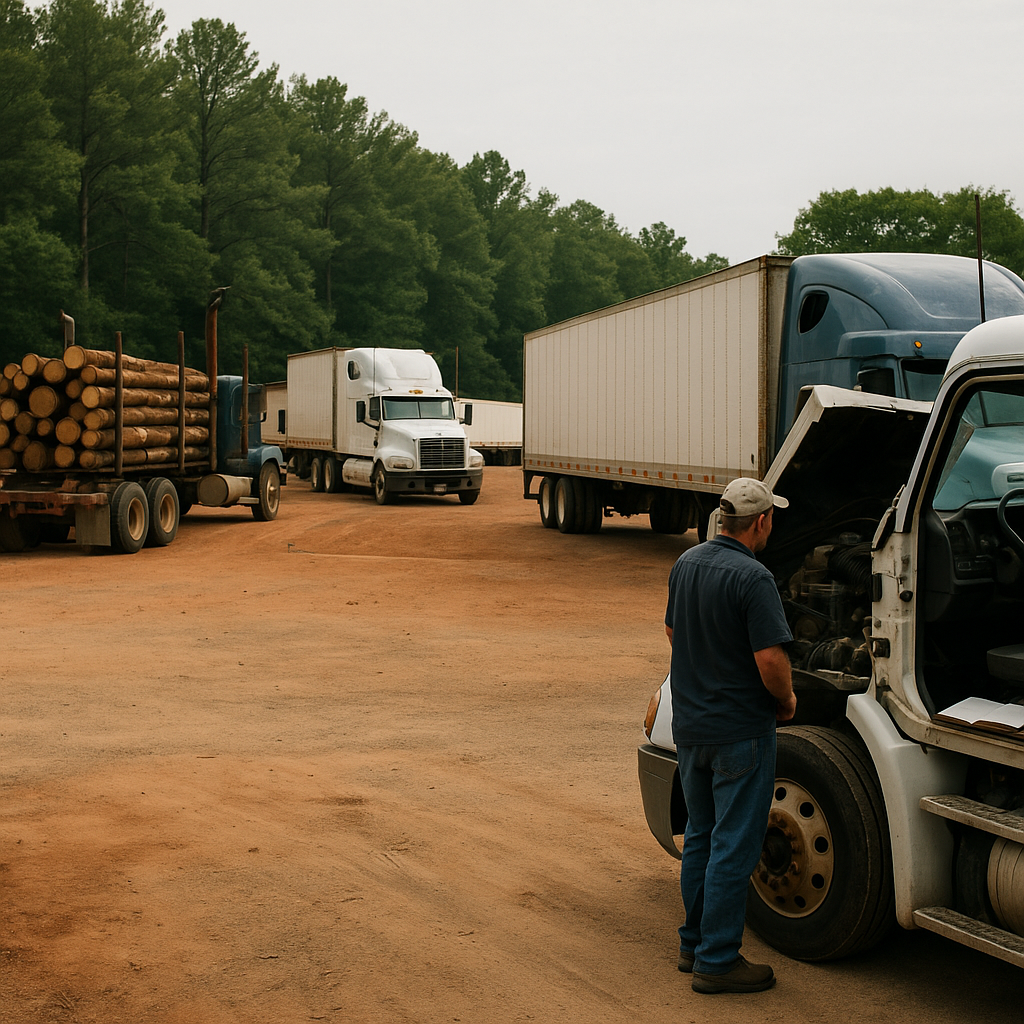
Logging changes the risk because the job often includes rough access roads, heavier wear, tighter loading areas, and more exposure around loading and unloading. A single-truck owner-operator hauling timber from a South Georgia tract to a mill may need a different setup than a local dump truck that stays on shorter paved routes and handles different material.
That difference shows up in limits, underwriting questions, and exclusions. Hauling logs isn’t just "general freight with a trailer." The operation itself changes how insurers look at the truck.
Georgia Requirements vs FMCSA Rules#
Georgia state requirements and FMCSA federal requirements are not the same thing, and mixing them up causes a lot of bad insurance decisions. Your registration, authority, and insurance filings depend on whether you operate intrastate or interstate, whether you’re for-hire or private, what the truck weighs, and what you haul.
State registration and insurance basics#
Georgia has its own state-level rules around registration, licensing, and insurance for commercial vehicles. For state guidance, owner-operators should verify the current rules with the Georgia Department of Driver Services and the Georgia Office of Commissioner of Insurance and Safety Fire.
Intrastate means you operate only within one state. A Georgia log truck that stays strictly inside Georgia may have a different compliance path than a truck set up to haul timber into neighboring states.
When FMCSA rules apply#
FMCSA is the Federal Motor Carrier Safety Administration, the federal agency that regulates interstate motor carriers. Federal rules usually come into play when your operation is interstate, not just because the truck is large or because someone told you "all truckers need the same limit."
Under FMCSA rules and 49 CFR Part 387, for-hire interstate carriers hauling general freight in vehicles over 10,001 pounds must carry at least $750,000 in public liability. That same federal framework also sets different minimums for other operations, including higher limits for some cargo types. If you need the filing side explained in plain English, this guide to FMCSA filing requirements is useful.
Why carrier type and operation matter#
Interstate means your operation crosses state lines or is part of trade moving across state lines. That’s where many Georgia log truck owners get tripped up.
A Georgia-based truck hauling logs only from a local tract to a Georgia mill may be set up one way. A truck making occasional trips into Alabama or Florida can trigger a different insurance and authority review. State minimums are not automatically your federal minimums, and "owned by an individual" does not make the truck personal-use for insurance purposes.
A simple rule: match the policy to the real operation, not the operation you wish were simpler.

Can Log Trucks Drive Interstate in Georgia?#
Yes, log trucks can drive interstate in Georgia, but legal operation and insured operation are not the same thing. If your log truck crosses state lines or is part of interstate commerce, your authority, filings, and liability setup may need to meet federal requirements, not just Georgia state rules.
What interstate operation means#
A lot of drivers hear "interstate" and think it only means running long haul. That’s too narrow. A Georgia truck that occasionally takes loads into South Carolina or Alabama is operating interstate, even if most of its work stays local.
That matters because the truck’s insurance has to reflect what it actually does. This is where interstate trucking insurance becomes a different conversation than a Georgia-only setup.
What changes when you cross state lines#
Crossing state lines can change your authority needs, your filing requirements, and the way underwriters classify your risk. It may also affect the minimum liability standard applied to your operation under 49 CFR Part 387.
A truck hauling logs only within Georgia might be quoted as a state-focused operation. The same truck taking even occasional loads into another state may need a broader compliance review before coverage is bound.
Common compliance mistakes#
The biggest mistake is assuming your Georgia setup automatically works for interstate hauling. The second biggest is assuming personal auto ideas apply because the truck is titled to an individual owner-operator.
They don’t. If the truck is used in a commercial logging operation, the insurance needs to match that business use. If you’re wrong on route type or authority, the problem usually shows up at the worst time: after a stop, after a filing issue, or after a claim.
If you’re not sure whether your operation is really intrastate or interstate,
How Much Does Log Truck Insurance Cost in Georgia?#
Log truck insurance in Georgia can vary widely, because the price depends on your truck, your operation, and your loss profile rather than one standard rate. Most owner-operators should expect quotes to move up or down based on driving history, truck value, radius, interstate exposure, cargo details, and prior claims.
The main cost drivers#
A few factors do most of the work. Your driving record matters because violations and accidents change how insurers view risk. Truck value matters because physical damage costs more on equipment that’s more expensive to repair or replace.
Your operating radius also matters. A truck running short in-state routes from timber tracts to local mills may be rated differently than one regularly moving across the Southeast. If you want a broader framework, these truck insurance cost factors explain why prices move so much.
Why quotes vary so much#
Two Georgia log trucks can both be single-truck owner-operators and still get very different quotes. One might have a clean record, stable intrastate routes, a lower-value truck, and several years of hauling experience. Another might be newer to the business, run interstate, finance a higher-value truck, and have a prior loss or inspection issues.
Cargo and operation details also matter. Hauling raw timber on rough rural roads is not the same risk as hauling boxed freight on mostly paved lanes. Even the garaging address and where the truck is regularly parked can influence the quote.
Monthly payment expectations#
Monthly payments depend on more than the annual premium. Down payment size, financing terms, deductibles, and which coverages you include can all change the monthly number.
For example, a policy with stronger physical damage coverage and lower deductibles may cost more each month than one with higher deductibles and fewer optional coverages. A higher-risk logging operation may also see stricter payment terms. Your actual premium depends on your operation, cargo, radius, driving history, and other factors.
Coverage Choices That Matter Most for Log Trucks#
The right log truck insurance setup depends on the actual work your truck does, not generic trucking advice. For Georgia logging operations, the key is understanding which coverage pays for damage to others, which protects the load, which protects your truck, and which gaps can still leave you exposed.
Liability and filings#
Commercial auto liability pays for bodily injury or property damage you cause to others with the truck. It’s the coverage tied most directly to legal operation and required filings.
That doesn’t mean every owner-operator needs the same limit. Requirements vary by carrier type, vehicle weight, cargo, and whether you operate interstate or intrastate. If you’re sorting out your options, this breakdown of commercial auto liability limits can help.
Cargo and load protection#
Motor truck cargo protects the load you’re hauling, subject to policy wording, load type, and exclusions. For log hauling, that matters because many operators assume "the load is covered somehow" without checking what kind of timber product is listed and under what conditions.
If you haul logs, pulpwood, timber products, or mixed loads depending on the season, make sure the quote reflects that. This guide to motor truck cargo coverage is a good place to start.
Physical damage and equipment protection#
Physical damage covers your truck when it’s damaged by collision or by covered non-collision causes such as theft, fire, or some weather events, depending on the form. It’s the coverage that helps when the truck itself is wrecked, not the load and not the third party.
This matters in logging because the truck may operate near mill sites, on logging roads, or on steep private land where rollovers, body damage, and equipment stress are more likely than in ordinary highway-only freight.
Optional coverages to review carefully#
General liability can matter if your business has exposures beyond the truck on the road. Trailer-related coverage can matter if you use a non-owned trailer or have a signed interchange agreement. Non-trucking liability or bobtail can matter in limited situations, but it does not cover paid hauling.
A common gap looks like this: the owner-operator buys liability and physical damage, assumes that covers "everything important," then finds out a cargo loss, trailer issue, or non-driving liability wasn’t part of the package. Logging operations are too specialized for guesswork.
How to Get the Right Quote in Georgia#
The fastest way to get an accurate Georgia log truck insurance quote is to gather the operational facts first and make sure they match what the truck really does. Good quotes come from good inputs: truck details, route details, cargo details, driver history, and the correct authority status.
What information to gather first#
Start with the VIN, year, make, and model of the truck. Then gather the garaging address, estimated operating radius, the states you run in, what timber or wood products you haul, and who will drive.
You should also know whether your operation is intrastate or interstate, whether you’re running under your own authority, and whether your USDOT and MC setup is active or pending. If you want to understand the process better, this explains how trucking insurance quotes work.
How to compare agencies and carriers#
Don’t compare quotes on price alone. Check whether the agency understands logging risks, can explain filings clearly, and can tell you what is excluded without hiding behind vague language.
For interstate operations, verify your carrier and authority details through SAFER. A solid quote review should also line up with what the FMCSA shows about your operation.
What to ask before buying#
Ask whether the quote assumes intrastate or interstate use. Ask how the cargo is classified. Ask what happens if you occasionally cross state lines or haul different timber-related loads during the year.
A time-pressed owner-operator in Georgia doesn’t need a generic form and a mystery premium. They need a human who can say, "Here’s what your setup appears to be, here’s where the compliance risk is, and here’s what this policy does and doesn’t cover."
Ways to Lower Cost Without Breaking Compliance#
You can lower log truck insurance cost by improving the real risk, classing the operation accurately, and choosing coverage that fits the work. The safest savings usually come from cleaner records, realistic deductibles, stable operations, and avoiding coverage you don’t need while keeping the coverage you do.
What can reduce risk legitimately#
A clean driving record helps over time. So does consistent route information, accurate cargo descriptions, and a truck that’s maintained and garaged in a way the insurer understands.
If you’re strictly intrastate, make sure the quote reflects that. If you’re interstate, disclose it clearly. Accuracy helps more than "shopping the story."
What to avoid#
Don’t underreport radius. Don’t say the truck stays in Georgia if it occasionally runs into Florida. Don’t list cargo in a generic way if you’re really hauling logs or timber products.
Those shortcuts can create filing problems, claims disputes, or both. A cheaper-looking quote that doesn’t fit your real operation can turn into the most expensive mistake on the truck.
Practical examples for owner-operators#
One owner-operator may improve quote quality just by cleaning up MVR issues over time and tightening how the truck is used. Another may find that raising a deductible on physical damage makes sense because the truck is older and the business can absorb smaller repairs.
The key is to trim mismatch, not protection.
Next Steps for Georgia Log Truck Owners#
The next step is to confirm what kind of operation you really have, then shop coverage around that reality. Start by answering three questions: do you run intrastate or interstate, what exactly do you haul, and what coverages protect both the truck and the load?
Before you request quotes, gather the truck details, driver history, route footprint, and authority status. If something is unclear, fix that first. A clean setup gets better answers faster.
FAQ#
How much is insurance on a log truck?
Log truck insurance cost varies widely, so there isn’t one reliable flat number. The quote usually depends on the truck’s value, the driver’s record, years of experience, operating radius, whether the truck runs interstate or intrastate, the type of timber or wood products hauled, and any prior losses. Physical damage, cargo, and liability choices also change the price.
Two owner-operators in Georgia can get very different quotes even if both have one truck. A newer, financed truck running interstate with a recent claim will usually price differently than an older paid-off truck on clean intrastate routes. Monthly cost also depends on down payment, deductibles, and financing terms.
Can log trucks drive on the interstate in Georgia?
Yes, log trucks can drive on the interstate in Georgia if the carrier, authority, and insurance are set up for interstate operation and the business complies with the applicable rules. The important point is that "can drive on the interstate" is not just a road-use question. It’s also an authority, filing, and insurance question.
If a Georgia log truck crosses into another state, that can trigger federal requirements under FMCSA rules, including financial responsibility standards under 49 CFR Part 387 depending on the operation. A truck that stays strictly intrastate may have a different setup. The insurance needs to match what the truck actually does, not what the owner hopes to report.
Do Georgia state minimums count as my federal trucking requirement?
Not always. Georgia state minimums and federal FMCSA requirements are separate issues, and one does not automatically satisfy the other. Federal requirements depend on factors like whether you’re for-hire or private, whether you operate interstate, the truck’s weight, and what commodity you haul.
For example, under 49 CFR Part 387, for-hire interstate carriers hauling general freight in vehicles over 10,001 pounds must carry at least $750,000 in public liability. That does not mean every trucker has the same federal minimum. Requirements vary by carrier type, vehicle weight, cargo, and whether you operate interstate or intrastate.
What coverage do most Georgia log truck owner-operators need besides liability?
Most Georgia log truck owner-operators look at more than just commercial auto liability. Depending on the operation, common coverages include motor truck cargo for the load, physical damage for the truck itself, general liability for certain business exposures, and trailer-related coverage if a non-owned trailer is involved.
The right mix depends on how the truck works. If you haul logs on rough access roads to mills, physical damage becomes especially important. If the load itself is valuable or contractually your responsibility, cargo matters. If you cross state lines or change what you haul seasonally, the quote should be reviewed so coverage and filings still fit the operation.
What should I have ready before I ask for a log truck insurance quote in Georgia?
Have the truck details, business details, and operating details ready before you start. That usually means the VIN, year, make, model, garaging address, who drives the truck, driving history, expected radius, the states where you operate, what timber-related cargo you haul, and whether you’re intrastate or interstate.
You should also know your USDOT status and, if applicable, your MC number status. For a logging operation, be ready to answer where the truck runs, whether it goes onto private land or mill sites, and whether you ever cross state lines. The more accurate your information is up front, the more useful the quote will be.





