
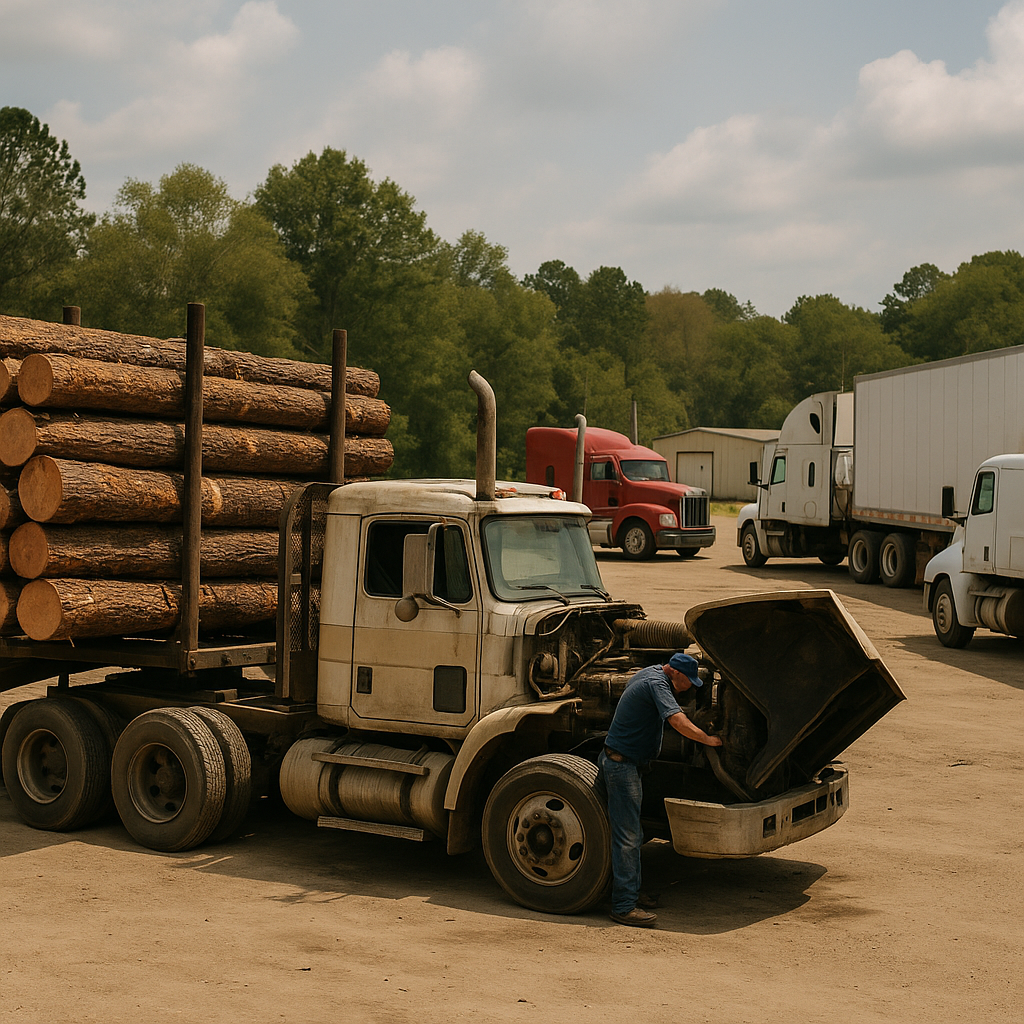

If you’re shopping for log truck insurance Mississippi operators actually need, the first thing to know is this: a log truck needs commercial trucking coverage, not personal auto. The right policy depends on what you haul, where you run, your truck, and whether your operation falls under Mississippi rules, FMCSA rules, or both.
What Mississippi Log Truck Insurance Covers#
Log truck insurance is commercial insurance built for logging-related hauling, not a personal auto policy with a business label. Most Mississippi log truck operators need some mix of liability, truck protection, cargo protection, and business liability, and the right mix changes based on cargo, truck value, operating radius, and whether the operation is interstate or intrastate.
Core coverages for log trucks#
Auto liability means coverage for injuries or property damage you cause to others in a crash. For log trucks, that usually starts with commercial auto coverage, because personal auto insurance usually won’t fit a truck used in logging or for-hire hauling.
Motor truck cargo means coverage for damage to the freight you’re hauling, subject to the policy terms. If you’re moving timber, pulpwood, or related loads for hire, motor truck cargo insurance may matter just as much as liability.
Physical damage means coverage for your own truck from collision or other covered losses like fire, theft, or weather. If the truck has real value or a lender interest, this is often one of the first coverages owners ask about.
How logging operations differ from general trucking#
Logging isn’t just "general freight with a different trailer." Log trucks often run rough roads, load in remote areas, face shifting-load concerns, and may operate on schedules or routes that increase loss exposure.
That changes how underwriters look at the risk. A cheap quote can look fine until you realize it left out cargo, used the wrong operating description, or quoted limits that don’t match how the truck actually runs.
Common gaps to avoid#
The biggest mistake is buying a policy that matches the truck but not the operation. A Mississippi log truck owner-operator might need liability, cargo, and physical damage, while a different operation may also need general liability or trailer-related coverage.
Another common gap is assuming any "business auto" policy works for a logging truck. It may not. Trucking coverage has to match whether you’re for-hire or private, what you haul, and how the truck is used day to day.

Mississippi Rules vs. FMCSA Requirements#
Mississippi rules and FMCSA rules are not the same thing, and one does not automatically replace the other. State requirements can affect registration and in-state operations, while federal insurance rules apply based on carrier type, vehicle weight, commodity, and whether you operate interstate under FMCSA authority.
State rules that affect Mississippi operations#
If you operate only inside Mississippi, state rules may control more of your insurance setup than federal authority does. That can include registration context, vehicle class, and state-level operating expectations, which is why Mississippi-specific questions should be checked with the Mississippi Department of Transportation and Mississippi Department of Insurance.
The mistake is assuming Mississippi’s minimum requirement is your full answer. For a trucking business, especially logging, that can leave a big compliance gap.
FMCSA requirements for interstate trucking#
FMCSA is the Federal Motor Carrier Safety Administration, the federal agency that regulates interstate trucking. Under FMCSA insurance requirements and the financial responsibility rules in 49 CFR Part 387, for-hire interstate carriers over the common weight threshold can face different minimum liability requirements depending on what they haul.
For example, under 49 CFR Part 387, for-hire interstate carriers hauling general freight in vehicles over 10,001 pounds must carry at least $750,000 in public liability. Auto haulers face a higher minimum, and certain hazmat operations can require $5,000,000. That rule comes from federal law, not a Mississippi shortcut, and it doesn’t mean all truckers need the same limit. FMCSA guidance at fmcsa.dot.gov and carrier status checks on SAFER are the place to verify authority and filing status.
Why the distinction matters before quoting#
BIPD means bodily injury and property damage liability to the public. If a quote is built on the wrong BIPD requirement, the wrong cargo class, or the wrong operating scope, it can look affordable and still be unusable.
That happens a lot when someone shops a personal auto policy or a generic business policy instead of trucking-specific coverage. Before you compare quotes, make sure the policy reflects whether you’re for-hire or private, your MC number status, your USDOT operation, your truck weight, and whether you cross state lines.
How Much Log Truck Insurance Costs in Mississippi#
Log truck insurance in Mississippi does not have one statewide price because underwriting is based on risk, not a standard truck type. Your premium depends on the driver, truck, cargo, route, claims history, limits, deductibles, and whether the policy actually includes the coverages your operation needs.
What drives pricing#
A few factors move the quote more than anything else:
- driving history
- years of CDL and business experience
- hauling radius
- cargo type
- truck age and value
- prior claims
- chosen deductibles and limits
Deductible means the amount you pay out of pocket before the policy pays on a covered claim. Policy limit means the maximum the insurer will pay for a covered loss, a concept also explained in plain language by NAIC.
Why two similar trucks may quote differently#
Two log trucks that look almost identical on paper can quote very differently. One may stay in Mississippi hauling a tighter radius, while another crosses state lines, runs longer hours, or has a different authority setup.
The same goes for the driver and the business. A newer venture, recent losses, or a mismatch between the application and the real operation can change pricing fast.
How to sanity-check a quote#
A low quote isn’t automatically the right quote. If it leaves out cargo, physical damage, or uses the wrong liability structure, it may not protect the operation you actually run.
The same caution applies when people ask how much a $1,000,000 liability policy costs. A $1,000,000 limit is just a liability limit choice, not a universal truck insurance product. For some operations, it may be common in the market conversation even when the federal minimum is different. The premium tied to that limit still depends on the carrier type, operating area, unit, loss history, and underwriting details.
Can Log Trucks Drive at Night in Mississippi?#
There is no safe blanket yes-or-no answer for night driving because it depends on the exact operation. A Mississippi log truck may be able to run at night in some situations, but the real answer can turn on route rules, permits, employer policy, cargo handling requirements, and any applicable state or federal restrictions.
What to verify before dispatch#
Check the route, permit terms, customer requirements, and any equipment or load restrictions before assuming night operations are allowed. Logging roads, local roads, and state highways may not all be treated the same.
How operating rules can affect coverage#
Insurance follows the described operation. If the quote assumed one type of route or schedule and the truck actually runs under different conditions, that can create problems when a claim happens.
When to confirm with the carrier and regulators#
If night driving is part of the plan, confirm it with the insurer, your dispatcher or shipper, and the relevant Mississippi or FMCSA authority before dispatch. Don’t assume a quote covers every hauling time or condition just because the truck is insured.
Coverage Choices That Matter Most for Log Truck Operators#
The coverages that matter most usually protect three things: damage you cause to others, damage to your own truck, and damage to the load. After that, the right add-ons depend on whether you’re an owner-operator, a company-owned unit, or a small fleet with different trailer and employee exposures.
Liability and cargo basics#
Liability usually comes first because it’s tied to legal and regulatory requirements. Cargo comes next for many for-hire operators because a claim involving timber or logging-related freight can become expensive fast.
General liability means coverage for certain non-driving third-party claims against the business, such as some premises or operations claims. It’s not a substitute for truck auto liability, but some logging businesses may still need it depending on how they operate.
Physical damage and equipment protection#
Physical damage matters when the truck itself is a major business asset. If the unit is financed, recently upgraded, or hard to replace, collision and comprehensive-style protection usually deserve a close look.
Trailer-related coverage is more specific. Trailer interchange applies when you have a signed interchange agreement for a non-owned trailer. Non-owned trailer physical damage is often the more practical fit when you’re responsible for a trailer you don’t own without that signed interchange setup.
Optional coverage that may fit a logging business#
Non-trucking liability means coverage for certain non-business use of a truck when it’s not under dispatch and not hauling for pay. Some owner-operators ask for this and may know it by the market term bobtail insurance, but it does not cover paid hauling.
Not every option fits logging. Reefer coverage usually won’t matter for log trucks, and some coverage combinations aren’t written by every carrier. LogRock specializes in trucking insurance for owner-operators and small fleets, so if you’re not sure what fits your operation, LogRock can help you scope it.
How to Get a Quote Without Buying the Wrong Policy#
A good log truck quote starts with accurate operating details, not just a truck VIN. To quote the right policy, the insurer or broker needs to know the truck, drivers, cargo, operating radius, authority status, and current coverage so the policy matches the real operation.
Information to gather first#
Have these details ready:
- VINs and unit details
- driver license and loss history
- cargo type
- normal operating radius
- interstate or intrastate scope
- USDOT or MC number status
- current declarations page, if you have one
Questions to ask before binding#
Ask whether the quote is based on logging-related hauling, whether the liability setup matches your operation, and whether cargo and physical damage are included or optional. Also ask whether any filings are needed and whether the quote assumes for-hire or private use.
Signs a quote may be incomplete#
Be cautious if the quote is vague about cargo, operating area, or filings. Missing filings, the wrong cargo class, or a mismatch on authority can create expensive coverage gaps later.
When to Review Additional Coverage for Logging Businesses#
Some logging businesses need more than truck insurance alone. If the business has employees, equipment, a yard, or jobsite activity beyond hauling, you may need to review additional coverages instead of assuming auto liability handles everything.
Equipment and tools#
If the business owns loaders, chainsaws, support equipment, or other gear not attached to the truck policy, ask whether they need separate protection. Truck insurance may not fully cover those items.
Business liability beyond the truck#
General liability may make sense if your business has exposures away from the driving operation. That depends on how the business is structured and what happens at loading sites, yards, or customer locations.
Workers compensation considerations#
Workers compensation usually becomes a bigger question when employees are involved. If you’re a true one-truck owner-operator with no employees, the answer may be different than it is for a small fleet or logging business with staff.
FAQ#
How much is log truck insurance in Mississippi?
There isn’t one standard Mississippi price for log truck insurance. The premium depends on the truck, driver history, hauling radius, cargo, claims record, operating authority, and the coverages you select. A quote that includes liability only can look very different from one that also includes cargo and physical damage.
The best way to judge a quote is to compare the structure, not just the dollar figure. Make sure each option uses the same operating description, same limits, and same key coverages. Otherwise, you’re not comparing apples to apples.
How much is insurance for a log truck?
Insurance for a log truck is priced on risk, not just on the fact that it’s a logging unit. Underwriters look at the business setup, whether the truck is for-hire or private, whether it runs interstate or only in-state, the driver’s background, the value of the truck, and the policy design.
That means the same truck can quote differently depending on authority status, hauling radius, claim history, and whether the quote includes cargo or physical damage. If two quotes are far apart, check what was included before assuming the cheaper one is better.
Can log trucks drive at night in Mississippi?
Sometimes they can, but you shouldn’t assume the answer is always yes. Night driving can depend on the route, local restrictions, permit terms, shipper rules, employer policy, and any state or federal rules that apply to the specific operation.
The practical move is to verify the exact setup before dispatch. Check the route, permit conditions, and insurer assumptions. If the policy was quoted for one kind of operation and the truck is actually running different conditions, that can create trouble later.
How much does a $1,000,000 liability insurance policy cost?
A $1,000,000 liability policy doesn’t have one fixed price because that limit is only one part of the risk. The premium still depends on the carrier type, the truck, the cargo, operating area, safety history, and whether the operation is intrastate or interstate.
It also matters whether the quote is for liability only or part of a broader package. If you’re researching this number because you’ve heard "$1,000,000 is standard," treat it as a market comparison point, not a universal rule. Your required minimum may be different, and your actual premium depends on your operation, cargo, radius, driving history, and other factors.





