Log truck insurance Oregon operators need isn’t the same thing as a personal auto policy with higher limits. If you’re hauling timber, running under your own authority, or crossing state lines, your coverage needs depend on how you operate, what you haul, and whether Oregon rules or FMCSA rules apply.
This guide breaks down what log truck insurance covers, how Oregon and federal requirements differ, what drives cost, and where owner-operators get tripped up.
What Log Truck Insurance Covers in Oregon#
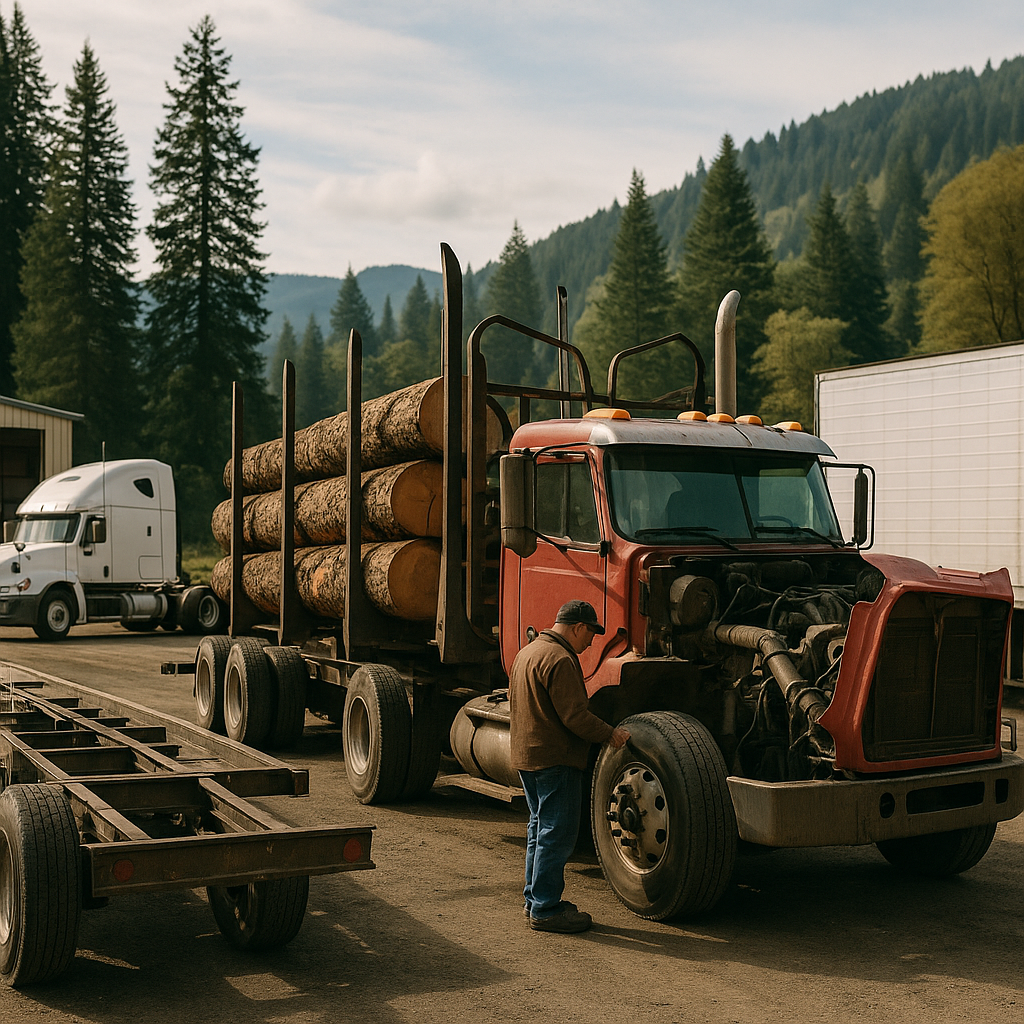
Log truck insurance is commercial insurance built for trucks used to haul logs, timber, or related loads as part of a business. In Oregon, the right setup usually includes auto liability plus any extra coverages your operation needs for cargo, truck damage, trailers, and off-duty use.
A logging truck isn’t just “a truck used for work.” It’s a commercial risk with heavier equipment, rougher roads, different cargo issues, and often a bigger gap between a basic policy and what the actual job requires. That’s why generic advice about trucking insurance can miss the mark for timber hauling.
Core coverages for timber hauling#
Auto liability pays when your truck causes bodily injury or property damage to others. This is the coverage tied most directly to state filings and FMCSA financial responsibility rules.
Motor truck cargo covers damage to freight you’re hauling, subject to the policy terms. If you’re hauling timber for hire, cargo treatment matters, and not every setup handles every commodity the same way. If you want a broader breakdown of commercial truck insurance guide basics, that helps frame where cargo fits.
Physical damage covers damage to your own truck. In trucking, that usually means collision and comprehensive, or fire and theft with combined additional coverage. Collision shouldn’t be treated like a standalone decision on a working truck without looking at the rest of the physical damage package.
General liability covers certain non-driving business liability exposures. For trucking, that usually means incidents not caused by operating the truck on the road.
Non-trucking liability covers personal, non-business use of the truck when you’re not under dispatch. Bobtail usually refers to driving a tractor without a trailer attached, but the coverage question is still about what you were doing at the time. A lot of owner-operators mix these up, so it helps to review bobtail and non-trucking liability in plain English.
Trailer interchange covers a trailer in your care under a signed interchange agreement. If there is no signed interchange agreement, a different trailer coverage discussion may apply.
How logging operations differ from general trucking#
Logging operations often involve tougher terrain, different loading patterns, specialized trailers, and cargo that doesn’t fit the assumptions behind a generic general-freight policy. A truck that’s fine on paper for ordinary freight may still be mismatched for timber hauling.
Coverage should match your carrier type, vehicle weight, commodity, route scope, and whether you run intrastate or interstate. That matters more than the label on the quote.
What LogRock writes for log trucks#
LogRock specializes in trucking insurance for owner-operators and small fleets. For eligible operations, that can include auto liability, motor truck cargo, general liability, physical damage, non-trucking liability, trailer interchange, non-owned trailer physical damage, and reefer breakdown where relevant.
Not every logging-related risk is a fit. Some specialized or excluded operations may fall outside LogRock’s writing appetite, so the key is scoping the operation correctly before anything gets bound.
Oregon Rules vs. FMCSA Requirements#
Oregon rules and FMCSA rules are not the same thing. Oregon insurance requirements generally tie to how your vehicle is registered and operated in the state, while FMCSA rules apply when your operation falls under federal interstate trucking requirements and financial responsibility rules.
This is where a lot of owner-operators get bad advice. Someone says, “Oregon only needs X,” or “all truckers need Y,” and both can be wrong because the real answer depends on where you run, what you haul, how heavy the truck is, and whether you’re for-hire or private.
When Oregon rules apply#
If you operate only inside Oregon and your work is intrastate, Oregon state rules are usually the first place to look for registration and insurance context. The Oregon DMV and Oregon insurance regulators are the right sources for state-specific requirements tied to vehicle use and registration.
State minimum insurance rules are one concept. They help govern legal operation within the state system. But they do not automatically tell you what a broker, shipper, lender, or federal regulator will require for a commercial logging operation.
When federal trucking rules apply#
If you haul interstate freight, run under federal operating authority, or otherwise fall under federal motor carrier rules, FMCSA requirements come into play. FMCSA is the Federal Motor Carrier Safety Administration, the federal agency that regulates safety and certain insurance filings for motor carriers.
Under FMCSA rules and 49 CFR Part 387, financial responsibility minimums depend on carrier type, vehicle weight, and commodity. Under 49 CFR Part 387, for-hire interstate carriers hauling general freight in vehicles over 10,001 pounds must carry at least $750,000 in public liability. That does not mean all truckers need $750,000.
Here are the minimums that get repeated most often, but they have to be scoped correctly:
- Under 10,000 pounds: $300,000
- Over 10,001 pounds for-hire interstate general freight: $750,000
- Auto haulers: $1,000,000
- Hazmat: $5,000,000
If you’re hauling logs only within Oregon, that doesn’t automatically put you under the same federal requirement as an interstate for-hire carrier. On the other hand, crossing a state line, hauling federally regulated freight, or operating under interstate authority can change the picture fast.
Intrastate vs interstate liability limits#
Intrastate means you operate within one state. Interstate means your operation crosses state lines or is part of interstate commerce, even if your truck itself doesn’t always cross the border.
A simple way to think about it:
| Question | Oregon-only operator | Interstate operator |
|---|---|---|
| Main rule set | State registration and insurance context | FMCSA plus state rules |
| Liability baseline | Depends on Oregon use and class | Depends on Part 387 scope |
| Key variables | Vehicle use, registration, business use | Weight, for-hire status, cargo |
| Authority issue | May not need federal authority | Often tied to USDOT and MC status |
A USDOT number is the identifier used by FMCSA to track safety records and inspections. An MC number is operating authority for certain for-hire interstate carriers. If you’re not sure which bucket you’re in, that’s exactly the kind of mistake to fix before you buy coverage.
A bad mismatch here can leave you legally operating one way and insured another way. If your current policy was built off a half-right assumption,
Do You Need Commercial Insurance for a Work Truck?#
If your work truck hauls goods, serves a business, or operates in logging or timber hauling, you usually need commercial insurance rather than personal auto coverage. The issue isn’t whether the truck looks like a personal vehicle; it’s whether the way you use it creates a commercial exposure.
A lot of Oregon operators start with a pickup, flatbed, or straight truck and assume a personal policy with business use is close enough. For real hauling work, that’s often where the trouble starts.
Personal auto vs commercial auto#
Commercial auto is insurance written for vehicles used in business operations, especially when they haul goods, carry tools or equipment, or create higher liability exposure than normal household driving. A personal auto policy is designed around private use, not for-hire hauling or business trucking.
That matters even if the truck spends some time parked at home. Once you’re using it for logging jobs, hauling timber, pulling work trailers, or running a business operation, the policy needs to match that use.
Who needs a business-use policy#
If you own a truck and use it to make money, haul materials, or support a business, you should assume commercial coverage is the starting point until an agent confirms otherwise. That includes owner-operators, contractors hauling their own loads, and drivers using pickups or medium-duty trucks for logging-related work.
The safest approach is to match the policy to the operation, not to the truck’s appearance. A one-ton pickup used in business can still be a commercial insurance issue.
If you’re sorting out the difference between business use and trucking use, these owner-operator insurance basics make the distinction easier to spot.
Common signs your truck is misclassified#
Your truck may be insured under the wrong policy type if:
- You haul goods for money but have a personal auto policy
- You use the truck for business every day but described it as personal use
- You pull work trailers or haul timber without cargo or trailer discussions
- You cross state lines but never reviewed federal authority or liability scope
The danger isn’t just paperwork. A misclassified truck can create claim disputes, coverage gaps, or a policy that technically exists but doesn’t fit the operation you actually run.
How Oregon Log Truck Insurance Cost Is Determined#
Oregon log truck insurance cost is driven by the operation behind the truck, not just the truck itself. Your premium depends on things like radius, interstate or intrastate use, commodity, truck value, driving history, prior losses, garaging location, and the coverages and limits you choose.
That’s why “what does it cost per month?” is a fair question but not one with a clean universal answer. Two log trucks that look similar can price very differently if one stays local and the other runs longer distances under different authority.
Main rating factors#
Insurers usually start with the basics: what unit you’re insuring, who drives it, where it’s garaged, and how it’s used. Then they get into the operation details that really move the premium.
The biggest cost drivers often include:
- Whether you operate intrastate or interstate
- Whether you’re for-hire or hauling your own property
- Your cargo type and how the insurer classifies it
- Vehicle weight and trailer setup
- Truck value and physical damage choices
- Driver history, years of experience, and losses
- Operating radius and territory
- Prior coverage history and lapses
Logging exposure can change the equation because timber hauling may bring different road conditions, loading exposures, trailer issues, and physical damage concerns than standard dry-van freight.
Why monthly cost varies#
Monthly cost is just the annual premium broken into installments if the carrier allows it. The real question is what risk the insurer thinks it’s taking on.
Searches like “log truck insurance cost per month” usually come from operators trying to budget before they shop. That’s reasonable, but any average you hear should be treated as rough background, not a quote. Your actual premium depends on your operation, cargo, radius, driving history, garaging, and other factors.
How to avoid overbuying#
The goal isn’t to buy the biggest policy stack somebody on a forum mentions. It’s to buy coverage that fits your operation, satisfies legal and contract requirements, and leaves fewer ugly surprises at claim time.
That usually means asking practical questions:
- What liability limit actually applies to my operation?
- Do I need cargo for the loads I haul?
- Is my trailer exposure covered the right way?
- Do I need non-trucking liability for off-duty use?
- Is my truck value insured realistically for physical damage?
Cheap-looking coverage can get expensive if it leaves out the part of the job that causes the loss. The better move is a tight fit, not a random bigger number.
Specialized Coverage for Logging and Timber Hauling#
Logging and timber hauling often need more than a generic trucking policy outline. The right setup depends on how the load is treated, what equipment is involved, who owns the trailer, and whether the policy language actually matches the work.
This is also where industry slang causes confusion. A familiar label can sound reassuring while hiding the fact that nobody checked the actual terms.
Loggers broad form insurance#
Loggers broad form insurance usually means a broad insurance package associated with logging operations, but it is not one universal standard policy definition. Different agents and carriers may use the term differently, so the name alone doesn’t tell you what is actually covered.
For one operator, that phrase may refer to liability and property coverage around a logging business. For another, it may get used loosely for a package that still leaves hauling-related gaps. That’s why policy wording matters more than the slang.
If your real exposure is hauling timber by truck, the important question is whether the commercial auto, cargo, trailer, and truck damage pieces are scoped for that hauling operation.
Cargo and equipment considerations#
Motor truck cargo becomes especially important when the load itself creates exposure and contract expectations. If timber hauling is part of your business, don’t assume cargo is automatic or that every commodity is treated the same. This deeper look at motor truck cargo coverage helps sort out where freight protection starts and stops.
Equipment and trailer issues matter too. If you’re hauling with a trailer you don’t own, the question is whether you need trailer interchange or non-owned trailer physical damage, and that depends on whether there’s a signed interchange agreement.
Physical damage also deserves a hard look. Logging routes and yards can be rough on trucks, and an undervalued unit can leave you short after a major loss.
Coverage gaps to watch#
The common gaps in logging-related operations usually come from assumptions like these:
- “My personal policy should be fine because it’s just a work truck.”
- “The state minimum is enough, so I’m covered.”
- “Cargo is included automatically.”
- “Any trailer coverage is the same.”
- “Broad form means everything important is handled.”
Those shortcuts are where bad surprises live. The fix is simple: match the wording to the operation, and make sure the policy was built for hauling timber instead of general trucking in the abstract.
Common Mistakes Oregon Log Truck Operators Make#
Most Oregon log truck insurance mistakes come from using the wrong shortcut. Operators rely on a forum comment, assume a state minimum covers everything, or buy a policy built for a different kind of trucking.
The problem isn’t lack of effort. It’s that trucking insurance rules split between state and federal requirements, and policy labels don’t always explain what they leave out.
Confusing state minimums with federal requirements#
Oregon state minimums and FMCSA financial responsibility rules are different things. A truck can meet one baseline and still fall short of what applies to its authority, cargo, or contract demands.
That matters most for operators who start intrastate and later take loads that pull them into interstate commerce. The insurance should change with the operation.
Buying the wrong policy type#
A personal auto policy on a business hauling truck is one of the most common mismatches. So is buying a generic trucking policy that was priced around general freight, then assuming it fits logging exposure without checking commodity, trailer, and route details.
Another frequent mistake is treating non-trucking liability like on-the-job coverage. It isn’t. Non-trucking liability applies to non-business use, not paid hauling.
Ignoring excluded or unsupported operations#
Some operations fall outside a brokerage’s or carrier’s appetite. That’s not automatically bad news, but it does mean you need to know it before binding instead of after a claim.
The practical move is to spell out exactly what you haul, where you run, what kind of trailer setup you use, and whether you operate intrastate or interstate. That up-front scoping prevents a lot of expensive confusion later.
How to Get a Quote for Oregon Log Truck Insurance#
Getting a quote for Oregon log truck insurance is really a matching process. The agent needs your truck details, cargo, route type, authority, driver history, and coverage needs so the policy can be scoped to your actual logging or timber-hauling operation.
This matters because a fast quote that starts from the wrong assumptions isn’t actually fast. It just delays the mistake until later.
What information to have ready#
Before you ask for quotes, gather the details that shape the risk:
- Truck year, make, value, and VIN
- Trailer type and whether you own it
- Commodity hauled and whether you haul for-hire
- Intrastate or interstate operating scope
- Garaging ZIP and usual radius
- Driver license details, experience, and loss history
- USDOT number and MC number, if applicable
- Current or prior insurance information
If you’re unsure whether you’re set up as an interstate carrier, check your status through SAFER. SAFER is FMCSA’s Safety and Fitness Electronic Records system, which shows carrier registration and operating status.
How an agent matches coverage to your operation#
A good agent doesn’t just ask, “How many trucks?” They ask what you’re hauling, whether you’re under dispatch, whether the trailer is owned or borrowed, whether your operation is Oregon-only or interstate, and what contracts or lenders require.
That’s where a modern brokerage approach helps. Clear intake, trucking-specific knowledge, and dedicated human support usually get you to the right coverage structure faster than a generic online form that treats a log truck like any other commercial vehicle.
Compare coverage terms, not just premium. Two quotes can look close until you find out one handles the operation correctly and the other was built off the wrong class code or use description.
Questions to ask before binding#
Before you bind, ask:
- Is this policy scoped for log hauling or timber-related trucking?
- Does it reflect intrastate or interstate use correctly?
- What exclusions apply to my cargo or route type?
- How is trailer exposure covered?
- What happens when I’m off dispatch?
- Does the truck value used for physical damage make sense?
FAQ#
What is the no pay no play law in Oregon?
Oregon’s no pay, no play rule generally limits what certain uninsured drivers can recover after a crash, especially for noneconomic damages in some situations. The key point for log truck operators is that this rule is separate from trucking insurance requirements and does not tell you what commercial coverage your operation needs.
In other words, don’t confuse an uninsured-driver penalty rule with commercial trucking compliance. Whether you need commercial auto, cargo, or FMCSA-level liability depends on your truck use, business activity, authority, and route type. The no pay, no play question is more about crash recovery rights than about building a valid log truck insurance policy.
What is loggers broad form insurance?
Loggers broad form insurance is a loose marketplace term, not one single standard policy definition used the same way everywhere. People often use it to describe broad coverage for logging-related businesses, but the label itself does not confirm what your trucking, cargo, trailer, or liability policy actually covers.
That means you should treat the phrase as a conversation starter, not an answer. Ask what policies are included, what exclusions apply, whether hauling timber is specifically contemplated, and how trailer and cargo exposures are handled. For log truck operators, the actual wording matters more than the package nickname.
What is the cheapest full coverage car insurance in Oregon?
There isn’t one universal cheapest full coverage option in Oregon because pricing depends on the vehicle, driver, garaging location, use, claims history, and coverage choices. More important, a personal full coverage car insurance quote is not a good comparison point for a commercial log truck policy.
A log truck used for hauling timber is a commercial risk, not a personal auto risk. Even if the vehicle started life as a pickup or work truck, business hauling changes the insurance question. If you’re pricing a truck used in logging, compare commercial coverage terms and operational fit instead of trying to match it to personal auto shopping language.
Do I need commercial insurance for my work truck?
If your work truck is used for business hauling, logging, transporting goods, or supporting a commercial operation, you usually need commercial insurance rather than personal auto coverage. The deciding factor is how the truck is used, not just what kind of truck it is or where it’s parked at night.
This comes up all the time with pickups, flatbeds, and straight trucks. A vehicle can look personal but still create a commercial exposure because it hauls materials, earns income, pulls business trailers, or operates under a business name. The safest move is to have the operation reviewed before you assume a personal policy will hold up.
How do I know if Oregon or FMCSA rules apply to my log truck?
Start with how and where you operate. If you’re hauling only within Oregon, state rules may be your main baseline. If you cross state lines, haul under federal authority, or operate as a for-hire interstate carrier, FMCSA rules may apply along with state requirements.
The fast check is to look at your route scope, whether you’re for-hire or private, your truck weight, and the commodity you haul. Federal liability minimums under 49 CFR Part 387 depend on those factors and are not one-size-fits-all. If you have a USDOT number or MC authority, that’s another sign to review your setup carefully before relying on Oregon-only assumptions.