
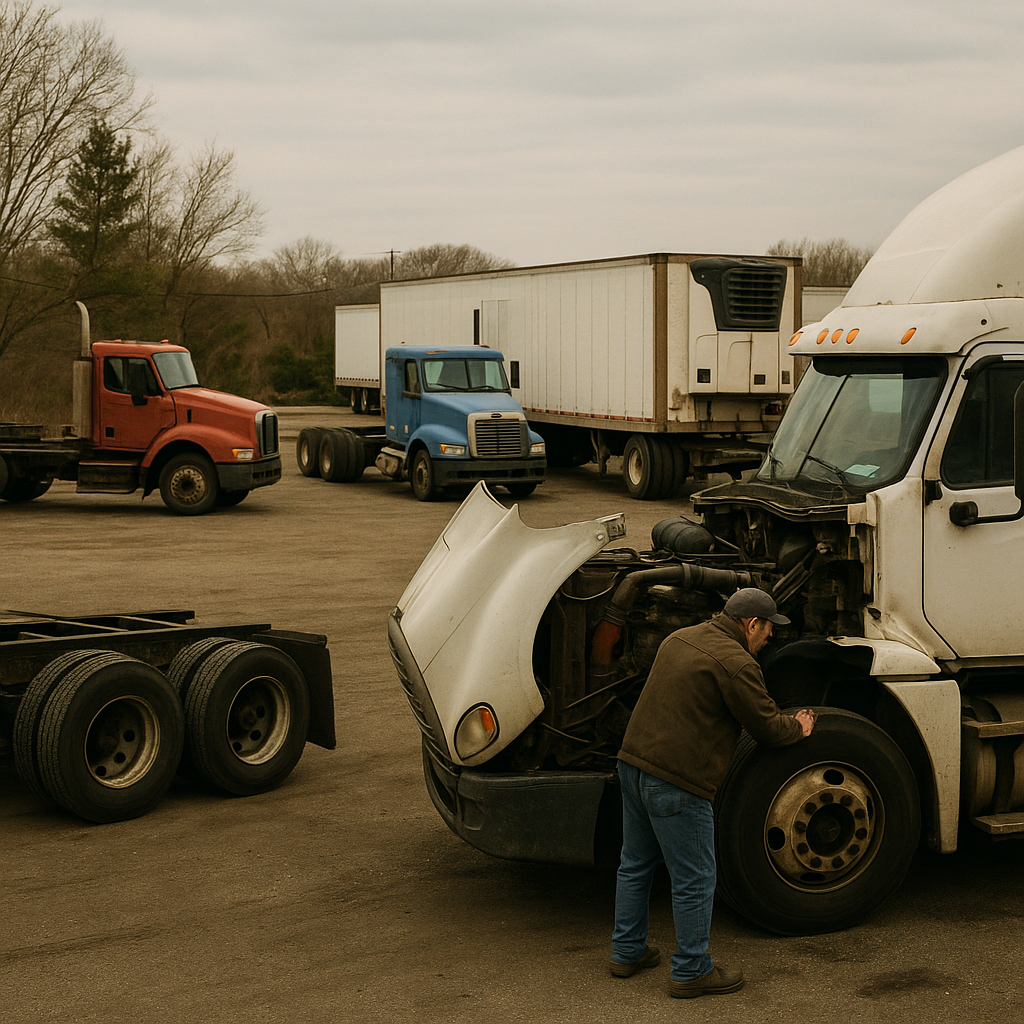

If you’re shopping for long haul truck insurance New Jersey, the biggest mistake is treating it like regular commercial auto or assuming New Jersey state minimums settle the question. For long-haul owner-operators and small fleets, your insurance setup usually depends on whether you run interstate, what authority you operate under, what you haul, and who is responsible for the trailer.
What Long-Haul Truck Insurance in New Jersey Actually Covers#
Long-haul truck insurance in New Jersey usually means a trucking policy built for interstate or multi-state freight, not a basic commercial auto policy. It can include liability, cargo, truck damage, trailer-related coverage, and off-dispatch protection depending on how you run. The right setup depends on your authority, freight, and trailer exposure.
In practical terms, long-haul trucking means you’re not just running local deliveries around one city or a short daily route. You’re taking loads across longer distances, often crossing state lines, dealing with more time on the road, more cargo exposure, and more chances for filing or coverage mistakes to matter.
A personal auto policy is insurance built for private driving, like commuting or family use. It does not fit paid freight hauling in a tractor because commercial trucking creates a very different risk.
Long-haul vs. local trucking#
Local trucking usually stays in a tighter radius and often has a different risk profile than long-haul work. Long-haul operations tend to involve interstate miles, more overnight parking, different shipper contracts, and more cargo-related requirements.
That matters because insurers don’t price a Newark-area day route the same way they price a New Jersey-based tractor running to Ohio, Georgia, or Texas every week.
Commercial auto vs. trucking-specific policies#
Commercial auto insurance is a broad business vehicle policy, but trucking-specific insurance is built around hauling for hire. That’s the difference many operators miss.
A trucking policy can account for federal filings, motor truck cargo, trailer responsibility, and dispatch status. Generic business auto coverage often doesn’t.
Interstate authority and filing basics#
An MC number is the federal operating authority many for-hire interstate carriers need to haul regulated freight. An MCS-90 is a federal endorsement attached to liability coverage to meet certain financial responsibility rules, and a BMC-91X is the liability filing insurers submit to show that required coverage is in place.
This is where New Jersey operators get tripped up. Your insurance question isn’t just "What does New Jersey require?" It’s also "Am I running under federal authority, and if so, what filings and limits apply to my operation?"

New Jersey Requirements vs. FMCSA Rules#
New Jersey and FMCSA rules are not the same thing. New Jersey can control state registration, licensing, and other in-state compliance issues, while FMCSA controls insurance requirements tied to certain interstate trucking operations. If you haul for hire across state lines, federal rules can override the shortcut advice you hear from other drivers.
What New Jersey does and does not require#
New Jersey has its own state-level compliance framework through registration and related business requirements. But state rules are not a substitute for checking whether your operation also falls under federal motor carrier rules.
That distinction matters because a New Jersey-based truck may be registered in the state while still needing federal proof of financial responsibility for interstate work. For state-specific compliance context, operators should verify current requirements through New Jersey’s official state agencies.
When federal insurance rules apply#
FMCSA is the Federal Motor Carrier Safety Administration, the agency that regulates interstate motor carriers. Under FMCSA rules and 49 CFR Part 387, for-hire interstate carriers hauling general freight in vehicles over 10,001 pounds must carry at least $750,000 in public liability. Other operations can require different minimums, including $300,000 under 10,000 pounds, $1,000,000 for certain auto haulers, and $5,000,000 for certain hazmat operations.
That is why "all truckers need $750K" is bad advice. Requirements vary by carrier type, vehicle weight, cargo, and whether you operate interstate or intrastate.
Common filing and authority touchpoints#
The confusion usually starts when an owner-operator gets a USDOT number, applies for an MC number, or starts comparing quotes before authority is active. A USDOT number identifies a carrier in the federal safety system, but it does not by itself tell you what insurance structure you need.
If the policy is wrong, you can end up with missing filings, mismatched liability, or coverage that doesn’t match how the truck actually runs. That’s expensive to discover after dispatch.
Coverage Types Long-Haul Operators in New Jersey Commonly Need#
Most New Jersey long-haul operators need more than one coverage line. Liability protects against injury or property damage you cause to others, cargo protects the freight, physical damage protects your truck, and optional coverages handle off-dispatch driving, trailers, and refrigerated loads. The mix should match your authority, contracts, and real operating setup.
Auto liability#
Auto liability is the coverage that pays for bodily injury and property damage you cause to others in an at-fault crash. This is the core coverage tied to FMCSA financial responsibility rules for many for-hire interstate carriers.
For most owner-operators hauling general freight interstate in heavier units, $1 million is common in the market even though the federal minimum for many of those operations is lower. But common does not mean universal. The right limit depends on your operation and any shipper or broker contract requirements.
Motor truck cargo#
Motor truck cargo insurance protects the freight you’re hauling against covered loss, subject to exclusions and policy terms. If you’re running long-haul loads, this often matters because your cargo may sit overnight, cross multiple states, or involve higher theft exposure.
Commodity matters here. Dry van general freight, produce, electronics, and high-theft loads don’t underwrite the same way.
Physical damage#
Physical damage covers damage to your own truck. In trucking, that usually means collision for crash damage and comprehensive or fire and theft with combined additional coverage for non-collision losses like theft, weather, vandalism, or fire.
Truck value, age, financing terms, and deductible choices all affect this piece. A newer sleeper tractor with a higher stated value creates a different insurance picture than an older paid-off unit.
Non-trucking liability and bobtail#
Non-trucking liability, often called NTL, covers non-business use when you’re off dispatch. Bobtail coverage is often used loosely in conversation, but the real question is whether you’re covered when you’re not actively hauling under dispatch.
This is a common gap for leased-on drivers. NTL does not cover paid hauling.
Trailer and refrigeration-related coverage#
Trailer interchange covers a non-owned trailer you use under a signed interchange agreement. Non-owned trailer physical damage is often the better fit for many non-intermodal owner-operators who pull someone else’s trailer without that formal interchange setup.
Reefer or refrigeration breakdown coverage helps with certain temperature-control losses tied to equipment breakdown. If you haul refrigerated freight, don’t assume standard cargo automatically covers spoilage from reefer failure.
What Drives Commercial Truck Insurance Cost in New Jersey#
Commercial truck insurance cost in New Jersey depends on the risk your operation presents, not a single state average. The biggest drivers are usually truck type and value, driving history, cargo, operating radius, authority setup, and selected limits. Two operators in the same state can get very different quotes because their actual exposures are different.
Truck type and value#
A heavy tractor running long interstate lanes usually costs more to insure than a lighter local-use business vehicle because the exposure is bigger. More miles, higher claim severity, and more expensive equipment all feed into the premium.
Physical damage pricing especially changes with truck age, replacement cost, financing requirements, and whether the unit has a sleeper, specialized equipment, or a higher insured value.
Driving record and claims history#
Tickets, preventable accidents, out-of-service history, and prior claims can all affect pricing. Insurers are looking at the chance of future loss, not just whether the truck is legal to run.
A clean record won’t guarantee a low premium, but losses and violations usually narrow your options and can change both price and coverage terms.
Cargo type and radius of operation#
Cargo affects both liability perception and cargo pricing. High-theft freight, temperature-sensitive freight, and high-value loads typically draw more underwriting attention than ordinary general freight.
Radius matters too. A truck staying mostly in one region is different from a unit running coast to coast every month. Interstate exposure and overnight parking patterns also influence risk.
Limits, deductibles, and business structure#
Higher liability limits, lower deductibles, and broader optional coverages generally increase premium. Your actual premium depends on your operation, cargo, radius, driving history, and other factors.
Business structure matters because a new authority, a leased-on owner-operator, and a small fleet with established loss history are not priced the same way. Even two one-truck operators in New Jersey can look very different on paper.
How Much Long-Haul Truck Insurance Usually Costs#
There is no universal price for long-haul truck insurance in New Jersey. A $1,000,000 liability setup or $100,000 cargo policy can vary widely based on authority, equipment, freight, driver history, filing needs, and route profile. Generic online averages often mash together local delivery, intrastate trucks, and true interstate long-haul operations.
Liability examples and what affects them#
When people ask how much a $1,000,000 liability policy costs, the honest answer is that it depends on the underwriting file. A New Jersey owner-operator with new authority, interstate lanes, and a rough loss history is a different risk from a seasoned small fleet with stable freight and clean drivers.
Liability pricing can change based on filings, vehicle weight, cargo class, driver experience, and whether the unit runs under its own authority or leased-on.
Cargo insurance pricing factors#
The same goes for $100,000 cargo insurance. Commodity, theft exposure, destination mix, prior cargo losses, deductibles, and policy structure all matter.
Cargo on paper may sound simple, but exclusions and sublimits matter just as much as the limit itself. A cheap-looking cargo quote can still leave the wrong freight uncovered.
Why generic averages can mislead#
Many online averages are too broad to help. They often blend local contractors, box trucks, regional fleets, and interstate tractors into one number.
For long-haul work, the better move is to quote the operation you actually run, with the right authority, truck, and freight details from the start.
How to Choose the Right Policy Setup Before You Buy#
The right policy setup starts with matching coverage to how your truck actually operates. Owner-operators with their own authority, leased-on drivers, and small fleets do not need identical policies. The fastest way to overpay or leave a gap is buying a package built for the wrong setup.
Match the policy to your authority#
If you run under your own authority, you may need filings and a full primary liability structure that matches your interstate operation. If you’re leased on, the motor carrier may provide some primary liability while you still need other coverages for your truck, cargo exposure, or off-dispatch use.
That distinction should be clear before you compare quotes.
Avoid overbuying and underinsuring#
Not every operator needs every optional coverage. But skipping the wrong one can leave you exposed.
Common examples include paying for a trailer coverage form that doesn’t match your actual trailer arrangement, or assuming NTL covers something it doesn’t. On the other side, some operators buy broad add-ons they never really need.
Check endorsements and exclusions#
The details matter in trucking. Cargo exclusions, unattended vehicle restrictions, named driver issues, reefer limits, and dispatch-status language can all change what a policy really does.
If a quote looks much lower than the others, compare the structure before you compare the premium.
When to ask for a second quote#
A second quote makes sense when the first one doesn’t clearly show filings, limits, deductibles, and coverage forms. It also makes sense if the broker seems to be treating a long-haul tractor like generic commercial auto.
If you’re not sure what coverage fits your operation, LogRock can help you scope it.
How to Get a New Jersey Long-Haul Truck Insurance Quote#
A useful New Jersey long-haul truck insurance quote starts with accurate operating details. Have your VIN, garaging address, USDOT and MC information if applicable, cargo type, operating radius, driver history, and trailer details ready. That lets a broker quote your actual operation instead of guessing.
A good quote should show limits, deductibles, filings if needed, and the exact coverages included so you can compare apples to apples. If you want to verify authority or carrier status during the process, check SAFER for federal carrier information. LogRock specializes in trucking insurance for owner-operators and small fleets serving New Jersey operators, including those based around Newark, Jersey City, Paterson, Elizabeth, Edison, and other freight-heavy parts of the state.
FAQ#
What are the requirements for truck insurance in New Jersey?
New Jersey truck insurance requirements depend on whether you’re looking at state compliance or federal trucking rules. State registration and business compliance issues can apply through New Jersey, but for-hire interstate trucking often triggers FMCSA insurance rules and filings. The exact setup depends on whether you operate under your own authority, your vehicle weight, the cargo you haul, and whether you run interstate or intrastate. That’s why a New Jersey-based truck can still need federally scoped liability and filings under 49 CFR Part 387.
How much does commercial insurance cost in NJ?
Commercial truck insurance in NJ varies widely because insurers rate the operation, not just the ZIP code. Truck type, stated value, driving history, cargo, operating radius, authority status, deductibles, and selected limits all affect the premium. A one-truck long-haul operator with new authority and interstate exposure will not be priced like a local business vehicle or an established fleet. If you’re comparing numbers online, make sure they’re actually for long-haul trucking and not mixed with broad commercial auto averages.
How much does a $1,000,000 liability insurance policy cost?
A $1,000,000 liability policy does not have one standard price. The cost depends on your authority type, whether filings are required, what the truck hauls, where it runs, who is driving it, and how clean the loss history looks. The truck itself can also affect the total package because liability is often quoted alongside other core coverages. If two quotes look far apart, compare the details closely, because differences in exclusions, driver acceptance, or filing setup can explain the gap.
How much does $100,000 cargo insurance cost?
The cost of $100,000 cargo insurance depends heavily on the freight. General freight, refrigerated goods, electronics, and higher-theft commodities do not rate the same way. Insurers also look at routes, overnight parking, prior cargo losses, deductible choices, and any restrictions in the policy wording. So while operators often ask for a $100,000 cargo quote by limit alone, the real price is tied to what you’re hauling and how you’re hauling it. The limit is only one part of the underwriting picture.





