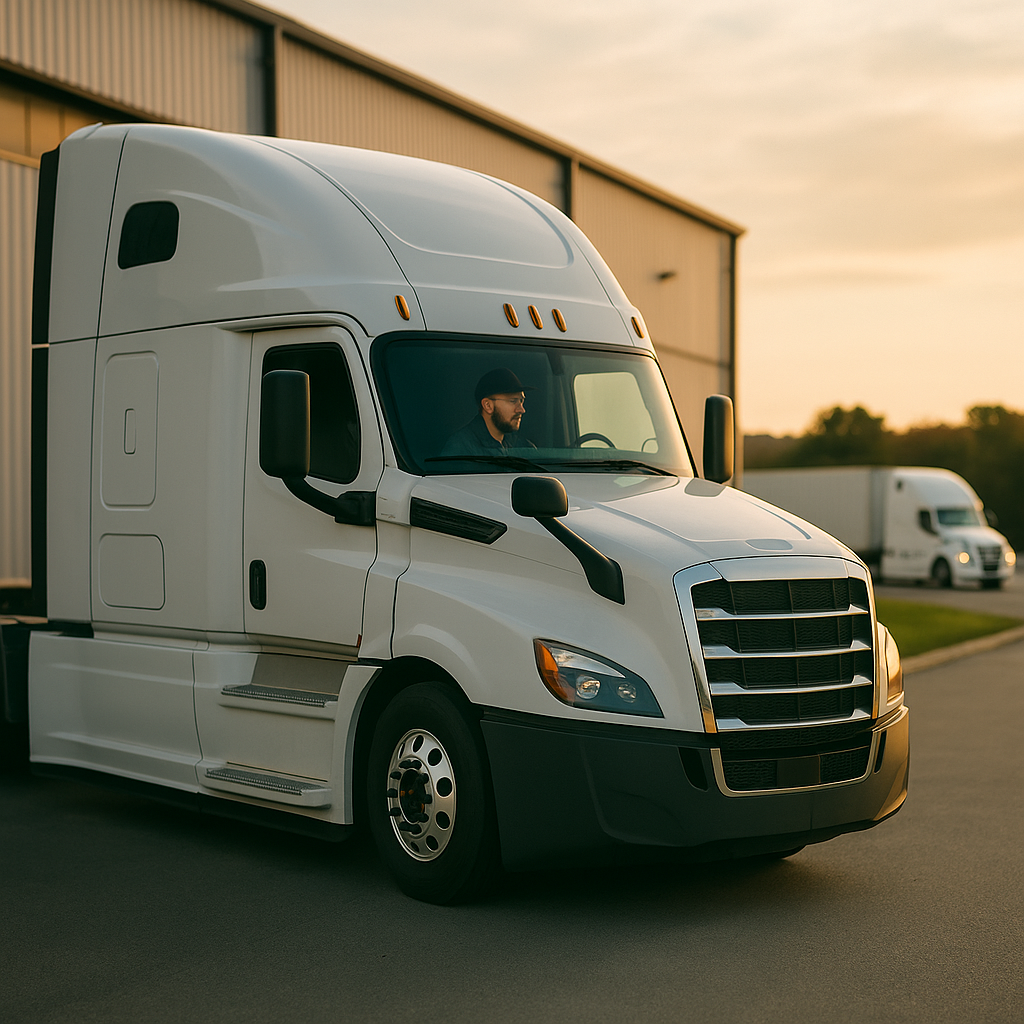

6 steps to get insured in PA—coverages, PUC vs FMCSA filings, and 2026 cost ranges for new ventures ($12K+). Compare quotes fast.
Pennsylvania trucking insurance for new ventures can make or break your first 90 days because one wrong coverage, one missed filing, or one cancellation can park your new authority before your lanes stabilize.
To launch a trucking authority in Pennsylvania, you typically need commercial truck insurance (liability + cargo, plus physical damage if the truck is financed) and the right filings based on how you operate—interstate is handled under FMCSA rules while some intrastate for-hire operations may involve PA PUC requirements. If you want the big-picture baseline first, start with Logrock’s new venture trucking insurance guide, then use the PA-specific playbook below to avoid delays and expensive re-quotes.
Table of Contents
Reading time: 8 minutes
- Key Takeaways
- New Venture Trucking in Pennsylvania: Intrastate vs Interstate (PUC vs FMCSA) + What “Filings” Really Means
- Commercial Truck Insurance Coverages PA New Ventures Actually Need (Including Hotshot & Semi Truck Insurance)
- Pennsylvania New Venture Trucking Insurance Cost (2026 Ranges) + How to Think About “Affordable Trucking Insurance”
- PA New Venture Launch Timeline: 6 Steps to Get Insured, Filed, and Rolling
- Frequently Asked Questions
- Conclusion
👉 Need to save money on truck insurance in Pennsylvania?
Watch the video below for a quick overview of truck insurance in Pennsylvania requirements, how much it costs, and practical ways to save. Or give us a call: (704) 290-3630
Key Takeaways
Pennsylvania trucking insurance for new ventures is usually built around accurate interstate vs intrastate classification, broker-driven limits (often $1,000,000 liability and $100,000+ cargo), and a consistent first-year operation that underwriters can price.
- Figure out your lane first: Intrastate vs interstate in PA changes where proof of insurance goes and what paperwork you’ll face.
- Expect broker-driven limits: Many loads won’t book unless you carry $1M liability and $100k+ cargo, even when legal minimums are lower.
- New venture pricing is real: Most PA startups see higher year-1 premiums until they build insurance history and consistent safety controls.
- Speed comes from accuracy: Radius, cargo, driver history, and garaging ZIP must be right before you bind, because mid-term changes can be expensive.

New Venture Trucking in Pennsylvania: Intrastate vs Interstate (PUC vs FMCSA) + What “Filings” Really Means
In Pennsylvania, whether you operate intrastate-only or interstate determines which regulator’s rules apply and where required insurance “proof” may need to be filed (typically handled electronically by your insurer/agent when required).
What “new venture” means in plain English
A “new venture” is a carrier with new authority and/or limited insurance history, and that status can raise rates until you prove consistent operations.
The common early mistake is buying coverage as if you’re “just local,” then discovering the freight is treated as interstate commerce—or that your broker packets require limits you didn’t budget for.
Why the intrastate vs interstate call matters (compliance + downtime)
If you’re interstate, you’re operating on the FMCSA field, and federal insurance filing requirements and financial responsibility rules apply for your authority and operation type.
- FMCSA reference: https://www.fmcsa.dot.gov/registration/insurance-filing-requirements
- PA PUC starting point (intrastate for-hire scenarios): https://www.puc.pa.gov/transportation/motor-carriers/
What new ventures get wrong: they shop price before they lock in where they run, what they haul, and how far they run. That mismatch can trigger re-underwriting, endorsements, re-filings, or cancellations—aka downtime.
One-minute decision checklist
- Are you for-hire (paid to haul someone else’s freight)?
- Will you cross state lines, or haul freight tied to interstate commerce?
- Do your brokers/shippers require $1M liability regardless of legal minimums?
Underwriters also price new ventures based on compliance habits and DOT history, so it helps to understand how your record affects your insurance options: FMCSA compliance requirements for insurance & DOT record.
Commercial Truck Insurance Coverages PA New Ventures Actually Need (Including Hotshot & Semi Truck Insurance)
A compliant and workable new venture insurance program is usually a stack of coverages—liability, cargo, and often physical damage—plus optional add-ons (GL, trailer interchange, bobtail/NTL) depending on contracts and equipment.
If you want deeper definitions, use this explainer on truck insurance coverage types.
Why this is essential (cash-flow reality)
Insurance isn’t just “compliance”—it’s business continuity. A physical damage claim can be the difference between “back on the road” and “missed truck payment,” and the wrong cargo limit can mean denied loads or out-of-pocket exposure.
Who needs what (practical table)
| Coverage | What it protects | Usually required by | Common limits new ventures see |
|---|---|---|---|
| Primary Auto Liability | Injury/property damage to others | FMCSA rules (interstate) + brokers/shippers | Often $1,000,000 CSL (many contracts), sometimes higher |
| Motor Truck Cargo | The freight you’re hauling | Brokers/shippers | Often $100,000 (varies by commodity/contract) |
| Physical Damage (Comp/Collision) | Your tractor (and sometimes trailer if scheduled) | Lender/lease + smart owner | Based on stated value; deductible often $1k–$5k |
| Non-Trucking Liability / Bobtail | Liability when not under dispatch (varies by setup) | Needed if leased-on or to cover gaps | Often quoted at $1M depending on structure |
| General Liability | Premises-type claims (e.g., “slip and fall”), some dock incidents | Many brokers/warehouses | Often $1M / $2M |
| Trailer Interchange | Non-owned trailer damage under a T/I agreement | Carriers you interchange with | Commonly $20k–$50k+ |
| Workers’ Comp / Occ-Acc | Injury protection for employees/contractors (structure-dependent) | State law if employees; contract-driven otherwise | Varies by payroll/class code; Occ-Acc varies |
Hotshot insurance vs semi truck insurance (PA startup reality)
- Hotshot insurance: Often a pickup + trailer setup that can price lower than Class 8, but new venture underwriting still focuses heavily on radius, cargo, driver history, and trailer type.
- Semi truck insurance: Class 8 severity is higher, so underwriters weigh experience, lanes, and prior coverage even more.
Pro tip: Don’t bind as “general freight local” if your real plan is “regional multi-state mixed freight.” The cheapest quote is often the most expensive mistake.
Pennsylvania New Venture Trucking Insurance Cost (2026 Ranges) + How to Think About “Affordable Trucking Insurance”
For many single-truck new ventures in Pennsylvania, first-year premiums commonly fall in the $12,000–$24,000 per year range, with higher pricing for reefer/high-value profiles, larger radius, or no prior insurance history.
To understand why two “similar” startups can get wildly different quotes, see what affects the cost of truck insurance.
Typical 2026 ranges (realistic bands, not promises)
These are common first-year ranges for many PA new ventures (single power unit), assuming for-hire, decent MVR, and standard commodities. Your exact premium depends on underwriting.
- Regional dry van / power-only (moderate radius): often $12,000–$20,000/year
- Local/metro-heavy (higher frequency exposure): often $14,000–$24,000/year
- Reefer / higher-value cargo profiles: often $16,000–$28,000+/year
- Hotshot insurance (for-hire): often $10,000–$18,000+/year depending on trailer type, cargo, and radius
What pushes you to the high end fast
- No prior commercial insurance (“no prior” in your name)
- New authority + low experience in similar equipment
- Bigger radius / OTR exposure
- Higher-risk cargo categories or vague cargo description (“misc.” is a red flag)
- High truck value + low deductible (physical damage cost climbs)
A quick budgeting estimator (back-of-napkin)
This won’t replace a quote, but it keeps you from buying a truck based on a fantasy premium.
- Start with a base annual band (pick one above).
- Adjust up if any apply:
- OTR / multi-state radius: +10–30%
- Reefer / higher-value freight exposure: +10–25%
- No prior insurance in your name: +10–40%
- Metro-heavy lanes (more frequency): +5–20%
- Add physical damage based on truck value and deductible (often thousands/year).
“Affordable trucking insurance” for new ventures = stable program
Affordable doesn’t mean minimum limits; it means limits that match your contracts, deductibles you can actually fund after a loss, and a plan to earn better pricing at renewal.
PA New Venture Launch Timeline: 6 Steps to Get Insured, Filed, and Rolling (Without Paying the “New Guy Tax” Forever)
A repeatable 6-step launch process for a Pennsylvania new venture is: define the operation, apply for authority, submit accurate underwriting details, bind coverage, request COIs/filings correctly, and run consistently through renewal to earn better pricing.
Step 1: Define your operation like an underwriter
Before you ask for quotes, lock these down:
- For-hire vs private
- Intrastate vs interstate
- Cargo (specific, consistent)
- Radius/states
- Power unit + trailer details
- Garaging ZIP (where the truck sleeps)
Step 2: Apply for authority (then don’t change the story)
If you’re going interstate, prep your authority application details the right way because shortcuts often create delays later. Use how to prepare for the FMCSA authority application as a checklist.
Step 3: Get quotes using real numbers, not guesses
What a solid new venture submission includes:
- CDL experience + MVR details (all drivers)
- VIN, model year, and stated value
- Prior insurance / LOE (letters of experience), if you have it
- Expected annual mileage and operating radius
- Any broker packet requirements (liability/cargo/GL)
Step 4: Bind coverage + request proof the right way
COIs and filings are not the same thing, and mixing them up causes avoidable delays.
- COI (Certificate of Insurance): What brokers/shippers want on file
- Filings: Proof sent to a regulator (FMCSA for interstate, and potentially PA-specific requirements depending on operation)
You usually do not file these yourself; your agent/insurer handles the electronic process when it’s required.
Step 5: Survive the first 90 days (where new ventures get canceled)
Cancellations and lapses are premium killers, so run the basics that underwriters love:
- Preventive maintenance logs
- Dashcam/telematics (even low-cost setups)
- Clean driver files (med card, license, MVR pulls)
- Clear dispatch records (avoid “mystery cargo”)
Step 6: Renewal strategy (where the real savings are)
- Keep your operation consistent (cargo/radius/driver roster)
- Shop early (30–60 days before renewal)
- Don’t stack claims on small stuff if it’s cheaper to handle out of pocket
PA risk note: Winter weather and congestion around major metros can increase claim frequency, so price insurance like a true operating cost and run disciplined.
Frequently Asked Questions
If you operate interstate, liability minimums are primarily set at the federal (FMCSA) level and vary by operation and cargo type, and any required insurance filings are typically submitted electronically by your insurer/agent.
Even when legal minimums are lower for a given operation, many brokers and shippers still require $1,000,000 liability to book loads. If you operate intrastate-only, requirements can differ depending on whether PA PUC oversight applies to your for-hire operation, so confirm your scenario before binding. FMCSA reference: https://www.fmcsa.dot.gov/registration/insurance-filing-requirements.
Many Pennsylvania new ventures land in the $12,000–$24,000 per year range for a single power unit, with higher pricing for reefer/high-value cargo, larger radius (regional/OTR), or no prior commercial insurance history.
Your biggest levers are driver history (MVR), cargo class, operating radius, and truck value/deductible for physical damage. If you’re trying to control cost without creating coverage gaps, start with affordable trucking insurance strategies that actually work.
Interstate new venture carriers generally deal with FMCSA-related insurance filing requirements, and those filings are typically submitted electronically by the insurer/agent rather than by the carrier.
Intrastate-only carriers can have different state-level steps depending on the exact for-hire operation, so confirm whether PA PUC oversight applies before you bind coverage and start taking loads. PA PUC hub: https://www.puc.pa.gov/transportation/motor-carriers/.
If your trucking business has employees, Pennsylvania generally requires you to carry workers’ compensation, and failing to set it up correctly can create major compliance and financial risk.
If you’re truly owner-only (no employees), requirements and risk planning can look different, but misclassifying drivers can still create serious exposure. Start with the PA Department of Labor & Industry overview here: https://www.dli.pa.gov/Individuals/Workers-Compensation/Pages/default.aspx.
Conclusion: Get the Right Coverage and Filings Before You Run
Pennsylvania new ventures don’t fail because they can’t drive—they fail because cash gets burned on preventable admin mistakes like wrong radius, wrong cargo class, wrong limits, or the wrong filing path.
Do it in order: define your operation → match coverages/limits → confirm filings → stay consistent through renewal.
Key Takeaways:
- Decide intrastate vs interstate early, because it changes the compliance lane and required proof of insurance.
- Build limits around the freight you want (broker/shippers often drive $1M liability and $100k cargo).
- Consistency through the first year is a pricing strategy, not just an operations habit.
Related reading: