
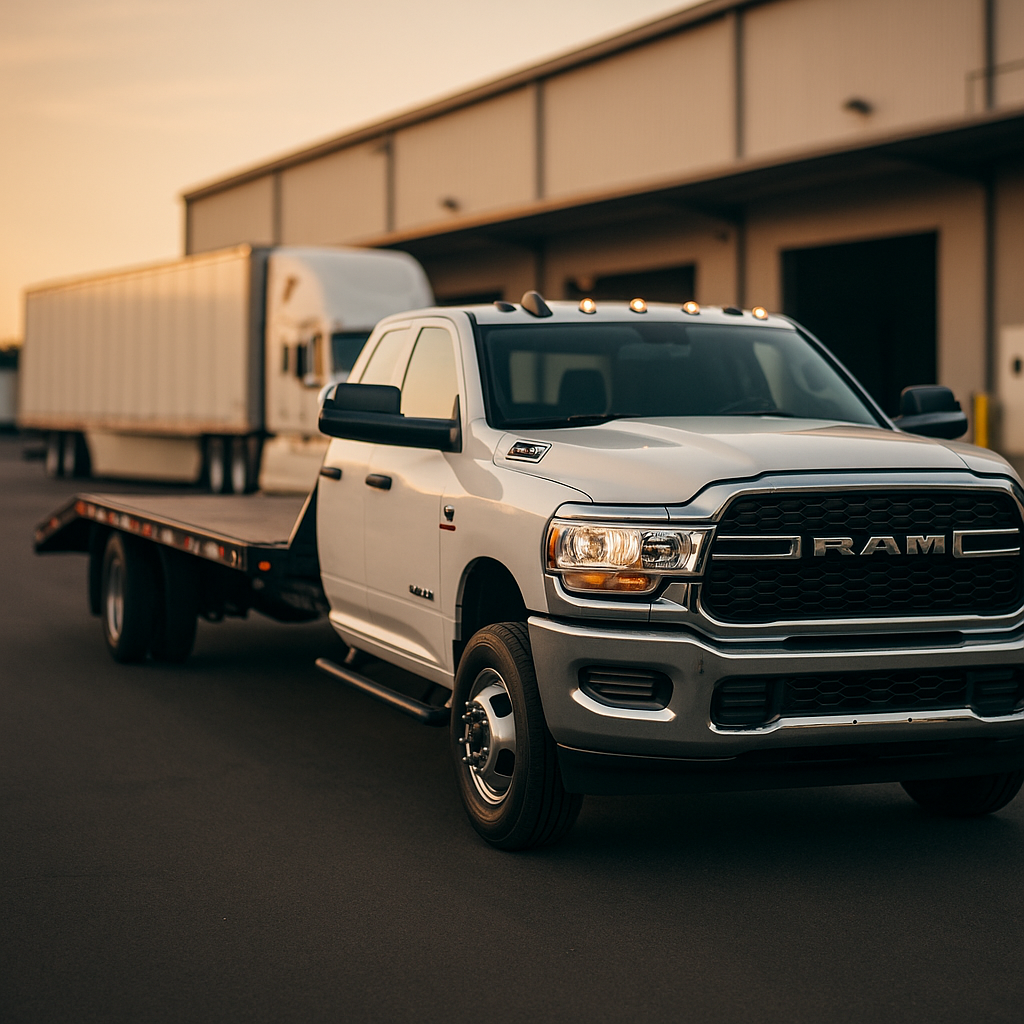
2026 RAM 3500 commercial truck insurance for hot shots costs $6K–$30K+/yr. See required coverages, filings, and monthly budgets—get quotes.
If you’re pricing RAM 3500 commercial truck insurance for hot shots, most owner-operators in 2026 should plan $6,000–$15,000/year for liability-only, $8,000–$20,000/year for liability + cargo, and $12,000–$30,000+/year for a full package (liability, cargo, physical damage, plus common add-ons). Your state, cargo value, operating radius, and whether you’re new authority can move your number fast.
For the big-picture ranges first (and a tighter way to sanity-check quotes), start with this breakdown: hot shot insurance cost ranges.
This guide is RAM 3500-specific because pickup-based hot shot setups get tripped up by the same issues: trailer value not scheduled correctly, cargo limits that don’t match what you actually haul, and “cheap” policies that fall apart when a broker requests a COI with specific wording.
👉 Ready to save on your hot shot truck insurance?
Watch the video below for a quick overview of hot shot insurance rules, how much it costs, and practical ways to save. Or give us a call: (704) 290-3630
Table of Contents
Reading time: 9 minutes
- Key Takeaways
- Does a RAM 3500 Count as a “Commercial Truck” for Hot Shot Trucking Insurance?
- RAM 3500 Hotshot Insurance Cost in 2026 (With Real Monthly Budget Math)
- Hot Shot Insurance Requirements for a RAM 3500: The 7 Coverages That Keep You Working
- Affordable Trucking Insurance for RAM 3500 Hot Shots: 10 Levers That Actually Move Your Premium
- Frequently Asked Questions
- Next Steps: Get the Right RAM 3500 Hot Shot Policy (Without Overpaying)
Key Takeaways
RAM 3500 hot shot insurance pricing in 2026 commonly spans $6,000 to $30,000+ per year because liability limits, cargo value, trailer value, garaging ZIP, and authority age drive underwriting more than the pickup badge does.
- Plan in packages, not guesses: liability-only, liability + cargo, and full-package pricing can differ by thousands depending on authority age and garaging ZIP.
- Your trailer and cargo drive risk: insurers price for-hire use + trailer value + maximum load value more than “pickup vs semi.”
- Legal minimums ≠ broker minimums: many brokers want $1M auto liability + $100K cargo (sometimes more) even if your legal minimum is lower.
- The cheapest quote can be the most expensive mistake: exclusions, wrong commodity, under-rated radius, or misclassification can create denied claims or lost loads.

Does a RAM 3500 Count as a “Commercial Truck” for Hot Shot Trucking Insurance?
If you’re hauling freight for-hire, insurers and brokers typically treat a RAM 3500 as a commercial auto risk because the exposure is driven by business use (for-hire hauling), not the fact that it’s a pickup.
For a plain-English reset on policy types and terms before you buy anything, read: commercial truck insurance basics.
What it is (plain English)
A commercial policy is designed for business use—hauling freight, issuing COIs to brokers/shippers, and handling claim scenarios that personal auto policies typically aren’t built to cover.
Why it’s essential (business reality)
Running load-board or broker freight on a personal policy (or describing your use as “personal”) can create a worst-case outcome: a claim denial right after a wreck, cargo loss, or dock incident.
Who usually needs a commercial policy
- RAM 3500 owner-operators hauling for-hire (brokers, load boards, direct shippers)
- New ventures setting up authority
- Leased-on operators who still need non-liability coverages (depending on the lease)
Bring these quote inputs every time (so your quote isn’t fantasy)
- Truck details: VIN, year, trim, and garaging ZIP
- Trailer details: type (gooseneck/flatbed), length, and trailer value
- Operations: operating radius and primary states (don’t lowball this to chase a cheaper premium)
- Cargo: commodity types and the maximum value of any single load
- Drivers: MVR, CDL status (if applicable), and driving experience
RAM 3500 Hotshot Insurance Cost in 2026 (With Real Monthly Budget Math)
For most RAM 3500 hot shot owner-operators in 2026, planning bands often land around $6,000–$15,000/year (liability-only), $8,000–$20,000/year (liability + cargo), and $12,000–$30,000+/year (full package), with monthly cash flow affected by down payment and installment fees.
For a budgeting-first breakdown (what people actually pay per month), use: hot shot insurance monthly cost.
2026 cost ranges by package (planning bands)
| Package (typical) | What’s usually included | Annual planning band | Monthly budget band* |
|---|---|---|---|
| Liability-only | Auto liability (no cargo, no physical damage) | $6,000–$15,000 | $500–$1,250 |
| Liability + cargo | Liability + motor truck cargo | $8,000–$20,000 | $670–$1,670 |
| Full package | Liability + cargo + physical damage (truck/trailer) + common add-ons | $12,000–$30,000+ | $1,000–$2,500+ |
*Monthly budgets vary based on down payment, installment fees, and underwriting (especially for new ventures).
RAM 3500-specific scenarios (what these numbers look like in the real world)
Scenario A — New authority, multi-state, general freight
- Truck: RAM 3500 dually
- Trailer: 40’ gooseneck flatbed
- Ops: multi-state lanes, load boards, mixed freight (“whatever pays”)
- Typical outcome: commonly lands in liability + cargo or full-package pricing, with “new venture” pricing being the pain point.
- What makes it expensive: no prior commercial history, broad radius, unclear lanes, and higher risk of rating/filing mistakes.
Scenario B — Leased on to a motor carrier (carrier provides primary liability under dispatch)
- You may not need your own primary liability while under dispatch, but you must verify the lease and the carrier’s insurance terms—don’t assume.
- Many leased-on operators still buy physical damage, non-trucking liability, and occupational accident (often required by the lease).
Scenario C — Established operator (12+ months continuous coverage, tighter lanes)
- Ops: consistent lanes, defined commodity, clean MVR
- Typical outcome: more carrier options, fewer declines, better pricing leverage.
- How to win: keep coverage continuous and document your operation clearly at renewal (radius, commodity, limits, equipment values).
Why monthly payments feel high (even when the annual premium seems “normal”)
- Down payment + installment fees: monthly plans can raise your effective cost vs pay-in-full.
- New venture surcharges: year one can be expensive; year two can improve if you stay clean and continuous.
- Deductibles matter: higher deductibles can lower premium, but only if you can actually absorb the deductible without skipping maintenance or compliance costs.
Hot Shot Insurance Requirements for a RAM 3500: The 7 Coverages That Keep You Working
Hot shot insurance “requirements” usually include both legal minimums and broker/shipper contract minimums, and many brokers commonly request $1,000,000 auto liability plus $100,000 cargo even when the legal minimum is lower.
Use this checklist as your baseline to avoid dispatch delays: hot shot trucking insurance requirements.
What it is (plain English)
This is the core coverage stack most RAM 3500 hot shot operators need to (1) stay compliant for their operation, and (2) stay eligible for the freight their brokers and shippers tender.
Why it’s essential (dispatch reality)
- Wrong coverage can shut you down like a breakdown (COI gets rejected).
- Right coverage, wrong limits can cost you loads (broker won’t tender).
- Right limits, wrong exclusions can turn into a denied claim when you need the policy to work.
The RAM 3500 hot shot coverage checklist (scannable)
- 1) Primary auto liability: Covers injuries/property damage to others when you’re at fault. If you’re subject to FMCSA financial responsibility rules for for-hire interstate property carriers, the federal minimum is $750,000 for many non-hazardous operations (see 49 CFR 387.9), while brokers often require $1,000,000. FMCSA filings overview: https://www.fmcsa.dot.gov/registration/insurance-filing-requirements
- 2) Motor truck cargo: Covers freight you’re hauling (subject to exclusions). A common broker minimum is $100,000, but your limit should reflect your maximum single-load value, not your average.
- 3) Physical damage (truck + trailer): Collision + comprehensive for your RAM 3500 and (if scheduled) your trailer. If you’re financed, a lender usually requires it; make sure the trailer value is accurate.
- 4) General liability (GL): Not the same as auto liability; it can apply to non-auto premises/operations exposures and is often requested by shippers at $1,000,000 per occurrence.
- 5) Non-trucking liability / bobtail (leased-on): Often intended for off-dispatch use; coverage depends heavily on policy wording and your lease situation.
- 6) Occupational accident (Occ/Acc): Common in owner-operator arrangements as an alternative to workers’ comp in many setups; benefits and eligibility are defined by the policy.
- 7) Trailer interchange: Only needed if you pull non-owned trailers under a written interchange agreement; many RAM 3500 hot shots hauling their own gooseneck don’t need it.
Important: “Required by law” and “required to get freight” aren’t the same thing; the practical goal is to buy coverage that matches your lanes, commodity, and contracts without paying for coverage you can’t use.
Affordable Trucking Insurance for RAM 3500 Hot Shots: 10 Levers That Actually Move Your Premium
Affordable trucking insurance outcomes are driven by underwriting factors you can control—continuous coverage, clean MVR, accurate radius/commodity reporting, and correct equipment values—often more than “calling more agents” ever will.
For the deeper savings playbook, read: Affordable trucking insurance savings playbook.
Why it matters (cash flow + survival)
Saving even $300–$600 per month is real money on a one-truck operation, and it can be the difference between taking bad freight and waiting for the right load.
The 10 premium levers (RAM 3500 reality edition)
- Never let coverage lapse: continuous prior coverage is pricing gold.
- Tell the truth about radius and lanes: being rated local but running multi-state is a claim problem, not a “hack.”
- Match cargo limits to maximum load value: don’t underinsure and don’t overpay for limits you don’t need.
- Avoid high-risk commodities early: unless you have the correct endorsements, limits, and experience.
- Use higher deductibles only if you can cash-flow them: a deductible you can’t pay is a downtime event.
- Install a dashcam and keep it running: credits vary, but claims are cleaner either way.
- Schedule your trailer correctly: value, type, and ownership must match reality.
- Keep your MVR clean: tickets can raise premiums more than most operators expect.
- Pay in full if you can: you often avoid installment fees and reduce total cost.
- Compare apples-to-apples quotes: same limits, same deductibles, same trailer values, same radius, same commodity.
Frequently Asked Questions
Most RAM 3500 hot shot operators in 2026 should plan about $6,000–$15,000/year for liability-only, $8,000–$20,000/year for liability + cargo, and $12,000–$30,000+/year for a full package, with the biggest swings coming from authority age, garaging ZIP, operating radius, and maximum load value.
Commercial auto pricing also varies by market conditions and loss trends, not just your truck; NAIC provides background on the commercial vehicle insurance market here: https://content.naic.org/sites/default/files/publication-cml-mv-commercial-vehicle.pdf.
Legally, the core requirement is auto liability at the applicable minimum for your operation, but brokers and shippers commonly require higher limits (often $1,000,000) plus motor truck cargo (often starting around $100,000) and sometimes general liability depending on the contract.
For a deeper, coverage-by-coverage explanation (and when each one applies), see: Hot shot insurance coverages explained.
It depends on whether you operate interstate vs. intrastate, for-hire vs. private, and whether your vehicle combination meets FMCSA’s definition of a commercial motor vehicle for your use case.
FMCSA’s starting point on USDOT registration is here: https://www.fmcsa.dot.gov/registration/do-i-need-usdot-number, and you should confirm your exact scenario before buying filings or a policy that doesn’t match your operation.
Often, yes—because while the motor carrier typically provides primary auto liability while you’re under dispatch, many leased-on owner-operators still need their own physical damage (truck/trailer), non-trucking liability for off-dispatch use, and commonly occupational accident if the lease requires it.
The practical step is to read the lease and confirm exactly who insures what (truck, trailer, and off-dispatch operation) before you bind coverage or assume you’re protected.
Next Steps: Get the Right RAM 3500 Hot Shot Policy (Without Overpaying)
A quote is only “cheap” if it pays a real claim and gets your COI accepted, so the goal is matching limits, filings, and scheduled equipment to how you actually run.
Do this next
- Write down your maximum load value, real lanes, and operating radius.
- List your RAM 3500 and trailer details (VIN, values, garaging ZIP).
- Confirm broker minimums and COI wording requirements before binding coverage.
- Compare quotes apples-to-apples and review commodity/radius exclusions carefully.
Optional: get localized pricing context
Bottom line: If you want to stay eligible for better freight, protect your truck/trailer, and avoid coverage surprises, build your policy around your real operation—not the cheapest number on the page.
Conclusion: Price Your RAM 3500 Like a Business, Not a Pickup
RAM 3500 commercial truck insurance for hot shots is priced around your for-hire exposure—limits, cargo, trailer value, lanes, and authority age—not the badge on the hood. If you plan the right package and match your COI to broker requirements, you protect both your cash flow and your ability to stay dispatched.
Key Takeaways:
- Use planning bands ($6K–$30K+/yr) and convert them into monthly budgets before you commit.
- Set liability/cargo limits to match the freight you want, not just the freight you’ve hauled before.
- Schedule trailer value correctly and avoid radius/commodity “shortcuts” that can create denied claims.
If you’re ready, compare quotes and make sure the limits, filings, and scheduled equipment match how you actually work.





