
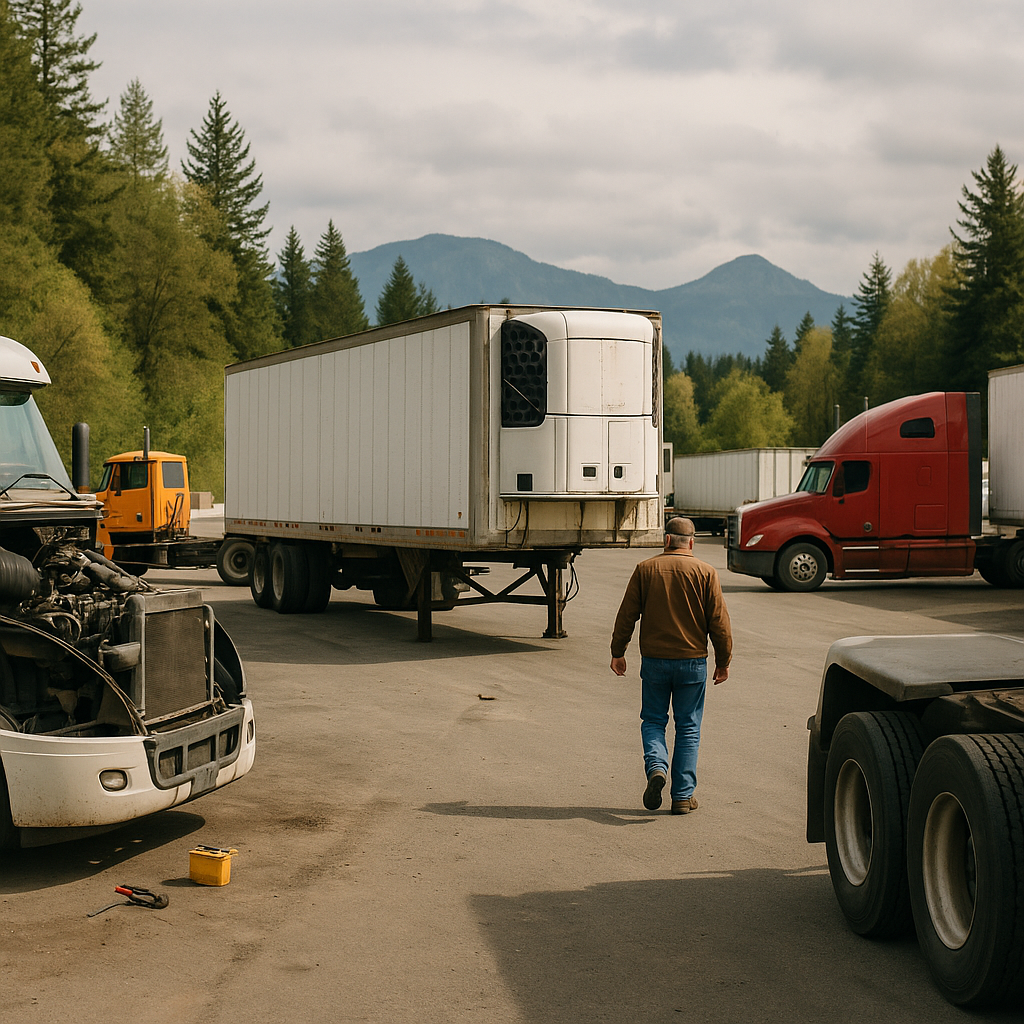

If you’re shopping for reefer truck insurance Washington operators actually need, the biggest mistake is treating it like regular trucking coverage with one extra add-on. Refrigerated hauling has its own failure points, especially when cargo value depends on temperature, dwell time, and how your policy handles spoilage.
This guide breaks down what reefer truck insurance usually includes, what Washington operators may be required to carry, what affects cost, and where coverage gaps tend to show up.
What Washington Reefer Truck Insurance Covers#
Washington reefer truck insurance usually combines several separate coverages that protect different parts of the operation: liability for injuries or property damage you cause, cargo for the freight, reefer breakdown for temperature-control failure, and physical damage for the truck itself. What you need depends on your operation, freight, route, and whether you run interstate or intrastate.
Core coverages for refrigerated trucking#
Auto liability pays for bodily injury and property damage you cause to others in a crash. In trucking, you’ll also hear BIPD, which means bodily injury and property damage liability.
Motor truck cargo insurance pays for covered damage to the freight you’re hauling. For reefer operators, that often means produce, frozen goods, dairy, pharmaceuticals, or other temperature-sensitive cargo.
Reefer breakdown coverage pays for certain losses tied to mechanical or electrical failure of the refrigeration unit that leads to spoilage or temperature damage under the policy terms. It is not the same thing as cargo insurance, and it doesn’t replace it.
Physical damage coverage pays for damage to your insured truck from collision and other covered causes like fire, theft, weather, or vandalism. If you want a fuller breakdown of truck damage protection, see how physical damage coverage works.
General liability covers certain non-driving business risks, such as third-party injuries or property damage claims that don’t come from operating the truck on the road. If you deal with shippers, receivers, or yard exposure, it’s worth understanding general liability for trucking businesses.
What each coverage pays for#
Each policy solves a different problem. Liability protects other people. Cargo protects the load. Reefer breakdown responds to covered temperature-control equipment failure. Physical damage protects your truck and sometimes attached equipment, depending on how the policy is written.
That matters because one claim can involve more than one policy section. A wreck might trigger auto liability, cargo, and physical damage at the same time. A refrigeration unit failure without a crash may involve reefer breakdown and cargo, but not liability.
Where coverage gaps usually happen#
The most common gap is assuming “reefer coverage” means every spoiled load is covered. It doesn’t. Coverage can change based on carrier type, cargo, route, contract language, operating radius, and whether you’re running interstate or intrastate.
Another common gap is buying limits to satisfy a broker packet without checking what the freight is actually worth. Your declarations page, which is the summary page showing your policy limits, deductibles, and coverages, should match the real operation, not just the first dispatch you hope to book.

What Is Required vs What Is Optional in Washington#
What’s required in Washington depends first on whether federal trucking rules apply to your operation, then on your state filings and registrations. Don’t assume a personal auto minimum or a generic “truckers need $750K” rule tells you what’s compliant, because requirements vary by vehicle weight, cargo, carrier type, and whether you haul interstate or intrastate.
FMCSA requirements for interstate carriers#
The FMCSA, the Federal Motor Carrier Safety Administration, regulates interstate motor carriers and sets federal financial responsibility rules. Under 49 CFR Part 387, for-hire interstate carriers hauling general freight in vehicles over 10,001 pounds must carry at least $750,000 in public liability, while some operations require different limits based on commodity and risk.
That’s why “all truckers need $750,000” is wrong. Auto haulers, hazmat carriers, lighter vehicles, private carriers, and intrastate operations can fall under different rules. If you’re trying to sort out the federal side of commercial auto liability for truckers, scope comes first: for-hire or private, weight, commodity, and interstate status.
The MCS-90 is a federal endorsement attached to certain liability policies that helps satisfy financial responsibility rules for motor carriers. It isn’t extra cargo protection, and it doesn’t mean every loss is covered under the policy the way drivers often assume.
Washington rules and registrations to verify#
Washington state rules still matter, but they don’t replace federal trucking obligations. The Washington Department of Licensing handles vehicle and carrier-related registration functions, while the Washington State Office of the Insurance Commissioner oversees insurance regulation at the state level. General state insurance guidance also runs through NAIC, which helps explain why state insurance rules and federal trucking requirements are separate systems.
State minimums vs federal trucking obligations#
The fast answer is this: your state minimum isn’t automatically your trucking minimum. Interstate authority, USDOT registration, MC number status, filings, and cargo type can push you into a different requirement than what a standard vehicle policy would suggest. A USDOT number is your federal registration identifier for safety oversight, and an MC number is operating authority for certain for-hire interstate carriers.
Before you bind a policy, verify what your authority actually requires through FMCSA and confirm your status through the right records, not forum advice. Confusing personal auto with commercial trucking insurance is one of the easiest ways to buy the wrong policy.
How Reefer Breakdown Coverage Works#
Reefer breakdown coverage is designed for covered mechanical or electrical failure of the refrigeration unit that causes a temperature-related loss. It matters most when a load’s value depends on staying within a temperature range, because a working truck and a dead reefer unit can still turn into a major cargo claim.
What triggers a reefer breakdown claim#
A reefer breakdown claim usually starts with a covered failure in the refrigeration system itself. That could involve the unit shutting down, failing to maintain temperature, or suffering a mechanical or electrical issue that leads to spoilage under the policy terms.
The key point is cause. If the policy requires a covered breakdown of the reefer unit, then the claim usually turns on proving that the equipment failure caused the temperature excursion and the cargo damage. That’s why trip records, maintenance history, unit settings, and quick reporting matter.
Common exclusions and loss scenarios#
Common exclusions often involve poor maintenance, wear and tear, delayed notice, improper pre-cooling, incorrect settings, or freight problems that don’t fall within the coverage grant. Some claims also get messy when the unit worked but the trailer doors were left open too long, the load was already compromised, or the shipper disputes when the damage started.
This is where drivers get burned by shorthand. A spoiled load does not automatically equal a covered reefer claim. The policy language, the facts of the temperature event, and the documentation decide that.
If you want the broader version of how reefer breakdown coverage is typically structured, it helps to review it before you compare quotes.
When this coverage matters most#
This coverage matters most when you’re hauling high-value or temperature-sensitive freight and when delays can magnify the loss. Long dwell times at receivers, overnight staging, produce runs, frozen loads, and freight with tight temperature specs all increase the stakes.
A single missed detail can leave you arguing over whether the problem was cargo, equipment, maintenance, or handling. If you’re staring at a quote and can’t tell what’s really covered,
Does Reefer Coverage Cover Cargo?#
No, reefer coverage does not automatically cover cargo by itself. Cargo insurance and reefer breakdown handle different parts of the same refrigerated haul: cargo insurance protects the freight, while reefer breakdown responds to covered refrigeration-system failure that may trigger spoilage.
Why cargo and reefer breakdown are not the same#
This is the confusion that trips up a lot of first-time reefer operators. Motor truck cargo insurance is coverage for the freight in your care, custody, and control while you haul it. Reefer breakdown is narrower and focuses on covered failure of the temperature-control equipment.
So if the freight is damaged because of theft, overturn, water intrusion, or another covered cargo cause, that isn’t the same as a refrigeration unit breakdown claim. If the reefer unit fails and that causes spoilage, the reefer endorsement or policy language becomes critical.
For a fuller look at how motor truck cargo insurance fits into the picture, it helps to compare it separately from the reefer piece.
How spoilage claims are typically evaluated#
Spoilage claims usually get evaluated by looking at the commodity, required temperature range, trip records, set-point history, cause of loss, and whether the policy actually covers that scenario. The insurer may also review maintenance records and whether reporting happened quickly enough to reduce damage.
That means two loads with the same dollar value can get treated very differently based on documentation and cause. A clean story with records is easier to adjust than a claim built on guesswork.
Choosing limits without overbuying#
The right cargo limit usually follows the value of the loads you actually haul, plus any broker or shipper requirements. If your freight regularly exceeds your limit, you’re exposed. If your limit is far above your real load profile, you may be paying for capacity you don’t use.
How Much Washington Reefer Truck Insurance Costs#
Washington reefer truck insurance cost depends on the operation, not a flat statewide price. The biggest drivers are usually your driving history, truck value, cargo type, operating radius, authority status, garaging location, and which coverages and deductibles you choose.
Main price drivers#
Insurers look at the full risk picture, not just the truck. A reefer operator hauling produce across multiple states presents a different exposure than a local refrigerated route with shorter runs and lower cargo values.
Driver history matters because losses and violations change how risk is priced. Truck value matters because physical damage claims scale with the equipment. Cargo matters because some temperature-sensitive freight is more expensive to replace and more likely to generate disputes.
Why quotes differ by operation#
Two Washington operators with similar tractors can get very different quotes because their operations aren’t truly the same. New authority, long-haul interstate work, higher-value refrigerated commodities, prior claims, and broader coverage selections can all change pricing.
Washington location can also influence cost through garaging area, theft exposure, weather patterns, road conditions, and claim history tied to common routes. Running out of the Seattle-Tacoma area can present a different risk profile than a smaller market or more rural base.
A deductible is the amount you pay out of pocket before covered insurance benefits apply on certain claims. Higher deductibles may reduce premium in some cases, but they also increase what you need to absorb when something goes wrong.
What can raise or lower cost#
Costs can rise with newer high-value equipment, broader physical damage, heavier interstate use, high-value refrigerated cargo, weak maintenance records, or filing complications tied to new authority. Costs may look better when the operation is clearly documented, the cargo profile is stable, the unit is well-maintained, and the requested coverage matches the actual work.
For reefer operators, “commercial hauling insurance” isn’t one price because it’s not one policy. It’s usually a package of liability, cargo, reefer breakdown, physical damage, and sometimes general liability or other endorsements. Your actual premium depends on your operation, cargo, radius, driving history, and other factors.
How to Get the Right Quote for a Reefer Truck#
The right reefer truck quote starts with accurate operational details, not just a truck VIN and a target price. Small mistakes in authority status, cargo description, garaging, or current coverage can create delays, wrong filings, or expensive gaps that only show up when you need the policy.
Information to gather before shopping#
Before you ask for quotes, gather the basics in one place:
- USDOT and MC number status, if applicable
- VINs and equipment details
- Garaging address
- CDL history for each driver
- Loss runs or prior claim history
- Cargo types and typical load values
- Operating radius and primary lanes
- Current declarations page and current deductibles
Your current declarations page gives the broker or underwriter a snapshot of what you carry now. If you have federal authority, it’s smart to confirm your public record through SAFER before shopping so your filings and status line up.
It also helps to understand how trucking insurance quotes work before you compare forms that look similar but cover different things.
Questions to ask about coverage gaps#
Ask direct questions. Does reefer breakdown require mechanical or electrical failure? What cargo exclusions apply? How is temperature spoilage handled? Is the refrigeration unit itself scheduled correctly? How does the policy treat attached equipment and downtime-related scenarios?
Also ask whether filing support is included if your operation needs it. A cheap-looking quote can become a problem fast if filings, endorsements, or authority details don’t match your actual operation.
How to compare brokers or direct carriers#
Compare clarity and trucking knowledge, not just the first premium number. Can someone explain the difference between cargo and reefer breakdown in plain English? Do they know the FMCSA side? Will they catch a mismatch between your authority, commodity, and requested limits?
That’s where small fleets and owner-operators usually benefit from a human review. Reefer operations have too many moving pieces for checkbox shopping alone.
How to Choose the Best Commercial Trucking Insurance for a Reefer Operator#
The best commercial trucking insurance for a reefer operator is the policy that fits the actual freight, route, authority, and risk profile without leaving hidden gaps. “Best” is not one company or one cheapest quote; it’s clear coverage, correct filings, and support from someone who understands refrigerated hauling.
What to compare beyond price#
Start with fit. Does the quote match your cargo type, operating radius, truck value, and authority status? Does it clearly show cargo limits, reefer breakdown terms, physical damage, liability, and deductibles in a way you can verify?
A policy that looks cheap but excludes your real exposure is usually not a good deal. For reefer operators, small wording differences can decide whether a claim gets paid or argued over.
Broker vs direct carrier considerations#
A direct carrier may be fine if the operation is simple and you already know exactly what you need. A broker can help when you need options, filing coordination, or a second set of eyes on coverages that are easy to confuse.
That matters more for owner-operators and small fleets because they often don’t have an in-house risk manager catching mistakes. They need someone who can translate policy language into day-to-day operating risk.
Signs a policy fits a small fleet or owner-operator#
A good fit usually means the quote is specific, the limits make sense for your freight, the endorsements aren’t generic filler, and the person explaining it can answer detailed questions without hand-waving. If a quote can’t survive a plain-English review, keep looking.
Ways to Reduce Waste Without Leaving Gaps#
You can reduce waste in reefer truck insurance by matching limits, deductibles, and endorsements to the loads and routes you actually run instead of carrying random extras or buying by rumor. The goal is right-sized protection, not bare-minimum insurance that falls apart on the first serious claim.
Common ways operators overpay#
Operators often overpay when they carry mismatched cargo limits, insure equipment values that haven’t been updated, or keep endorsements that don’t fit the operation anymore. Another common problem is renewing without checking whether the freight mix changed.
Where to trim carefully#
Raising a deductible may make sense if you can absorb it. Cleaning up inaccurate garaging, driver info, or cargo descriptions can also help avoid paying for the wrong risk class.
When not to cut coverage#
Don’t cut cargo or reefer breakdown just to reduce premium if the freight depends on temperature control. A lean policy isn’t useful if one spoiled load wipes out months of revenue.
FAQ#
How much does $100,000 cargo insurance cost?
There’s no universal price for $100,000 in cargo insurance because the quote depends on what you haul, where you haul it, your claims history, and how the cargo coverage is packaged with the rest of the policy. Refrigerated produce, frozen food, pharmaceuticals, and mixed grocery loads can all price differently because the severity and spoilage risk differ.
For reefer operators, the smarter question is whether $100,000 matches your real load value and contract requirements. Cargo limit, deductible, operating radius, authority status, and the insurer’s view of your commodity all affect cost. A quote that looks fine on limit alone may still have exclusions or conditions that matter more than the number.
Who has the lowest auto insurance rates in Washington state?
That question usually comes from personal auto shopping, and it doesn’t translate well to commercial reefer trucking. Personal auto rankings don’t tell you much about reefer truck insurance because commercial trucking rates depend on authority, cargo, unit value, driver history, operating radius, and whether you need coverages like cargo, reefer breakdown, and physical damage.
For a Washington reefer operator, the useful comparison isn’t “who is lowest” in the abstract. It’s which quote properly matches the operation without leaving filing issues or cargo gaps. A low number that misses your actual freight exposure can cost more in the long run than a quote that is built correctly.
How much is commercial hauling insurance?
Commercial hauling insurance is usually a bundle of coverages rather than one standalone price. For a reefer operation, that often includes auto liability, motor truck cargo, physical damage, and reefer breakdown, with general liability added in some cases depending on the business setup and contracts.
The cost changes based on your driving record, years in business, truck value, garaging location, authority status, cargo type, operating radius, and chosen deductibles. Washington-based operations can also see differences tied to route exposure, weather, theft patterns, and where the truck is parked. The only reliable way to judge cost is to compare complete quotes with the same operational facts.
What is the best commercial trucking insurance?
The best commercial trucking insurance is the one that fits your real operation and makes the coverage easy to verify before a claim happens. For a reefer operator, that means the quote should clearly address liability, cargo, reefer breakdown, physical damage, deductibles, and any filings tied to your authority.
A strong policy also comes with clear explanations and responsive support. If the person quoting it can’t explain how a spoilage claim would be evaluated, or whether the reefer unit failure actually triggers coverage, that’s a red flag. The right fit usually beats the most aggressively priced option because reefer claims are too technical for guesswork.





