
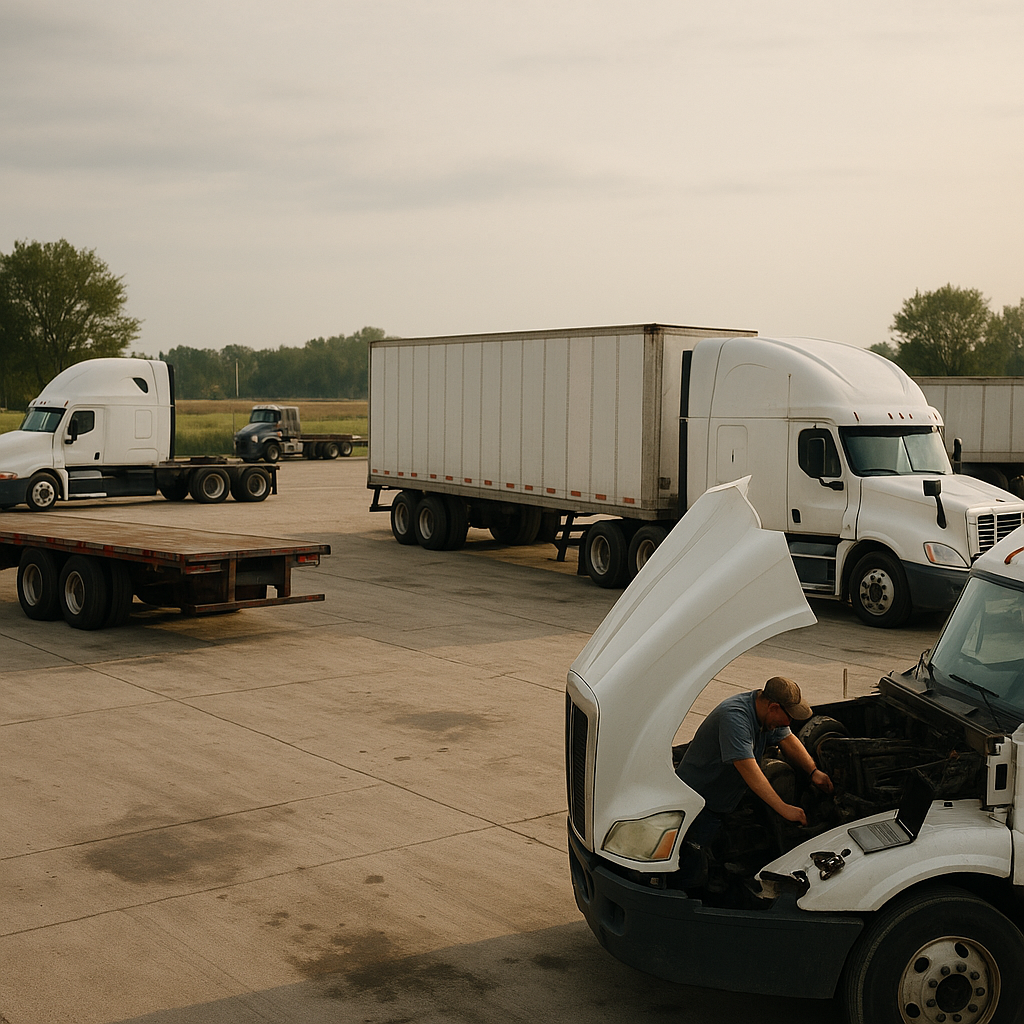

If you’re shopping for semi truck insurance Illinois, the biggest mistake is treating it like one simple product. It isn’t. What you need depends on whether you haul interstate or intrastate, what you haul, what the truck is worth, and whether you’re running one truck or a small fleet.
A lot of Illinois owner-operators get tripped up by bad shorthand. State minimums aren’t always your federal minimums, personal auto doesn’t replace commercial trucking insurance, and a cheap-looking quote can leave you stuck when a filing issue shuts your authority down.
Illinois Semi Truck Insurance: What It Covers and What Actually Matters#
Semi truck insurance in Illinois covers liability, cargo, truck damage, and other business risks, but the right setup depends on your operation. The key variables are interstate versus intrastate hauling, carrier type, truck weight, cargo, and whether you’re an owner-operator or running a small fleet.
Illinois rules matter, but federal FMCSA rules can matter more. If you run interstate freight, federal requirements tied to your operating authority and filings can control what has to be in place. Under 49 CFR Part 387, for-hire interstate carriers hauling general freight in vehicles over 10,001 lbs must carry at least $750,000 in public liability. That doesn’t mean every trucker needs the same limit.
Illinois rules vs federal FMCSA rules#
Public liability is the liability coverage that responds if your truck causes bodily injury, property damage, or environmental restoration costs in a covered accident. If you stay intrastate in Illinois, your insurance setup may follow state rules and contract demands. If you cross state lines or haul freight that puts you under FMCSA authority, federal filing requirements come into play.
Here’s the practical version. A one-truck owner-operator hauling general freight from Joliet into Indiana has a different compliance picture than a two-truck local fleet staying inside Illinois. Same state, different rules.
Who needs coverage: owner-operators and small fleets#
Owner-operators usually need the tightest match between coverage and operation because one mistake can stop the whole business. A five-truck fleet has more moving parts, but a single-truck operation feels a lapse faster because there isn’t another unit earning while one truck is parked.
What changes by carrier type, cargo, weight, and route#
Cargo changes things fast. General freight, autos, and hazmat don’t all carry the same insurance requirement. Weight matters too, and so does whether you’re for-hire or private. If you’re not sure what your setup actually calls for, that’s where a trucking-specific review matters more than generic online quoting.
Illinois Requirements, Filings, and Authority: What Must Be in Place#
Insurance alone doesn’t get an Illinois trucking operation fully compliant when authority and filings are involved. If you need operating authority, your policy has to support the right filing, the filing has to reach the right agency, and your dates have to line up so your truck can legally keep moving.
An MC number is the federal operating authority number many for-hire interstate carriers need before hauling regulated freight for compensation. An MCS-90 is an endorsement tied to certain motor carrier liability policies that helps satisfy federal financial responsibility rules. These are not the same thing as simply having an insurance card in the truck.
How insurance filings relate to operating authority#
If you’re a first-time carrier, buying a policy is only part of the job. FMCSA tracks whether required insurance filings are in place before authority becomes active. You can review authority and registration basics on FMCSA, and the financial responsibility rules sit under 49 CFR Part 387.
A common first-timer problem is timing. The truck is ready, the shipper is lined up, but the authority isn’t active because the filing chain isn’t complete yet. That can mean a week of payments going out while no freight money comes in.
What happens when filings lapse#
A filing lapse can interrupt operations fast. If a policy cancels, renews late, or gets replaced without the new filing landing correctly, your authority can run into trouble. That creates downtime, missed loads, and phone calls you didn’t have time for in the first place.
Think about a renewal where the old policy ends Friday at midnight and the new one starts Saturday, but the supporting filing doesn’t line up cleanly. On paper, that sounds minor. In real life, it can leave you unable to run until the issue gets fixed.
If that risk feels too familiar,
Practical examples of filing problems that stop a truck from working#
Example one: a new authority owner-operator buys coverage but assumes active insurance means active authority. It doesn’t. Until the filing side is complete, the truck may still sit.
Example two: a small Illinois fleet replaces a truck mid-term and updates the policy, but forgets to confirm every related document and effective date. One missing detail can create a preventable interruption.
Core Coverages for Illinois Semi Trucks#
Most Illinois semi truck policies combine a few core coverages, and not every truck needs every option. The basic job is to match coverage to how you haul, what you haul, what equipment you use, and which risks would hurt your business most if something went wrong.
Auto liability#
Auto liability pays when your truck causes covered injury or property damage to other people. This is the coverage tied most directly to legal and regulatory requirements. For many for-hire interstate carriers over 10,001 lbs hauling general freight, the federal minimum is $750,000 under 49 CFR Part 387, while auto haulers and hazmat operations can require more.
Motor truck cargo#
Motor truck cargo covers your customer’s freight if it’s lost or damaged from a covered cause while you’re hauling it. This matters if you’re for-hire and responsible for the load. A lot of owner-operators assume a broker’s cargo policy protects them automatically. That’s a bad assumption unless the contract and policy language say so.
Physical damage#
Physical damage covers damage to your truck itself. It usually includes collision and comprehensive, or fire and theft with combined additional coverage depending on the policy structure. If your tractor gets hit in a yard, stolen, or damaged by weather, this is the part that may respond.
Non-trucking liability and bobtail#
Non-trucking liability covers liability for non-business use when you’re not under dispatch. Bobtail usually refers to a tractor being operated without a trailer, but coverage terms vary, so the policy wording matters. The big gotcha is this: non-trucking liability does not cover paid hauling.
Trailer interchange and non-owned trailer physical damage#
Trailer interchange covers damage to a trailer in your care when you have a signed interchange agreement. Non-owned trailer physical damage covers certain damage to a trailer you don’t own without relying on that same interchange setup. Many non-intermodal owner-operators actually need the second conversation more than the first.
General liability and reefer breakdown#
General liability covers certain non-driving business claims, like a slip-and-fall at your premises or some loading-related exposures outside truck use. Reefer breakdown covers certain loss tied to refrigeration unit failure for temperature-controlled freight.
Not every Illinois truck needs all of this. A dry van owner-operator may focus on liability, cargo, and physical damage. A reefer operation may need a closer look at cargo conditions and refrigeration exposure. A local fleet with older paid-off tractors may make different physical damage choices than a fleet with financed equipment.
How Much Semi Truck Insurance Costs in Illinois#
Semi truck insurance costs in Illinois vary widely because insurers price the operation, not just the truck. The main drivers are driving history, truck value, cargo, operating radius, business type, requested coverages, and how much risk the insurer thinks your operation brings.
Main cost drivers#
Two trucks can look similar and price very differently. One owner-operator may run general freight in a steady regional radius with a clean record. Another may haul higher-risk cargo, run longer lanes, or have recent violations. Same state, same tractor class, different premium.

A deductible is the amount you pay out of pocket on a covered claim before insurance starts paying. Higher deductibles can reduce premium, but they also mean more cash pressure after a loss. NAIC has plain-language consumer insurance basics at NAIC.
Why used trucks can change the equation#
A used semi changes the conversation because truck value, repairability, downtime risk, and financing all matter. A paid-off older tractor might not justify the same physical damage strategy as a newer used truck with a note on it. But dropping or trimming coverage to save premium can backfire if one loss takes the truck off the road for good.
Here’s a real-world comparison. Truck A is an older Columbia used for intrastate general freight with lower stated value and no lender requirements. Truck B is a newer used Cascadia hauling interstate loads with a finance company requiring physical damage. Those are not going to quote the same way.
What owner-operators can control#
You can’t control every pricing factor, but you can control some. Clean loss history, accurate application details, realistic valuations, stable operations, and matching the policy to the actual work all help. Misclassifying cargo or radius might look cheaper at first, but it can create trouble later.
Where small fleets often overspend#
Small fleets often overspend when they buy broad options they don’t use, carry the wrong trailer coverage, or leave old equipment values untouched for too long. They also overspend when they move too fast and compare only the top-line premium instead of what each quote really covers.
Your actual premium depends on your operation, cargo, radius, driving history, and other factors.
Used Semi Truck Insurance in Illinois: What to Check Before You Bind#
Used semi truck insurance in Illinois needs extra attention around value, condition, financing, and downtime risk. Before you bind coverage, make sure the insured value makes sense, physical damage matches the truck’s real role in the business, and you understand what happens if the truck is parked, broken down, or stored.
Condition, value, and financing impact#
A financed used truck usually gives you less flexibility because the lender may require physical damage. A paid-off truck gives you more choice, but that doesn’t always mean less coverage is the smart move. If the truck is hard to replace quickly, the cheapest structure may be the most expensive mistake.
Older equipment and physical damage decisions#
Older tractors create judgment calls. If the truck’s market value is modest, carrying broad damage coverage with a deductible you can’t comfortably absorb may not fit. On the other hand, if that one truck is your whole income, going bare on truck damage can put you out of business after one collision.
Operational downtime and storage considerations#
Parking a truck doesn’t automatically mean every risk disappears. Theft, weather damage, fire, and storage-related losses may still matter. A good review before binding should include how often the truck sits, whether it stays active year-round, and what changes during repair periods.
Practical example: a paid-off older tractor used seasonally may call for a different physical damage conversation than a financed newer used truck running full-time from Rockford to St. Louis lanes.
How to Compare Quotes Without Missing a Coverage Gap#
To compare semi truck insurance quotes the right way, look past the premium and compare coverage scope, filings, exclusions, deductibles, and how the policy fits your actual operation. A lower number can hide missing protection, bad assumptions about your business, or a filing problem that costs far more than the difference in price.
The quote details that matter#
An exclusion is a policy term that says a certain kind of loss is not covered. When two quotes look close, check whether both include the same liability setup, cargo terms, truck value, deductible structure, and optional coverages. Also confirm whether the broker understands Illinois trucking operations instead of treating your business like a generic commercial auto risk.
Why a lower number can hide a bad fit#
Quote one may include liability and basic truck damage but no cargo. Quote two may cost more because it includes cargo, better trailer protection, and filing support that matches your authority. Those are not equal quotes.
You should also verify operating status and authority details on SAFER when reviewing carrier information or confirming how your operation is listed. That’s especially useful before switching setups or checking whether records reflect current status.
Questions to ask before switching brokers or carriers#
Ask what filings are needed, when the new policy becomes effective, when the old one should cancel, what exclusions matter for your cargo, and how downtime affects coverage. Use NAIC guidance as a plain-language baseline for comparing deductibles and exclusions, but make sure the final review is trucking-specific.
One common switching mistake is canceling first and confirming later. Don’t do that. Make sure active coverage, effective dates, and filing support line up before the old policy ends.
How to Start a Policy and Keep It Active When the Truck Is Down#
Starting or changing an Illinois trucking policy should be done with matching effective dates, correct truck details, and a plan for filings if authority is involved. If the truck goes down for repairs or sits for a while, review the policy before making changes so you don’t accidentally leave a gap or pay for the wrong setup.
Starting coverage without a gap#
The cleanest switch is simple in theory: new coverage starts before or exactly when old coverage ends, and any needed filings are confirmed. In practice, this is where rushed changes create problems. A truck replacement, trailer change, or authority update can all affect timing.
What to do during repairs or downtime#
If the truck is broken down, ask what still needs protection. You may still want coverage for fire, theft, weather, or other non-driving risks depending on the policy structure. But don’t assume a truck sitting in a yard should be insured the same way as one hauling every day.
When to update your broker after route or cargo changes#
Tell your broker when your radius changes, your cargo changes, you add drivers, or the truck moves from parked to active use. Those details affect rating and coverage fit. Fast updates help avoid claim surprises later.
FAQ#
Do I need different insurance if I run interstate versus intrastate in Illinois?
Yes. Interstate and intrastate trucking should not be treated the same because route type can change both regulatory requirements and the insurance structure that fits your operation. If you haul interstate, FMCSA rules, operating authority, and federal filings may apply depending on what you do and what you haul. If you stay intrastate in Illinois, state rules and contract requirements may drive more of the setup. The key is to match coverage to whether you’re for-hire or private, your vehicle weight, your cargo, and where you operate.
Is personal auto insurance enough for a semi truck?
No. Personal auto insurance is not built for commercial trucking risk and usually does not satisfy what a semi truck operation needs. A tractor used for hauling freight creates business liability, equipment risk, and often cargo exposure that personal policies are not designed to cover. It also won’t handle the filing side tied to many for-hire trucking operations. If you’re using the truck in business, you need commercial trucking coverage that matches how the truck is actually used, not a personal policy meant for ordinary driving.
What coverages should an owner-operator in Illinois start with?
Most owner-operators start by looking at auto liability first, because that’s the coverage most directly tied to legal operation and accident exposure. From there, the right mix often depends on whether you haul for-hire freight, what cargo you carry, whether the truck is financed, and whether you use non-owned trailers. Many operations then consider motor truck cargo, physical damage, and possibly non-trucking liability or trailer-related coverage. The right answer isn’t one fixed package. It should fit your truck, contracts, routes, and income risk if the truck goes down.
Why did my trucking quote go up after I switched trucks or cargo?
Because the risk changed. A different truck can change insured value, repair cost, safety features, downtime exposure, and lender requirements. A different cargo can change the insurer’s view of claim severity, theft risk, spoilage risk, or legal exposure. Radius matters too. A truck running short Illinois lanes may rate differently than one crossing multiple states every week. Even if your driving record stayed the same, changing equipment or freight type can make the operation look very different from an underwriting standpoint.
Can I keep insurance active if my truck is broken down or parked?
Often yes, but the right setup depends on what risks still exist while the truck is down. A parked or broken-down truck may still need protection against theft, fire, weather, or other non-driving losses. At the same time, you may not need the exact same structure you carried while the truck was actively hauling. The mistake is making assumptions without reviewing the policy. Before reducing, suspending, or changing coverage, check how downtime affects liability, truck damage, lender obligations, and any authority-related requirements tied to your operation.
What should I check before switching to a new Illinois trucking policy?
Check the effective dates first so there is no gap between the old and new policy. Then confirm any required filings, the listed trucks and drivers, deductibles, exclusions, cargo terms, and trailer-related coverage. Make sure the new policy matches your real operation, including radius, commodity, and whether you run interstate or intrastate. A lower premium does not automatically mean a better fit. The safest switch is one where coverage starts cleanly, filings are handled correctly, and the old policy is not canceled until the replacement is truly in place.





