
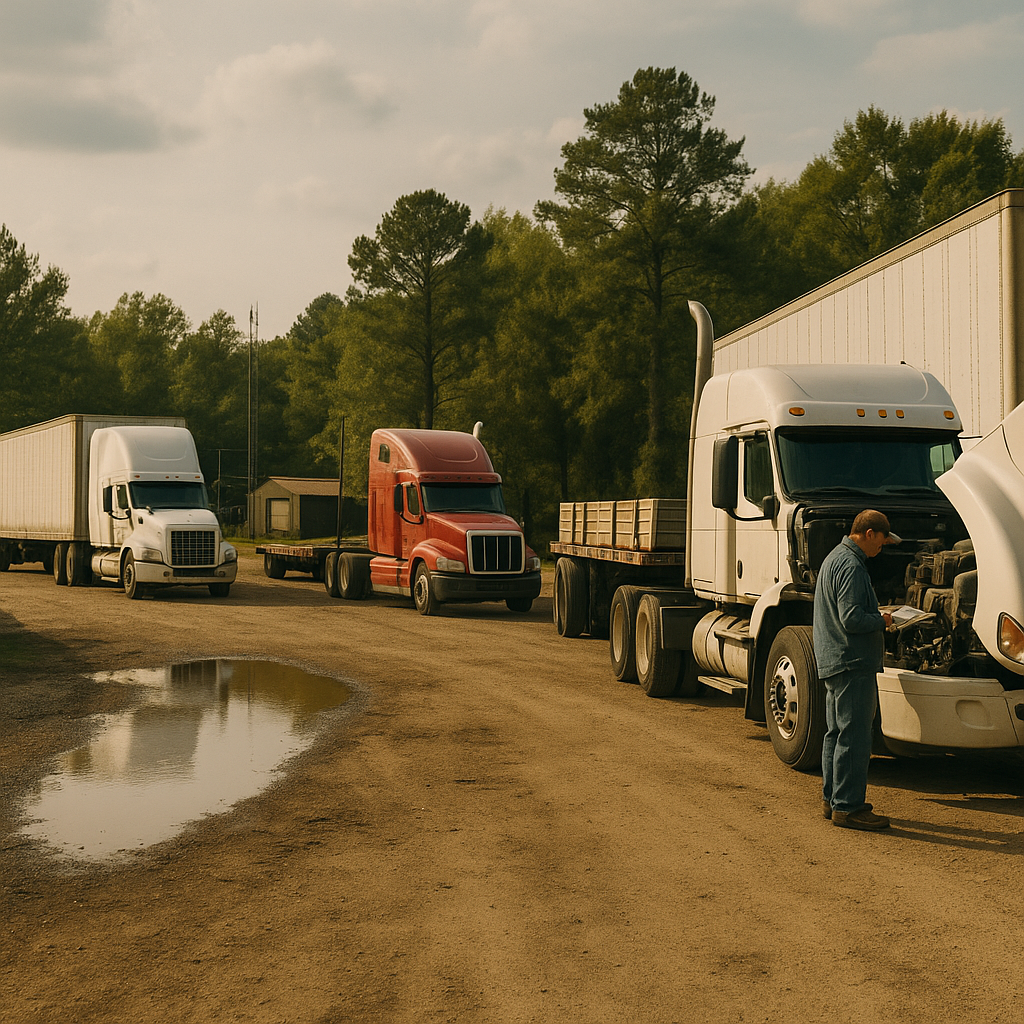

If you’re shopping for semi-truck insurance in Mississippi, don’t start with price alone. Start with your operation. A Mississippi owner-operator hauling general freight across state lines needs a different insurance setup than a private carrier staying in-state, and both need something very different from a personal auto policy.
Why Mississippi Truck Insurance Depends on Your Operation#
Your Mississippi truck insurance depends first on how you run, what you haul, and where you operate. State location matters, but carrier type, vehicle weight, cargo, and interstate versus intrastate use usually matter more when you’re figuring out what coverage is required and what coverage makes sense.
That’s where a lot of drivers get tripped up. They hear a number from another driver, read a forum comment, or assume their pickup policy works the same way as a semi policy. It doesn’t.
A personal auto policy is insurance written for private, non-commercial vehicle use. Commercial trucking coverage is insurance built for business use, heavier vehicles, cargo exposure, and carrier filings.
Owner-operators vs small fleets#
An owner-operator is a trucker who owns and runs one truck, sometimes under their own authority and sometimes leased to another motor carrier. A small fleet usually means a business running a handful of trucks, with more drivers, more scheduling exposure, and more chances for claims to hit multiple units.
Owner-operators often need a leaner coverage package, but the details matter. If you’re leased on, your primary liability setup may look different than a carrier running under its own MC number. Small fleets usually need tighter policy structure because one bad mismatch can affect several trucks at once.
Private carrier vs for-hire carrier#
A for-hire carrier transports someone else’s property for payment. A private carrier moves its own goods as part of its business.
That difference matters because filings, liability requirements, and contract expectations can change. A private carrier delivering its own equipment in Mississippi may not face the same setup as a for-hire interstate motor carrier moving general freight for customers.
Interstate vs intrastate use#
Interstate means your operation crosses state lines or is part of interstate commerce. Intrastate means the transportation stays within one state and is regulated at the state level.
If you cross state lines, FMCSA rules can control your minimum public liability requirement and filing needs. If you stay in Mississippi, state rules may drive the insurance picture instead. Either way, some coverages are mandatory and some are business decisions based on equipment, contracts, and risk.
Mississippi Requirements vs FMCSA Federal Rules#
Mississippi and FMCSA do not regulate the same thing in the same way. Mississippi handles state insurance regulation and state-level compliance context, while FMCSA controls federal financial responsibility and operating authority rules for interstate motor carriers.
The biggest mistake is mixing state minimums with federal trucking requirements. If you run interstate for-hire trucking, your federal rules can override the simple answer you might get from a basic auto insurance conversation.
What Mississippi regulates#
The Mississippi Department of Insurance oversees insurance regulation in the state. Mississippi can affect how policies are issued in the state and how insurance fits into registration, licensing, and state financial responsibility questions.
That doesn’t automatically tell you what a for-hire interstate semi needs under federal law. State rules matter, but they are not the whole answer for trucking.
What FMCSA regulates#
The FMCSA regulates interstate motor carriers, including financial responsibility tied to operating authority. Under 49 CFR Part 387, for-hire interstate carriers hauling general freight in vehicles over 10,001 lbs must carry at least $750,000 in public liability. Auto haulers and certain hazmat operations have different minimums, and those are higher.
A public liability requirement is the minimum liability insurance a motor carrier must carry for bodily injury, property damage, and environmental restoration where applicable. This is why “all truckers need $750K” is sloppy advice. The actual requirement depends on carrier type, weight, commodity, and whether you operate interstate or intrastate.
When filings are required#
A filing is an insurance form submitted to prove required coverage for regulatory purposes. If you’re applying for interstate for-hire authority, your insurance usually has to line up with your authority timing before you can legally dispatch under that authority.
If you’re leased to a motor carrier, your filing needs may look different because the motor carrier’s policy structure may control some of the primary liability picture. If you run under your own authority, the timing matters more because you can’t assume authority, policy effective date, and dispatch date will all fall neatly into place.
The lease structure can matter too. Under 49 CFR Part 376, written lease arrangements affect who is responsible for what during the lease term, which is one reason owner-operators should confirm how their insurance fits the contract instead of guessing.
Core Coverages for Semi-Truck Insurance#
The main semi-truck insurance coverages protect different parts of your business: liability for damage you cause, cargo for the freight you haul, physical damage for your truck, and specialty coverages for gaps created by trailers, non-business use, or temperature-controlled loads. You usually don’t need every coverage, but you do need the right mix.
Auto liability#
Auto liability is the coverage that pays when your truck causes bodily injury or property damage to others. This is the coverage most often tied to FMCSA minimums and state financial responsibility rules.
For many owner-operators running interstate for-hire general freight over the federal weight threshold, this is the foundation policy. A lot of shippers and brokers also expect higher limits than the legal minimum, so legal compliance and practical contract requirements are not always the same thing.
Motor truck cargo#
Motor truck cargo covers damage to the freight you’re hauling, subject to the policy terms and exclusions. If you haul for customers, cargo coverage is often a practical necessity even when a specific law does not say you must buy it.
Cargo needs to match the operation. General freight, refrigerated goods, higher-theft commodities, and excluded items can all change how underwriters look at the risk.
Physical damage#
Physical damage covers direct damage to your insured truck. In trucking, that usually means collision for crash damage and comprehensive or fire and theft coverage for non-collision losses like theft, vandalism, or weather.
If the truck is financed, this is often required by the lender. It’s also one of the most painful gaps to discover after a loss, especially on a newer tractor where the business can’t afford to replace the unit out of pocket.
General liability#
General liability covers certain non-driving business liability exposures, separate from truck driving accidents. For for-hire carriers, it may help with premises-type claims or other non-auto incidents tied to the business.
Not every operator needs the same limit or structure here. But if your contracts, terminals, or customer relationships expect it, skipping it can create problems even if your truck liability is fine.
Bobtail and non-trucking liability#
Bobtail usually refers to a tractor being operated without a trailer attached. Non-trucking liability covers non-business use of a truck when it’s not being used in paid hauling or business dispatch.
These terms get mashed together all the time, but they are not the same thing. Non-trucking liability is for non-business use only, not paid hauling. If you’re leased on and think one of these coverages protects every gap between loads, that assumption can turn into a denied claim.
Right after that kind of confusion shows up is usually when a driver realizes the policy they bought doesn’t match the way they actually run. If you’re not sure what fits your setup,

Trailer and reefer coverages#
Trailer interchange covers a trailer in your care under a written interchange agreement. Non-owned trailer physical damage covers certain trailer damage when you use a trailer you don’t own but don’t have a signed interchange agreement. Most non-intermodal owner-operators care more about the second situation than the first.
Reefer breakdown covers certain cargo loss tied to refrigeration unit breakdown. If you haul temperature-controlled freight, that coverage can matter a lot because regular cargo insurance may not solve a refrigeration-related loss by itself.
What Affects Semi-Truck Insurance Costs in Mississippi#
Semi-truck insurance costs in Mississippi depend more on your risk profile than on your ZIP code alone. The truck, driver, cargo, routes, limits, filings, and loss history all shape the premium, so two operators in the same city can get very different numbers for what looks like the same policy.
Truck value and age#
A more expensive truck usually costs more to insure for physical damage because there’s more value at risk. Age matters too, but not always in a simple newer-equals-higher way, because condition, repair costs, parts availability, and safety features all feed into underwriting.
Driving record and experience#
Underwriters look hard at accidents, violations, CDL experience, and prior commercial insurance history. A clean record doesn’t guarantee a low premium, but a rough record usually puts pressure on pricing and carrier options.
Cargo type and radius#
Hauling general freight is different from hauling higher-risk commodities. Running local Mississippi routes is different from long-haul interstate work. More miles, more states, and tougher cargo usually mean more exposure.
Operating authority and filing needs#
Running under your own MC number can change the insurance picture because filings and primary liability requirements become part of the equation. An MC number is federal operating authority issued for certain for-hire interstate carriers.
If your operation needs federal filings, that can narrow the market and affect how the policy is structured. It can also change effective-date timing, because the policy has to support the authority setup.
Deductibles and limits#
Higher liability limits often increase cost because the insurer is taking on more potential exposure. Higher deductibles can lower physical damage pricing, but they also mean more out-of-pocket cost when a loss happens.
And if you’re asking about monthly cost, remember this: monthly billing is usually just the annual premium broken into installments. It’s not a separate kind of insurance policy.
How to Choose Coverage by Business Type#
The right semi-truck insurance setup depends on your business model, not just the fact that you own a truck. Owner-operators, small fleets, private carriers, and for-hire carriers usually start with different questions, and the wrong starting point is where coverage gaps begin.
Owner-operator#
If you run one truck, start by figuring out whether you’re under your own authority or leased on. That affects liability structure, filing needs, and whether you may need coverages like cargo, physical damage, and non-trucking liability.
Bobtail confusion is common here. So is assuming financed equipment can go without physical damage because it isn’t legally required by FMCSA.
2–5 truck fleet#
A small fleet has more moving parts: more drivers, more schedules, and more ways one bad classification can create repeat problems. Fleets should pay extra attention to driver lists, garaging, unit values, and whether all trucks truly do the same kind of hauling.
Private carrier#
Private carriers should focus on what they haul for their own business and whether any contracts require added protection beyond the legal basics. Even without for-hire authority, cargo-like exposures and equipment protection still matter.
For-hire carrier#
For-hire carriers usually face the most scrutiny on liability, filings, cargo, and contract compliance. If you haul refrigerated freight, borrowed trailers, or specialized loads, those details should be built into the quote from the start instead of patched in later.
Common Coverage Gaps Mississippi Truckers Should Watch For#
The most common trucking insurance problems in Mississippi come from mismatch, not mystery. The policy says one thing, the truck is used another way, and the problem shows up only after a claim, an audit, or a dispatch deadline.
Personal auto policy confusion#
A personal auto policy usually does not fit a commercial semi operation. If the truck is being used in business, for hauling, or for carrier operations, personal-use coverage is generally the wrong tool.
Cargo and haul-type mismatch#
Cargo policies are not one-size-fits-all. If the policy is built for one class of freight and you start hauling something riskier, you can create a gap fast.
Bobtail vs non-trucking liability confusion#
This one burns a lot of leased owner-operators. Non-trucking liability is for non-business use only. It does not replace primary liability when you’re under dispatch or doing paid hauling.
Trailer and reefer exposures#
Borrowed trailers, customer trailers, and refrigerated loads all create exposures that basic liability does not solve. Trailer interchange and non-owned trailer physical damage are not interchangeable, and reefer losses need their own attention.
Coverage timing before authority#
Coverage timing matters before authority turns active, before plates are finalized, and before contracts go live. A lot of headaches come from trying to dispatch before all the policy pieces and filings actually line up. If your timeline is tight and you want help sorting the sequence,
How to Get a Quote for Mississippi Semi-Truck Insurance#
Getting a useful Mississippi semi-truck insurance quote goes faster when you gather the operation details first. Underwriters usually want the same core facts: truck info, where it’s garaged, who drives it, what it hauls, how far it runs, and what limits or coverages you need.
Information to gather#
Have your unit year, make, VIN, stated value, garaging city, and business structure ready. You should also know whether you’re operating under your own authority, what cargo you plan to haul, and whether you’ll run only in Mississippi or across state lines.
What underwriters usually ask#
Expect questions about CDL history, violations, prior losses, years of commercial experience, radius, and whether the truck is financed. If you already have a USDOT or MC number, have that ready too.
How filings fit into onboarding#
If your operation needs filings, timing matters before first dispatch. You can verify federal status and authority details through SAFER, which helps confirm whether your USDOT and MC information is lined up correctly.
LogRock specializes in trucking insurance for owner-operators and small fleets, so the process is built around trucking details rather than generic business-auto questions.
Mississippi Semi-Truck Insurance FAQs#
Semi-truck insurance questions in Mississippi usually come down to four things: what’s required, what’s optional, what affects price, and how to compare quotes fairly. The best way to evaluate a quote is to keep the operation details and coverage assumptions consistent, then compare the policy structure instead of chasing a single advertised number.
How much is commercial truck insurance in Mississippi?#
Commercial truck insurance in Mississippi varies based on your operation, not just your location. Underwriters look at whether you’re for-hire or private, interstate or intrastate, what cargo you haul, your driving history, your truck’s value, and whether you need filings tied to operating authority. Two drivers in the same Mississippi city can pay very different premiums if one hauls refrigerated freight under their own authority and the other runs locally with a simpler setup. When comparing quotes, make sure the liability limit, cargo coverage, deductibles, and specialty coverages are actually the same.
What is the best insurance for a semi truck?#
The best insurance for a semi truck is the coverage mix that matches how the truck is actually used. For many operators, that starts with auto liability and then adds cargo, physical damage, and any specialty coverage the operation creates, such as non-trucking liability, trailer protection, or reefer breakdown. “Best” does not mean the same thing for every trucker. A leased owner-operator, a private carrier, and a small fleet under their own authority can all need different policy structures. The right policy is the one that fits your contracts, cargo, equipment, and risk tolerance.
How much does a $1,000,000 liability insurance policy cost?#
A $1,000,000 liability policy does not have one standard price. The premium depends on your carrier type, operating radius, truck class, cargo, driver experience, violations, prior claims, and whether the policy must support federal filings. The same limit can quote very differently for two operators because the insurer is pricing the risk behind the limit, not just the number on the declarations page. That’s why limit-only comparisons can be misleading. A solid comparison keeps the operation details the same and then looks at how each policy handles exclusions, deductibles, and required coverages.
How much does it cost to insure a semi truck per month?#
Monthly cost is usually just the annual premium divided into installments, sometimes with fees depending on the billing setup. It’s not a separate product. What changes the monthly number is the same thing that changes the annual premium: liability limits, truck value, deductibles, cargo type, operating radius, claims history, and filing requirements. If you want to compare monthly payments fairly, compare policies with the same coverage structure and down-payment terms. Otherwise, one quote can look lower each month simply because it strips out coverage or spreads the payments differently.
Do I need Mississippi coverage, FMCSA coverage, or both?#
It depends on how you operate. If you stay intrastate, Mississippi rules may drive most of the insurance requirement. If you’re a for-hire interstate motor carrier, FMCSA rules can control your public liability minimums and filing needs under 49 CFR Part 387. Some operations deal with both state and federal requirements at the same time, which is why “What does Mississippi require?” is only half the question. You also need to ask whether you’re private or for-hire, what the truck weighs, what commodity you haul, and whether your freight movement is part of interstate commerce.





