
A semi truck theft insurance claim moves fastest when you report the theft right away, save your records, and know which part of your policy actually applies. The big mistake is assuming one trucking policy covers the truck, the cargo, and any liability the same way. It usually doesn’t.
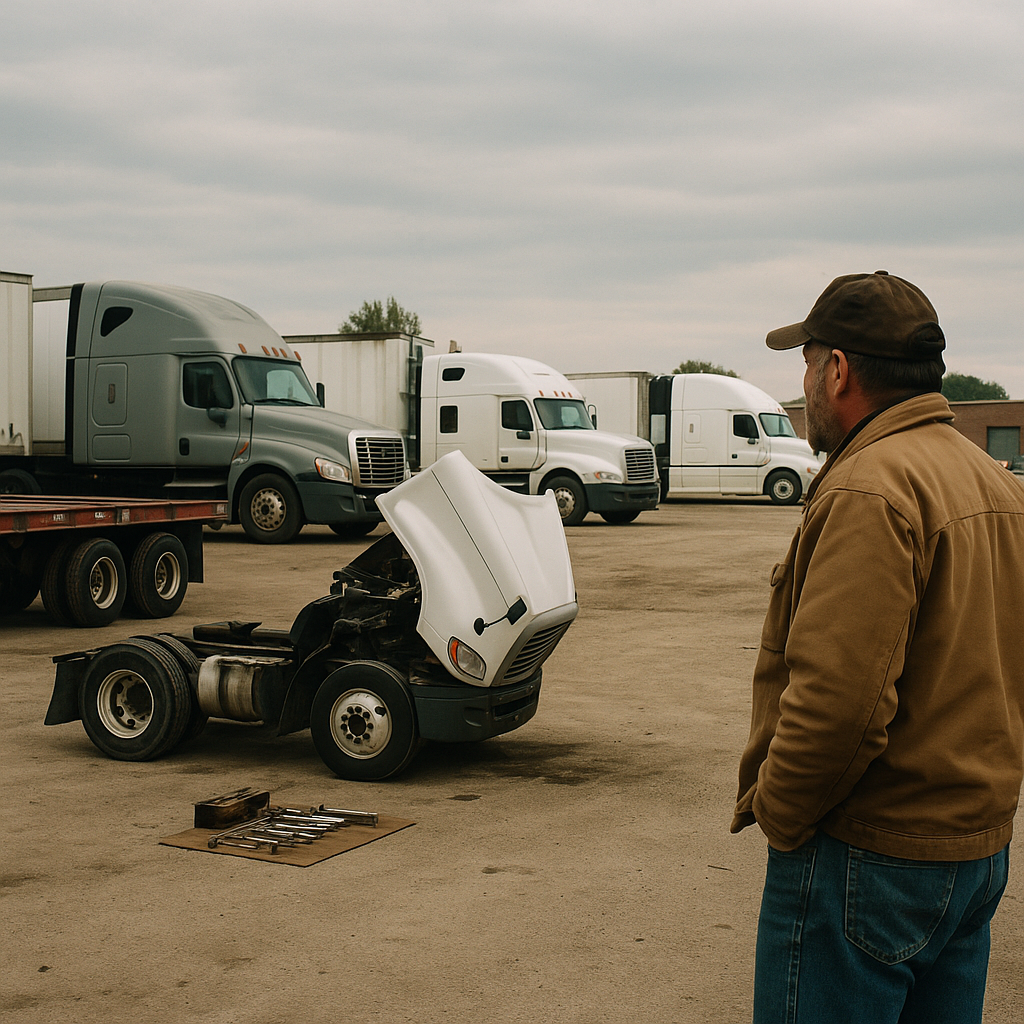
If your tractor disappears from a truck stop, yard, or repair lot, the first few hours matter. This guide breaks down what to do first, what proof insurers usually want, how the claim gets investigated, and how payment is usually calculated.
What to do first after a semi truck is stolen#
If your semi truck is stolen, first confirm it wasn’t towed, moved, or taken by someone with permission, then report it to police and your insurer immediately. After that, lock down documents, key records, and tracking data before anything gets lost or overwritten. Delays don’t help and can complicate the claim review.
Confirm the truck is truly missing#
Start with the obvious checks before panic takes over. Call the yard, truck stop, repair shop, dispatcher, or anyone else who may have had access. If the truck had GPS, ELD, or camera systems, check the last known location right away.
This matters for two reasons. First, a tow, repo, or authorized move is handled differently than a theft. Second, the timeline starts forming immediately, and your insurer will want a clean story of when you last saw the truck and when you discovered it missing.
Call police and get the report started#
Report the theft to local law enforcement as soon as you confirm the truck is gone. Be ready with the VIN, unit number, plate, USDOT information, where the truck was parked, when it was last seen, and any tracking data you have.
A VIN is the vehicle identification number, the unique serial number tied to that truck. If the tractor, trailer, or both are missing, make that clear in the report.
Notify your insurer right away#
After police, call your insurance carrier or claims number. Don’t wait until you “have everything together.” Most insurers would rather open the file early and collect more details after than learn about the theft days later.
If the truck had cargo on it, say that immediately because cargo is usually handled under a separate coverage part. If you wait too long, camera footage disappears, GPS logs expire, and witness memory gets worse.
A stolen truck can turn into a bigger mess fast if the policy setup isn’t clear or the claim facts don’t line up. If you’re not sure what coverage should have been in place for your operation,
Preserve key documents and tracking data#
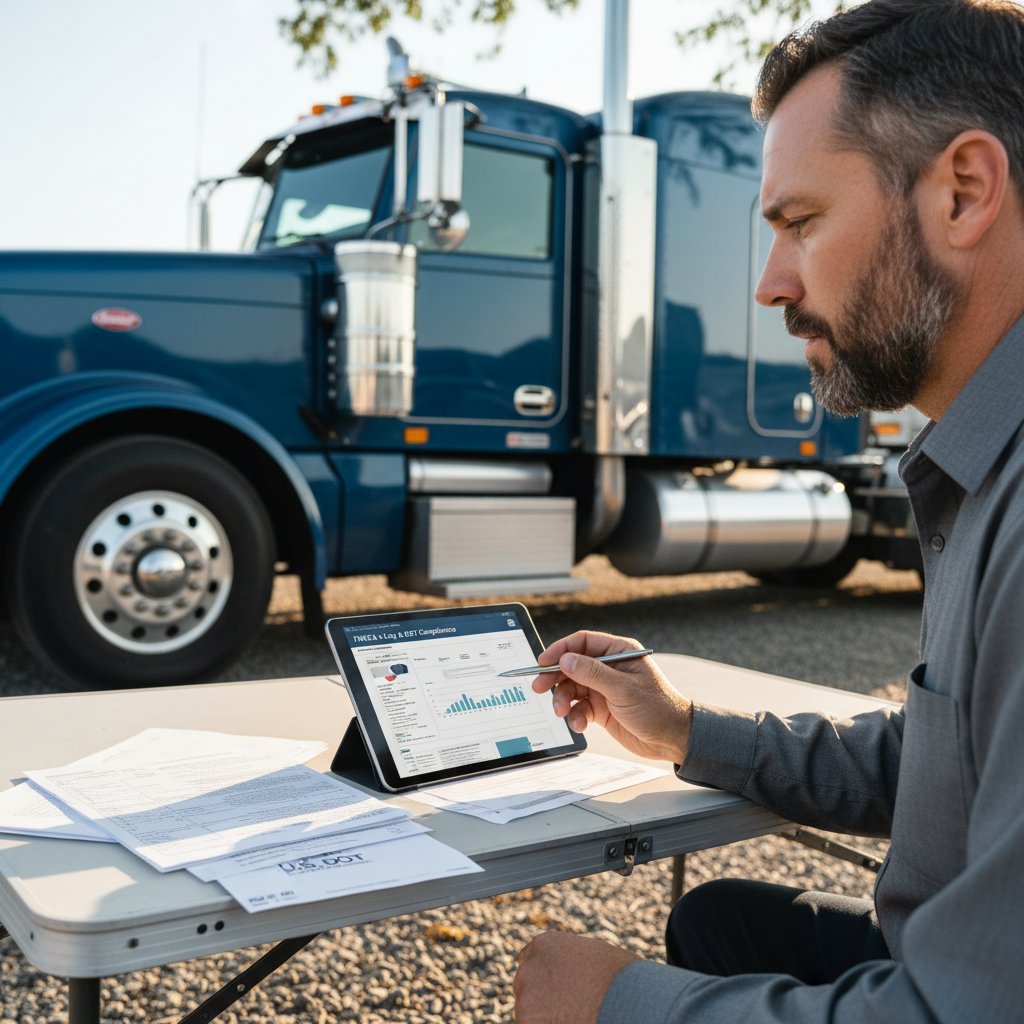
Save everything tied to the truck and the timeline while it’s fresh:
- Police report number and officer contact
- Registration and title records
- Finance or lien documents
- Photos of the truck and any unique equipment
- GPS, ELD, dashcam, and geofence records
- Repair, maintenance, and yard invoices
- Key inventory and who had access
- Dispatch records if the truck was under load
A lienholder is the lender with a legal interest in the truck until the loan is paid off. If the truck is financed, that lender may need to be involved early.
Which coverage may respond to a stolen semi truck#
A stolen semi truck is usually a physical damage claim on the truck itself, not an auto liability claim. Cargo loss is separate, and liability questions usually come up only if the stolen truck later causes damage or injury. Coverage depends on your policy form, endorsements, and how the truck was insured for your operation.
For trucking, it’s easy to mix up federal liability requirements with theft coverage. FMCSA oversight and federal financial responsibility rules matter for operating authority, but they don’t mean the FMCSA pays theft claims or that required liability insurance covers a stolen tractor. FMCSA regulates motor carriers, while the insurance claim itself is handled under your policy terms and carrier process. You can verify carrier operating status through FMCSA and SAFER.
Under 49 CFR Part 387, for-hire interstate carriers must meet certain public liability minimums based on carrier type, weight, and commodity. Public liability means bodily injury, property damage, and environmental restoration obligations to others. It is not the same thing as theft coverage for your own truck.
Physical damage coverage for the truck itself#
Physical damage is the coverage bucket that protects your own truck from direct loss, subject to the policy terms. For theft, this is usually the main place the tractor claim lives.
On trucking policies, physical damage often includes collision and comprehensive-style causes of loss. Theft typically falls under the non-collision side, but the exact wording matters, especially if the policy uses different endorsements or a named cause structure.
Fire and theft or comprehensive-style coverage variants#
Some policies may refer to comprehensive coverage, while others may use fire and theft with CAC. CAC means combined additional coverage, a package structure used on some trucking policies instead of a standard personal-auto style label.
The key point is simple: don’t assume “I have insurance on the truck” means theft is automatically covered. Check whether the truck had physical damage coverage, how the loss causes are listed, and whether any restrictions apply to that unit, equipment, or use.
Cargo coverage is separate from truck theft#
Motor truck cargo covers freight you’re hauling for someone else, not the truck itself. If the tractor is stolen while loaded, there may be one claim for the truck and another for the cargo, with different rules, limits, deductibles, and documentation.
That catches a lot of operators off guard. A truck can be covered for theft while the cargo issue gets reviewed separately, or the opposite can happen depending on the facts and policy setup.
Liability coverage usually does not pay for the stolen truck#
Auto liability pays for covered damage or injury you cause to others, not for your own stolen tractor. If a thief later uses the truck in a crash or another crime, that becomes a different legal and coverage question than the theft loss itself.
That doesn’t mean liability never gets discussed after a theft. It means the first question is still whether the truck loss is covered under physical damage, not under the FMCSA-tied liability portion of the policy.
What proof insurers usually ask for in a theft claim#
Insurers usually ask for records that prove the truck existed, you had an insurable interest in it, it was actually taken, and the timeline makes sense. Expect requests for the police report, ownership records, keys, access details, tracking data, and anything showing where the truck was before it disappeared. Missing records don’t kill every claim, but they often slow it down.
Police report and incident details#
The police report is usually the backbone of the file. It gives the insurer a formal theft record, a timeline, location details, and basic identifiers like the VIN and plate.
You’ll also be asked for your own written or recorded account. Keep it accurate and straightforward: when the truck was last seen, who last used it, where it was parked, what security measures were in place, and how you discovered it missing.
Keys, access, and driver control records#
Most carriers will ask how many keys existed, where they were, who had them, and whether any spares were unaccounted for. That’s normal claim validation, not an automatic accusation.
If multiple drivers, mechanics, yard staff, or family members had access, write that out clearly. If the truck had a remote-start, keypad, or telematics access feature, mention that too.
Proof of ownership and financing#
Be ready to show title, registration, bill of sale, loan paperwork, and any lease or finance agreement. These documents prove ownership and show whether a lienholder must be named on any settlement check.
Underwriting is the insurer’s process of evaluating risk before and after issuing a policy. In a theft claim, the carrier may compare what was scheduled on the policy against the truck you say was stolen, including year, make, unit, and declared equipment.
Tracking, photos, and maintenance or location history#
GPS pings, ELD records, toll data, fuel stops, repair invoices, and recent photos can all help confirm the truck’s identity and movement. If the truck had custom equipment, upgrades, or permanently attached gear, save proof of that too.
Good records tighten the timeline. Bad or inconsistent records don’t always mean denial, but they can send the file into a deeper investigation queue.
How insurers investigate theft and decide whether to pay#
A theft claim investigation usually focuses on four things: whether the policy covered that truck for theft, whether the truck was actually stolen, whether the timeline is consistent, and whether the loss value can be documented. Questions about security, keys, drivers, and recovery efforts are standard parts of that process. They don’t automatically mean the insurer thinks fraud occurred.
A claims adjuster often starts by reviewing the policy schedule, the reported loss date, and the police information. They may also verify carrier details through SAFER, especially if the truck’s operation, garaging, or use matters to the claim facts.
Timeline of discovery and notice#
The first timeline question is simple: when was the truck last known to be in your control, and when was the theft discovered? The second is whether notice to police and the insurer happened promptly.
If there are long gaps, the insurer may ask more questions. That’s because theft investigations depend heavily on early facts, footage, tracking logs, and witness accounts.
Security and negligence review#
The insurer may ask where the truck was parked, whether it was in a secured lot, whether it was left running, and what anti-theft measures were in place. That’s part of understanding how the loss happened.

It doesn’t automatically mean “you were negligent, so no coverage.” But if the facts show major gaps between how the truck was represented and how it was actually stored or used, that can create friction in the review.
Questions about authorized drivers and keys#
Expect questions about who had permission to use the truck, who last drove it, and whether any keys are missing. If there was a driver dispute, terminated employee issue, or family-use situation, say that early.
A clean explanation helps more than a defensive one. Insurers mainly want to separate theft from unauthorized use, civil disputes, or other situations that may be handled differently under the policy.
Recovery attempts and salvage handling#
If the truck is recovered, the claim doesn’t just stop. The insurer may inspect it for damage, missing parts, stripping, or vandalism before deciding the final payment path.
Salvage is the remaining value of damaged or recovered property after a loss. If the truck is recovered with heavy damage, salvage value can become part of how the final settlement is calculated.
How payment is usually calculated on a stolen truck#
Most stolen-truck claims are paid based on the policy’s valuation method, then reduced by the deductible and adjusted for any lienholder interest. In plain terms, insurance usually pays the covered value of the truck, not automatically what it would cost you to buy another one tomorrow. If the truck is financed, the lender may get paid first.
The NAIC provides plain-language consumer explanations of deductibles, claims, and settlement basics that line up with how many commercial losses are handled. The same basic idea applies here: your deductible comes out, and the valuation method in the policy controls the starting point.
Actual cash value vs. replacement expectations#
Actual cash value is the truck’s value at the time of loss, not its original purchase price and not always the price of a replacement truck in today’s market. That difference is where many owner-operators get frustrated.
If you spent money on upgrades, engine work, or attached equipment, don’t assume the carrier already has that value in the file. You may need invoices, photos, or endorsements showing those items were insured.
What happens if the truck is financed#
If a lienholder is listed, the settlement check may include that lender or go directly to the loan balance first. If the payoff is higher than the covered value, you may still owe money after the claim settles.
That’s one of the hardest parts of a theft loss. Insurance may pay the covered value correctly, and you can still end up short if the loan balance outran the truck’s actual cash value.
Deductibles and claim checks#
A deductible is the amount you absorb before insurance pays the covered loss. If the truck’s covered value is accepted, the deductible is subtracted from that amount.
How the check is issued depends on ownership and financing. An owned truck with no lender is simpler. A financed truck usually adds another signature, another party, and sometimes more paperwork.
When payout may be reduced or delayed#
Payment can be delayed if the truck might still be recoverable, if ownership records don’t match, if keys are missing without explanation, or if attached equipment values aren’t documented. Delays can also happen when the policy schedule doesn’t clearly match the stolen unit.
This is where details matter. A clean file with matching VIN records, prompt reporting, and good documentation usually moves better than a file built from memory days later.
Common reasons a theft claim gets delayed or challenged#
Theft claims usually get delayed because the file is incomplete, the reporting timeline is weak, or the policy details don’t match the truck and operation. Most of these problems are paperwork and scope issues, not dramatic fraud findings. The fix is usually better documentation and a clearer explanation of the loss.
Late reporting#
Waiting too long to call police or the insurer is one of the easiest ways to make the claim harder. By then, camera footage may be gone and tracking logs may be incomplete.
Missing documents#
No title copy, no finance records, no recent photos, and no repair trail can all slow down value review. The truck may still be covered, but the adjuster has less to work with.
Inconsistent key or driver records#
If one version says only one key existed and another says there were three, expect follow-up questions. The same goes for confusion about who last had possession of the truck.
Policy scope gaps and excluded operations#
A theft claim can also run into trouble if the truck wasn’t properly scheduled, the use described in underwriting doesn’t match the actual operation, or the policy structure left out the theft-related physical damage piece. If you’re not sure whether your policy scope fits how you actually run,
Will a theft claim raise your insurance cost#
A theft claim can affect pricing or renewal, but there is no universal rule that says one theft automatically means a specific increase. Underwriters usually look at the full picture: claim history, garaging, operating area, security controls, and whether the theft appears to be an isolated event or part of a broader risk pattern.
Renewal review after a claim#
At renewal, the insurer may reassess your operation more closely. A single theft loss may not hit the same as repeated thefts, loose key control, or a pattern of parking in high-risk spots.
What underwriters may look at next#
They may ask where the truck is normally parked, whether tracking is active, how spare keys are controlled, and whether the truck’s route patterns changed. They can also review whether the unit’s stated use matched actual use.
Ways to reduce future theft risk#
The best move before renewal is to tighten the obvious controls. Clean up spare key handling, improve parking habits, keep GPS active, and document any anti-theft steps you added after the loss.
When to review coverage before renewal#
Don’t wait until the renewal offer lands. Review the physical damage setup, attached equipment values, cargo structure, and lender information ahead of time so the next policy reflects the truck you actually run.
How to lower theft risk before the next load#
The best theft prevention plan is usually a set of repeatable habits, not just expensive gear. Park smarter, control keys, keep tracking active, and maintain records that make recovery and claims easier. Those same habits can also help during underwriting and renewal review.
Parking and route habits#
Use well-lit, active locations when possible. Avoid leaving the truck unattended for long periods with a predictable routine, especially in unsecured areas.
If the truck must sit, tell someone where it is and keep the location record. Consistent garaging and parking habits matter both for prevention and for explaining a later loss.
Key and spare management#
Know exactly how many keys exist and who has them. Don’t let old drivers, repair shops, or yard staff stay on the list longer than needed.
A written key log sounds basic, but it solves a lot of claim headaches later.
Tracking and recovery tools#
GPS, geofencing alerts, kill-switch technology where appropriate, and camera systems can all help. Even simple telematics records can tighten the timeline if the truck disappears.
Documentation and security checklist#
Use this short checklist before the next load:
- Photograph the truck and major attached equipment
- Save VIN, plate, and finance records in the cloud
- Keep a current key and access log
- Verify GPS and alert settings work
- Record where the truck is normally parked
- Update the policy if the unit, value, or use changed
FAQ#
What does insurance do if your truck is stolen?
If your truck is stolen, insurance usually opens a claim, confirms what coverage applies, investigates the facts, and then either pays or denies the loss based on the policy and documentation. For the truck itself, the claim usually falls under physical damage, not auto liability. The carrier will want the police report, ownership records, key and access information, and the timeline of when the truck was last seen and reported missing. If cargo was on the truck, that may trigger a separate cargo review with its own requirements.
How much does insurance pay out for theft?
Insurance usually pays based on the valuation method in the policy, often actual cash value, minus your deductible and subject to any lender’s interest. Actual cash value means the truck’s value at the time of loss, not necessarily what it costs to replace it today. If the truck is financed, the lienholder may be paid first or included on the settlement check. If the payoff amount is higher than the covered value, you may still owe money after the claim closes. That’s why truck value documentation matters so much.
What proof do I need for a theft claim?
Most theft claims require a police report, the truck’s VIN, registration, title or bill of sale, and any finance paperwork showing ownership and lienholder details. Insurers also commonly ask about keys, spare keys, who had access, who last drove the truck, and where it was parked. GPS data, ELD records, toll history, fuel receipts, photos, maintenance records, and dispatch records can all help prove the timeline and support the truck’s identity and value. The cleaner the record trail, the smoother the review usually goes.
Does your insurance go up after a theft claim?
A theft claim can affect your insurance cost or renewal options, but the result depends on the insurer’s underwriting review, not a fixed rule. Carriers may look at your overall claim history, parking and garaging practices, operating area, theft controls, and whether this appears to be a one-off event or part of a pattern. Some operators mainly see tougher renewal questions rather than a dramatic change. The best response is to improve key control, tracking, storage habits, and documentation before the next renewal cycle.
What happens if the stolen truck is found later?
If the truck is recovered, the insurer usually inspects it before finalizing payment. The claim may shift from a total theft loss to damage, vandalism, or partial theft of parts and equipment depending on the condition of the truck. If the truck was stripped, damaged, or contaminated, those facts affect the settlement. If a payment was already issued, recovery can create additional steps involving ownership, salvage, and the lender if one is involved. Recovery doesn’t erase the claim; it changes how the loss is measured.