
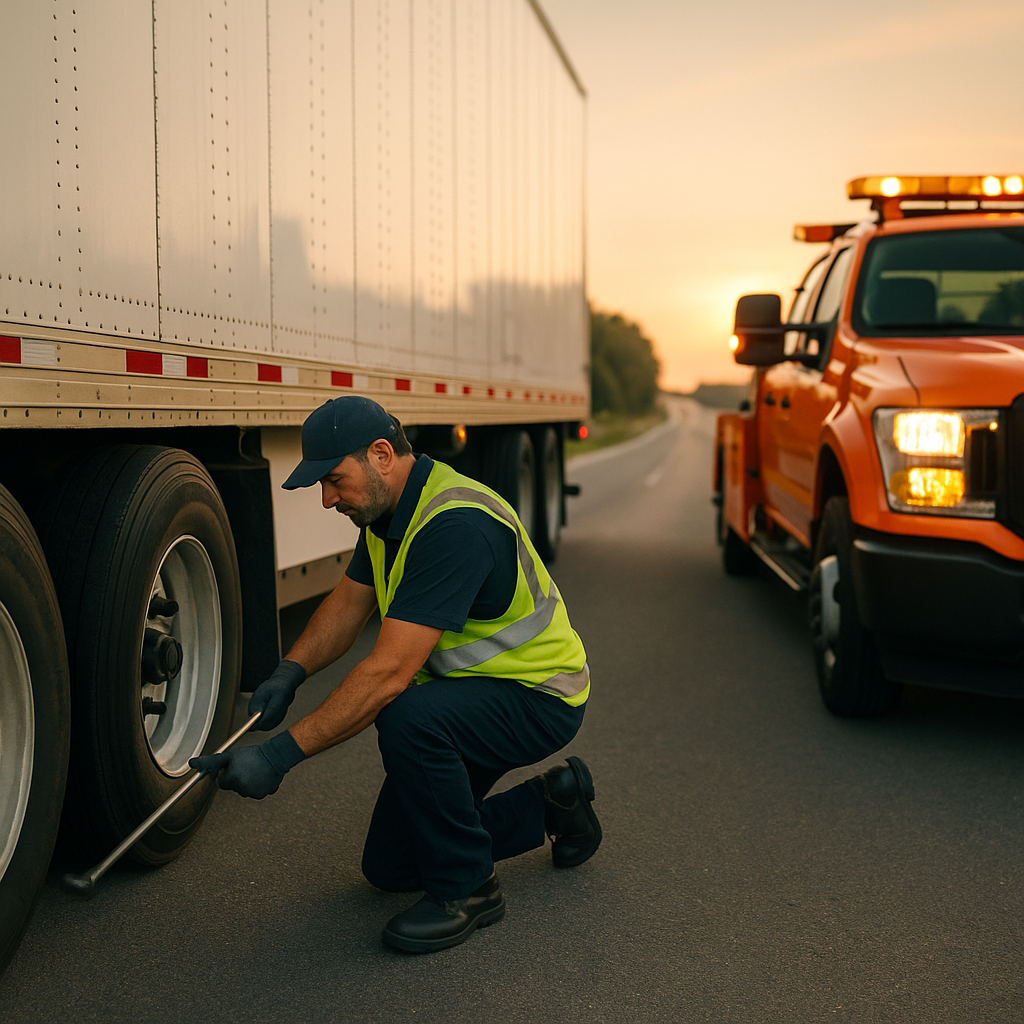

Trailer roadside assistance: 7 services, 2026 cost ranges, and what it doesn’t cover vs commercial truck insurance. Compare limits—call now.
Trailer roadside assistance is a membership or pay-per-call dispatch service that sends help when a trailer can’t safely roll—most often for tire service, minor mechanical fixes, or towing to a shop. It’s built to reduce downtime and surprise invoices, not to replace insurance coverage.
One shoulder breakdown can quickly turn into a missed appointment, a reschedule fee, and a bill you didn’t plan for. Roadside help also isn’t a substitute for insurance (liability, physical damage, cargo), so if you need a clean baseline, start with commercial truck insurance basics.
Table of Contents
Reading time: 7 minutes

Key Takeaways
Trailer roadside assistance plans typically focus on dispatch + tire service + towing, and they typically exclude liability claims, cargo claims, and collision repairs that fall under commercial trucking insurance policies. Use these points as your quick filter when comparing providers.
- Coverage is usually tire + tow + dispatch: Wheel-end, brakes, and electrical may be limited or excluded—verify before you buy.
- Costs depend on trailer type, location, and tow miles: One after-hours commercial tire event can rival a full year of membership.
- “Nationwide” doesn’t guarantee speed: Vendor density and after-hours coverage matter more than marketing.
- Roadside complements insurance, not replaces it: You still need the right coverage stack for your operation.
What Trailer Roadside Assistance Is (and Who It’s For)
Trailer roadside assistance is a membership or pay-per-call dispatch service that sends a local vendor for trailer tire service, minor repairs, or towing, and the benefit is controlled by per-incident caps, event limits, and exclusions. The goal is to shorten “time-to-help” and make the invoice more predictable.
What it is (plain English)
You call a number (or use an app) when the trailer is the problem—flat tire, wheel-end heat, brake trouble, light failure, or the trailer needs a tow to a repair facility. The provider dispatches a vendor, then bills according to your plan rules.
Why it matters (real business risk)
Downtime is what hurts first: missed appointments, rejected loads, and cash-flow stress from paying a retail emergency invoice. A solid plan helps you in two ways: faster dispatch (less time calling around) and fewer “panic-price” surprises.
Who needs it
- Owner-operators: Dry van, reefer, step deck, and flatbed operations—especially nights, weekends, or rural lanes.
- Hotshot operators: Goosenecks and equipment trailers still have tires, bearings, lights, and brakes that fail at the worst times.
- Small fleets: Standardizing how calls are handled keeps dispatch, drivers, and accounting on the same page.
If you run a 1–5 truck operation and want practical tools for lanes, risk, and operations, keep this bookmarked: owner-operator resources hub.
What Trailer Roadside Assistance Covers (7 Common Services)
Most commercial trailer roadside assistance programs cover seven core event types—tire service, towing, mobile mechanic dispatch, brake triage, electrical troubleshooting, wheel-end heat events, and limited lock/latch help—but the fine print decides what’s actually paid. Treat every bullet below as “confirm this in writing.”
1) Trailer tire roadside assistance (repair/replace)
Tires are the #1 trailer roadside call. Confirm they can service your tire size/load range and whether the plan covers service call, labor, and replacement tires (many plans are “labor only” or cap the tire amount).
- Ask: Is tire cost covered, or only mounting and labor?
- Ask: Are there annual tire-event limits (example: “5 tire events/year”)?
- Ask: Do they stock your commercial tire size, or will they “dispatch only”?
2) Towing/transport to a repair facility
A tow benefit only works if the included miles match your lanes. A plan that includes 10 miles won’t help much if the nearest heavy-duty shop is 45 miles away.
- Ask: How many towing miles are included per event?
- Ask: Is it direct-bill or reimbursement?
3) Mobile trailer mechanic dispatch (minor repairs)
Some providers dispatch a mobile tech for small fixes like air lines, minor electrical, or adjustments. Most exclude major component work and cap labor dollars per incident.
4) Brake issues (triage vs repair)
Brake problems often become a “safe-to-move?” decision. Many plans will cover the call-out and basic assessment, but not a full roadside brake job.
5) Electrical/lighting troubleshooting
Common failures include 7-way plug issues, corroded connectors, lighting outages, and ABS light complaints. Some vendors will troubleshoot on scene; other plans classify it as “mechanical” and cap or deny.
6) Wheel-end / hub / bearing heat events
Wheel-end heat, smoke, grease loss, or a suspected bearing issue often leads to a tow recommendation rather than a roadside repair. This is where low caps can turn into a big out-of-pocket bill.
7) Lock/latch/door issues (limited)
Some plans include limited help for latch and door problems; many don’t. Don’t assume it’s covered just because it’s “roadside.”
What it usually does not cover (read this twice)
Roadside assistance is not insurance, and it typically does not pay for collision damage, liability claims, cargo loss/spoilage, or broad physical damage claims. If you pull trailers you don’t own, don’t confuse dispatch service with exposure on non-owned equipment—separate roadside service from coverage needs like trailer interchange insurance.
Roadside help also doesn’t replace trucking insurance solutions (commercial trucking liability, physical damage, cargo, etc.). It’s an operations tool—not a claim solution.
Trailer Roadside Assistance Cost in 2026 (and the Downtime Math)
In 2026, trailer roadside assistance memberships commonly cost $0–$450 per year, while pay-per-event calls often run $250–$900+ depending on after-hours service, tire size, vendor availability, and towing miles. Those numbers move fast when you add remote locations, severe weather, or specialized equipment.
Two pricing models you’ll see
- Membership/subscription: Often $0–$450/year depending on tier, limits, and what’s included.
- Pay-per-event: Often $250–$900+ per call based on time of day, location, tire size, and towing distance.
What drives price the most
- Commercial tire capability: Big difference from consumer “boat trailer” plans.
- Towing miles included: A major cost driver on rural lanes.
- Per-incident caps: Labor, parts, tire, and tow caps determine your out-of-pocket cost.
- Annual event limits: Avoid “benefit exhausted” surprises mid-year.
Downtime math (why this is a business decision)
ATRI (American Transportation Research Institute) regularly highlights repair and maintenance as a major operating cost category for trucking in its Operational Costs of Trucking research (see: https://truckingresearch.org/). In plain terms, shortening one ugly breakdown can protect your week.
If you want to run this with your own numbers, build a simple cost-per-mile view and plug in your downtime estimate (lost miles, reschedule penalties, extra labor). Here’s a reference point: trucking cost-per-mile breakdown.
Simple test: If one after-hours tire event (service call + labor + tire + lost time) equals most of your annual membership cost, the plan can pay for itself—but only if it truly covers your trailer type and lanes.
Provider Comparison Checklist: Response Time, Coverage, and Fine Print (Plus What to Do When You Break Down)
A roadside plan’s real-world performance is determined by 24/7 dispatch, vendor density on your lanes, towing miles included, per-incident caps, and whether the provider can direct-bill vendors instead of reimbursing you. If you can’t confirm these items, you’re buying marketing—not response.
Provider comparison matrix (screenshot this)
| Compare This | Why It Matters |
|---|---|
| Coverage area (states/regions, US/Canada) | “Nationwide” doesn’t mean vendor density everywhere. |
| 24/7 dispatch + after-hours fees | Nights/weekends are when you get punished. |
| Commercial tire capability | Prevents “sorry, we can’t service that” delays. |
| Towing miles included | Often the biggest dollar swing on rural lanes. |
| Per-incident cap (labor/parts/tire) | Protects you from runaway invoices. |
| Annual event limit | Avoids “benefit exhausted” surprises. |
| Reimbursement vs direct-bill | Reimbursement can hit cash flow hard. |
| Exclusions list | This is where “covered” becomes denied. |
Questions to ask before you sign
- Do you guarantee response times, or is dispatch “best effort”?
- What’s the per-incident cap for labor, parts, tires, and towing?
- Any extra fees for after-hours, remote calls, or severe weather?
- If I find my own vendor, do you reimburse? What paperwork is required?
- Do you cover trailer only, tow vehicle only, or both?
If you break down: do this while waiting (safety + compliance)
FMCSA regulations for commercial vehicles address required emergency equipment (49 CFR §393.95) and warning devices for stopped vehicles (49 CFR §392.22), which is why triangles, visibility, and proper placement matter during a roadside stop. Reference links:
For a paperwork-ready approach to inspections and roadside procedures, use: DOT compliance requirements.
Have this info ready for dispatch
- Exact location: mile marker + direction (a pinned location helps)
- Trailer details: unit number/VIN, tire size, and what failed
- Load constraints: reefer needs, hazmat rules if applicable, delivery window
- Shop preference: where you want the trailer towed (if required)
- Documentation: photos + timestamps for reimbursement and disputes
Pro tip (cash flow protection)
If a plan is reimbursement-heavy, assume you’ll float the bill. If cash flow is tight, prioritize providers that direct-bill vendors whenever possible.
Frequently Asked Questions
The answers below define trailer roadside assistance, typical coverage limits, and common 2026 pricing ranges (including $0–$450/year memberships and $250–$900+ event-based calls) so you can compare plans quickly.
Trailer roadside assistance is a membership or pay-per-call dispatch service that sends a local vendor to handle common trailer breakdown events like tire service, minor roadside fixes, or towing to a repair facility, based on stated limits and exclusions. Most plans work by dispatching a third-party provider and paying under a per-incident cap (for example, a labor cap and a towing-mile cap) rather than paying “whatever it costs.” It’s designed to reduce downtime and price chaos, but it does not replace commercial insurance coverages like liability, physical damage, or cargo.
Trailer roadside assistance typically covers dispatch for tire service and towing, and some plans add limited mobile mechanic help for minor mechanical or electrical issues. Coverage is almost always controlled by plan language such as per-incident caps (labor/parts/tire), towing miles included, and annual event limits. For example, a plan may cover mounting labor but cap tire replacement dollars, or cover a tow but only for a short mileage allowance. Always confirm exclusions for wheel-end heat events, brakes, and after-hours fees before relying on the plan.
In 2026, trailer roadside assistance membership plans commonly cost about $0–$450 per year, while pay-per-event calls are often $250–$900+ depending on tire size, location, after-hours service, and towing distance. The biggest cost drivers are usually towing miles, commercial tire availability, and whether the provider pays vendors directly or reimburses you later. If you run rural lanes or nights/weekends, budget toward the higher end and prioritize clear caps and dispatch coverage, not just the sticker price.
Many roadside assistance plans cover trailer tire events, but coverage often comes with restrictions like annual event limits, per-incident caps, and exclusions for certain commercial tire sizes or replacement-tire costs. A common structure is “service call + labor covered,” with tire replacement capped or excluded, which can still leave you with a large invoice on an after-hours call. The best way to reduce tire calls is preventive basics—pressure checks, valve stems, and tread condition—so review tire safety and maintenance for trucks/trailers and build it into your routine.
Conclusion: Choose Coverage That Matches Your Trailer and Your Lanes
Trailer roadside assistance reduces downtime costs by standardizing dispatch and limiting surprise invoices, but it does not replace commercial truck insurance, trailer interchange coverage, or a preventive maintenance program. The best plan is the one that actually performs on your lanes, with your tire sizes, at the hours you run.
Key Takeaways:
- Verify the big four in writing: towing miles, per-incident caps, annual event limits, and after-hours fees.
- Prefer direct-bill when possible: reimbursement models can strain cash flow during a bad week.
- Reduce calls before they happen: tire and PM discipline beats any roadside plan.
Related reading (keep your wheels turning):
If you want help pressure-testing your setup (routes, trailer type, and risk stack), talk to a specialist and get a plan comparison you can actually use.





