
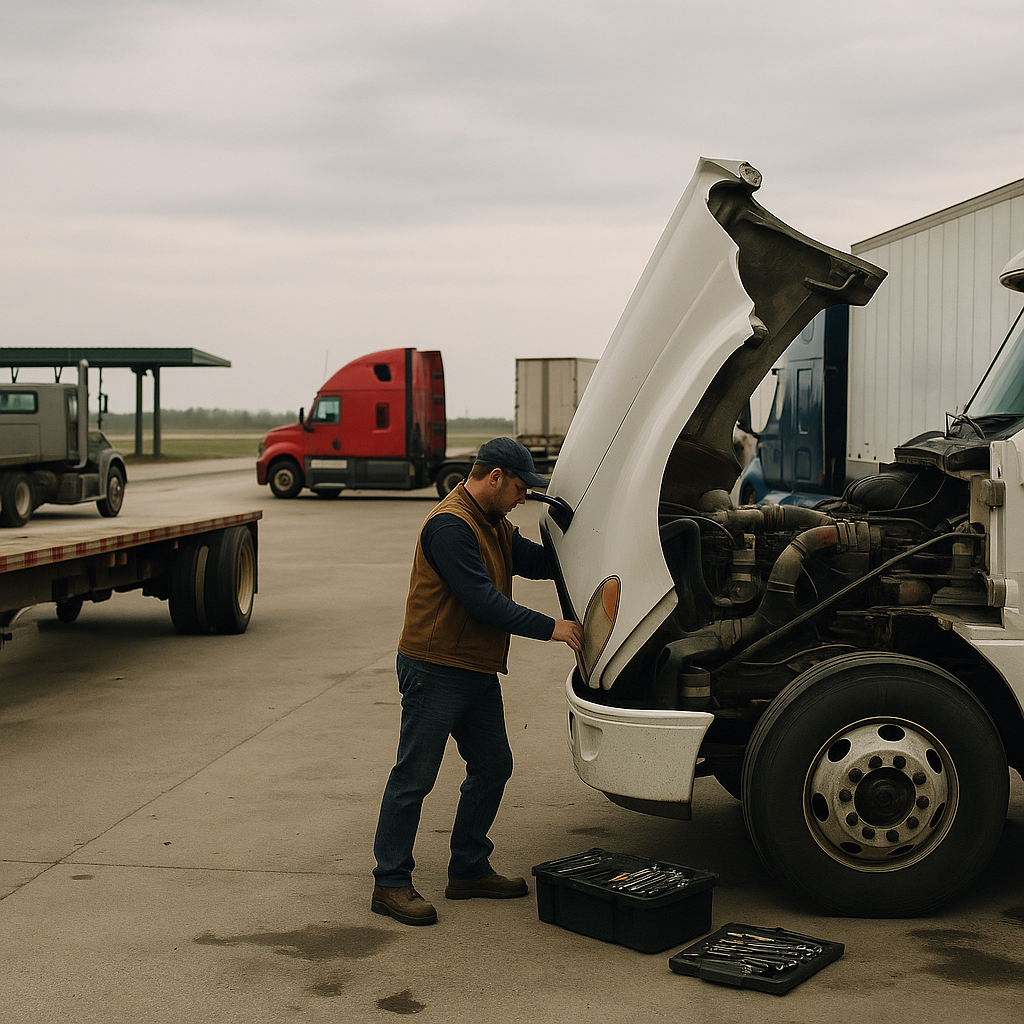
A truck accident can scramble your whole week in minutes. If you’re an owner-operator or running a small fleet, the big questions hit fast: who do you call, what coverage applies, can the truck keep working, and will the claim wreck your next renewal?
This guide breaks down truck insurance after an accident in plain language. It covers the first steps at the scene, what to tell the insurer, which coverages may respond, how FMCSA rules differ from state minimums, and what an accident can mean for future rates and coverage.
What to Do First After a Truck Accident#
After a truck accident, handle safety first, then law enforcement and medical needs, then your insurance reporting. Once the scene is stable, gather solid documentation before the truck moves if it’s safe to do so. That order matters because missing facts at the start can create claim problems later.
Safety and scene control#
Your first job is protecting people. Check for injuries, call 911 if anyone may need medical help, and follow police instructions about traffic control, hazard lights, triangles, or moving the truck if it’s creating a danger.
If the truck can safely stay put until law enforcement documents the scene, that’s usually better than rushing to reposition it. If it has to move for safety, take quick photos first if you can do it without putting yourself at risk.
For small fleets, this is where cab-to-office coordination starts. The driver may be handling the scene while the owner, dispatcher, or safety contact starts pulling unit details, policy information, and load information.
Who to call first#
Call emergency services first if there’s any injury, fire, fuel spill, blocked roadway, or immediate hazard. After that, contact law enforcement as required, then notify your motor carrier or dispatch contact if you’re under dispatch or leased on.
The first insurance-related step is usually reporting the loss to the carrier or broker contact listed on your policy, but only after emergency needs are handled. Reporting a loss means telling the insurer an accident happened so the claim file can open.
What to document before leaving#
Before you leave, collect the facts you’ll wish you had later. Get photos of vehicle positions, damage, road conditions, skid marks, signage, cargo issues, and any trailer damage.
Also capture:
- Truck and trailer numbers
- USDOT and MC number if relevant
- Time and exact location
- Names and contacts for involved parties
- Witness names and phone numbers
- Police agency and report number
- Towing details
- Load, commodity, and pickup or delivery status
A clean written record from the first hour often matters more than your memory three days later.
Who to Notify and What to Say to the Insurer#
Notify the insurer promptly, but keep your first report factual and limited to what you know. Reporting the accident opens the claim; it does not mean you need to guess about fault or give a polished story on the spot. Clear facts help more than fast opinions.
Calling the insurer versus the adjuster#
An adjuster is the person assigned to investigate and handle the claim. The first call is usually just notice of loss: who was involved, when it happened, where it happened, and what units were damaged.
That is different from a recorded statement or a deeper interview with the adjuster. You don’t help your claim by filling gaps with guesses just because the phone is ringing and you’re under stress.
What not to say after the crash#
Don’t guess about speed, fault, injuries, mechanical causes, or what your policy covers. Don’t say you were “probably tired,” “must have missed something,” or “I think the other guy is fine” unless you actually know and can support it.
Stick to verified facts: lane, direction, time, weather, impact points, police response, and visible damage. If you don’t know something yet, say you don’t know yet.
This is where a lot of owner-operators get boxed in. A rushed statement can turn a bad day into a coverage fight, a liability dispute, or a renewal headache months later. If you’re not sure how to frame the facts of a trucking loss,
Written notes versus verbal summaries#
Build a timeline as soon as you can. Save every voicemail, text, email, estimate, tow bill, inspection note, and police update in one place.
Written notes usually age better than memory. If the adjuster calls back a week later, your own file can keep your report consistent and keep small details from turning into contradictions.
What Happens to Coverage After the Accident#
A claim usually does not cancel coverage automatically, but it can trigger review by the insurer during the claim, at renewal, or sometimes midterm if the loss is serious enough. Whether the truck can keep operating is a separate question from whether the policy still exists.
Can the truck still be insured?#
In most cases, yes, at least immediately after the loss is reported. One accident does not automatically void your policy just because a claim opened.
But insurers and an underwriter may review what happened. An underwriter is the insurer’s risk reviewer who decides whether to accept, renew, change, or decline coverage based on the account’s loss history and operating profile.
If the truck has damage, the policy’s physical damage insurance may respond to the insured unit itself, depending on the cause of loss, deductible, and policy terms. That’s separate from what gets paid to another party under liability coverage.
Can the truck still be operated?#
Maybe, but not automatically. A truck with minor cosmetic damage might keep working if it is still safe, legal, and mechanically sound. A truck with steering, brake, light, tire, frame, or trailer connection issues may need to be parked, repaired, or inspected first.
The answer can also depend on the motor carrier’s safety rules, lease requirements, and whether law enforcement or an inspector put the truck out of service. Not every “minor accident” is minor from a safety standpoint.
How claims can affect renewal or cancellation#
The biggest impact often shows up later. A serious at-fault loss, a pattern of claims, or related violations can change how the insurer views the account at renewal.
That doesn’t mean every accident ends coverage. It means truck insurance after an accident becomes an underwriting story as well as a claims story, and the cleaner your records are, the easier that story is to explain.
Which Coverages May Respond After a Truck Accident#
Different trucking coverages respond to different parts of a loss, and they only work when the policy and the truck’s use match the situation. After an accident, the key question isn’t just “Do I have insurance?” It’s “Which coverage applies to this exact trip, truck, trailer, and load?”
If you need a refresher on commercial truck insurance basics, start there before assuming one policy covers every accident the same way.
Auto liability#
Auto liability pays for covered bodily injury or property damage you cause to others. It does not pay to repair your own truck.
That distinction matters because many drivers mix up liability with truck repair coverage. For a deeper breakdown, see how auto liability coverage works in a trucking policy.
Physical damage#
Physical damage covers the insured truck for covered loss to the unit itself. In trucking, that usually refers to collision and comprehensive or fire and theft with combined additional coverage, depending on how the policy is built.
A guardrail hit may trigger collision. Theft, fire, or some non-collision losses may fall under the comprehensive side. But lost revenue while the truck sits usually is not automatic just because repairs are covered.
Cargo, reefer, trailer, and bobtail/NTL#
Motor truck cargo covers covered damage to the freight you’re hauling, subject to the commodity, exclusions, and policy terms. If cargo is part of your operation, learn how motor truck cargo insurance fits a claim.
Reefer breakdown is coverage for certain temperature-control failures that damage refrigerated cargo. It is not the same as cargo coverage by itself, and it only matters if your operation hauls temperature-sensitive freight and the endorsement is on the policy.
Trailer interchange applies when you’re using a non-owned trailer under a signed interchange agreement. If that’s your setup, trailer interchange coverage may be the piece that responds to trailer damage.
Non-trucking liability, often called bobtail in everyday talk, is coverage for certain non-business use when you’re not under dispatch. True bobtail insurance and non-trucking liability are often misunderstood, and neither one covers paid hauling.

When coverage depends on operation type#
What applies after a crash depends on whether you were:
- Hauling under dispatch
- Deadheading between loads
- Bobtailing without a trailer
- Pulling a non-owned trailer
- Running under your own authority or leased to a carrier
That is why two drivers can have the same wreck and totally different claim outcomes. Operation type, cargo, trailer status, and policy setup drive the answer.
How Long You Have to File a Claim#
The safest answer is to report the accident as soon as possible because the deadline depends on your policy, the insurer’s notice rules, and any state law issues in play. Waiting can create avoidable disputes about missing evidence, delayed damage, or late notice.
Policy notice requirements#
Most policies require prompt notice after a loss, but “prompt” is defined by policy wording and claim facts, not by one universal number. The NAIC provides consumer-facing guidance on claims handling and insurance regulation, and your policy language controls the notice duty in your contract.
Notifying the insurer is not the same as finishing the whole claim. It means preserving your place early so the carrier cannot later argue it was denied a fair chance to inspect, investigate, or mitigate damage.
State deadlines and statute-of-limitations issues#
States may have separate accident reporting, filing, or lawsuit deadlines that matter alongside insurance notice. Your state’s department of insurance or DMV is the right place to verify those state-specific rules, because they vary.
That is different from suing someone after a crash. Insurance notice, claim handling, and legal deadlines are related, but they are not the same clock.
Why waiting can create coverage problems#
Late reporting can blur the facts. Photos disappear, witnesses stop answering, truck damage changes after towing or storage, and repair shops may start work before the insurer inspects.
If you’re unsure whether the damage is “worth claiming,” report first and sort out the claim facts second. That usually protects your options better than silence.
State Minimums, FMCSA Rules, and Why They Are Not the Same#
State minimums and FMCSA financial responsibility rules are not the same thing, and neither one tells the full claim story by itself. After a truck accident, what matters is whether your operation is interstate or intrastate, for-hire or private, what the truck weighs, and what you’re hauling.
Federal versus state responsibility#
Under 49 CFR Part 387, certain interstate motor carriers must carry federal minimum levels of public liability. For-hire interstate carriers hauling general freight in vehicles over 10,001 lbs must carry at least $750,000 in public liability under 49 CFR Part 387. Other operations can fall under different thresholds, including $300,000 under 10,000 lbs, $1,000,000 for auto haulers, and $5,000,000 for certain hazmat operations.
That federal rule does not erase state insurance requirements. Intrastate operations may face state-specific rules, filings, or minimums that work differently from FMCSA’s interstate framework.
Why minimums do not answer every claim question#
Minimum required limits are not the same as broad protection. A policy can meet a filing requirement and still leave gaps around truck damage, cargo loss, trailer damage, or non-business use.
That’s why personal auto logic breaks down here. Commercial trucking policies are built around business use, regulatory responsibility, and the actual operation of the truck, not just a vehicle title and a driver’s license.
Why the truck’s use matters#
The truck’s use at the time of the accident can affect both legal responsibility and which coverage responds. Hauling general freight under dispatch is different from personal use, deadheading, or pulling an interchange trailer.
If you need to confirm authority or operating status after a crash, you can check the carrier record on SAFER through FMCSA. That record can help verify USDOT and MC number details, but it does not replace reading the actual policy.
How an Accident Can Affect Rates and Future Coverage#
After an accident, insurers usually review the loss as part of the account’s risk story, not just as one isolated bill. They may look at fault, severity, violations, repair cost, cargo involvement, and whether the file shows a clean, organized response from the insured.
What underwriters review#
Underwriters often look at the police report, claim notes, prior losses, MVR issues, out-of-service history, and what steps were taken after the crash. A documented repair file and a consistent timeline can help them understand that one event is not the same as a careless operation.
When a claim matters most#
The biggest impact usually shows up at renewal or when shopping new coverage. A small claim with no violations is different from a major loss with injuries, citations, or repeated incidents.
No one can honestly promise what your premium will do after a wreck. Your actual premium depends on your operation, cargo, radius, driving history, and other factors.
How to present the account accurately#
Keep your post-accident file tight: repair invoices, photos, inspection results, corrective actions, and any safety steps you took afterward. That gives the next carrier a fuller picture than a bare loss run line.
If you’re trying to sort out what coverage still fits after a loss, LogRock specializes in trucking insurance for owner-operators and small fleets.
FAQ#
What happens when a truck driver gets in an accident?
After a truck accident, the usual sequence is safety first, then emergency response if needed, then police documentation, then insurance notice. The driver may also need to notify dispatch, the motor carrier, or a safety contact right away depending on the operation. Once the scene is stable, photos, witness info, unit numbers, and report details become critical because they shape the claim later.
After that, the insurer opens a claim and an adjuster may investigate damage, liability, cargo issues, or injuries. The truck may keep working, need repairs, or be taken out of service depending on the damage and safety status.
What not to say to insurance after an accident?
Don’t guess about fault, speed, injuries, mechanical cause, or policy coverage. A lot of claim trouble starts when a driver tries to be helpful by filling in blanks with assumptions. If you don’t know whether the other person is injured, whether your trailer was damaged internally, or whether a part failed, say you don’t know yet.
Stick to verifiable facts: location, direction of travel, weather, visible damage, police response, and what you personally observed. Also keep your wording consistent between phone calls, texts, and written reports so small differences do not look like bigger contradictions later.
How long does your insurance stay up after an accident?
In most cases, your policy does not disappear the moment you have an accident. Reporting a claim usually does not automatically cancel the policy, and one loss by itself does not mean the truck becomes uninsurable overnight.
What can happen is review. The insurer may evaluate the severity of the loss, any related violations, your prior claims history, and the policy terms to decide what happens at renewal or, in some cases, midterm. The truck’s ability to keep operating is a separate issue tied to damage, safety, and repair status.
How long after an accident can I claim on insurance?
The safe answer is as soon as possible. Your policy likely requires prompt notice, and waiting can make the claim harder by giving the insurer grounds to argue that evidence was lost, damage changed, or inspection was delayed.
That said, insurance notice deadlines are not the same as state lawsuit deadlines or accident reporting rules. The exact timeline depends on your policy language and state law. If there is any chance you may need coverage, report the loss early and keep a full written record while the facts are still fresh.
Will my truck still be covered if I keep working after a minor accident?
Maybe, but that depends on what “minor” really means. If the damage is cosmetic and the truck is still safe, legal, and mechanically sound, continued operation may be possible. If the accident affected brakes, steering, tires, lights, frame integrity, or trailer connections, the truck may need repair or inspection first.
Coverage also depends on what happened after the accident. If more damage occurs because a truck that should have been parked stayed on the road, that can complicate the claim. When in doubt, document the condition and get clear direction before rolling again.
Does insurance cover lost income after a truck accident?
Not automatically. Auto liability usually addresses damage or injury you cause to others, and physical damage usually addresses covered damage to your truck. Neither one automatically replaces the revenue you lose while the truck is down.
Some operations may have endorsements or separate options that affect downtime-related losses, but you cannot assume standard coverage replaces missed loads or weekly revenue. The answer depends on the policy wording and the facts of the loss, so this is one of the first things to verify after the claim is reported.
Who should I call first after a truck crash?
If there are injuries, fire, hazardous conditions, or a blocked roadway, call emergency services first. Once immediate danger is handled, contact law enforcement as required and follow scene instructions.
After that, notify your dispatch contact, motor carrier, or safety person if your operation requires it, then report the loss to the insurer or the reporting contact on your policy. The main point is simple: handle safety before coverage, but don’t wait long to give notice once the scene is under control.
Is commercial truck insurance the same as personal auto insurance?
No. Commercial truck insurance is built around business use, truck type, cargo, operating radius, and regulatory requirements. Personal auto insurance is not designed for a for-hire trucking operation, and state personal auto minimums do not answer FMCSA or commercial claim questions.
That difference matters after an accident because coverage may turn on whether you were under dispatch, hauling cargo, deadheading, bobtailing, or using a non-owned trailer. The policy has to match the operation, not just the vehicle.





