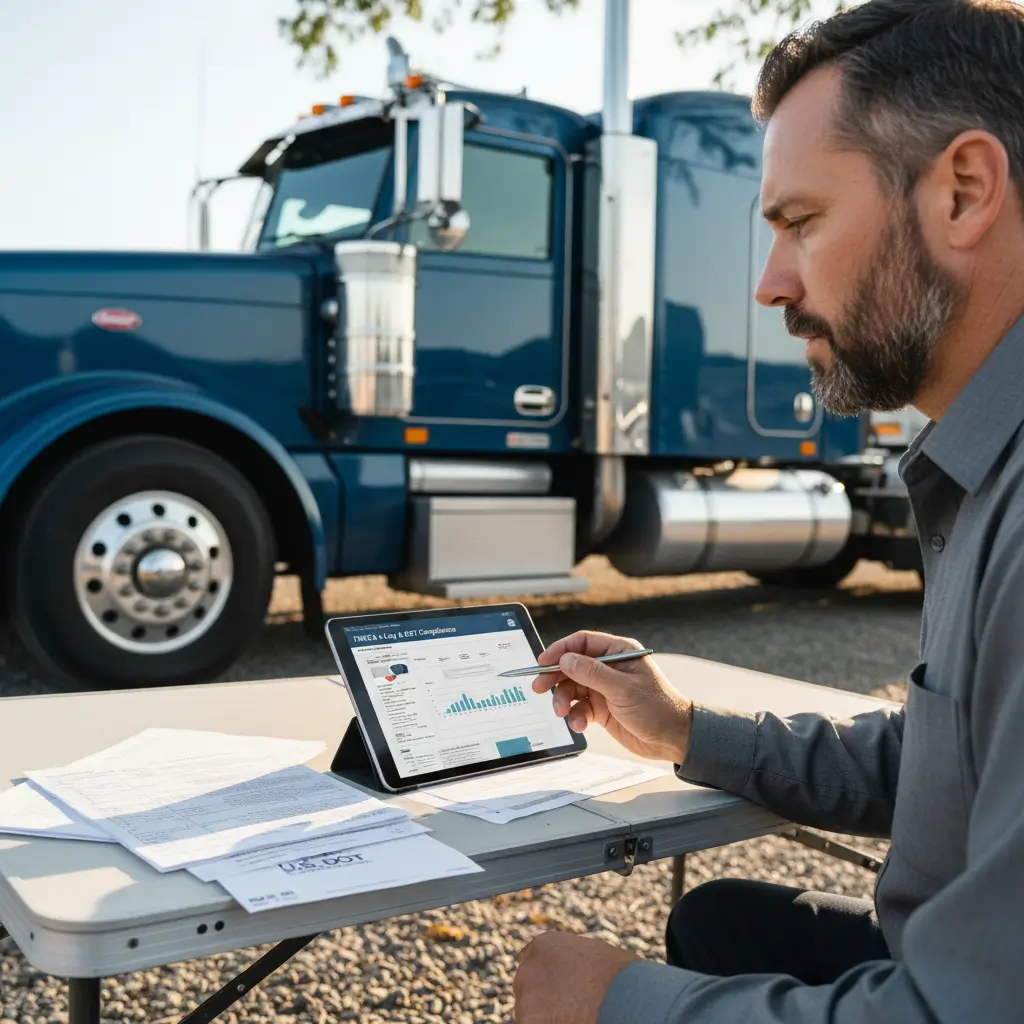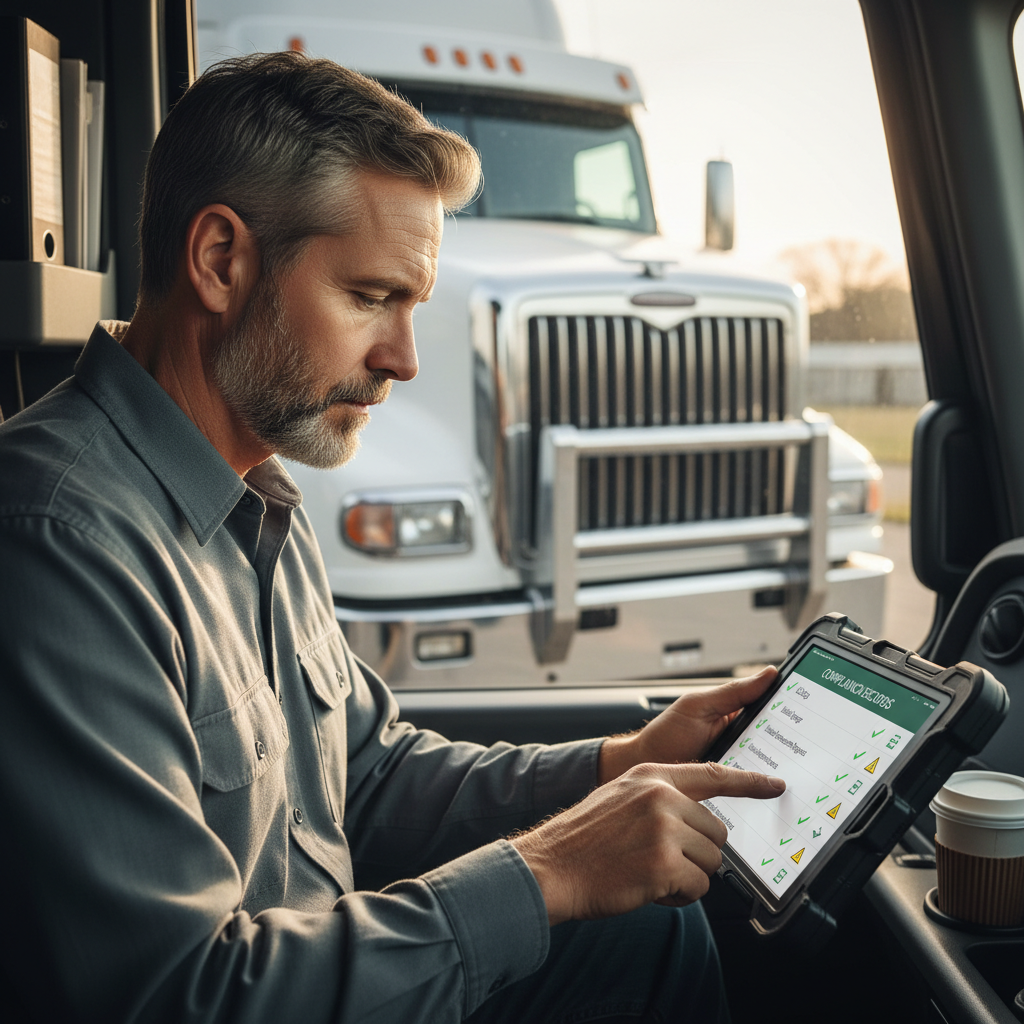

Truck Insurance Radius of Operation is the mileage range your truck usually runs from its base, and it can affect how an insurer views your risk. If your lanes start stretching farther than what was reported, that can create underwriting questions even when your authority and registration are otherwise active.
Most owner-operators hear “radius” and assume it means either a hard coverage line or a DOT rule. It usually isn’t that simple. The big job here is separating your declared insurance operating radius from your policy territory, your FMCSA requirements, and your real dispatch pattern.
What a Truck Insurance Radius of Operation Means#
A truck insurance radius of operation is the distance your insured truck typically travels from its primary garaging location or operating base. Insurers use that radius as an underwriting fact to understand how and where you normally run, not as a vague label that means the same thing on every application.
Primary garaging location is the main place where the truck is usually parked when it’s not working.
Declared radius versus actual trips#
The radius you report on an application is supposed to reflect your normal operation. That means the lanes you actually run, not just the loads you’d like to haul someday. If your truck is usually dispatched within a certain range of its base, that’s the pattern the insurer is trying to capture.
One trip outside that pattern and a regular change in lanes aren’t the same thing. An occasional unusual load may raise a different conversation than a steady shift into farther markets.
Why insurers ask about operating radius#
Insurers ask because mileage radius helps them understand road exposure, trip length, states traveled, and how predictable your operation really is. A truck making repeat local runs often looks different from one taking irregular brokered freight wherever the board sends it.
Radius also works together with other facts, like cargo, vehicle type, and where the truck is parked. On its own, it’s only one part of the picture.
Radius categories are not universal#
Local, regional, and long-haul sound simple, but insurers don’t always use the same mileage bands. That’s why an owner-operator should confirm the actual range shown on the application instead of relying on a label from a forum or an old quote.
If you’re not sure what range your policy or application reflects, ask for the exact mileage category in writing. That matters more than the shorthand.

Operating Radius, Coverage Territory, and Regulatory Requirements Are Different#
Your declared operating radius is an underwriting fact, while coverage territory describes where the policy can apply, and FMCSA or state rules set separate insurance obligations. A broad territory or active authority does not automatically mean the insurer rated your truck for every operating pattern the same way.
Declared radius is an underwriting fact#
Your declared radius tells the insurer how your business normally operates. It helps the underwriter price and accept the risk based on your real routes, trip frequency, and highway exposure.
That matters because a truck that usually stays near home base may be underwritten differently from one that regularly crosses multiple states. Even if both trucks are legally registered and both have commercial auto liability, their operating patterns can look very different to an insurer.
Coverage territory describes where a policy applies#
Coverage territory is the geographic area where the policy says covered losses may fall within the policy terms.
A policy can have a broad coverage territory, but that doesn’t mean every lane change is irrelevant. The insurer still underwrites based on the operation you reported. If your actual business starts looking different from what was disclosed, that can lead to policy-change or claims-review questions later.
FMCSA and state requirements address separate obligations#
Commercial auto liability is coverage that responds to bodily injury and property damage you cause with the truck, subject to the policy terms.
FMCSA financial responsibility rules are separate from your declared operating radius. Under 49 CFR Part 387, for-hire interstate carriers hauling general freight in vehicles over 10,001 lbs must carry at least $750,000 in public liability, while other operations can have different minimums depending on carrier type, weight, and cargo. Requirements vary by carrier type, vehicle weight, cargo, and whether you operate interstate or intrastate.
Interstate commerce means transportation that crosses state lines or is part of a movement tied to more than one state. Intrastate operation means transportation that stays within one state and is governed primarily by that state’s rules.
Your USDOT number, MC number, or operating authority status doesn’t set your insurance radius by itself. FMCSA registration and operating authority are federal carrier registration matters, not a substitute for telling the insurer where and how the truck actually runs, as FMCSA explains at fmcsa.dot.gov.
MCS-90 is a federal endorsement tied to certain motor carriers’ public financial responsibility, and it is not a replacement for accurate application information. FMCSA’s MCS-90 guidance at fmcsa.dot.gov supports that distinction.
What Insurers Review Along With Your Mileage Radius#
Mileage radius is reviewed together with your garaging, lanes, states traveled, cargo, truck setup, and business use. Two trucks can report a similar radius and still look very different to an underwriter because the real risk comes from the full operating pattern.
Primary garaging and regular lanes#
The starting point is your primary garaging location and the lanes you regularly run from there. A truck parked outside Birmingham and repeatedly running the same Alabama and Georgia lanes presents a different pattern from a truck that leaves the same yard but chases spot freight in whichever direction dispatch sends it.
Underwriters want the recurring pattern, not just a best guess. If the truck is now parked somewhere new or routinely staged near a customer, that can matter.
Interstate versus intrastate work#
State lines matter because they can change the regulatory picture and the underwriting picture at the same time. More interstate work may bring different filing or compliance considerations, while also signaling a broader exposure pattern for the insurer.
That doesn’t mean interstate is automatically a problem. It means the insurer should be looking at the same operation you’re actually running.
Cargo, vehicle type, and operating pattern#
A dry van hauling packaged freight isn’t the same risk as a truck hauling a different commodity on rougher routes or longer schedules. Vehicle configuration, commodity, loading pattern, and trip frequency all matter.
A predictable route pattern is easier to describe and underwrite than irregular dispatch that keeps pushing farther from base. That’s why it’s better to use recent completed loads and real dispatch records than an estimate based only on your original business plan.
How Local, Regional, and Long-Haul Operations Can Affect Underwriting#
Local, regional, and long-haul operations can affect underwriting because they often involve different route predictability, state exposure, and dispatch patterns. The key question usually isn’t whether one far trip can happen, but whether your truck’s normal work pattern has changed enough that the insurer needs updated information.
Local operations with repeat routes#
Think about a local construction-material delivery operation. The truck may leave from the same yard, serve the same contractors, and return to the same parking spot most nights. Even if one job occasionally stretches farther than usual, the core pattern is still repeatable and easy to explain.
That kind of operation is different from saying “local” on paper while regularly drifting into a much wider service area. The issue is whether the real pattern still matches what was reported.
Regional operations with multi-state lanes#
Now take a regional dry-van owner-operator with repeat lanes into neighboring states. The truck may cross state lines often, but the work still follows a recognizable pattern: similar corridors, similar shippers, and similar trip lengths.
That can still be straightforward if the insurer knows about it. The problem starts when the operation was quoted one way and is now functioning another way because a new shipper or broker relationship changed the lane mix.
Long-haul and irregular dispatch patterns#
A for-hire carrier taking irregular long-distance freight presents a different underwriting story. For-hire means the carrier is paid to haul property for others.
If dispatch can send the truck almost anywhere, the insurer may want that described accurately from the start or updated when the pattern changes. A new dedicated lane, expanded territory, or frequent backhauls outside your usual region can all trigger a review.
That’s where owner-operators get in trouble by assuming one unusual trip doesn’t matter, then slowly building a different business around it. Before renewal or before switching coverage, compare your recent loads, planned loads, and stated insurance information side by side.
If your lanes are stretching beyond what you originally reported, don’t guess from a generic label or a forum comment.
What to Do Before Taking Loads Beyond Your Reported Radius#
Before taking loads beyond your reported radius, review what was actually submitted to the insurer, measure the trip against your normal base, and decide whether this is a one-off run or a recurring business change. Going farther than your stated radius does not automatically cancel coverage, but it can create underwriting or claims questions that are better handled early.
Check whether the trip is occasional or a business change#
Start with your application, quote details, or policy paperwork. Look for the mileage range or operating description that was used when coverage was bound.
Then compare the new trip to your primary base. If it’s one unusual move and your operation otherwise stays the same, that may be a different conversation than adding a regular lane, new customer, or broader dispatch area.
Gather the details an insurer will need#
Have the facts ready before you call. That usually includes pickup and delivery states, expected trip frequency, cargo type, customer or broker name, where the truck will park, and whether the truck is being garaged somewhere new.
If the farther trip ties to a dedicated account or a repeat lane, say that clearly. The goal is to show the actual operating pattern, not to minimize it.
Request confirmation before a recurring lane change#
If this is becoming part of the business, contact the broker or insurer before it becomes routine. Ask whether the change needs an underwriting review, policy update, or revised operating description.
Also ask for written confirmation of any approved update. That way you’re not relying on a verbal assumption later if a claim or renewal review comes up.
Keep Your Radius Information Current When Your Business Changes#
Keep your radius information current whenever your operation changes in a way that affects lanes, garaging, cargo, or dispatch. Accurate updates usually lead to a cleaner underwriting conversation than trying to force new work into an old radius label.
Changes that should trigger a review#
A few practical changes should put this on your radar:
- a new regular shipper
- more interstate work
- a new terminal or parking location
- a move to a different home base
- adding a second truck
- hauling a different cargo type
- a new dispatch arrangement
Carriers also worry about keeping authority active while sorting out insurance details. Treat compliance status and underwriting details as related but separate issues.
Documents to keep available#
Keep recent rate confirmations, bills of lading, dispatch summaries, lane lists, lease agreements, and proof of garaging handy. Those records make it easier to show what the truck is actually doing.
You can also verify public carrier registration and safety information through FMCSA SAFER, but remember SAFER is for public carrier data, not a record of the operating radius you disclosed to your insurer.
Questions to ask at renewal#
At renewal, ask simple fact-based questions. Where is the truck primarily garaged? Which states did it travel in over the past year? What are the farthest recurring lanes? Has cargo changed? Is the operation still for-hire?
Those questions usually get you closer to the truth than broad labels like local or regional.
Truck Insurance Radius of Operation Checklist#
Your best move is to confirm your real operating facts, separate insurance questions from compliance questions, and get help before a recurring lane change becomes a surprise. No single mileage radius fits every owner-operator or small fleet because the right description depends on actual lanes, cargo, garaging, and dispatch.
Confirm your current operating facts#
Map your regular lanes and your farthest recurring loads from the truck’s primary garaging location. Identify the states you actually travel, the cargo you haul, and whether the truck’s use has changed.
Review insurance and compliance separately#
Keep the insurance side and the regulatory side straight. Your policy information, operating radius, USDOT record, MC authority, and FMCSA minimum liability rules each answer different questions.
Get help before a recurring change#
If a lane expansion is starting to look permanent, ask about it before assuming it’s already accounted for. That’s especially true if you’re adding interstate work, a new parking base, or a different type of freight.
FAQ#
What does radius of operation mean in insurance?
Radius of operation in insurance means the typical distance a commercial vehicle travels from its primary garaging location or operating base. Insurers use it as part of underwriting to understand where the truck normally runs, how far it goes, and whether the operation is mostly local, regional, or broader. For owner-operators, the safest approach is to report the recurring pattern you actually run, not just the loads you hope to book. If your lanes start changing in a consistent way, update your broker or insurer instead of assuming the old description still fits.
Which trucks have the worst turning radius?
That question is about vehicle maneuverability, not insurance operating radius. A truck’s turning radius depends on things like wheelbase, axle configuration, steering angle, chassis design, and whether it’s a day cab, sleeper, straight truck, or another setup. In general, longer wheelbases and certain axle layouts tend to need more room to turn, but there isn’t one universal answer for “worst.” If you’re comparing trucks, use manufacturer turning-circle or curb-to-curb specs for the exact configuration you’re considering. That’s separate from the insurance radius discussed in this article.
What does “radius of operations” mean?
“Radius of operations” means the normal geographic range a business vehicle travels from its base or garaging location. In trucking, it helps describe the usual lanes and territory the truck serves as part of daily or recurring work. On an insurance application, that range helps the insurer understand the operation for underwriting purposes. The exact mileage categories can vary by insurer, so don’t assume a local or regional label means the same thing everywhere. Confirm the actual range shown on your application or policy paperwork if you want to know how your operation was classified.
What truck has the tightest turning radius?
The truck with the tightest turning radius depends on the specific build, not just the brand or class. Wheelbase, steering geometry, axle placement, and overall chassis design all affect how sharply a truck can turn. Some shorter wheelbase trucks and certain vocational configurations can turn tighter than longer highway setups, but buyers need to compare published manufacturer specs for the exact unit. That’s a separate issue from insurance radius of operation. Insurance radius deals with how far the truck usually travels from base, while turning radius deals with how much space it needs to maneuver.
Can operating beyond my reported radius void my truck insurance?
Not automatically. A trip beyond your reported radius does not by itself mean coverage disappears, but it can create underwriting, policy-change, or claims-review questions depending on the policy language and the facts of the trip. The real issue is whether the farther trip is occasional or whether your normal operation has changed and the insurer was never updated. If your lanes are expanding, your best move is to review the original operating description, document the new pattern, and ask for confirmation before the change becomes routine.