
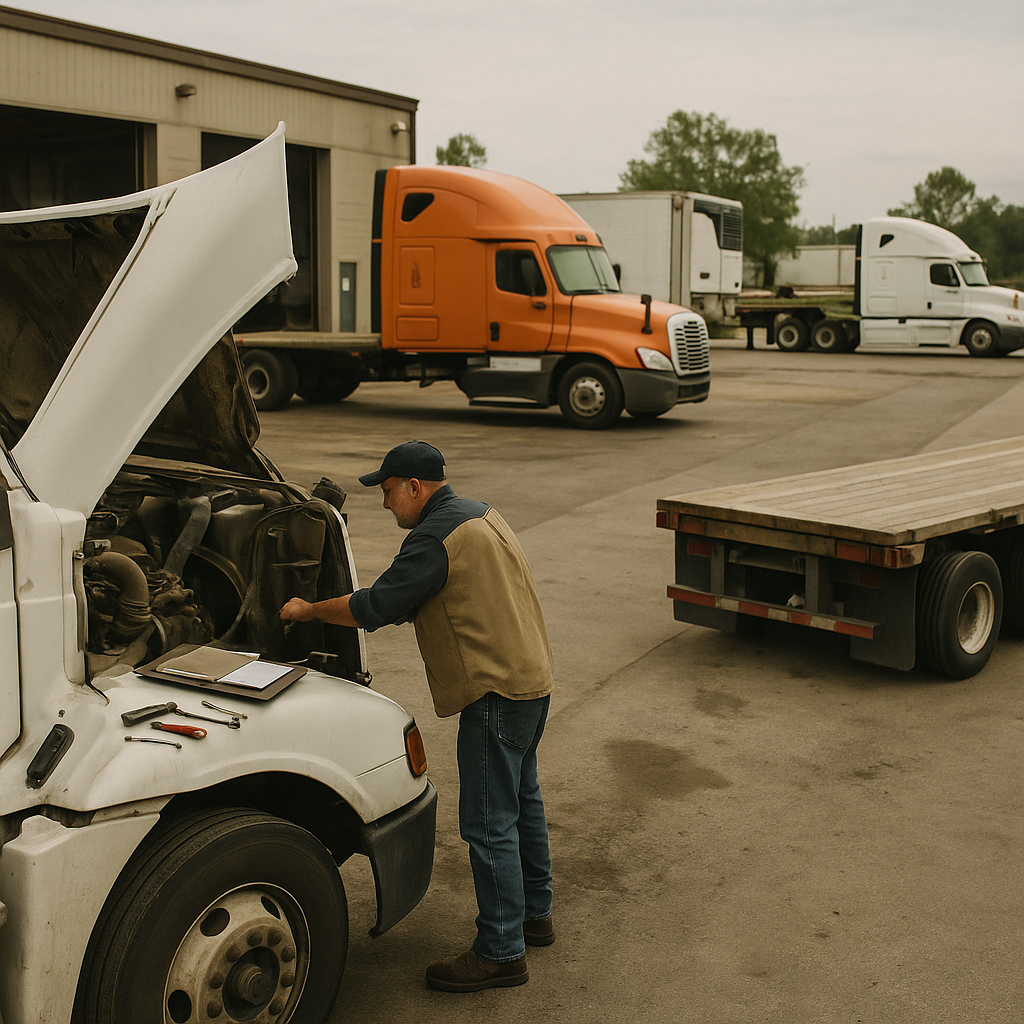

A truck repair insurance claim can help when damage came from a covered loss like a crash, fire, theft, or vandalism. It usually won’t pay just because your truck broke down. For owner-operators and small fleets, that difference matters fast when the truck is in the shop and the load board doesn’t stop.
Truck Repair Insurance Claims: What They Usually Cover#
A truck repair insurance claim usually applies when a covered event damages the truck, cargo, or someone else’s property. The key question isn’t whether the truck needs repairs. It’s what caused the damage, which policy applies, and what the policy excludes.
Physical damage is coverage for your truck against covered losses like collision, fire, theft, vandalism, or certain other direct damage events. If a deer strike crushes the front end or a fire damages the cab, physical damage coverage may respond, subject to the policy terms and deductible.
Motor truck cargo is coverage for a customer’s freight while you’re hauling it for hire. If a crash damages the load, the truck repair bill and the cargo loss may involve separate claims under truck and motor truck cargo insurance.
Liability coverage is different. Under FMCSA rules and federal financial responsibility requirements in 49 CFR Part 387, liability coverage is about damage or injury you cause to others in covered operations, not fixing your own truck. That’s why state minimums, FMCSA filings, and repair claims are related but not the same question.
Bobtail / non-trucking liability is liability coverage for limited non-business use, not coverage for paid hauling and not repair coverage for your own truck. Reefer breakdown is coverage that may respond when refrigeration equipment fails and a covered spoilage loss follows, depending on the form.
Accident damage vs. mechanical failure#
A crash, rollover, theft, vandalism, falling object, or fire is a different insurance event than an engine failure from wear, age, poor lubrication, or a blown turbo with no outside cause. Insurance usually cares about sudden accidental loss, not routine breakdown.
Which commercial coverages may respond#
One shop visit can trigger more than one coverage. A collision can damage the tractor, trailer, and freight at the same time, while a reefer unit problem may affect cargo but not the truck itself.
Why the claim type matters before repairs start#
If you start with the wrong claim theory, you can create avoidable trouble. Calling a maintenance issue an accident or assuming cargo coverage pays for truck repairs can slow things down or lead to a denial.
Step 1 – Decide Whether the Loss Looks Covered#
Before you file a truck repair insurance claim, figure out whether the loss looks like a covered event or a straight mechanical problem. That quick sort helps you call the right carrier, describe the loss clearly, and avoid turning a weak claim into a messy one.
Start with the trigger. Did the damage follow a collision, fire, theft, vandalism, rollover, falling object, weather event, or cargo-related incident? If yes, that points toward a possible covered loss.
If the truck simply lost power, overheated, spun a bearing, cracked a head, or failed from wear without a separate outside event, standard physical damage coverage often won’t respond. That’s the accident-versus-breakdown line many owner-operators get tripped up on.
Check your policy before you call if you can do it quickly. Look for the coverages you actually carry, the deductible, and any obvious exclusion, which is policy language saying a certain cause of loss or type of damage is not covered.
If you’re running under your own authority, it also helps to confirm your operating setup is current. A quick lookup on SAFER can help you verify carrier status and operating details, which sometimes matter when a commercial claim is being sorted.
Spot the trigger event#
Ask one question first: what happened right before the truck needed repair? The answer usually points toward either covered damage or non-covered breakdown.
Separate repairable damage from breakdown#
A damaged bumper after an impact and a failed transmission from internal wear may show up in the same shop visit. They don’t get treated the same way by insurance.
Check your policy before you call#
You don’t need to become an adjuster. You just need a rough idea of which coverage might be in play so your first report is cleaner.
Step 2 – File Promptly and Describe Only the Facts#
File a truck repair insurance claim promptly after a covered loss and keep your first report short, factual, and specific. The safest approach is to report what happened, when it happened, and what damage you can see without guessing about fault, cause, or coverage.
Call the insurer or claims number listed on the policy as soon as you can after the loss. If there’s a crash, theft, fire, or major road incident, handle safety first, get law enforcement involved when needed, and then report the claim.
Don’t guess. Don’t say you “must have caused it” if you don’t know. Don’t tell the insurer a mechanical problem came from an accident if you can’t back that up. And don’t exaggerate damage because you assume the adjuster will cut it down anyway.
A good first report usually includes:
- Date and time
- Exact location
- Unit number and trailer number if applicable
- What happened in plain words
- Photos of damage and the scene
- Police report information, if any
- Witness information, if any
- Where the truck was towed or is being inspected
- Visible damaged parts
- Whether cargo was affected
This is where owners hurt themselves most: the truck is down, cash flow is tight, and the urge is to rush the story. That can backfire if your words lock you into the wrong cause of loss before anyone inspects the unit. If you’re not sure what coverage fits your operation,
Who to contact first#
If people are hurt or public property is damaged, handle emergency response first. After that, notify the insurer tied to the truck or loss type as soon as practical.
What not to say#
Don’t admit fault, speculate about internal damage, or describe routine wear as a sudden accident. Facts travel better than theories.
What information the adjuster needs#
The adjuster needs enough to open the file, inspect the unit, and connect the damage to the reported event. Clean notes and good photos save time.
Step 3 – Decide Whether to Tow, Inspect, or Start Repairs#
In most cases, file first, document everything, and wait for claim guidance before major repairs begin. Emergency steps to protect the truck or make it safe may be necessary, but early teardown or full repair can make it harder for the adjuster to confirm what happened.
If the truck is blocking traffic, leaking fluid, exposed to theft, or unsafe to move, towing and basic protective steps are reasonable. Take photos before anything changes if you can do it safely.
If a shop has to do emergency work to secure the unit, save every receipt and ask the shop to note exactly what was done and why. That helps separate emergency mitigation from full repair.
The risk comes when a truck goes straight into major repair before anyone from the carrier sees it or approves the process. Once damaged parts are thrown out, mixed together, or repaired, it gets harder to prove the original scope of loss.
When to wait for approval#
Wait before authorizing major repairs, teardown, or parts replacement whenever the truck is stable enough to do so. Inspection first usually protects the claim.
When emergency repairs are reasonable#
Emergency work to prevent more damage or make the unit safe is different from full restoration. Keep that line clear in your records.

How to protect evidence#
Photograph the truck from multiple angles, save damaged parts when possible, and keep a timeline of tow, inspection, and repair steps.
Step 4 – Work With the Adjuster and Repair Shop#
After you file, the adjuster and repair shop usually build the claim through inspection, estimates, and follow-up questions. Heavy-truck claims often change after teardown, so organized communication matters more than most operators expect.
An adjuster is the person who investigates the claim, reviews damage, and helps decide what the policy may pay. The shop may write the first estimate, but the adjuster compares that estimate to the reported loss, visible damage, policy terms, and sometimes prior condition.
Hidden damage is common on commercial units. What looks like front-end damage can turn into steering, suspension, frame, cooling, or wiring issues once the truck is opened up. When that happens, the shop usually submits a supplement with added photos and costs.
Keep one file with the estimate, supplement requests, emails, text screenshots, tow bills, and invoices. If the shop, adjuster, and insured are all working from different versions of the damage story, delays get longer.
Inspection and estimates#
The first estimate is rarely the final word on a big truck repair. It starts the conversation.
Supplemental damage#
A supplement is added damage found after teardown or deeper inspection. It’s common, not automatically a red flag.
Choosing a repair path#
Use a shop that can document its work clearly. Clean paperwork often matters almost as much as the wrench work.
Why Claims Get Denied or Reduced#
One of the most common reasons a truck repair insurance claim gets denied or reduced is that the insurer decides the damage came from wear, maintenance issues, or another excluded cause instead of a covered accidental event. Weak documentation and late reporting can make that problem worse.
A proof of loss is the information and supporting records used to show what happened, what was damaged, and what you’re claiming. You may not hear that phrase on every truck claim, but the idea is the same: photos, invoices, statements, estimates, and timeline matter.
The biggest denial theme is mechanical failure. If the carrier thinks the engine, transmission, turbo, or other part failed on its own, standard repair-related physical damage coverage often won’t pay. That’s especially true when there was no collision, fire, theft, or other outside cause.
Documentation problems also hurt. The NAIC broadly supports the basics of claims handling and policy review: prompt notice, clear records, and understanding exclusions. If photos are missing, the truck got repaired too soon, or the story changes three times, the claim gets harder to support.
Coverage mismatch is another issue. If the real loss involved cargo, non-business use, or a separate operation, but the policy purchased didn’t match that use, the carrier may limit or deny part of the claim.
Mechanical failure and maintenance gaps#
Insurance usually doesn’t step in for normal wear, neglected maintenance, or parts that simply gave out. That’s a repair expense, not always an insured loss.
Late notice or missing proof#
Delayed reporting doesn’t automatically kill every claim, but it can raise questions. Missing evidence makes those questions harder to answer.
Policy exclusions and mismatched coverage#
An exclusion removes certain losses from coverage. If the policy and the operation don’t line up, the paperwork catches up eventually.
Coverage Questions Owner-Operators Ask After a Down Truck#
When a truck is down, the first question is not “Will insurance pay?” It’s “What caused the loss, and which policy does that trigger?” A repair bill, a cargo problem, and a liability claim can all grow out of the same event, but they don’t get handled under the same coverage.
If the truck simply broke down, standard physical damage coverage usually doesn’t pay for the repair. That answer frustrates people, but it’s the core distinction between accidental damage and mechanical failure.
Liability confusion is common too. Bobtail insurance and non-trucking liability deal with certain liability situations when you’re not under dispatch, not fixing your own truck. And general liability for trucking is usually about business premises or non-auto exposures, not collision damage to your tractor.
Cargo has its own lane. If freight was damaged, reefer breakdown coverage may matter for temperature-controlled loads, while other cargo losses may fall under different terms of your cargo policy.
Physical damage and downtime#
Physical damage may help with covered repair costs. It doesn’t automatically solve lost revenue from downtime.
Bobtail and liability confusion#
Liability coverage protects against covered claims by others. It isn’t a repair fund for your own truck.
Cargo and reefer breakdown questions#
If the truck, trailer, and load were all affected, expect separate coverage questions for each piece of the loss.
How to Protect the Claim Before and After the Repair#
Protect a truck repair insurance claim by keeping records from the first hour of the loss through the final invoice. Claims go smoother when your timeline, photos, estimates, and repair documents all tell the same story.
Create one folder for everything: tow bills, estimates, scene photos, shop notes, adjuster emails, text messages, supplements, and final invoices. If the adjuster asks what happened before the truck entered the shop, you should be able to answer with documents, not memory.
Consistency matters. If your first report says side impact, the photos show front-end damage, and the shop invoice mentions old unrelated issues, expect questions.
The best claim protection starts before the loss. Regular maintenance, pre-trip and post-trip checks, and fast reporting help reduce the chance that a real accident claim gets tangled up with old wear issues. Results turn on the policy language and the facts, but good records give you a better shot at a cleaner outcome.
FAQ#
Do you file an insurance claim before or after repair?
File the claim before major repairs whenever you reasonably can. That gives the insurer and adjuster a chance to inspect the truck, confirm the cause of loss, and review the damage before parts are replaced or thrown away. If the truck needs towing or emergency work to make it safe, secure, or movable, do that first and document it with photos and receipts. The practical rule is simple: protect the truck, report the loss fast, and wait on major repair authorization if the situation allows.
What not to say when filing an insurance claim?
Don’t guess about fault, cause, or hidden damage. Avoid saying you “must have caused it” if you don’t know, and don’t call a normal mechanical problem an accident just because the repair is expensive. Don’t exaggerate the loss or fill gaps in the story with assumptions. Stick to facts: when it happened, where it happened, what you saw, what was damaged, and what happened next. A clean factual report gives the adjuster something usable without boxing you into a bad version of the claim.
What is one of the most common reasons for a claim being rejected by an insurance company?
A common reason is that the insurer decides the loss was not caused by a covered event. In trucking, that often means the damage gets classified as wear and tear, poor maintenance, or mechanical failure instead of sudden accidental damage like a collision, fire, theft, or vandalism. Claims also get weaker when notice is delayed, photos are missing, damaged parts are gone, or repairs started before inspection. The more clearly you can connect the repair bill to a covered trigger, the stronger the claim usually is.
Will insurance pay out for mechanical failure?
Usually not under standard truck physical damage coverage. If the engine, transmission, turbo, or another component fails from wear, age, heat, poor lubrication, or internal breakdown alone, that repair is often treated as maintenance or non-covered mechanical failure. The answer can change if a separate covered event caused the damage, or if a specific endorsement applies, but that’s policy-specific. The safest way to think about it is this: insurance may pay for accidental damage to the truck, but it usually doesn’t function like a warranty for parts that simply break.
Does liability insurance pay to repair my own truck?
Usually no. Liability coverage is meant to pay for covered bodily injury or property damage you cause to other people, not repairs to your own tractor. For owner-operators running interstate for hire, federal liability requirements under 49 CFR Part 387 are about financial responsibility to the public, not your own repair bill. Repairs to your truck are usually a physical damage question, and cargo losses are usually a separate cargo question. That’s why one accident can create multiple claims under different coverages instead of one all-purpose repair claim.





