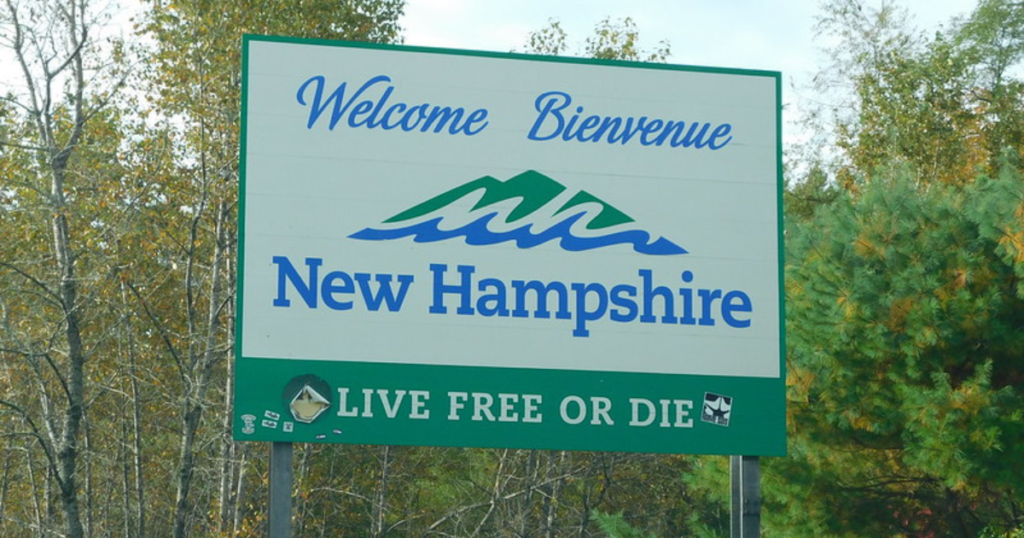
New Hampshire offers a unique business climate: No general sales tax and no personal income tax. This makes it an attractive place to headquarter a trucking business compared to neighboring Massachusetts. However, the operational reality involves navigating the steep grades of the White Mountains and severe winter weather on I-93.
While personal drivers in NH aren't legally required to buy auto insurance (unless they have a bad record), Motor Carriers (truckers) do not have this exemption. The New Hampshire Department of Safety (DOS) adopts federal rules. If your truck is over 10,001 lbs, you must carry liability insurance.
In New Hampshire, the average commercial truck insurance premium typically lands between $8,000 and $13,500 per year. This guide breaks down exactly what you need to pay to keep your trucks legal in the Granite State.
Key Takeaways: New Hampshire Truck Insurance Costs
- The Price Tag: Expect to pay around $11,200 annually for a Semi-Truck with a clean record.
- Monthly Breakdown: A typical owner-operator pays roughly $900/month for Liability and $200/month for Physical Damage.
- The "Live Free" Myth: Do not assume you don't need insurance. Commercial vehicles > 10,001 lbs must meet federal liability limits ($750k+) even for intrastate use.
- Winter Risk: "Comprehensive" coverage is vital here. Salt damage and ice-related accidents are the primary claims drivers in the Northeast.
Real Numbers: Estimated Costs by Truck Type
Let's look at the hard data. The following estimates represent the average annual cost for Auto Liability ($1M Limit) for a driver with a clean record in New Hampshire. New Hampshire rates are significantly lower than Massachusetts or Connecticut (Tier 3 - Affordable), making it a competitive base for Northeast regional haulers.
| Vehicle Type | Limit $300,000* | Limit $750,000 | Limit $1,000,000 (Standard) |
|---|---|---|---|
| Hotshot | $6,200 | $8,500 | $9,800 |
| Box Truck | $5,200 | $6,800 | $8,200 |
| Dump Truck | $7,000 | $9,500 | $11,000 |
| Semi Truck | $8,500 | $10,800 | $12,500 |
| Log Truck | $9,000 | $11,500 | $13,200 |
Last updated: December 15, 2025.
Logrock Reality Check: While liability is cheap, Physical Damage rates are creeping up due to the cost of parts and the severity of winter accidents. Ensure your policy covers Towing & Storage, as getting pulled out of a snowbank in Franconia Notch isn't cheap.
Liability Limits: Intrastate vs. Interstate
New Hampshire rules change depending on whether you cross state lines. We have broken this down into two tables to make it clear.
Table 1: Intrastate Requirements (NH DOS)
For trucks that never leave New Hampshire (e.g., Manchester to Portsmouth).
| Vehicle Weight / Type | Minimum Liability Limit | Filing Required? |
|---|---|---|
| Freight > 10,001 lbs GVW | $750,000 CSL | No (Proof on Registration) |
| Hazmat (Gas/Oil) | $1,000,000 - $5,000,000 | Yes (Form E/ MCS-90) |
| Household Goods (Movers) | $300,000 - $750,000 | Yes (Form E) |
| Passenger (For-Hire) | $1,500,000 - $5,000,000 | Yes (Form E) |
Note: "CSL" means Combined Single Limit. Critical: Unlike many states, New Hampshire does not typically require a "Form E" filing for general freight intrastate carriers. You prove insurance at the time of registration (Cab Card). However, Passenger and Hazmat carriers are strictly regulated.
Table 2: Interstate Requirements (FMCSA / Federal)
For trucks that cross state lines (e.g., Nashua, NH to Boston, MA).
| Vehicle Weight / Type | Minimum Liability Limit | Filing Required? |
|---|---|---|
| Freight < 10,000 lbs | $300,000 CSL | No (Unless Hazmat) |
| Freight > 10,001 lbs | $750,000 CSL | Yes (BMC-91X) |
| Hazmat (Gas/Oil/Explosives) | $1,000,000 - $5,000,000 | Yes (MCS-90) |
| Passenger (16+ seats) | $5,000,000 CSL | Yes (BMC-91X) |
New Hampshire Requirements & Critical Filings
To operate legally, your insurance agent must understand the nuance of NH registration.
- Proof of Insurance (Cab Card): For most general freight carriers, you do not need an electronic filing (Form E) for intrastate work. You simply need to present a valid Insurance ID card when you register your commercial plates at the DMV/Town Clerk.
- Form E: Required for Passenger Carriers (Buses/Limos) and specific regulated industries to prove financial responsibility to the Department of Safety.
- MCS-90: Essential for Hazmat haulers and Interstate carriers. It ensures that even if you miss a premium payment, the public is protected in an environmental disaster.
- UCR: New Hampshire participates in the Unified Carrier Registration system.
Your Questions Answered: "People Also Ask" FAQs
NO. That law applies to private passenger vehicles. Commercial vehicles over 10,001 lbs are governed by state adoption of Federal Motor Carrier Safety Regulations (FMCSR). You must have at least $750,000 liability coverage to operate legally.
While not state-mandated, it is industry-standard. If you haul timber in the North Country, standard policies may exclude accidents that happen "off public roads" (i.e., on the logging trail). Broad Form covers you from the stump to the mill.
Winter conditions. Tow trucks in NH operate in high-risk environments (icy highways, blizzards). The risk of a secondary accident while loading a vehicle on the shoulder of I-93 is high, leading to higher premiums for "On-Hook" and Liability.
The Logrock Difference: We Know the Granite State
New Hampshire is a great place to base a trucking company due to the tax benefits, but you must respect the winter. At Logrock, we ensure you aren't overpaying. We know that a dry van running from Nashua to Boston needs different coverage than a log truck in Coos County. We help you find the sweet spot between compliance and cost.
Conclusion & Get Your New Hampshire Quote
Take advantage of New Hampshire's business-friendly environment, but don't cut corners on your winter coverage. Ready to get a solid number for your business? Contact Logrock today for a customized, no-obligation quote and keep your wheels turning.