
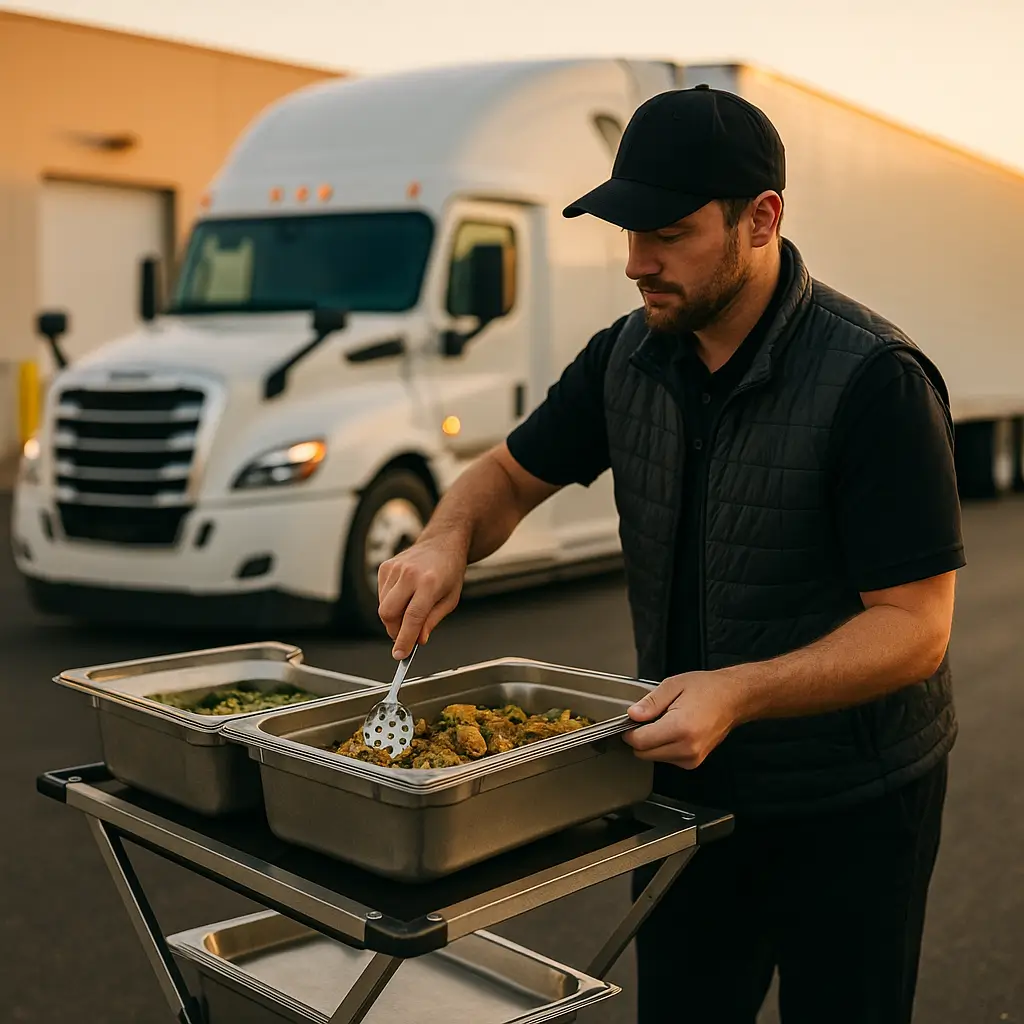
Learn catering operation insurance coverage, venue requirements, 2026 cost ranges, and a multi-state compliance checklist.

Catering operation insurance is a practical mix of liability, auto, property/equipment, and (sometimes) liquor coverage built for off-site events—and most venues expect at least $1M per occurrence / $2M aggregate in general liability before they’ll book you. If you want a fast checklist: start with general liability + product (food) liability, add off-premises equipment coverage, then fix your auto exposure (commercial auto and/or HNOA) so deliveries don’t become denied claims.
Catering is a margin business, and the worst losses usually come from gaps you didn’t know you had—like using a personal auto policy for deliveries or relying on “host liquor” when a contract expects true liquor liability. If you want help lining up coverage with the way you actually work, you can get a catering insurance quote and we’ll map limits and endorsements to your venues and contracts.
Table of Contents
Reading time: 11 minutes
- What Does Catering Operation Insurance Cover?
- Essential Insurance for a Catering Operation (Coverage Checklist)
- BOP for Catering: When Bundling Is Worth It
- Workers’ Comp for Caterers: When It’s Required
- Commercial Auto vs. HNOA for Catering Deliveries
- Liquor Liability (Dram Shop Basics) for Caterers
- Spoilage, Equipment Breakdown, and Off-Premises Theft
- Cyber + E&O: When Caterers Actually Need Them
- Catering Insurance Requirements by State (CA, NY, FL, TX)
- Venue Contracts + COIs: How to Avoid Costly Surprises
- How Much Does Catering Operation Insurance Cost in 2026?
- Real Claim Scenarios (and What Policy Responds)
- Coverage Checklist by Catering Type
- How to Reduce Risk (and Potentially Lower Premiums)
- Your Questions Answered: “People Also Ask” FAQs
- Why Logrock (and How to Get Covered Without Gaps)
- Conclusion & Next Steps
What Does Catering Operation Insurance Cover?
Catering operation insurance is typically a bundle of policies—general liability (often with product/food liability), property/equipment coverage, and auto—built for off-premises events where venues commonly require $1M/$2M liability limits and certificate of insurance (COI) endorsements.
It’s not one magic policy, because catering risk isn’t one thing. You prep food (sometimes in a commissary, sometimes at home, sometimes in a rented kitchen), transport food and gear, set up at venues you don’t control, and you may serve alcohol. Add part-time staff and tight timelines, and you’ve got a mobile operation with lots of ways to get pulled into a claim.
How catering risk differs from a restaurant
Restaurants are mostly “fixed-location” risk. Catering is mobile + off-premises + contract-heavy risk, which means your biggest problems often happen where you have the least control—parking lots, banquet halls, back entrances, loading docks, and outdoor tent setups.
- Slip-and-fall: buffet lines, cords, wet floors, spilled drinks
- Property damage: scorched countertops, damaged floors, smoke/fire issues
- Foodborne illness allegations: even weak claims can create real legal costs
- Auto accidents: deliveries and gear transport are high-frequency loss areas
- Employee injuries: lifting, cuts, burns, set-up/tear-down mishaps
- Alcohol incidents: overserving allegations and “dram shop” exposure
- Theft/damage to gear: trailers, vans, overnight staging at venues
Essential Insurance for a Catering Operation (Coverage Checklist)
A venue-ready catering insurance baseline usually starts with general liability at $1M/$2M, then adds off-premises equipment coverage and the right auto setup (commercial auto and/or hired & non-owned auto) to match how deliveries are actually done.
If you want a clean program (no surprises at the contract stage), build it in layers: liability first, then property/equipment, then auto, then workers’ comp and liquor as your operation requires.
Essential coverages table (what it covers, who asks for it, typical limits)
| Coverage | What It Covers (Plain English) | Who Requires It Most Often | Typical Limits (Common Benchmarks) |
|---|---|---|---|
| General Liability (GL) | Guest injury, third-party property damage, advertising injury | Venues, corporate clients, municipalities | $1M per occurrence / $2M aggregate (common venue minimum) |
| Product / Food Liability (often part of GL) | Claims alleging your food caused illness/injury | Venues, clients, practical necessity | Often included in GL; confirm it’s not excluded |
| Commercial Property | Your owned contents: equipment, supplies, tenant improvements (if applicable) | Lenders, landlords (sometimes) | Based on replacement cost of contents |
| Inland Marine / Off-Premises Equipment | Gear in transit + at event sites (hot boxes, tents, chafers, generators) | You (this is a “stay-in-business” coverage) | Scheduled/blanket limit based on gear value |
| Workers’ Compensation | Employee medical + wage benefits for job-related injuries | State law, many venue contracts | State statutory |
| Commercial Auto | Liability + physical damage for business-owned vehicles | State law, clients indirectly, real-world exposure | $1M liability is a common benchmark |
| Hired & Non-Owned Auto (HNOA) | Liability if employees use personal cars or you rent vehicles for jobs | Smart operators, some contracts | $1M is common |
| Liquor Liability | Claims tied to selling/serving alcohol (not just hosting) | Venues, alcohol license rules, contracts | $1M is common, but varies widely |
| Umbrella/Excess | Extra limits over GL/auto/employers liability | Larger venues/corporate clients | $1M–$5M+ depending on contract size |
General liability + product liability (food liability)
General liability is the policy that responds when someone claims your operation caused bodily injury or property damage, and for caterers, product liability (food-related claims) is often included—but it has to be confirmed with your insurer.
Venues don’t care that you’re careful; they care that you can pay if something happens. Ask your agent to confirm in writing that product liability is included, and that there aren’t exclusions that clash with your setup (open flame/chafers, certain cooking methods, or contractual liability limits).
Property coverage (commissary, rented kitchen, or home-based)
Commercial property coverage protects the stuff you own—equipment, supplies, office contents, and sometimes tenant improvements—based on replacement cost values you choose.
Many caterers assume a commissary’s policy covers them, but that policy usually covers the building owner, not your contents, not your liability, and not the gear you haul to events. If you’re home-based, don’t assume homeowners insurance covers business operations; you often need a business endorsement or a separate policy.
Off-site equipment (inland marine / tools & equipment)
Inland marine coverage is designed for property that moves, which is why it’s a core policy for caterers with hot boxes, tents, chafers, generators, and other gear that lives in vehicles, trailers, and venues.
Standard property coverage is often weak off-premises—exactly where catering lives—so this is one of the most common “why didn’t anyone tell me?” gaps.
BOP for Catering: When Bundling Is Worth It
A Business Owner’s Policy (BOP) typically bundles general liability + commercial property (and often business interruption), and it’s frequently a cost-effective way for caterers to cover the basics in one policy form.
Bundling can also reduce “who pays?” arguments between separate policies and make renewals simpler. For established caterers with meaningful equipment value or a dedicated prep space, it’s often the cleanest foundation.
What a BOP typically includes
- General liability: slip-and-fall, third-party property damage, and related claims
- Commercial property: contents and sometimes tenant improvements
- Business interruption: often included/optional when a covered loss shuts you down
What a BOP may not include (common gaps)
Most BOPs don’t automatically include workers’ comp, commercial auto, liquor liability, robust off-premises equipment coverage, or cyber. The fix is usually endorsements or separate policies—just make sure the “bundle” doesn’t hide missing pieces.
Bundling vs. stand-alone: a simple cost model (illustrative)
These ranges are illustrative and vary by state, claims history, limits, and underwriting.
| Scenario | Likely Program | Typical Monthly Range |
|---|---|---|
| Solo drop-off caterer (no employees, no alcohol) | GL/product + HNOA + small equipment limit | ~$50–$200/mo |
| Full-service caterer (staff, venues, gear, occasional alcohol) | BOP + workers’ comp + equipment + HNOA and/or commercial auto + liquor liability when needed | ~$300–$1,500+/mo |
| High-volume/corporate caterer (multiple vehicles, higher limits, umbrella) | BOP + umbrella + fleet auto + workers’ comp + cyber + liquor (if applicable) | ~$1,000–$4,000+/mo |
Workers’ Comp for Caterers: When It’s Required
Workers’ compensation is required by law in most states once you have employees, and it generally pays for medical care and wage benefits for job-related injuries under state statutory rules.
The tricky part in catering is how “employee” is defined. Part-time and seasonal staff can still count, and some states treat owners/officers differently. Don’t assume you’re exempt without checking your state’s labor rules and your venue contract language.
Common catering injuries (what actually drives claims)
- Cuts and burns: knives, hot pans, chafing fuel, steam tables
- Back/shoulder strains: lifting hot boxes, cambros, tables, and racks
- Slips/trips: wet floors, ice, outdoor surfaces, loading docks
1099 labor, audits, and misclassification risk
If you use contractors, classification matters. Misclassification can trigger penalties and retroactive premium after a workers’ comp audit, and it can also create liability gaps if someone gets hurt and argues they were effectively an employee.
For state-specific classification rules, check your state labor department before relying on a 1099 label alone.
Occupational accident vs. workers’ comp
Occupational accident policies exist, but they’re not the same as workers’ comp and may not satisfy state requirements or venue expectations. If a venue contract requires workers’ comp, an “occ acc” policy usually won’t check that box.
Commercial Auto vs. HNOA for Catering Deliveries
Commercial auto is designed for business-owned vehicles, while hired & non-owned auto (HNOA) covers liability when employees use personal cars or you rent vehicles, and many contracts expect $1M auto liability regardless of state minimums.
Auto is also where a lot of caterers get burned because personal auto policies commonly restrict or exclude business delivery use. You don’t want to find that out after a crash on the way to a venue.
When you likely need commercial auto
You likely need commercial auto if you own/lease vehicles used for deliveries or towing gear, such as cargo vans, box trucks, or trucks that pull equipment trailers. You can also add physical damage coverage (comprehensive/collision) if you want the policy to help repair or replace the vehicle after a covered loss.
When HNOA makes sense (and what it doesn’t do)
HNOA typically provides liability protection if an employee causes an accident while driving their own car for your business (or if you rent a vehicle), but it usually does not pay for physical damage to the employee’s car—that’s typically handled by their personal auto policy.
- Business-owned vehicle: commercial auto
- Employees using personal vehicles: HNOA
- You have both exposures: you may need both
Liquor Liability (Dram Shop Basics) for Caterers
Liquor liability insurance is commonly needed when you sell or serve alcohol as part of your operations, and venues often require a separate liquor liability limit such as $1M because many general liability policies only include limited “host liquor” coverage.
The simplest rule: if your contract makes you responsible for alcohol service, treat it like its own risk category—not an afterthought. “Host liquor” is often fine when alcohol is incidental and you’re not in the business of serving/selling, but it’s not the same as true liquor liability.
Contract language changes the answer fast
Even if you “only do food,” a venue contract can push alcohol responsibility onto you through indemnification language or service obligations. That’s why your agent should review how you serve alcohol (or don’t), who provides bartenders, and who holds the alcohol license (if applicable).
Because liquor liability rules vary by state, check your state Alcoholic Beverage Control agency and have your contract reviewed before accepting alcohol-service responsibility.
Operational safeguards underwriters like
- Server training: TIPS or ServSafe Alcohol (or state-approved equivalents)
- ID checks: written policy and consistent practice
- Cut-off procedures: who decides and how it’s documented
- Incident logs: simple notes can matter in a claim
Spoilage, Equipment Breakdown, and Off-Premises Theft
Spoilage and equipment breakdown coverage can help pay for lost refrigerated inventory and sudden mechanical/electrical failures, and off-premises theft coverage is usually handled under inland marine/equipment forms with limits based on your gear value.
These losses feel “operational” until you price them out: food waste, emergency rentals, staff overtime, and last-minute replacement purchases can hit cash flow immediately.
Spoilage / temperature excursions
Spoilage coverage can apply when refrigerated or frozen stock is lost due to covered causes like certain power outages or refrigeration failure, depending on how the policy is written. Claims go smoother when you can show what happened and when.
- Temperature logs: app-based or a simple manual log
- Maintenance records: proof you didn’t ignore known issues
- Photos + timeline: what you found and the steps you took
Equipment breakdown
Equipment breakdown typically covers sudden mechanical or electrical failure (not wear-and-tear), which matters when a compressor blows the day before a big event and you’re forced into emergency solutions.
Off-premises theft/damage (trailers, vans, overnight staging)
Caterers often stage gear in trailers, vehicles, or at venues overnight. Policy wording matters here, especially for unattended vehicle theft or forced-entry requirements, so it’s worth asking your agent how theft is handled in the real world.
Cyber + E&O: When Caterers Actually Need Them
Cyber liability is increasingly relevant for caterers who take online deposits and store customer data, while professional liability (E&O) can cover service-failure claims that don’t trigger general liability because there’s no bodily injury or property damage.

If you use booking software, payment links, QuickBooks invoices, or shared inboxes, you’ve got the same fraud exposure as bigger companies—just with less margin to absorb a mistake.
Cyber: deposits, payment links, and email fraud
Common cyber losses for small caterers include invoice fraud (“wire the balance here”), hacked email leading to diverted payments, and ransomware locking access to booking or customer files right before a major weekend.
Cyber policies vary, but can include breach response support, legal help, notification costs, and sometimes business interruption tied to a covered cyber event.
Professional liability (E&O) for catering
E&O is most relevant when contracts have strict service expectations and a mistake leads to financial loss instead of injury—think wrong menu delivered, allergen miscommunication, or a missed service window for a corporate event.
- Best fit: corporate catering with SLAs, high-allergen environments, or venues that require it by contract
- Not a substitute for GL: it’s designed for a different type of allegation
Catering Insurance Requirements by State (CA, NY, FL, TX)
State insurance requirements vary most by workers’ compensation rules, auto minimum liability limits, and alcohol liability environment, but in catering, venue and client contracts often drive higher limits than the legal minimum.
Use the matrix below as a starting point, then verify with your state labor department, DMV, and alcohol control authority—and compare that to your venue contract language.
What usually varies by state
- Workers’ comp triggers: how many employees, who counts, and exemptions
- Auto minimums: state-required minimum liability (often far below contract needs)
- Alcohol liability environment: dram shop rules and how aggressively claims are pursued
- Local requirements: municipalities and venues may add their own insurance rules
Sample multi-state matrix (verify before relying)
| State | Workers’ Comp (High-level reality) | Auto Minimum Liability (State minimum, not “recommended”) | Alcohol Service Notes | Common Venue Expectations |
|---|---|---|---|---|
| California (CA) | Generally required for employers with 1+ employees in most situations | Often cited as 30/60/15 (BI/BI/PD) minimum | Contracts matter; alcohol exposure can be complex | Often $1M/$2M GL; COI endorsements frequently requested |
| New York (NY) | Commonly required once you have employees; enforcement can be strict | Often cited as 25/50/10 (BI/BI/PD) minimum | Many venues require liquor coverage if you serve | Additional Insured + Primary/Noncontributory are common asks |
| Florida (FL) | Non-construction businesses often have higher employee thresholds (commonly 4+), but verify for your setup | Often cited as $10k PIP + $10k PDL minimum; contracts usually require more | Serving alcohol can increase underwriting scrutiny | Weddings/late-night events may push higher limits |
| Texas (TX) | Texas is one of the few states where many private employers can opt out, but clients may still require it | Often cited as 30/60/25 (BI/BI/PD) minimum | Contract responsibility often matters more than “minimums” | Corporate clients may require umbrella limits |
Bottom line: If you want to stay booked, build your program to pass the strictest venue you serve—not the loosest rule you can find.
Venue Contracts + COIs: How to Avoid Costly Surprises
Venue contracts commonly require COI endorsements like Additional Insured, Primary & Noncontributory, and Waiver of Subrogation, and missing one line of wording can delay approval or force expensive last-minute changes.
This is also where you can accidentally “agree” to uninsured obligations. A contract can push responsibility onto you for alcohol service, property damage, or third-party actions in ways your policy may not automatically cover.
Common contract requirements caterers miss
- Additional Insured: and whether it applies to ongoing + completed operations
- Primary & Noncontributory: your policy pays first
- Waiver of Subrogation: limits your carrier’s ability to recover from the venue
- Specific limits: per occurrence vs aggregate, and separate liquor limits
- Umbrella/excess requirements: especially for large venues or corporate clients
- Indemnification clauses: can shift responsibility beyond what you intended
COI checklist (bring this to every venue conversation)
| Item | Why It Matters | What to Ask Your Agent |
|---|---|---|
| Additional Insured | Venue wants coverage under your policy | “Can you add an AI endorsement that matches their template?” |
| Primary/Noncontributory | Your policy pays first | “Can the COI reflect primary/noncontributory wording?” |
| Waiver of Subrogation | Prevents insurer from going after the venue | “Can we add waiver wording where required?” |
| Correct limits | Avoid breach of contract | “Do my GL/auto limits match this agreement?” |
| Policy dates | Event date must fall inside policy period | “Can we issue a fresh COI for this event date?” |
Negotiation tips that can reduce premium impact
- Match limits to the event: don’t accept blanket high limits for a 40-person luncheon without a reason.
- Clarify alcohol responsibility: who’s serving, who’s licensed, who’s liable.
- Consider per-event options: for true one-offs, special event coverage may be cheaper than an annual program.
How Much Does Catering Operation Insurance Cost in 2026?
In 2026, small catering insurance programs often start around $50–$200 per month for basic liability and can rise to $300–$1,500+ per month for full-service operations with employees, vehicles, and alcohol exposure, depending on revenue, payroll, limits, and claims history.
Price is driven by a handful of levers: annual revenue, payroll (and class codes), alcohol involvement, vehicles/drivers, loss history, deductibles, and where you operate (state and metro area).
2026 cost benchmarks by policy type (typical ranges)
These are broad starting ranges to help you budget and sanity-check quotes.
| Policy Type | Typical Monthly Range (Small–Mid Ops) | What Pushes It Higher |
|---|---|---|
| GL + Product Liability | $30–$200/mo | Higher revenue, large events, prior claims, higher limits |
| BOP (GL + Property) | $60–$300/mo | More property value, cooking exposures, business interruption |
| Inland Marine / Equipment | $15–$100/mo | High gear value, trailers, frequent off-premises staging |
| Workers’ Comp | Payroll-based | Payroll, class codes, loss history, state |
| HNOA | $10–$50/mo | More drivers, higher delivery frequency |
| Commercial Auto (per vehicle) | $150–$800+/mo | Vehicle type, driver records, radius, garaging location |
| Liquor Liability | $50–$400+/mo | Serving frequency, late-night events, claims, higher limits |
| Cyber | $25–$150/mo | Revenue, data stored, security controls, prior incidents |
| Umbrella | $25–$250/mo | Underlying limits, class of business, claims history |
What drives price up (and how to control it)
- Alcohol exposure: tighten contracts so you don’t “own” the bar unless you’re paid for that risk.
- Documentation: incident reports and temperature logs reduce claim friction.
- COI standardization: fewer last-minute endorsements can help control admin costs.
- Right-sized limits: choose limits based on your real venues, not hypotheticals.
Real Claim Scenarios (and What Policy Responds)
Most catering claims fall into a few predictable buckets—slip-and-fall, food allegations, auto accidents, alcohol incidents, and gear theft—and each bucket is tied to a specific policy (GL, product liability, auto, liquor liability, or inland marine).
Here’s how these usually line up so you can spot gaps before they become expensive lessons.
Common scenarios
-
Guest slips near a buffet line
Likely coverage: General liability (and possibly medical payments).
Common pitfall: no incident report, no witness info, delayed reporting. -
Food poisoning allegation after an event
Likely coverage: Product liability (often under GL).
What helps: prep logs, temperature logs, vendor invoices, a clear timeline. -
Catering vehicle rear-ends another car during delivery
Likely coverage: Commercial auto (liability; physical damage if purchased).
Common pitfall: trying to run business delivery through personal auto. -
Overserving allegation leads to an injury claim
Likely coverage: Liquor liability (when you’re truly selling/serving).
Common pitfall: only having “host liquor,” or a contract that assigns alcohol responsibility to you. -
Trailer or gear stolen overnight at a venue
Likely coverage: Inland marine / equipment.
Common pitfall: unattended vehicle theft requirements (forced entry wording varies by policy).
Coverage Checklist by Catering Type
The right catering insurance setup depends on whether you’re drop-off only, full-service on-site, or running a high-volume corporate operation, because each model changes your employee, auto, and venue-contract exposure.
Use these as practical starting points, then adjust limits to match your venues and client requirements.
Drop-off catering (no staff on-site, no alcohol)
- GL + product liability: the baseline for client and venue claims
- HNOA: if you or staff use personal cars for deliveries
- Small equipment limit: if you carry valuable gear off-site
Full-service catering at venues (setup/serve/teardown)
- GL + product liability: commonly $1M/$2M minimum
- Equipment/inland marine: gear in transit and on-site
- Workers’ comp: if you have staff (often required by law/contract)
- Auto: commercial auto and/or HNOA depending on vehicle ownership
- Umbrella: if you serve high-limit venues or corporate clients
Corporate / high-volume / multi-event operations
- BOP + endorsements: clean core foundation
- Umbrella: align limits to client contracts
- Cyber: payments, deposits, booking systems, client data
- EPLI (optional): often worth considering once you manage employees
- Fleet commercial auto: if you run multiple vehicles regularly
Frequently Asked Questions
Catering insurance usually covers general liability for guest injuries and third-party property damage, product (food) liability for food-related allegations, and property/equipment for your gear—plus auto exposure through commercial auto and/or HNOA depending on who drives what. Many venues also expect a COI showing $1M per occurrence / $2M aggregate in GL and may require endorsements like Additional Insured. If you have employees, workers’ comp is often legally required and is commonly demanded by corporate clients even when the law is flexible.
Catering operation insurance cost in 2026 commonly ranges from ~$50–$200/month for a small drop-off operation to $300–$1,500+/month for full-service catering with employees, vehicles, and alcohol exposure, with commercial auto often adding $150–$800+/month per vehicle. Pricing depends on revenue, payroll and class codes, claims history, locations served, required limits (like $1M/$2M), and whether liquor liability or an umbrella is required. The only fair comparison is quotes with the same limits, endorsements, and exclusions—otherwise “cheap” can be a coverage gap.
Yes—if you sell or serve alcohol, provide bartenders, or accept alcohol-service responsibility in a contract, you typically need liquor liability (often with $1M limits), because many general liability policies only include limited “host liquor” coverage. If you only provide food and the venue/client supplies and serves alcohol, you may not need liquor liability—but the contract language controls the answer. Always confirm whether your GL excludes liquor-related claims when alcohol is part of your operations, not incidental hosting.
Workers’ compensation is required in most states once you have employees, and some states are strict—for example, California generally requires workers’ comp for employers with 1+ employees. Other states have different thresholds and exemptions, so you must verify your state rules and how owners/officers and part-time staff are treated. Even where it’s not legally required, many venues and corporate clients still demand workers’ comp as a contract requirement, and it can prevent employee injury costs from turning into lawsuits that hit your general liability.
A Business Owner’s Policy (BOP) usually bundles general liability + commercial property (and often business interruption) into one policy, and it’s often the most efficient core setup for established caterers with equipment and a prep space. A BOP typically does not automatically include workers’ comp, commercial auto, liquor liability, or robust off-premises equipment coverage, so those are commonly added via separate policies or endorsements. When comparing quotes, confirm the BOP includes product (food) liability and doesn’t exclude key parts of your operation.
Yes—venues and corporate clients can require higher limits than state minimum insurance requirements, and the most common benchmark is $1M per occurrence / $2M aggregate in general liability plus endorsement wording on the COI. It’s also common to see requirements for Additional Insured, Primary & Noncontributory, and Waiver of Subrogation, and larger venues may require a $1M–$5M umbrella. If your policy can’t meet the contract language, you can lose the booking or end up paying for expensive last-minute fixes.
Maybe—if you’re catering a single event, you may be able to buy a short-term special event policy that satisfies a venue’s COI requirements, but availability and pricing depend on alcohol involvement, headcount, and venue wording. If you cater multiple events per year, an annual policy is often simpler and can be more cost-effective once you account for repeated COIs and endorsements. The decision usually comes down to frequency: one true one-off vs. a seasonal schedule where liability follows you across many locations.
Restaurant insurance is built around a fixed location—the same kitchen, dining room, and parking lot every day. Catering insurance is built around mobility and other people’s property: your team, food, and equipment move between a prep space, a vehicle, and venues you do not control. That is why off-premises equipment coverage, auto exposure, and venue-driven COI requirements matter more for caterers.
Not automatically. Standard catering GL and product liability can apply to the food and service side, but the vehicle needs its own auto coverage—commercial auto if you own the van or truck, or a policy built for mobile catering operations. Ask your agent to confirm both the vehicle and any kitchen equipment inside it are covered, since standard commercial auto may exclude onboard cooking equipment.
Usually not automatically. The commissary’s policy typically protects the building and its owner, not your equipment, your liability, or the food you prepare there. Caterers using a shared or rented kitchen usually still need their own general liability and property or equipment coverage, and some leases require the kitchen owner to be named as an Additional Insured.
It depends on how workers are actually classified, not just what a contract calls them. Workers’ compensation is usually tied to employees, but a misclassified contractor who functions as an employee can create a gap if they are hurt on the job. When you regularly use freelance event staff, ask how your workers’ comp and general liability policies treat them.
Timing depends on your carrier and whether you already have an active policy. With existing coverage, most agents can issue an updated COI with Additional Insured wording the same day or next business day once they have the venue’s exact requirements. When you need a new policy for a one-off event, allow several business days—especially when liquor liability or higher limits are involved.
Why Logrock (and How to Get Covered Without Gaps)
Most catering insurance problems aren’t about buying “more insurance,” they’re about buying the right mix of coverage and endorsements so your COIs get approved and your claims don’t hit exclusions.
When we structure catering operation insurance, we focus on contract-fit coverage, operational fit (drop-off vs. full-service, alcohol, staffing, vehicles), and quote comparability so you’re not comparing apples to oranges.
- Contract-fit coverage: map your venue requirements to policy limits and endorsements.
- Operational fit: align auto, equipment, and staffing coverage to how you actually operate.
- Clear tradeoffs: understand what drives price so you can control it without creating gaps.
Conclusion: Next Steps for a Venue-Ready Program
Catering operation insurance is how you stay in business when a normal “event problem” turns into a legal and cash-flow problem. Build around the real exposures: off-site liability, food allegations, vehicles, staff injuries, alcohol responsibility, and gear that moves.
Key Takeaways:
- Start with GL + product (food) liability, then add off-premises equipment coverage.
- Fix vehicle exposure early: commercial auto for owned vehicles and HNOA for employee/rental exposure.
- Treat alcohol as its own category—contracts and state rules determine when liquor liability is needed.
- Match limits and COI endorsements to your venues so you don’t overpay or miss a requirement.
If you want accurate pricing with fewer gaps, gather three things before requesting quotes: (1) your top venue contract requirements, (2) your vehicle + driver list, and (3) estimated annual revenue + payroll.
If you’re juggling venue contracts, alcohol service, and a mix of owned and rented vehicles, LogRock can help you map general liability, auto, equipment, and liquor coverage to the way your catering business actually operates. Talk to our team to review your current limits, spot gaps before your next event, and get a quote built around your real venues and contracts.
Speak with LogRock and request a catering insurance quote.
Related reading





