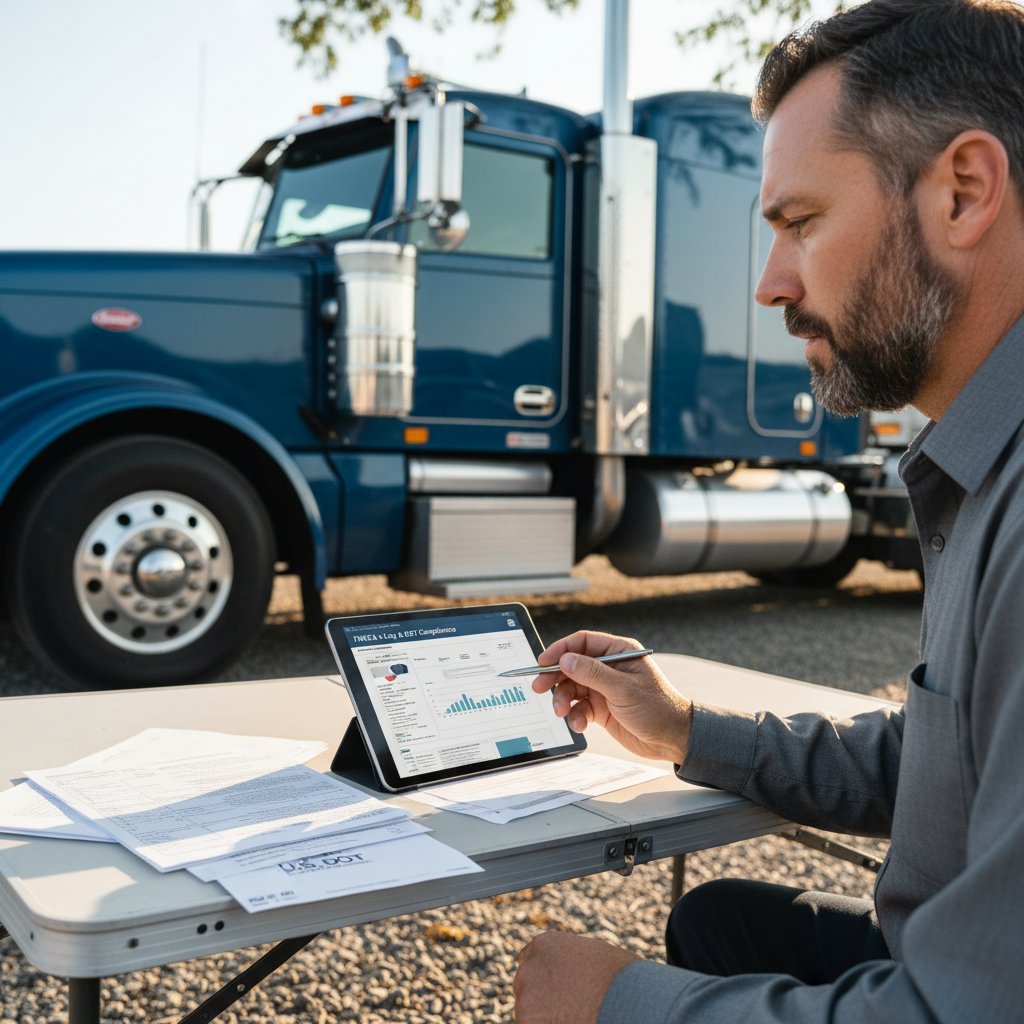
Learn what non trucking insurance (NTL) covers, when it applies, what it excludes, bobtail vs NTL vs deadhead, and how to avoid claim denials. Get a quote.
Non trucking insurance (non-trucking liability, or NTL) is liability coverage that’s intended to apply when you use your tractor for personal use and you’re not under dispatch—and that “dispatch status” definition is exactly where claim denials happen. If you’re leased-on and you take the tractor home, run to dinner, or move it around off-duty, NTL is meant to protect you from third-party injury and property damage claims (not damage to your own truck). The catch is the fine print: “available for dispatch,” repositioning, and lease wording can flip a “personal trip” into “business use” fast.
This guide breaks NTL down like a business owner: what it is, when it applies, what it excludes, real-world scenarios, 2026 cost ranges, and the lease/dispatch checklist that prevents claim surprises. For a broader cost reality check across commercial truck insurance, see this breakdown of affordable trucking insurance in 2026 and real monthly costs.
Key Takeaways: Essential Non‑Trucking Insurance (NTL)
- NTL is personal-use liability coverage for a commercial truck when you’re not under dispatch (policy and lease language decide what “under dispatch” means).
- NTL does not replace primary liability while you’re working (hauling, deadheading for work, repositioning, or “available for dispatch” in many leases).
- Most denied NTL claims come from gray-area business use—not from people blatantly hauling a load.
- The smart play is aligning your lease + your NTL policy wording + your real habits (ELD status, dispatch messages, trip planning).
Table of Contents
This table of contents lists 7 main sections plus FAQs so you can jump straight to dispatch rules, exclusions, and 2026 cost ranges.
Reading time: 9 minutes
- What Non‑Trucking Insurance (NTL) Is—and Who Actually Needs It
- When NTL Applies: The Dispatch Status Rule (and the Gray Areas)
- What NTL Covers vs. What It Excludes (Covers/Excludes Table)
- Bobtail vs Non‑Trucking vs Deadhead: A Simple Comparison That Stops Confusion
- How Much Non‑Trucking Insurance Costs in 2026 (and How to Lower It Safely)
- Frequently Asked Questions
- Why Logrock: Practical Trucking Insurance, Not Guesswork
- Conclusion & Next Step: Get the Classification Right Before You Have a Claim
What Non‑Trucking Insurance (NTL) Is—and Who Actually Needs It
Non‑trucking liability (NTL) is third‑party liability coverage—often written at limits like $1,000,000 CSL—that is intended to apply only during personal use when you’re not under dispatch as defined by your lease and policy.
Non‑trucking insurance = non‑trucking liability (NTL) (plain English)
What it is (in plain English): Non-trucking insurance usually refers to non-trucking liability (NTL)—coverage that can help pay for other people’s injuries and other people’s property damage when you’re using the truck for personal use and you’re not under dispatch.
Why it’s essential (the business risk): If you’re in a crash and you’re not clearly covered by either the carrier’s policy or your own, you can end up with out-of-pocket defense costs, a judgment that threatens personal assets, and a messy compliance/lease dispute at the worst time.
Who needs it:
- Leased-on owner-operators whose motor carrier provides primary liability while you’re working
- Operators who take the tractor home or use it off-duty (even “just around town”)
Who usually doesn’t need NTL (or needs something different)
If you run under your own authority, NTL usually isn’t your “main” solution because you still need your own primary liability and the correct filings for your operation. A lot of drivers buy the wrong thing because someone called it “bobtail” or “non-trucking” and they assumed it covers everything.
Pro tip: If you’re trying to understand the full stack of commercial truck insurance costs (not just NTL), compare quotes apples-to-apples using this guide on cheapest commercial auto insurance (2026) and how to pay less.
When NTL Applies: The Dispatch Status Rule (and the Gray Areas)
NTL eligibility typically comes down to 3 checkboxes—(1) personal use, (2) not under dispatch, and (3) no business purpose—and missing any one of the three can trigger a denial depending on policy and lease wording.
The clean “yes” situation: personal use + not under dispatch
NTL is designed for off-duty, personal trips—think dinner, groceries, or driving home—when you’re not under dispatch and you’re not moving the truck for the carrier’s business.
Personal-use accidents can still create commercial-sized losses. A minor crash involving a tractor can escalate quickly once injuries, towing, storage, and legal defense get involved.
The #1 claim-denial zone: “available for dispatch” (lease language > opinions)
Many leases and NTL forms carve out coverage if you’re “available for dispatch,” “in the business of the carrier,” or repositioning, even if you feel off-duty in the moment.
After a loss, the decision is built on documentation, not vibes. Adjusters may look at:
- The policy wording (definitions and exclusions)
- The lease agreement (dispatch status and control language)
- Dispatch messages / load offers (timing matters)
- ELD duty status (off-duty vs on-duty)
- Trip purpose (personal errand vs moving toward freight)
Practical move: Treat dispatch definitions like IFTA or IRP—boring until it’s expensive. Ask your agent and carrier to clarify “under dispatch” and “available for dispatch” in writing.
The biggest misunderstanding: NTL does NOT replace primary liability
NTL is typically not the policy responding when you’re under dispatch, hauling, or deadheading/repositioning for the next load. If you’re counting on NTL while you’re still in business use, you’re exposed exactly when the losses are bigger.
For a deeper NTL-specific breakdown (coverage, cost, and the bobtail comparison), reference Non‑Trucking Liability Insurance (NTL): Coverage, Cost & Bobtail vs NTL (2026).
What NTL Covers vs. What It Excludes (Covers/Excludes Table)
NTL is primarily third‑party liability coverage (bodily injury and property damage), and it commonly excludes under‑dispatch business use plus damage to your own tractor and cargo.
What NTL typically covers
NTL is mainly about liability to others:
- Bodily injury to other people
- Property damage to other people’s vehicles or property
- Legal defense (varies by form and carrier wording)
Even if the accident is “minor,” the downstream cost (claims handling, attorneys, medical bills) can freeze your operation and cash flow.
What NTL commonly excludes (where people get burned)
These are common “no” situations (policy/lease dependent):
- Hauling a load (even if you weren’t paid)
- Moving the truck to pick up freight (often treated as business use)
- Deadheading/repositioning (often treated as business use)
- Being “available for dispatch” (lease definition matters)
What NTL does NOT cover (and what you need instead)
| Exposure | Does NTL cover it? | What you actually need |
|---|---|---|
| Damage to your tractor (wreck, fire, theft, hail) | No | Physical damage (comp/collision) |
| Damage to the cargo you’re hauling | No | Cargo coverage (motor truck cargo) |
| Injuries/property damage while under dispatch | Usually no | Primary liability (carrier or your own authority setup) |
Pro tip: If you’re trying to control insurance spend without creating gaps, start with the bigger picture of affordable trucking insurance in 2026 and what owner-operators really pay—NTL is only one line item.
Bobtail vs Non‑Trucking vs Deadhead: A Simple Comparison That Stops Confusion
Bobtail, deadhead, and non‑trucking are 3 different concepts—two describe how you’re operating (bobtail/deadhead) and one describes a coverage trigger (NTL).
Definitions (one sentence each)
- Bobtail: You’re driving the tractor without a trailer (a configuration, not a coverage).
- Deadhead: You’re driving without a load (can still be business use).
- Non-trucking (NTL): Coverage intended to apply when you’re using the tractor for personal use and not under dispatch.
Why the terms get mixed up (and why it matters)
People say “bobtail insurance” when they really mean “coverage when I’m not hauling,” but you can bobtail for business (like heading to a pickup), which is exactly where NTL can get denied.
If you mislabel your exposure, you can end up paying for coverage that doesn’t respond when you need it most.
Simple real-world examples (fast clarity)
| Situation | Trailer? | Purpose | Likely NTL? | Why |
|---|---|---|---|---|
| Tractor home → grocery store | No | Personal | Likely yes | Personal use + not under dispatch (if lease/policy agrees) |
| Leaving receiver empty → heading to next pickup | Maybe no | Business | Often no | Repositioning/deadhead is commonly treated as business use |
| Bobtail to shop for repairs between loads | No | Mixed | Depends | Dispatch status + trip purpose decide the classification |
If you want the “apples-to-apples” way to compare policies and avoid buying the wrong coverage, use the framework in cheapest commercial auto insurance (2026) and how to pay less.
How Much Non‑Trucking Insurance Costs in 2026 (and How to Lower It Safely)
Many leased-on owner-operators see non‑trucking liability priced around $300 to $2,500 per year in 2026, with the final number driven by state, limits, driving history, and how “off‑duty” use is underwritten.
Typical NTL cost range in 2026 (realistic, not hype)
NTL is usually one of the more affordable pieces of a trucking insurance stack because it’s limited to off-duty exposure. The bigger money issue isn’t the premium—it’s the cost of a denied claim when the trip gets classified as business use.
What drives your NTL price
Insurers typically price NTL using underwriting inputs like:
- Garaging state/ZIP and loss environment
- Driver MVR (tickets, at-fault accidents)
- Prior claims and prior coverage lapses
- Liability limits (example: $1,000,000 CSL vs lower limits)
- Off-duty exposure details (home parking vs secured yard, metro vs rural)
For broader benchmarks on what trucking insurance costs per month (and what moves the needle), use this guide on affordable trucking insurance in 2026.
How to lower premium without creating a coverage gap
Do:
- Keep coverage continuous (lapses often raise your price)
- Be honest about usage (misclassification is how claims get denied)
- Match limits to your real risk (a low limit can still be financially catastrophic)
- Shop quotes with identical inputs (same limits, same garaging, same drivers)
Don’t:
- Buy NTL thinking it replaces primary liability
- Assume “no trailer” automatically means “covered”
Frequently Asked Questions
Non-trucking liability insurance (NTL) is third-party liability coverage—often issued at limits like $1,000,000 CSL—that is intended to apply when you’re using your commercial tractor for personal use and you’re not under dispatch.
It’s designed to help pay for other people’s bodily injury and property damage (and sometimes defense costs, depending on the form). It typically doesn’t cover damage to your own tractor (that’s comprehensive/collision) and it usually won’t apply while you’re hauling, repositioning for a load, or otherwise in the carrier’s business. The “trigger” is dispatch/business use as defined by your lease and your policy—not whether you have a trailer attached.
Non-trucking liability insurance usually applies only when you’re off-duty, using the tractor for personal reasons, and not under dispatch as defined by your lease and policy.
That means a short personal trip (home, dinner, groceries) can be covered, but the same drive can be excluded if you’re “available for dispatch,” moving toward a pickup, or repositioning between loads. After a crash, insurers may review dispatch messages, ELD duty status, and the lease language to decide whether the trip was personal or business. For a deeper 2026-focused breakdown of dispatch traps, see Non‑Trucking Liability Insurance (NTL): Coverage, Cost & Bobtail vs NTL (2026).
Bobtail means you’re driving the tractor without a trailer, while non-trucking (NTL) means liability coverage intended for personal use when you’re not under dispatch.
You can be bobtailing for business (for example, going to pick up a load), and in that situation NTL is commonly excluded because it’s still business use. You can also be bobtailing for personal reasons (like driving home), where NTL may apply if your lease/policy definitions line up. The practical rule is simple: configuration (trailer/no trailer) doesn’t decide coverage—dispatch status and trip purpose do.
Non-trucking liability is often priced in the hundreds to low-thousands per year, and many owner-operators see rough 2026 ranges around $300 to $2,500 annually depending on state, limits, and driving history.
Your exact premium moves with garaging ZIP, MVR, prior claims, lapses, and how the insurer underwrites your off-duty exposure (home parking vs secured yard, metro vs rural). The bigger financial risk is paying for a policy that doesn’t respond because the trip gets labeled business use. To compare pricing drivers and quotes apples-to-apples, use cheapest commercial auto insurance (2026) and how to pay less.
Why Logrock: Practical Trucking Insurance, Not Guesswork
Getting NTL right usually requires aligning 2 documents (your lease and your policy) with 1 reality check (how you actually use the truck between loads and at home).
You don’t need another generic definition—you need coverage that matches how you actually run your week: deadhead miles, ELD status flips, dispatch texts, parking at home, and the gray areas that cause claim denials.
Logrock focuses on making the decision concrete:
- What triggers coverage (personal use vs business use)
- What exclusions mean on the road (available-for-dispatch traps)
- How to compare quotes without getting fooled by “cheap” labels
If you want to see how we approach commercial truck insurance decisions beyond NTL, start at Logrock.
Conclusion & Next Step: Get the Classification Right Before You Have a Claim
Non trucking insurance (NTL) is straightforward on paper—personal-use liability when you’re not under dispatch—but in real claims the lease and policy definitions decide whether the loss gets paid.
If dispatch status is ambiguous (“available for dispatch,” between loads, repositioning), that’s where people get surprised. Fix the classification now, while you still have options, instead of after an adjuster starts pulling records.
Key Takeaways:
- NTL is for off-duty/personal use—not hauling, not repositioning for freight, and not most deadhead-for-work situations.
- The biggest denial risk is the gray area: “available for dispatch,” between loads, and mixed-purpose trips.
- Shop and bind using matching inputs (limits, garaging, drivers) so “cheap” isn’t just a hidden coverage gap.
If your goal is to keep premiums controlled without gambling your finances, read next: affordable trucking insurance in 2026 (real monthly costs + how to pay less). Related reading: cheapest commercial auto insurance (2026) and how to pay less, and Non‑Trucking Liability Insurance (NTL): Coverage, Cost & Bobtail vs NTL (2026).