
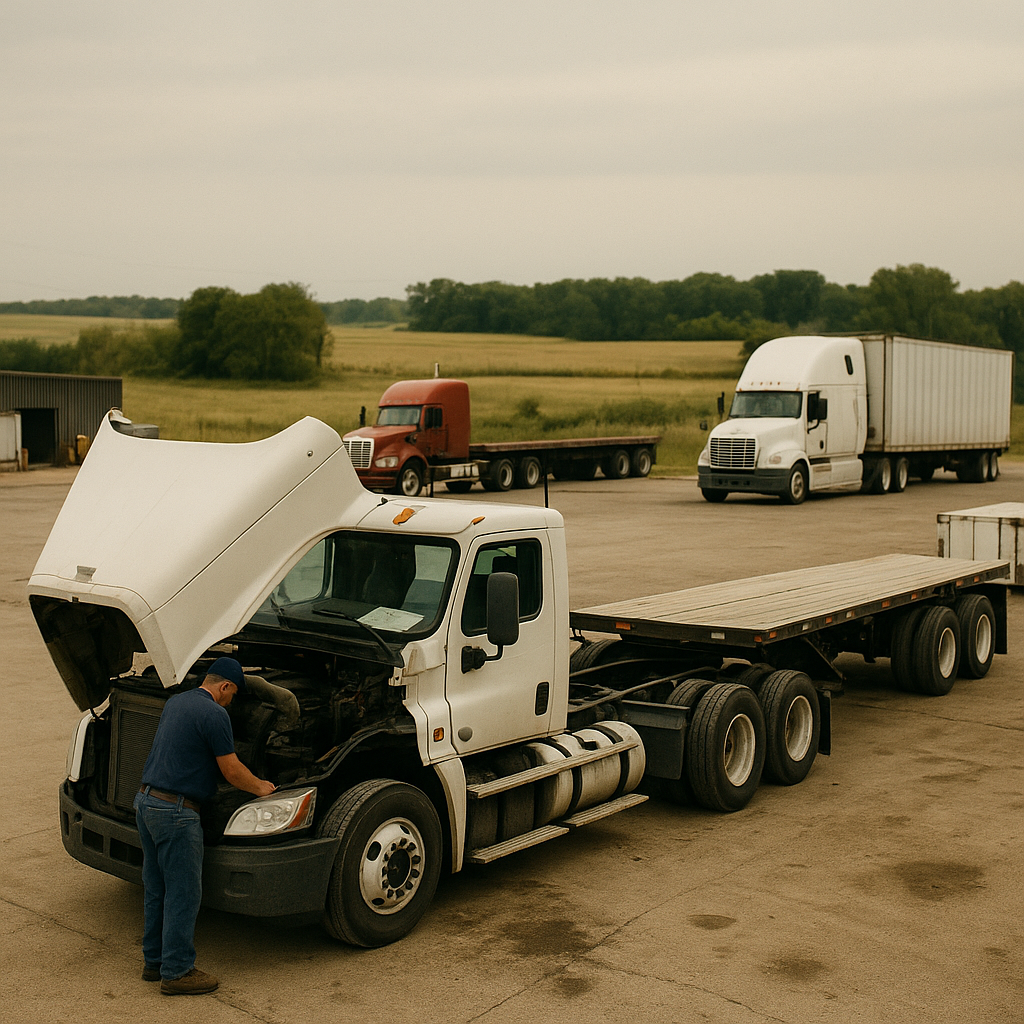

If you’re shopping for dump truck insurance Iowa operators actually need, the first thing to clear up is this: personal auto and trucking insurance are not the same thing, and Iowa rules don’t automatically tell you what FMCSA requires. Your setup depends on how the truck runs, what it hauls, and whose authority it’s under.
This guide breaks down what dump truck insurance covers, who needs it, how Iowa rules interact with federal filings, what drives cost, and how to compare quotes without missing a coverage gap.
What Iowa Dump Truck Insurance Covers#
Dump truck insurance is commercial auto coverage built around the truck’s business use, liability exposure, and hauling risk. It protects against third-party injury and property damage claims, and it can also protect the truck itself depending on the coverages you add. For Iowa operators, the right mix depends on whether you’re for-hire, leased on, or running your own authority.
Commercial auto is insurance for vehicles used in business, with terms and limits built for work use rather than personal driving. The NAIC gives the plain-language foundation, but dump truck operations usually need trucking-specific scoping beyond a basic business auto policy.
Core coverages for dump truck operators#
Auto liability pays for bodily injury and property damage you cause to others in a crash. This is the coverage tied to state requirements and, for some interstate carriers, federal financial responsibility rules under 49 CFR Part 387.
Physical damage covers damage to your own truck from collision and non-collision causes like theft, fire, or weather. In trucking, collision usually pairs with comprehensive or fire and theft with combined additional coverage rather than standing alone.
General liability covers certain non-driving business claims, like incidents at a jobsite or loading area that aren’t caused by operating the truck on the road. It doesn’t replace auto liability.
What changes when the truck hauls dirt, gravel, or debris#
Motor truck cargo covers freight you’re hauling for others when that exposure applies. Some dump truck operators need it, but others hauling dirt, gravel, sand, or debris under certain job setups may have little or no true cargo exposure in the way a van or reefer carrier would.
That matters because dump truck work isn’t one-size-fits-all. Hauling for a contractor on a local route, running aggregate for-hire, and operating under lease to another motor carrier can all point to different insurance needs.
When physical damage and cargo coverage matter#
Some coverages protect your truck. Others protect you against claims from other people. That’s the split that confuses a lot of operators.
Non-trucking liability, often called bobtail in casual conversation, covers non-business use only and does not apply while you’re hauling or dispatching for work. Trailer-related coverages can also matter if your operation uses non-owned trailers or works under a trailer interchange agreement. If you’re not sure which setup fits your operation,
Who Needs Dump Truck Insurance in Iowa#
Most Iowa dump truck operators need commercial trucking insurance, not a personal auto policy. That includes owner-operators, small fleets, and many contractors using trucks in business even when they stay local. FMCSA filings may not apply to every truck, but commercial liability usually still does.
Owner-operators#
If you own one dump truck and use it for work, you’re usually in commercial territory right away. Whether you need your own full policy package depends on whether you run under your own motor carrier authority, work intrastate only, or lease on to another carrier.
An owner-operator is a driver who owns or controls the truck used in the business. If you’re leased to a motor carrier, some primary liability may flow through that carrier while you’re under dispatch, but that doesn’t mean every gap is covered.
Small fleets#
A small fleet is a business running a handful of trucks, usually with company ownership, scheduled units, and sometimes multiple drivers. Insurance gets more layered when one entity owns the trucks, another signs contracts, or hired drivers use the equipment.
Fleet setup also changes underwriting. Insurers look at driver selection, maintenance practices, concentration of risk, and whether all trucks do the same kind of work.
Contractor-haul and for-hire operations#
A for-hire motor carrier hauls property for someone else in exchange for payment. A contractor-owned truck doing internal work on private jobs may face a different insurance setup than a truck hauling materials for customers as a transportation business.
That’s why “it’s just a dump truck” isn’t enough to scope coverage. The use case matters more than the body style.
Intrastate versus interstate use#
Intrastate means you operate only within one state. Interstate means you cross state lines or take part in transportation that falls under interstate commerce.
Intrastate-only trucking can still require commercial liability even when FMCSA filings don’t apply. Once your operation involves interstate authority, the federal side can kick in fast.
Iowa Rules vs. FMCSA Requirements#
Iowa rules and FMCSA requirements are separate, and some dump truck operators have to deal with both. State proof of insurance and vehicle registration issues do not replace federal financial responsibility rules for interstate motor carriers. The trigger is how you operate, not the fact that the truck is a dump truck.
State minimums and policy proof#
Iowa handles its own vehicle registration, titling, and state-level insurance framework through state agencies, including the Iowa Department of Transportation and the Iowa Insurance Division. For a working dump truck, that state side can affect registration proof, plates, and compliance inside Iowa even when no federal filing is required.
But state minimum thinking is where many operators get sideways. A state minimum is not automatically the limit that satisfies your commercial trucking operation, especially if your work expands beyond purely local, intrastate use.
When federal financial responsibility rules apply#
Under 49 CFR Part 387, for-hire interstate carriers hauling general freight in vehicles over 10,001 pounds must carry at least $750,000 in public liability. That federal minimum changes by carrier type, vehicle weight, and commodity.
So no, not all truckers need the same liability limit. If you’re over 10,001 pounds and for-hire interstate, general freight points to one threshold, while auto hauling and hazmat point to higher ones.
How filings work for interstate carriers#
An MC number is FMCSA operating authority for certain for-hire interstate carriers. A USDOT number identifies carriers and supports federal safety oversight, even though not every USDOT registrant has the same authority requirements.
If you run interstate for-hire, insurers may need to support the required filing tied to your authority. You can verify a carrier’s status and authority through SAFER before assuming the policy setup is correct.
Why no-fault confusion does not replace trucking requirements#
No-fault questions come up a lot because people mix personal auto rules with commercial trucking. Even if someone is thinking in personal auto terms, that does not erase the liability structure commercial trucks operate under.
A motor carrier is the business responsible for commercial transportation operations. Whether Iowa is discussed as no-fault in casual conversation doesn’t change this basic point: commercial trucking liability requirements still depend on your operation, contracts, and whether federal rules apply.
How Much Iowa Dump Truck Insurance Costs#
Iowa dump truck insurance costs vary based on the truck, the work, the driver, and the policy structure. There isn’t one useful flat number because underwriters price dump truck risk by operation details, not just by vehicle type. Your actual premium depends on truck value, radius, hauling exposure, authority status, driving history, and more.
Main price drivers#
The biggest drivers are usually the truck’s stated value, where it’s garaged, how far it runs, who drives it, and what kind of work it does. A newer truck with higher physical damage values costs more to insure than an older paid-off unit with limited first-party coverage.

Your driving record and loss history matter too. So do years of CDL experience, prior commercial insurance history, and whether there have been lapses in coverage.
Why dump truck premiums vary by use case#
A dump truck hauling aggregate every day to active jobsites can look very different from a truck doing seasonal farm-related hauling or lower-mileage local work. Debris, demolition, gravel, sand, and construction support all create different underwriting pictures.
An operating radius is the usual distance your truck runs from its base. More road time, tighter jobsites, denser metro traffic, and heavier haul frequency can all change how an insurer sees the risk.
What underwriters look at#
Underwriters want a clean, consistent story. That includes VINs, unit year and make, business entity name, garaging address, driver details, safety history, and whether the truck operates under its own authority or someone else’s.
They also look hard at business type. A truck that’s described one way on an application, another way on a contract, and a third way on a loss run is exactly the kind of mismatch that slows quotes or creates coverage problems later.
What can increase or reduce cost#
These factors commonly move pricing up:
- New venture status
- Poor driving history
- Prior claims
- Higher truck values
- Wider radius
- For-hire interstate exposure
- Hired drivers with limited experience
- Higher requested limits
- Lower deductibles
These factors can help pricing or insurability:
- Stable business history
- Clear job descriptions
- Accurate garaging and mileage
- Strong driver files
- Solid maintenance records
- Reasonable deductibles
- Consistent prior coverage
Single-truck owner-operators and small fleets can also be rated differently. Fleets may benefit from stronger controls, but they also create concentration risk when multiple units and drivers are involved.
How to Lower Cost Without Creating Coverage Gaps#
The safest way to lower dump truck insurance cost is to improve the risk, not strip the policy. You can often make a better case to underwriters by tightening records, choosing deductibles carefully, and matching coverage to the actual operation. Cutting the wrong coverage may save premium short term but create a much bigger loss later.
Choose the right deductibles#
A higher deductible can reduce premium, but only if your cash flow can handle repairs after a claim. If one cracked hood, backing loss, or windshield event would jam up operations, the lower premium may not be worth the stress.
Match limits to the operation#
Don’t buy by rumor. Match liability limits and optional coverages to your hauling type, contracts, authority status, and equipment value.
A truck doing regular for-hire work has a different exposure than a truck used only for a contractor’s own operations. Removing needed protection just to force a lower price is where a lot of expensive mistakes start.
Keep records clean and consistent#
Driver lists, loss history, business name, unit details, and garaging address should all match from form to form. If not, you create quote friction and may raise red flags with underwriters.
Review garaging, routes, and driver files#
Garaging location, normal routes, and who actually drives the truck all affect the policy. If your current setup no longer matches the real operation, fix that before renewal rather than after a claim.
Do You Need a Separate Policy for the Trucking Company?#
Yes, sometimes you do. The truck and the company are related, but they are not always protected by the same coverage in the same way. A dump truck operation may need auto liability for the vehicle, physical damage for the equipment, and separate business-side protection depending on contracts, leases, or jobsite exposure.
Truck policy versus business entity coverage#
The truck policy mainly follows vehicle-related exposure. The business entity may also need coverage for things the truck policy doesn’t handle.
That’s where operators get tripped up. Having insurance on the truck doesn’t automatically mean every company exposure is covered.
When one policy is not enough#
If the company owns the truck, hires drivers, signs hauling contracts, or works with outside trailers or equipment, one policy may not do the whole job. General liability and auto liability handle different kinds of claims, and physical damage serves another purpose entirely by protecting your own equipment.
A business can also need different named insureds or policy structures depending on whether it’s a sole proprietor, LLC, or corporation.
How contracts and leases can change the answer#
Lease terms and customer contracts often answer this question faster than general advice does. If you lease on to a motor carrier, their liability arrangement may apply in some situations but leave other exposures to you.
If you run under your own authority, the burden is usually broader. Before assuming one policy solves everything, check the lease, check the contract, and check how the authority is set up.
How to Get a Quote for Iowa Dump Truck Insurance#
Getting a useful quote starts with complete, consistent information. The faster you can show exactly how the dump truck operates, the easier it is to get a quote that’s actually usable instead of a rough number that changes later. For Iowa operators, quote speed usually comes down to preparation.
What information to gather first#
Have these details ready:
- VIN for each truck
- Garaging address
- Driver names and license details
- Operating radius
- Haul type
- Authority status
- Current insurance info
- Requested coverages
- Trailer details, if any
Which details affect quote speed#
The biggest slowdowns are unclear business type, missing driver information, and confusion about whether the truck runs under its own authority or a leased carrier’s authority. If your application is clean, the process usually gets much smoother.
How to compare offers without missing coverage#
Don’t compare on premium alone. Compare liability limits, deductibles, exclusions, filing support, covered drivers, and whether the policy structure actually fits your operation.
Common Iowa Dump Truck Insurance Questions#
Most Iowa dump truck insurance questions boil down to four things: what coverage you need, whether Iowa rules or FMCSA rules apply, how pricing works, and whether the business needs its own policy. The short answer is that requirements vary by carrier type, vehicle weight, cargo, and whether you operate interstate or intrastate.
Iowa no-fault confusion doesn’t replace trucking liability requirements. Separate company insurance may be needed depending on ownership, contracts, and drivers. And cost depends less on the words “dump truck” than on how the truck is used day to day.
FAQ#
How much does it cost to get insurance on a dump truck?
Dump truck insurance cost depends on the operation more than the truck alone. Insurers usually look at the truck’s value, physical damage need, operating radius, driver experience, CDL history, prior claims, garaging location, and whether the truck runs intrastate, interstate, leased on, or under its own authority. Hauling type matters too, since construction support, aggregate hauling, and debris work can carry different risk. Deductibles and selected liability limits also change the premium. The cleanest way to control cost is to present accurate information and buy coverage that matches the work.
What insurance do I need for a dump truck?
Most dump truck operators need commercial auto liability at a minimum, not a personal auto policy. Beyond that, the usual building blocks are physical damage for the truck itself, general liability for certain non-driving business claims, motor truck cargo when there is a real cargo exposure, and non-trucking liability only for qualifying non-business use. Some operations also need trailer-related coverage. The right setup depends on whether you’re for-hire, hauling under contract, leased to a motor carrier, or running under your own authority. Requirements vary by carrier type, vehicle weight, cargo, and interstate versus intrastate operation.
Is Iowa still a no-fault state?
For trucking purposes, the better answer is this: no-fault talk does not remove commercial truck liability requirements. Owner-operators often hear personal auto terms and assume they change what a working dump truck needs, but commercial trucking follows its own insurance and regulatory logic. If your operation is intrastate only, Iowa state rules and proof requirements still matter. If you’re a for-hire interstate carrier, federal financial responsibility rules under 49 CFR Part 387 may also apply. Either way, no-fault confusion should never be used as a shortcut for deciding dump truck coverage.
Do you need a separate insurance for a trucking company?
Often, yes. Insurance on the truck itself does not automatically cover every exposure the company has. A trucking business may need auto liability for road use, physical damage for its own equipment, and general liability or other policy structures for business-side risk depending on contracts, jobsite exposure, ownership, and whether it hires drivers. Lease arrangements can also split responsibility between the motor carrier and the owner-operator. The answer depends on who owns the truck, whose authority is used, what contracts require, and what kind of claims you’re trying to protect against.
Does interstate hauling change what an Iowa dump truck operator needs?
Yes. Interstate hauling can trigger FMCSA authority and filing requirements that don’t apply the same way to a purely intrastate operation. Under 49 CFR Part 387, for-hire interstate carriers over the weight threshold and hauling covered property need federally scoped public liability limits, and those limits vary by commodity and carrier type. Iowa registration or proof-of-insurance rules don’t replace that. If you’re not sure whether your work counts as interstate, check your authority setup, routes, contracts, and SAFER status before assuming your current policy structure is enough.





