
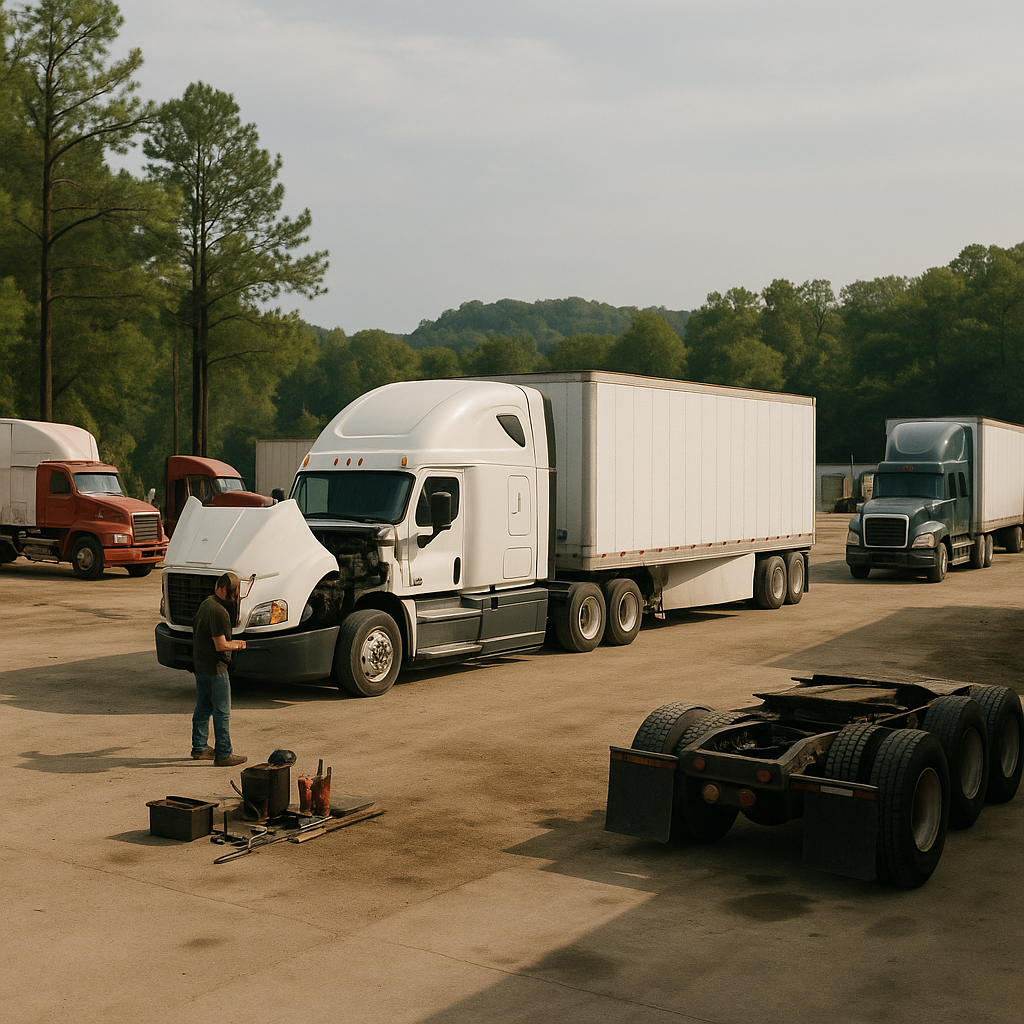
Dry van trucking insurance South Carolina operators buy isn’t one single policy. It’s a stack of coverages that protects your truck, trailer exposure, freight, and liability based on how you run: leased on or independent, intrastate or interstate, one truck or a small fleet.
If you’ve heard “just get the minimum” or “all you need is cargo and liability,” that’s where people get burned. South Carolina state auto minimums, FMCSA filings, shipper requirements, and trailer use don’t all mean the same thing, and a dry van setup can look simple right up until a claim shows the gap.
What South Carolina dry van trucking insurance actually covers#
South Carolina dry van trucking insurance usually means a package of separate policies that protect different parts of the operation: liability for injuries or damage you cause, cargo for the freight you’re hauling, physical damage for your truck, and sometimes trailer-related or non-trucking coverages depending on how you run. Dry van insurance is not one standalone policy.
Core coverages for dry van operations#
Auto liability pays when your truck causes bodily injury or property damage to other people. In trucking, you’ll also hear BIPD, which means bodily injury and property damage liability combined under your commercial auto policy.
Motor truck cargo covers the customer’s freight while you’re hauling it, subject to the policy terms, commodity rules, and exclusions. For a dry van operator, that’s often one of the first coverages a broker or shipper asks about because the trailer may be enclosed, but the cargo inside still has to be insured correctly.
Physical damage covers your own truck for collision and non-collision losses like theft, fire, weather, or vandalism, depending on the form. If your tractor has real value and you couldn’t easily replace it out of pocket, this is usually a practical coverage, not just a financing requirement.
General liability covers certain business-related third-party claims that don’t come from operating the truck on the road. It’s often requested by contracts, terminals, or customers even though it doesn’t replace auto liability.
What is often optional, duplicated, or misunderstood#
Non-trucking liability is coverage for non-business use when you’re not under dispatch; many drivers call it bobtail, though bobtail can be used loosely and the actual form matters. It does not cover paid hauling.
Trailer coverage is where dry van operators often overbuy or buy the wrong thing. Trailer interchange applies when you have a signed interchange agreement for a trailer you don’t own, while non-owned trailer physical damage applies when you’re pulling a trailer you don’t own without that signed interchange setup.
Personal auto insurance doesn’t replace commercial trucking insurance. And cargo insurance doesn’t protect your truck, just like physical damage doesn’t protect the freight.
How coverage changes for owner-operators and small fleets#
If you’re leased on to a motor carrier, that carrier may provide some primary liability while you still need your own physical damage, non-trucking liability, or other coverages depending on the lease. If you’re running under your own MC number and USDOT authority, the policy structure usually gets broader because the filings, dispatch control, and freight obligations sit with you.
A small fleet adds another layer because insurers rate the whole operation, not just one truck. Driver mix, unit schedules, loss history, and whether all trucks run the same lanes can change what coverages make sense and how the quote is built.
If you’re not sure whether your dry van setup has a gap between what you assume is covered and what’s actually on paper,
South Carolina rules versus FMCSA requirements#
South Carolina state minimum auto insurance is not the same thing as commercial trucking compliance. For a dry van operation, the right requirement depends on whether you’re operating interstate or intrastate, whether you’re for-hire or private, what the truck weighs, and what you’re hauling.
State minimum auto insurance is not the same as trucking compliance#
South Carolina’s regular auto minimums are consumer auto rules, not a shortcut for commercial trucking compliance. The South Carolina Department of Insurance is the right state source for consumer-facing minimum auto information, but a dry van tractor hauling freight for hire usually needs a commercial trucking setup that goes beyond those personal vehicle minimums.
That confusion causes real problems. A driver may hear the state’s minimum liability number and assume that’s enough to haul freight, then find out a broker, shipper, or lender won’t touch the load because the insurance doesn’t match the operation.
When federal filings matter#
FMCSA filing rules apply to many for-hire interstate carriers, and that’s where people hear the “$750K” shorthand and get the wrong idea. Under 49 CFR Part 387, for-hire interstate carriers hauling general freight in vehicles over 10,001 pounds must carry at least $750,000 in public liability, but that is not a universal number for all trucking.
Auto haulers and hazmat operations can face different minimums. Federal rules also turn on carrier type, cargo, and vehicle weight, so the right question isn’t “What’s the minimum for truckers?” It’s “What minimum applies to this operation?”
The filing tied to that liability policy is often backed by an MCS-90, which is an endorsement connected to federally required public liability for certain motor carriers. You can verify carrier operating status through SAFER and review FMCSA guidance at FMCSA.
Intrastate versus interstate dry van operations#
Intrastate means you operate within one state; interstate means your operation crosses state lines or is part of interstate commerce. That distinction matters because a South Carolina dry van carrier that stays intrastate may face a different compliance setup than one booking loads across state lines under its own authority.
Leased-on drivers can have a different structure again because the motor carrier may control filings and dispatch. Independent carriers with their own authority usually need to line up the policy, filing, and operating status more carefully before hauling.
Even when a state rule doesn’t spell out every coverage, brokers and shippers often expect proof of liability, cargo, and sometimes general liability before they’ll work with you. That’s why reading only the state minimum and stopping there usually isn’t enough.

How dry van insurance cost is calculated in 2026#
Dry van insurance cost in 2026 depends on the full risk profile, not just the truck or ZIP code. The biggest pricing drivers are authority status, years in business, driving history, radius, lanes, cargo, equipment value, deductibles, and whether you’re leased on or operating under your own authority.
The underwriting factors that move price#
Insurers want to know how you actually run. A new authority with irregular lanes, higher cargo values, and limited prior insurance history will usually be viewed differently than an established owner-operator with stable lanes, clean inspections, and documented experience.
Your truck’s value matters because physical damage premiums track replacement exposure. Higher stated values and lower deductibles usually mean more premium, while inflated equipment values can leave you paying for protection you didn’t need in the first place.
Cargo value matters too. If you’re hauling higher-value freight, more theft-sensitive commodities, or loads with bigger severity potential, underwriters price that exposure differently than ordinary dry goods.
Why similar trucks can get different quotes#
Two South Carolina dry van operators can have nearly identical tractors and get very different quotes because the quote is built around the operation, not the hood. One may be leased on with liability handled through the carrier, while the other has a fresh authority, broader filings, and direct shipper contracts.
Lanes change things. A truck running short, predictable regional routes may look different from one running long interstate lanes with unfamiliar shippers, denser metro stops, or theft-prone corridors.
Location also matters, but not by itself. Garaging near Charleston, Columbia, Greenville, or a more rural part of the state can influence pricing, yet underwriters still look at where the truck travels, where it parks, and how consistently it operates.
What new authority versus established carriers changes#
A loss run is the claims history insurers use to evaluate prior insurance performance. Established carriers can often show loss runs, prior declarations pages, and a track record, while new authorities usually can’t, which creates more uncertainty for underwriters.
That doesn’t mean new authority can’t get covered. It means quote structure often changes: different markets, tighter terms, closer review of driver history, and more attention to cargo type, radius, and filing needs.
Quote differences also come from structure, not just appetite. One insurer may include broader trailer treatment or higher cargo terms, while another looks cheaper because something important is missing.
What to expect from quotes for owner-operators and small fleets#
Quotes for South Carolina dry van trucking insurance can look similar on the front page and still protect very different things. The safest way to compare them is to match the coverage structure to your operation first, then compare premium, deductibles, and terms.
Quote variables for leased-on versus independent carriers#
If you’re leased on, the motor carrier may carry primary liability while your own quote focuses more on physical damage, non-trucking liability, occupational exposures, or trailer-related needs. The key question is who controls dispatch, whose authority is being used, and what the lease says about insurance responsibility.
If you’re independent, your own policy usually has to carry more of the load. That can include liability filings, cargo, physical damage, and any trailer or general liability pieces needed for your direct operation.
Owner-operator versus 2-5 truck fleet considerations#
A one-truck owner-operator is often judged tightly on driver history, experience, equipment value, and operating pattern. A 2-5 truck fleet introduces more moving parts: more drivers, more units, more chances for inconsistency, and sometimes different schedules of autos and trailers.
Fleet quotes can also hide structural differences. One quote may assume all units are scheduled the same way, while another may break out tractors, trailers, and driver assignments more carefully.
How to spot missing coverages in a quote#
Read the quote line by line. Check whether cargo is actually included, whether physical damage applies to all scheduled units, whether deductibles are workable, and whether trailer coverage is explicit instead of implied.
A dry van owner-operator can easily think “the trailer is covered” when the quote only covers the tractor. The same goes for cargo limits that sound fine until you compare them to what you actually haul.
Fast quoting is useful, but only if the setup is right. If you’re comparing options and want someone to sanity-check what the quote really covers,
Ways to lower dry van insurance cost without creating coverage gaps#
You can lower dry van insurance cost without gutting protection, but the best moves are usually operational and structural, not just chopping limits. The safest savings come from accurate equipment values, workable deductibles, clean operations, and coverage that matches the freight you actually haul.
Deductibles, limits, and truck value choices#
A deductible is the amount you pay out of pocket before the insurer pays a covered claim. Higher deductibles can reduce premium pressure, but only if you can realistically absorb that amount after a loss.
Keep truck values honest. If the stated value is too high, you may be paying extra for physical damage coverage that doesn’t reflect the equipment’s actual worth. If it’s too low, the problem shows up at claim time.
Cargo limits should also fit the freight. Buying less cargo than your loads require can save money on paper and cost much more when a loss hits.
Operational habits that insurers view favorably#
Insurers like consistency. Stable lanes, documented maintenance, clean driver records, clear safety routines, and organized paperwork can all help underwriting confidence over time.
That includes basic business setup too. If your operation runs through an LLC, keep your records straight, vehicle details current, and driver information easy to verify. A VIN is the vehicle identification number used to identify each truck or trailer being insured, and missing or mismatched VIN information slows everything down.
Where not to cut coverage#
The most expensive policy isn’t always the best, but the cheapest-looking quote can be the worst if it leaves out the loss that would actually hurt you. Trailer exposures, cargo terms, and liability setup are the places dry van operators most often misread.
Don’t cut coverage just to make a quote fit if the operation still needs that protection. A lower premium doesn’t help much if the denied claim comes from a gap you could have spotted up front.
How to compare dry van insurance quotes the right way#
The right way to compare dry van insurance quotes is to make them apples to apples: same operation, same filings, same units, same deductibles, and the same understanding of whether you’re leased on, independent, interstate, or intrastate. Otherwise you’re not comparing price; you’re comparing different policies.
A simple checklist for apples-to-apples comparison#
Start with the basics:
- Liability limit and whether any required filing is included
- Cargo coverage and whether the limit fits your freight
- Physical damage on every scheduled tractor and trailer that needs it
- Deductibles for collision and comprehensive-type losses
- Trailer treatment: owned, non-owned, or interchange exposure
- General liability if your contracts require it
- Exclusions or commodity restrictions that affect dry van freight
If one quote is much lower, find out why. Lower cost may reflect narrower cargo terms, omitted trailer coverage, or a different assumption about who provides liability.
Paperwork that speeds underwriting#
Underwriting moves faster when the operation is documented clearly. That usually includes your USDOT number, MC number if you have authority, driver details, VINs, current declarations pages, and loss runs if you’ve had prior coverage.
If you’re forming or cleaning up the business side, the IRS and SBA are useful for basic business setup information. But insurance still turns on how the trucking operation runs day to day, not just what the entity paperwork says.
Questions to ask before binding coverage#
Before you bind, ask whether the quote assumes interstate or intrastate use. Ask whether it’s built for leased-on use or independent authority. Ask whether trailer exposures are included, and whether cargo terms fit what you actually haul.
Also ask what’s not covered. That’s usually where bad surprises live.
Common South Carolina dry van coverage questions#
South Carolina dry van coverage questions usually come down to three things: cargo, trailer use, and confusion over state minimums versus real trucking requirements. The simplest way to think about it is this: your entity type matters less than your actual operation, and the policy has to match how the truck, trailer, and freight are used.
Cargo and trailer coverage confusion#
Cargo insurance protects the freight you’re hauling, not the trailer itself. If your dry van trailer is owned, borrowed, or pulled under an interchange agreement, the trailer exposure may need a separate coverage decision from the cargo.
That matters because many operators say “I need trailer insurance” when what they really mean is one of three different things: physical damage on an owned trailer, non-owned trailer physical damage, or trailer interchange. Each solves a different problem.
LLC and business insurance questions#
An LLC is a legal business structure, not an insurance class. The NAIC has good plain-language background on business insurance, but trucking underwriters still rate the real exposure: truck type, filings, drivers, radius, cargo, and claims history.
So if you’re wondering what insurance an LLC needs in South Carolina, start with the operation. A one-truck dry van carrier under its own authority has a very different risk profile than a local cargo van delivery business or a leased-on owner-operator.
Minimums versus real operating needs#
South Carolina minimum auto rules don’t tell you everything a dry van carrier needs. Federal requirements, contract expectations, lender requirements, and your own loss exposure all matter too.
That’s why the right question usually isn’t “What’s the minimum?” It’s “What would actually protect this operation and keep it moving after a loss?”
FAQ#
How much does $100,000 cargo insurance cost?
The cost of $100,000 in cargo insurance depends on what you haul, where you run, your claims history, your authority status, and the deductible on the policy. Dry van freight isn’t all priced the same, because underwriters look at commodity type, theft exposure, route patterns, and how consistently you operate.
The bigger point is that the limit alone doesn’t tell the whole story. A quote with the same cargo limit can still differ based on exclusions, covered commodities, and who is hauling under whose authority. Your actual premium depends on your operation, cargo, radius, driving history, and other factors.
What type of insurance do you need to run a cargo van business?
The answer depends on what “cargo van business” means in real life. If it’s a commercial delivery operation, you may need commercial auto liability, physical damage if you want the van protected, and cargo coverage if you’re responsible for customers’ goods. If a trailer is involved, trailer-related coverage may matter too.
If the business is operating as a motor carrier under authority, the compliance side can change again. That’s why cargo van insurance and dry van trucking insurance aren’t interchangeable terms. The right setup depends on whether it’s personal delivery, local commercial work, or regulated for-hire hauling.
What are South Carolina’s minimum requirements for auto insurance?
South Carolina has state minimum auto liability rules for regular vehicles, along with uninsured motorist requirements, but those consumer auto minimums are not the same as commercial trucking requirements. For trucking, the right liability setup depends on whether you’re for-hire or private, interstate or intrastate, vehicle weight, and cargo type.
For example, under 49 CFR Part 387, many for-hire interstate carriers hauling general freight in vehicles over 10,001 pounds must carry at least $750,000 in public liability. So a dry van tractor-trailer can’t assume the state personal auto minimum is enough just because the truck is registered in South Carolina.
How much is business insurance for an LLC in South Carolina?
There isn’t one price for business insurance just because the company is an LLC. Insurance cost depends on what the business does, whether it has vehicles, what kind of freight or services it handles, payroll or driver exposure, property values, and the coverages being purchased.
For a trucking LLC, insurers care more about the operation than the entity label. A one-truck dry van carrier with its own authority, interstate lanes, and financed equipment will be rated very differently from a small non-trucking LLC with no vehicles. Your actual premium depends on your operation, cargo, radius, driving history, and other factors.
Do dry van trailers need separate insurance?
Sometimes yes, and that’s where a lot of dry van operators get tripped up. If you own the trailer, you may need physical damage coverage scheduled on it. If you don’t own it, you may need non-owned trailer physical damage or trailer interchange, depending on whether there’s a signed interchange agreement.
Cargo coverage does not insure the trailer itself. And liability on the tractor does not automatically mean every trailer-related loss is covered the way you expect. The right answer depends on ownership, contracts, and how the trailer is being used in the operation.





