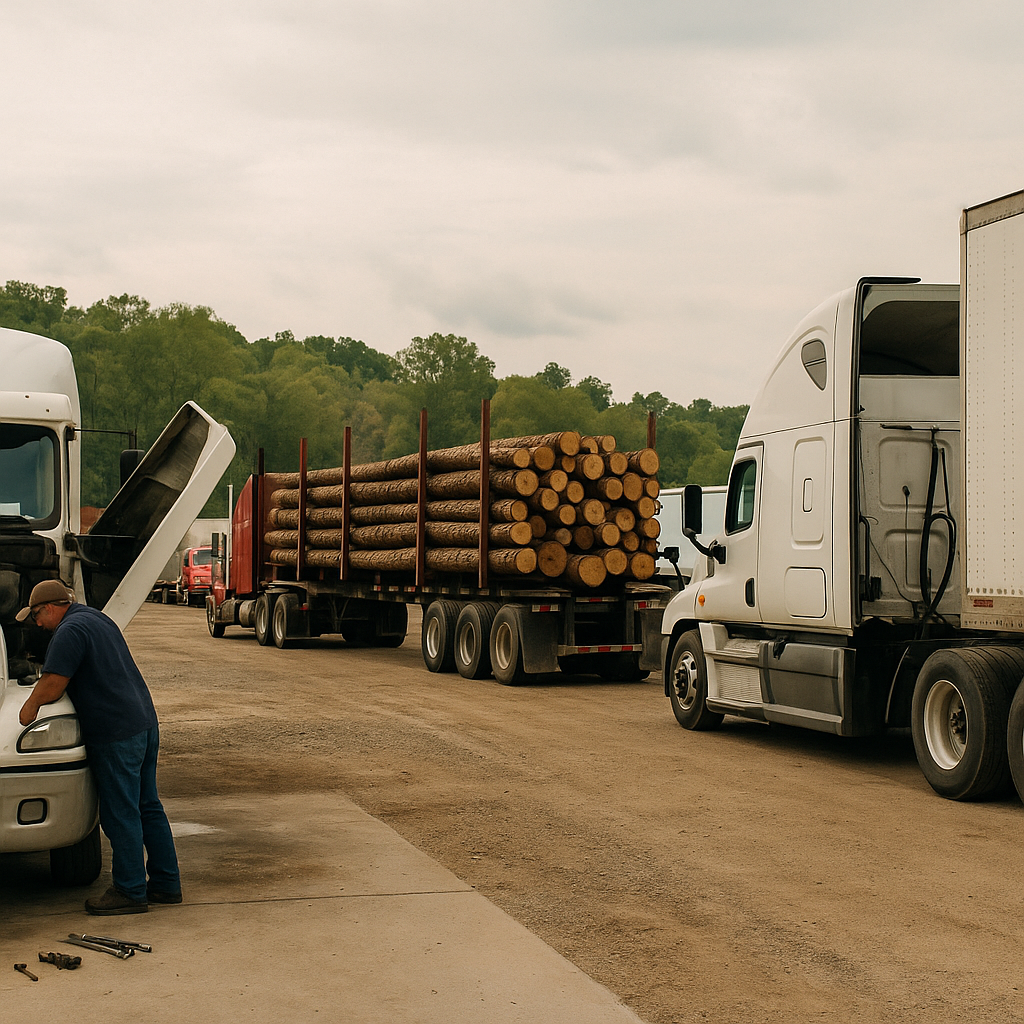
Log truck insurance in Alabama isn’t just "commercial auto with a trailer." It’s coverage built for timber hauling, heavy equipment, cargo exposure, and the difference between Alabama-only work and interstate trucking. If you’re running logs, your actual insurance setup depends on how you operate, what you haul, your truck weight, and whether you’re running under your own authority.
What log truck insurance covers in Alabama#
Log truck insurance in Alabama is commercial coverage designed for timber hauling operations, not personal driving or light business use. Most policies combine auto liability with optional coverages like cargo, physical damage, and trailer-related protection, based on your authority, equipment, and how your logging operation actually runs.
A commercial auto policy is insurance written for business vehicles and business driving exposures. For log trucks, that usually means a policy built around hauling timber, working rural routes, loading and unloading around job sites, and dealing with heavier claim severity than a standard work truck.
Why logging trucks need specialized coverage#
Logging trucks have a different risk profile than a contractor pickup or a local delivery van. You’re dealing with heavier units, rougher roads, load securement concerns, and cargo that can cause serious damage if something goes wrong.
That matters because insurers don’t just look at "truck" as one category. They look at whether you’re a motor carrier, meaning a business that transports property by commercial motor vehicle, whether you’re hauling for hire, and whether you’re operating under your own authority or leased onto someone else’s.
Core coverages for timber hauling operations#
The main coverage most operators start with is auto liability, which pays for bodily injury and property damage you cause to others in a covered crash. If you’re hauling timber for business, this is the backbone of the policy.
Other common coverages include:
- Motor truck cargo, which covers damage to the freight you’re hauling, subject to the policy terms and exclusions
- Physical damage, which covers damage to your truck from collision and other causes like theft, fire, or weather
- General liability, which covers certain non-driving business liability exposures
- Non-trucking liability, which covers certain non-business use of the truck when you’re not under dispatch
- Trailer interchange, which applies when you use a trailer under a signed interchange agreement
- Non-owned trailer physical damage, often more relevant when you’re pulling a trailer you don’t own without a formal interchange setup
- Reefer breakdown, which applies when refrigerated cargo depends on temperature-control equipment; for most log haulers, this usually isn’t relevant
What personal auto insurance does not cover#
Personal auto insurance is built for private driving, not commercial hauling for income. If you’re using a truck to haul logs, tow specialized equipment, or operate under authority, personal auto is not designed for that exposure.
This is one of the biggest mistakes Alabama operators make early on. They hear a state minimum number, assume any liability policy counts, and find out too late that a personal policy or generic small-business auto policy doesn’t match real trucking exposure.
Alabama rules vs. FMCSA requirements#
Alabama log truck insurance requirements depend first on whether you operate only inside Alabama or cross state lines, and then on carrier type, truck weight, and cargo. State minimums and federal FMCSA requirements are not the same thing, and confusing them can delay authority or leave a dangerous coverage gap.
An interstate operation crosses state lines or otherwise falls under interstate commerce. An intrastate operation stays within one state and is regulated mainly at the state level, though the exact setup still depends on the business and vehicle use.
Intrastate versus interstate logging runs#
If your logging work stays entirely inside Alabama, your insurance requirements may be shaped more by Alabama rules and your specific business structure than by federal operating authority. The Alabama Department of Insurance is the state-level source for Alabama insurance regulatory context.
If you cross state lines or operate in interstate commerce, FMCSA rules come into play. The FMCSA ties insurance filings and operating authority to the kind of trucking operation you’re running, not just the fact that you own a truck.
How truck weight and carrier type change requirements#
This is where broad advice online usually goes off the rails. Under 49 CFR Part 387, for-hire interstate carriers hauling general freight in vehicles over 10,001 pounds must carry at least $750,000 in public liability. Under 10,000 pounds, the minimum is $300,000. Auto haulers have a different minimum, and certain hazmat operations require $5,000,000.
That doesn’t mean all truckers need the same limit. Requirements vary by whether you’re for-hire or private, whether you’re interstate or intrastate, what the vehicle weighs, and what commodity you’re hauling. A log truck operator needs to scope all four before assuming a number from a forum post applies.
Why state minimums are not the whole answer#
Alabama minimum insurance rules for ordinary vehicles don’t answer the federal question for a trucking business. If you’re applying for a USDOT number, an MC number, or operating under federal authority, the insurance standard tied to your authority matters more than a personal or state-only shorthand.
A USDOT number identifies a commercial carrier in the federal system. An MC number is operating authority used for certain for-hire interstate carriers. If you want to verify public carrier information, authority status, or safety records, the SAFER system is the public lookup tool.
If you’re not sure whether your Alabama logging operation is purely intrastate or triggers interstate rules, that’s the point to slow down. A wrong assumption here can mean buying the wrong liability structure, filing the wrong paperwork, or finding out your policy doesn’t match your authority after you’ve already lined up work.
If you’re sorting through Alabama-only rules, FMCSA filings, and what actually fits a logging operation,

How log truck insurance cost is usually determined#
Log truck insurance cost in Alabama is usually driven by the operation itself, not a simple statewide average. Underwriters look at your driving record, truck value, cargo, radius, routes, claims history, limits, and whether you’re a one-truck owner-operator or a small fleet with several units.
That means there’s no honest flat answer to "What does it cost per month?" Your actual premium depends on your operation, cargo, radius, driving history, and other factors.
Key rating factors insurers use#
Insurers usually start with the basics: who drives, what gets driven, where it runs, and what gets hauled. For a log truck, that often means driver experience, MVR issues, prior losses, truck age and value, garaging location, and the distance and type of roads on your normal routes.
They also look closely at coverage design. Higher liability limits, broader physical damage, cargo coverage, lower deductibles, and added trailer-related coverages can all change price. So can whether the truck is financed, leased, or titled to the business.
Owner-operator versus small fleet pricing drivers#
An owner-operator is a self-employed trucker who typically runs one truck, either under personal authority or leased to another carrier. A small fleet usually means a business running two to five trucks, often with more moving parts in scheduling, driver management, and maintenance controls.
Those operations are underwritten differently. A one-truck operation may rise or fall on the named driver’s history and the exact hauling profile. A small fleet gets reviewed more as a business system, including driver controls, turnover, maintenance practices, and loss patterns across units.
Why logs, routes, and equipment matter#
Timber hauling can push pricing higher because the exposure is different from dry van general freight. Rural roads, uneven loading areas, weather, rollover risk, debris, and heavy equipment all change how an underwriter sees the operation.
Specialized trailers, loaders, and financed equipment can also affect eligibility and how much physical damage protection makes sense. If the truck is central to your income, choosing too little coverage just to get a lower number can turn one collision into a business-ending problem.
Affordability matters, especially when you’re trying to make a log truck operation pencil out. But the safer play is to control risk and buy the right structure, not chase the lowest quote if it leaves you uncovered where logging claims actually happen.
How to lower cost without buying the wrong policy#
The best way to lower log truck insurance cost in Alabama is to tighten the policy around your real operation, improve how your risk looks on paper, and avoid paying for the wrong coverage. Cutting a critical coverage may lower the quote today, but it can create a much larger bill after a crash or cargo loss.
Choose only the coverages your operation needs#
Start with how the truck is used. If you’re hauling for hire, auto liability is not optional in the same way a side-business pickup policy might be. Then build outward based on whether you need cargo, physical damage, trailer protection, or general liability.
Review deductibles carefully. A higher deductible can lower premium, but only if you could actually absorb that out-of-pocket cost after a loss. The same goes for truck valuation and financed equipment: don’t insure it like a low-value beater if the business depends on replacing it.
Document safety and maintenance practices#
Insurers respond to clean records and organized operations. That includes maintenance logs, inspection discipline, driver screening, and a clear explanation of where and how the truck runs.
For logging operations, that kind of documentation matters because the work already looks tougher on paper. If you can show that the operation is controlled, maintained, and consistently run, that can help preserve better options.
Avoid common underinsurance mistakes#
The most common mistake is buying generic commercial auto and assuming it equals trucking insurance. The next is using state-minimum thinking for a federally regulated operation.
Another mistake is misunderstanding non-trucking liability. Non-trucking liability covers certain personal, non-business use of the truck; it does not cover paid hauling or dispatched business use. And if you’re looking at physical damage, collision should be paired correctly with comprehensive or fire-and-theft style protection, not treated like a stand-alone shortcut.
What to ask before you request a quote#
A good log truck insurance quote in Alabama starts with clean, specific operating details. If you give vague information, you’ll usually get a vague quote back, and that can hide exclusions, wrong classifications, or a policy built for generic commercial auto instead of actual trucking work.
Information insurers need for an accurate quote#
Have the basics ready before you start:
- Interstate or intrastate operation
- Whether you’re for-hire or private
- USDOT and MC status, if applicable
- Truck year, make, VIN, and value
- Trailer details
- Cargo type and typical hauling profile
- Operating radius and states run
- Garaging location
- Driver information and loss history
- Number of trucks in the business
Those details shape eligibility as much as price. They also help the broker tell whether your operation fits standard trucking markets or needs a more specialized approach.
Questions that reveal whether the policy fits logging work#
Ask directly whether the quote is being built for commercial trucking exposure or just generic commercial auto. Ask how the insurer is classifying the operation, what cargo assumptions are built in, and whether the quote assumes you run under your own authority or leased onto another carrier.
If a trailer is involved, ask whether the quote includes trailer interchange or non-owned trailer physical damage, and which one actually matches your setup. Trailer interchange usually requires a signed interchange agreement, while non-owned trailer physical damage is often the better fit when you use a trailer you don’t own without that agreement.
When to pause and verify exclusions#
This is the part most rushed buyers skip. Ask what classes are excluded, whether logging or timber hauling is specifically accepted, how cargo limits work, and whether leased equipment is handled the way you expect.
Before binding coverage, verify your public carrier information through SAFER if you’re operating in the federal system. That helps you confirm authority and public records line up with what you’re telling the insurer.
For owner-operators and small fleets, this isn’t busywork. It’s how you avoid buying a policy that looks fine on the declarations page but doesn’t fit the work once a claim happens.
How claims and losses affect logging operations#
Claims hit logging operations hard because the truck, cargo, and downtime exposure all stack together. A collision, cargo loss, trailer damage, or equipment theft can affect cash flow immediately, and the way your policy is built determines how much of that loss stays on your shoulders.
Common loss scenarios for timber hauling#
Common claim scenarios include collisions on rural or narrow roads, physical damage to the truck, cargo shifting or damage, and losses involving borrowed or non-owned trailers. Weather and fire can also matter, especially if equipment is stored outdoors.
How coverage responds after a claim#
Auto liability responds when you injure someone else or damage their property in a covered accident. Physical damage helps with damage to your own truck. Cargo coverage may help when the freight is damaged, subject to policy wording and exclusions.
That difference matters. If you only buy the minimum structure needed to get on the road, you may still be exposed to major out-of-pocket costs after a real logging loss.
Why claims history changes future options#
A clean claims record can help keep more markets open over time. Repeated losses can tighten underwriting, reduce options, and make it harder to place the operation on favorable terms.
That’s another reason not to focus only on today’s quote. The policy and risk practices you choose now can affect what your business can buy later.
When specialized trucking guidance matters most#
Specialized trucking guidance matters most when your Alabama log truck operation doesn’t fit a simple business-auto template. Owner-operators and small fleets usually need coverage scoped to authority, truck weight, cargo, trailer use, and whether the business runs interstate or intrastate.
Owner-operators versus 1-5 truck fleets#
A one-truck operator often needs help making sure the policy matches the exact authority setup and daily use. A two-to-five truck fleet has the same coverage questions, plus added driver, maintenance, and business-structure complexity.
When generic commercial auto is not enough#
Generic commercial auto may be fine for lighter business vehicles, but timber hauling usually needs true trucking coverage analysis. That includes liability requirements, cargo exposure, physical damage structure, and trailer-related coverage that actually matches logging work.
Non-fit classes and where to verify them#
Not every market fits every logging-related operation. Certain classes and arrangements can fall outside what a brokerage writes, so it’s worth verifying fit before you spend time on paperwork.
LogRock specializes in trucking insurance for owner-operators and small fleets. If you’re not sure what coverage fits your operation, LogRock can help you scope it.
FAQ#
How much is liability insurance for a small business in Alabama?
Liability insurance for a small business in Alabama depends on the business type, what risks it creates, the limits selected, claims history, and whether you’re buying general liability, commercial auto, or a more specialized policy. For a log truck operation, the bigger pricing drivers are whether you’re hauling for hire, whether you operate interstate or intrastate, truck weight, cargo type, routes, and driver history. So a statewide average for "small business liability" usually isn’t useful for a timber hauler. The right comparison is a quote built around your actual trucking operation.
Do log truck operators in Alabama need FMCSA insurance limits?
Not always. It depends on whether the operation is subject to federal interstate rules and what kind of carrier you are. Under 49 CFR Part 387, for-hire interstate carriers hauling general freight in vehicles over 10,001 pounds must carry at least $750,000 in public liability, but that is not a universal rule for every Alabama log truck. Requirements vary by carrier type, vehicle weight, cargo, and whether you operate interstate or intrastate. That’s why Alabama state minimum thinking can create problems if your authority or operating status triggers a different federal standard.
Can I use personal auto insurance for a log truck in Alabama?
No, not for commercial timber hauling. Personal auto insurance is built for private driving, not hauling logs for business, operating under authority, or handling commercial trucking exposures. Even a generic business auto policy may still be the wrong fit if it isn’t structured for trucking. If you’re using the truck to generate revenue, haul freight, tow specialized equipment, or work under a motor carrier setup, you need commercial trucking coverage designed for that use. Otherwise, the policy may not respond the way you expect after a loss.
What coverages do most Alabama log truck operators look at?
Most start with auto liability, then add the other pieces based on how the operation runs. Common add-ons include motor truck cargo for hauled property, physical damage for the truck itself, general liability for certain non-driving exposures, non-trucking liability for qualifying personal use, and trailer-related coverage when the trailer isn’t owned or is used under an interchange arrangement. Not every operation needs every coverage. The right setup depends on authority, truck ownership, cargo profile, trailer use, and whether the truck is leased on or running under its own authority.
What should I have ready before asking for a log truck insurance quote?
Have your operating details ready, because they drive both eligibility and pricing. That includes whether you operate interstate or intrastate, your for-hire or private status, USDOT and MC information if applicable, truck and trailer details, cargo type, route radius, garaging location, driver information, and prior losses. You should also be ready to explain whether you’re under your own authority or leased onto another carrier. The more precise you are, the easier it is to tell whether the quote actually fits logging work instead of generic commercial auto.
How can I lower log truck insurance cost without creating gaps?
Focus on coverage fit and risk control, not just getting the lowest number. Review deductibles, truck valuation, and optional coverages based on what your operation could realistically absorb after a loss. Keep maintenance and safety documentation organized, protect your driving record, and make sure the insurer understands the real hauling profile. Avoid cutting core protections just to reduce premium, especially if the truck is financed or central to your income. In trucking, a cheap policy that doesn’t match the work can cost more than a higher premium when a serious claim happens.