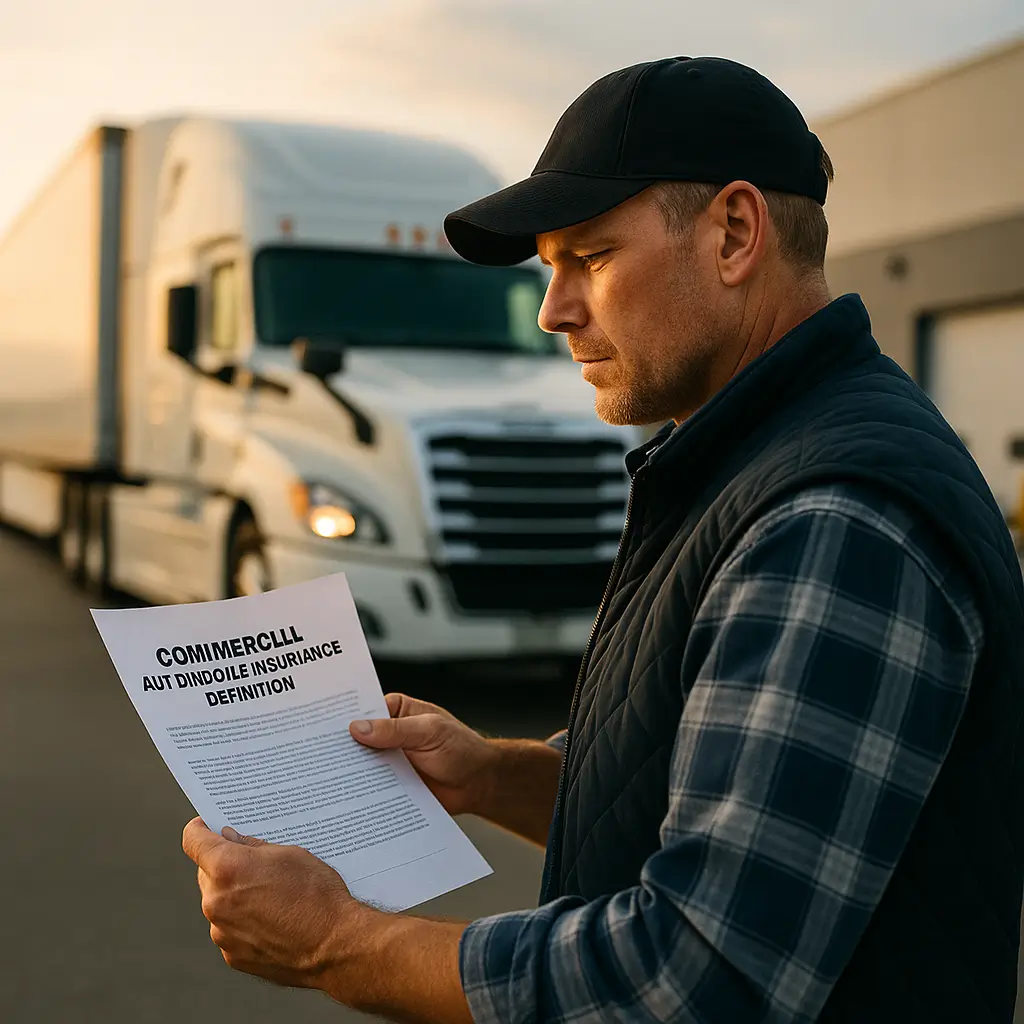
Learn what commercial auto insurance means, what it covers, key add-ons, when you need it, and how to avoid claim issues.
Commercial automobile insurance definition: it’s a business auto policy that covers vehicles used to make money, usually with higher liability limits, multiple drivers, and contract-ready proof (like a COI) that personal auto often can’t meet. If you use a pickup, van, box truck, or semi for work, the right policy comes down to how you operate—not what the vehicle “looks like.”
If you’re hauling freight under authority, you may need trucking insurance (not just business auto), including filings and limits. For a trucking-focused overview, start with commercial truck insurance for owner-operators.
Table of Contents
Reading time: 8 minutes
Key Takeaways
Commercial auto policies are designed for business vehicle use and are commonly written with $1,000,000 liability limits to satisfy contracts and COI requests, even when state minimums are far lower.
- Commercial automobile insurance is built for business driving exposures (deliveries, job sites, employees, higher mileage), not just commuting.
- Coverage is usually liability + physical damage (collision/comprehensive), with optional add-ons like Hired & Non-Owned Auto and Drive Other Car.
- If you operate like a motor carrier (including hotshot), you may need commercial truck insurance / semi truck insurance structures and possibly FMCSA filings—not only a standard business auto policy.
- “Affordable” only helps if the policy matches your real use (radius, drivers, vehicle class, hauling) so a claim doesn’t turn into a coverage dispute.
Commercial automobile insurance definition (plain English)
Commercial automobile insurance is a business policy that covers third-party liability and often physical damage for vehicles owned, leased, or used for work, and it’s typically rated for business mileage, job-site exposure, and multiple drivers.
Plain-English definition
Commercial automobile insurance is a business policy that covers liability and often physical damage for vehicles owned, leased, or used for work. It’s designed for business driving exposures—like employee drivers, deliveries, job sites, and higher mileage—where a personal auto policy may limit or exclude coverage.
For context on how this fits into your overall risk plan, see commercial auto insurance basics.
Why the definition matters (real-world triggers)
This “definition” becomes a real cash-flow problem fast when a customer asks for proof, a lender needs a loss payee, or an adjuster checks whether your stated use matches reality.
- COI gates payment: Shippers, brokers, and general contractors often require a certificate before you can load or get paid.
- Use is underwriting: “Deliveries” and “job sites” are not the same rating class as “commute.”
- Driver changes matter: Adding an employee or a non-household driver can change eligibility and pricing.
Who typically needs it
- Contractors and service businesses (HVAC, plumbing, electricians)
- Landscapers, trades, and mobile repair
- Delivery and courier operations
- Businesses with vehicles titled to the company or driven by non-household drivers
- Many owner-operators running pickups, straight trucks, or semis (with a caveat: trucking may require trucking-specific coverage and filings)
What commercial auto insurance covers (and what it doesn’t)
A typical commercial auto policy is built around liability plus optional physical damage, and many contracts require $1,000,000 combined single limit (CSL) even if your state minimum is lower.
What it covers (core coverages)
Most commercial auto policies use familiar building blocks (liability, collision, comprehensive), but the policy language and rating are designed around business exposure.
The NAIC has a neutral overview of standard auto coverage terms here: NAIC auto insurance consumer guide. For a deeper breakdown, review commercial auto insurance coverage explained.
| Coverage | What it generally pays for | Business reality check |
|---|---|---|
| Liability (BI + PD) | Injuries and property damage you cause to others | Contracts and COIs often demand limits higher than state minimums |
| Collision | Your vehicle damage from a crash/impact | Pick deductibles you can pay during a slow month |
| Comprehensive | Theft, vandalism, fire, weather, animal strikes | Big value for parked work trucks and theft-prone areas |
| MedPay / PIP (varies) | Medical costs for occupants (state/policy dependent) | Employee injuries may still fall under workers’ comp rules |
| UM/UIM | If the at-fault driver has no/low insurance | Often a “quiet” value-add in heavy traffic markets |
Prefer to watch? Here’s a quick breakdown of what auto liability actually covers:
What it doesn’t cover (common gaps that surprise owners)
Commercial auto is not a “covers everything” policy, and these gaps are where small businesses get hit.
- Tools/equipment in the vehicle: often needs inland marine/equipment coverage. The NAIC’s commercial lines overview is a useful starting point for understanding business-property coverage categories.
- Slip-and-fall / jobsite liability: usually falls under general liability (not auto)
- Employee injuries: often workers’ compensation territory
- Cargo/freight: trucking operations often need motor truck cargo (depending on how you haul)
One of the most common questions: what’s the difference between auto liability and general liability? This video breaks it down:
7 common commercial auto endorsements (add-ons) to know
Commercial auto endorsements are optional policy changes—such as Hired & Non-Owned Auto (HNOA) and Drive Other Car (DOC)—that expand coverage beyond the scheduled vehicles and named insured.
Endorsements are where your policy goes from “technically insured” to “actually protected” for day-to-day operations.
1) Hired & Non-Owned Auto (HNOA)
What it is: Liability coverage for your business when employees use their own cars for work—or when you rent/borrow vehicles.
Why it matters: If a worker runs to a job site in their personal car and causes a crash, the injured party often targets the business in the lawsuit.
Who needs it: Businesses with employees running errands, visiting clients, or making deliveries in non-company vehicles. If this applies to you, read hired and non-owned auto insurance (HNOA).
2) Drive Other Car (DOC)
What it is: Extends coverage to certain individuals (often owners/executives) when they drive vehicles not listed on the policy.
Why it matters: If you only insure company-titled vehicles and occasionally drive something else, DOC can help prevent a coverage gap.
3) Additional insured / additional interest / loss payee
What it is: Policy language that protects lenders/lessors (and sometimes contracting parties) by giving them rights to notices or payment.
Why it matters: If you finance or lease a work vehicle, this is often required.
4) Rental reimbursement + towing/labor
What it is: Helps pay for a rental vehicle or towing when a covered vehicle is down.
Why it matters: Downtime can kill cash flow for 1–2 truck operations.
5) Scheduled / hired auto physical damage (varies)
What it is: Physical damage coverage for certain non-owned vehicles (form varies by insurer).
Why it matters: Liability-only is common; physical damage is where many owners assume coverage that isn’t there.
6) Tools/equipment coverage (often separate from auto)
What it is: Coverage for tools and mobile equipment—often written as inland marine, not as an auto endorsement.
Why it matters: The truck might be covered while the $8,000 worth of tools inside is not.
7) Trucking-specific add-ons (for commercial truck insurance / semi truck insurance)
What it is: Trucking operations often require separate coverages (and sometimes filings) that don’t fit a simple “contractor van” commercial auto policy.
- Motor truck cargo: protects freight you’re responsible for — see motor truck cargo coverage and costs
- Non-trucking liability / bobtail: depends on lease/dispatch setup and when you’re under load — see bobtail vs non-trucking liability explained
- Trailer interchange: if you pull other people’s trailers under a trailer interchange agreement — trailer interchange insurance explained
- Hotshot insurance structures: for pickups + trailers running freight
If a broker, shipper, or lease agreement requires these, they’re not optional—they’re part of doing business.
Commercial auto vs personal auto (plus legal requirements + cost in 2026)
State liability minimums vary by jurisdiction, and FMCSA requires at least $750,000 public liability for many for-hire interstate motor carriers hauling non-hazardous property (49 CFR § 387.9), which is a different standard than most personal auto policies.
Side-by-side comparison (quick table)
| Topic | Personal auto | Commercial auto |
|---|---|---|
| Who drives | Usually household members | Can include employees and multiple drivers |
| Vehicle use | Personal use and commuting | Deliveries, job sites, hauling tools, business mileage |
| Vehicles covered | Personally owned vehicles | Owned/leased/scheduled business vehicles; options for hired/non-owned |
| Limits | Often lower | Often higher; contracts/COIs may require specific limits |
| Proof requirements | Rarely needs COIs | COIs are common for jobs, vendors, brokers |
For a full side-by-side breakdown, see commercial auto vs personal auto insurance.
When a customer, broker, or GC asks for proof, you’ll usually need a certificate of insurance (COI) and commercial insurance documents.
Legal requirements: state minimums vs FMCSA rules (important for trucking insurance)
Most businesses only deal with state financial responsibility rules, but regulated trucking can add federal requirements and insurance filings.
- State rules: Minimum liability limits and compliance steps vary by state (Texas example): Texas DMV motor carrier insurance requirements
- FMCSA rules: Insurance filing requirements for certain interstate motor carriers: FMCSA insurance filing requirements
State minimums vary significantly; the Insurance Information Institute state-by-state guide is a useful starting point for other jurisdictions.
Plain-English trigger: If you’re hauling freight for-hire across state lines (or operating under FMCSA authority), you may need trucking insurance limits/filings that go beyond a standard commercial auto setup.
Is commercial auto more expensive in 2026?
Commercial auto is often priced higher because the exposure is usually higher: more miles, more drivers, heavier vehicles, and higher limits.
What usually drives price:
- Vehicle class: pickup vs box truck vs semi
- Operating radius: local vs regional vs long haul
- Driver history: MVRs, experience, prior losses
- Limits and deductibles: especially liability and physical damage
- Endorsements: HNOA, DOC, towing/rental, etc.
- Garaging location: theft/weather risk
Not sure what liability limit to choose? This video covers how to think through the right number for your operation:
If you want the full pricing breakdown, see commercial auto insurance cost breakdown. You can also compare broader commercial auto insurance rates by vehicle/use case.
Frequently Asked Questions
Commercial automobile insurance is a business auto policy that covers vehicles used for work, typically including third-party liability and optional physical damage (collision/comprehensive) for scheduled vehicles. It’s built for business exposures like deliveries, job sites, higher mileage, and multiple drivers, including employees, which is why it’s rated and underwritten differently than personal auto. Many contracts also require higher limits—often $1,000,000—and proof of coverage via a COI before you can start a job or load freight.
Yes. Adding an employee driver is one of the most common policy changes for growing businesses. Your insurer will typically run an MVR on the new driver and may adjust your premium based on their history. Some carriers have restrictions on drivers with recent violations or limited commercial driving experience. If you’re adding drivers regularly, keep your agent updated because undisclosed drivers can create coverage disputes after a claim.
Hired & Non-Owned Auto (HNOA) covers your business’s liability when employees use their personal vehicles for work or when you rent a vehicle. If an employee drives their own car to a job site, makes a client delivery, or runs a business errand and causes an accident, the injured party can sue your business. Your employee’s personal auto policy may not cover business use, leaving your company exposed. HNOA fills that gap and is often required by contracts or vendors.
Commercial auto insurance commonly covers liability, collision, comprehensive, and sometimes MedPay/PIP or uninsured/underinsured motorist depending on the state and carrier. It usually does not cover jobsite slip-and-fall liability, employee injuries, or tools and cargo unless you add separate coverage such as general liability, workers’ compensation, inland marine, or motor truck cargo.
Generally, no. Commercial auto policies cover the vehicle itself, not the contents. Tools, equipment, and mobile gear stored in or on your truck usually require a separate inland marine or equipment floater policy. This is one of the most common gaps that catches contractors and tradespeople off guard after a break-in or theft. If your tools are a significant part of your business value, ask your agent specifically about inland marine coverage.
If a pickup, van, or semi is used for business, such as deliveries, job sites, hauling tools or materials, or employee driving, commercial auto insurance is typically appropriate because many personal auto policies restrict or exclude business use. If you haul freight for-hire under authority, the requirement can go further: FMCSA insurance rules and filings may apply, and many operations need a trucking-structured program with auto liability, cargo, and physical damage rather than a basic contractor-style policy.
Commercial auto insurance is the broader category: it covers business vehicles used for deliveries, job sites, service work, and employee drivers. Trucking insurance is a more specific structure built for motor carriers hauling freight for hire, and it typically includes cargo coverage, FMCSA filings, and higher liability limits required by federal law or broker contracts. If you’re a contractor or service business with a work truck, commercial auto usually fits. If you’re hauling freight under authority, you likely need a trucking program instead.
Commercial auto insurance is often more expensive than personal auto because it’s priced for higher exposure: more annual miles, more drivers, heavier vehicles, and higher liability limits, commonly $1,000,000 for contract work. Your actual premium is driven by vehicle class, operating radius, driver MVRs, loss history, limits, deductibles, and endorsements like HNOA or towing and rental reimbursement.
Owner-operators hauling freight for hire under their own authority typically need proof of insurance filed with the FMCSA, most commonly Form BMC-91 or BMC-91X for liability and sometimes BMC-34 for cargo in specific situations. The minimum liability filing for non-hazardous property is commonly $750,000, though most brokers and shippers require $1,000,000. These filings are separate from your insurance policy because your insurer files them directly with the FMCSA once coverage is bound. If you’re leased on to a carrier, the carrier’s insurance typically covers you while under dispatch.
Conclusion: buy the policy that matches how you actually operate
Commercial automobile insurance isn’t just a definition—it’s the difference between a smooth claim and a coverage dispute. The best setup is the one that matches your vehicles, drivers, radius, and contracts, with the endorsements that close real-world gaps.
Key Takeaways:
- Build around liability + physical damage, then add endorsements based on how your team actually drives.
- If you haul freight, verify whether you need trucking insurance structures and possible FMCSA filings—not only business auto.
- Plan for paperwork: a clean COI process keeps you from losing loads, jobs, or payment.
Related reading: Hotshot insurance guide for pickups and trailers and General liability insurance for truckers and contractors.
If you’re trying to figure out whether your current setup actually covers how you operate — the vehicles, the drivers, the jobs, and the paperwork — LogRock can help you review your options and identify real gaps before they become claim problems. Talk to our team to ask questions and request a quote tailored to your operation.