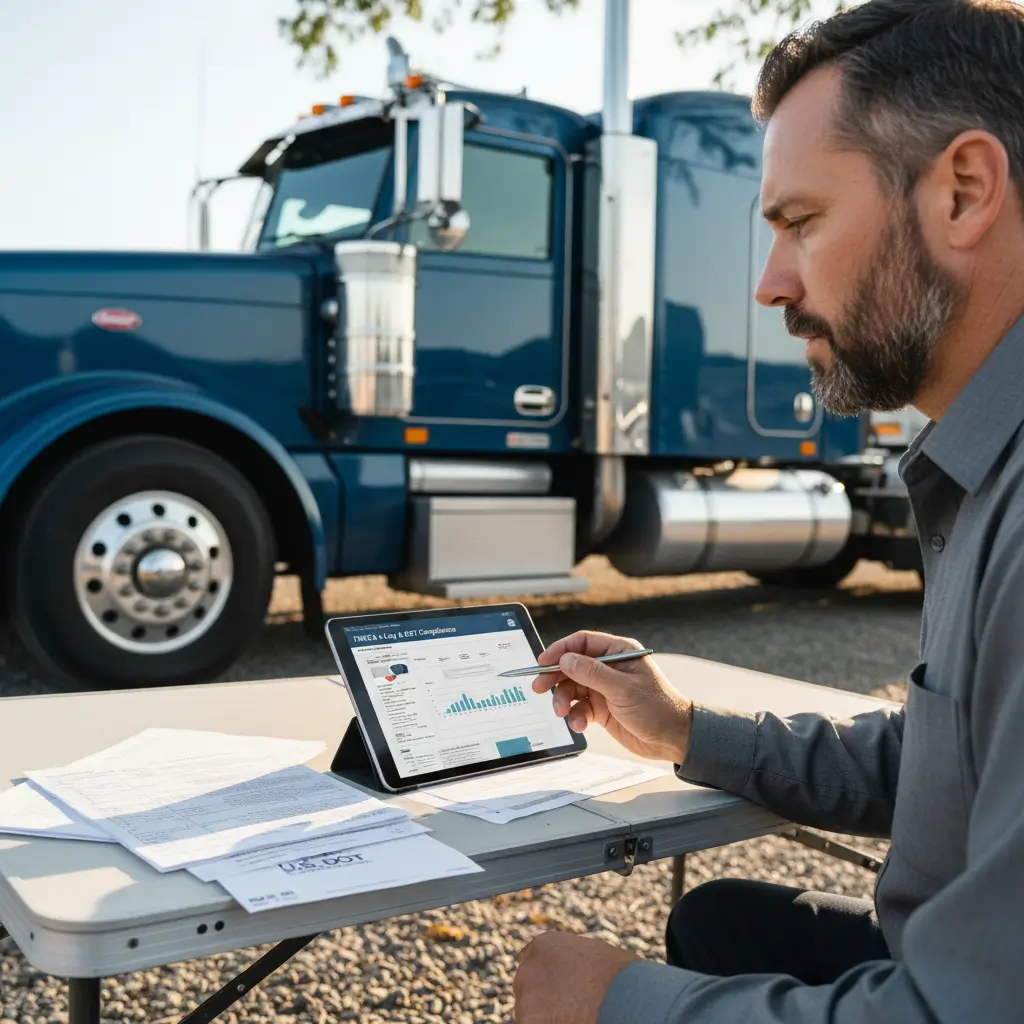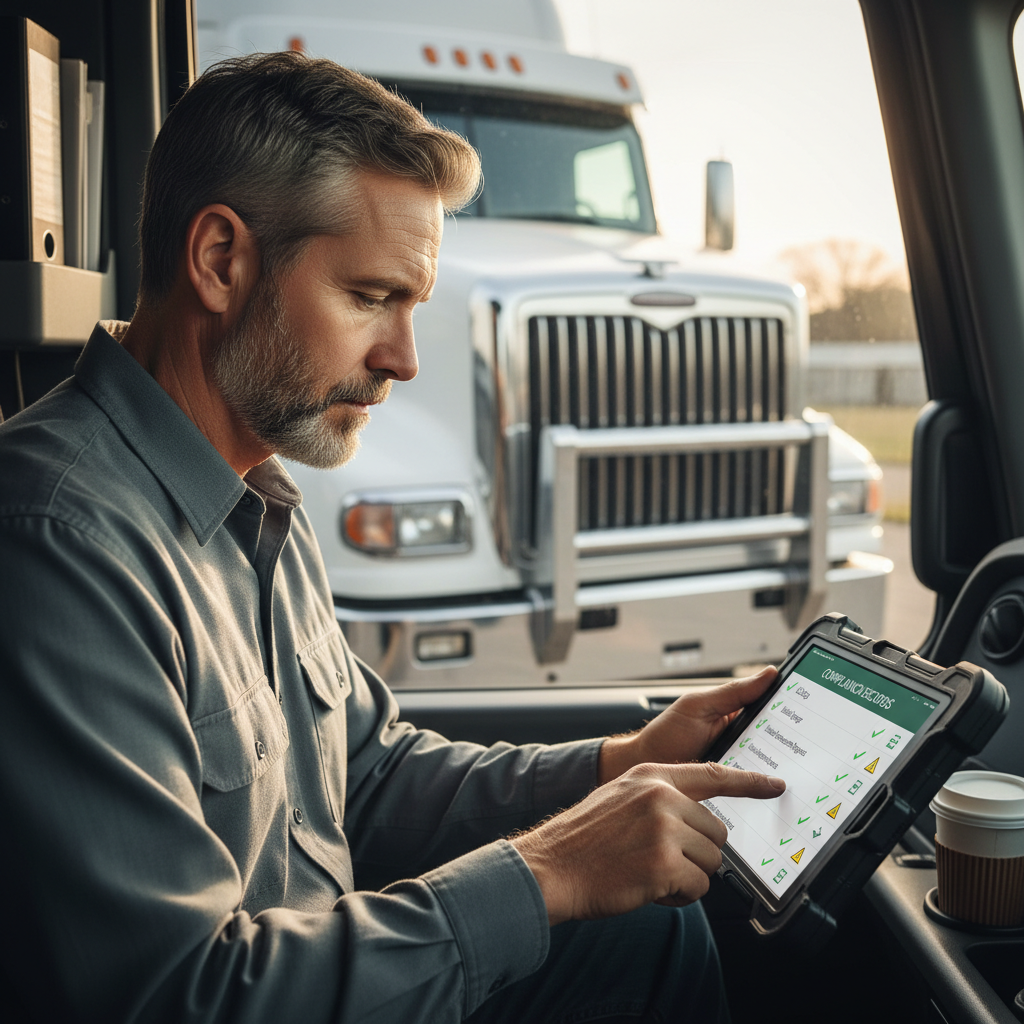
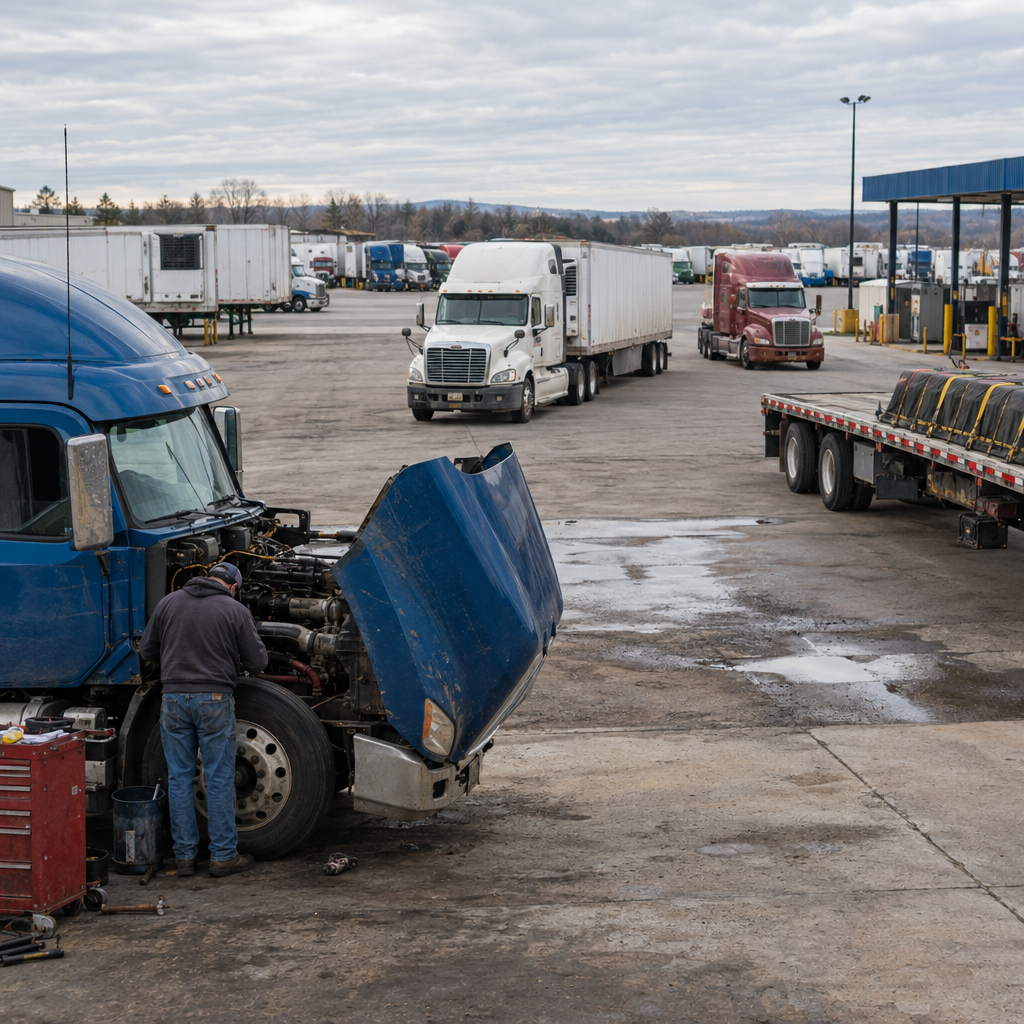
Buying a Class 8 truck for 2027 means matching the truck to your freight, budget, insurance needs, and compliance plan—not betting on market headlines. Compare new and used equipment, verify condition, and prepare your operating details before signing.
Class 8 truck orders can make a good headline, but they don’t tell you whether one specific truck will work for your operation. The smarter move is to start with the freight you expect to haul, inspect the equipment in front of you, and make sure insurance and authority details won’t hold up your first load.
What Lower Class 8 Orders May—and May Not—Tell You About 2027#
Lower Class 8 order activity is market context, not a buy-or-wait signal for every owner-operator. FTR reported 15,600 Class 8 net orders in October 2026, down 36% year over year, but your decision should come from verified freight, truck condition, operating costs, and readiness to run.
Put October 2026 order activity in context#
FTR’s October number shows that fleets and buyers placed fewer net orders than they did during the same month a year earlier. That can reflect replacement cycles, manufacturer production plans, financing conditions, freight expectations, and uncertainty about future rules.
It does not automatically mean new truck prices will fall, used equipment will become easier to find, or freight revenue will improve. A lower-order month is one data point, not a guarantee about what will happen in your market or on your lanes.
Separate a market signal from a purchase decision#
A possible pre-buy cycle, a rumored emissions deadline, or a strong opinion from a truck forum is not enough reason to rush into a purchase. The right truck still has to fit your trailer, cargo, routes, weight, parking arrangement, and available repair support.
If your current truck is reliable and your numbers don’t support a replacement, market chatter doesn’t fix that. If you have dependable freight and a truck that fits the work is available, waiting solely for a predicted market shift can also leave you stuck without the equipment you need.
Focus on facts you can verify before signing#
Build your decision around facts you can check: the truck’s VIN, service records, inspection findings, financing terms, operating plan, and insurance requirements. A VIN, or vehicle identification number, is the unique identifier used to match the truck to its title, records, and insurance submission.
The basic order is simple: match the truck to the work, verify the truck’s condition and documentation, then confirm insurance and compliance readiness before money changes hands.

Start With the Work the Truck Must Do#
Start by defining the actual work before comparing Class 8 listings. Your freight, lanes, trailer type, gross weight, home base, and authority setup should drive the truck configuration, operating radius, insurance details, and equipment choices—not resale assumptions or a dealer’s inventory.
Define freight, lanes, and operating radius#
Write down the commodities you plan to haul, your typical gross weight, trailer type, pickup and delivery conditions, terrain, annual mileage, and usual home base. A truck built for dry van freight on interstate lanes may not be the right fit for heavy regional work, steep grades, tight customer yards, or specialized trailers.
Your operating radius is the distance you regularly travel from your garaging location. Be realistic about your operating radius for insurance, because it should match the lanes you actually expect to run—not the smallest radius that looks better on an application.
Choose a configuration that fits the work#
A day cab can make sense for predictable local or regional dispatch where you return home regularly. A sleeper may fit long-haul work, overnight resets, and lanes where finding safe parking is part of the job.
Also look beyond cab style. Match axle configuration, wheelbase, engine rating, transmission, fuel capacity, and PTO or auxiliary-equipment needs to the loads and routes you expect. PTO means power take-off, a system that lets the truck power certain attached equipment.
Decide whether you will operate under your own authority or lease on#
Interstate work crosses state lines or can involve freight moving in interstate commerce. Intrastate work stays within one state, though state rules can still apply. The distinction matters for registration, insurance, and federal requirements.
If you run under your own authority, you may need a USDOT number and an MC number. A USDOT number identifies a carrier in U.S. Department of Transportation safety records, while an MC number is operating authority used by certain for-hire interstate carriers. If you lease on to another motor carrier, confirm what that carrier provides and what remains your responsibility.
Treat 2027 Emissions and Regulatory Questions as Verification Tasks#
Possible 2027 emissions and regulatory changes should trigger verification, not panic buying. The practical effect depends on the truck model, engine configuration, registered state, operating states, service support, and the specific freight operation you plan to run.
Avoid buying based on rumor or a presumed deadline#
Truck buyers often hear that a future engine change, state policy, or manufacturer shift means they need to buy now. That conclusion may be wrong for your truck, your state, or your work.
Ask what specific rule is being discussed, when it takes effect, where it applies, and whether it applies to your equipment. Verify the answer with the relevant agency rather than relying on a dealer pitch, social post, or secondhand conversation.
Check where and how the truck will operate#
California and other states can have equipment, registration, or operating rules that affect your planning. If your loads may take you into California, confirm current requirements directly with the relevant state agencies before committing to a particular engine year or emissions configuration.
Equipment rules are separate from federal financial-responsibility rules for for-hire carriers. A truck’s emissions setup may determine whether it fits your planned lanes, while your carrier type, weight, cargo, and interstate status help determine applicable insurance requirements.
Confirm the truck’s emissions configuration and service support#
Ask the seller or dealer for the engine family, emissions-system configuration, warranty status, recall status, and maintenance history. You also need to know whether qualified service is available near your home base and on your usual lanes.
A modern diesel emissions system may include a diesel particulate filter, diesel exhaust fluid system, and selective catalytic reduction components. Those systems are manageable when maintained, but repeated fault codes, incomplete repair records, or weak service access can turn a low purchase price into long downtime.
Build a Purchase Budget Around Operating Reality, Not the Payment Alone#
A truck payment is only one part of the cost of owning a Class 8 truck. Build your budget around expected loaded miles, deadhead, fuel, maintenance, insurance, permits, compliance tools, and a repair reserve so a slow week or unexpected repair does not put the operation in a bind.
Estimate revenue from the freight you can actually haul#
Use the freight you can realistically book with your equipment, authority setup, and experience—not the highest rate you saw online. Include deadhead miles, appointment delays, tolls, accessorial terms, and the cost of repositioning for the next load.
Your fuel plan should include actual route and load conditions, not a best-case estimate. Start with a realistic diesel cost per mile for your operation, then test how changes in miles and fuel use affect the full trip.
Freight type also matters. Understanding spot versus contract freight math can help you avoid treating a short run of strong spot loads as guaranteed revenue for a multi-year truck obligation.
List fixed, variable, and reserve costs#
Fixed costs can include the truck payment, insurance, permits, parking, and communications or compliance subscriptions. Variable costs include fuel, tires, maintenance, tolls, and repairs that rise with use.
An ELD, or electronic logging device, records required hours-of-service data for applicable drivers. IFTA, the International Fuel Tax Agreement, and IRP, the International Registration Plan, can also affect interstate operating administration. Include the time and cost needed to keep these tasks current.
Set aside a repair reserve for irregular but material events, including towing, major component work, emissions-system repairs, and time out of service. Your actual premium depends on your operation, cargo, radius, driving history, and other factors.
Stress-test the plan for downtime and slower weeks#
Run the numbers with fewer loaded miles, more deadhead, a repair week, and a delayed customer payment. Review the down payment, term length, mileage assumptions, warranty exclusions, and early-payoff conditions with qualified financial and legal professionals as needed.
A truck that works only under ideal revenue assumptions can become a problem fast when it needs repairs or freight softens. Gather the VIN, intended garaging address, operating radius, commodity profile, and authority setup before requesting an insurance-readiness review.
Use a New-versus-Used Decision Path Instead of Chasing the Market#
New and used Class 8 trucks should be judged against the same operating plan. A new truck may offer known starting condition and warranty support, while a used truck may lower acquisition cost—but either choice can create expensive downtime if it does not fit the work or service network.
When a new truck may fit the operation#
A new truck can offer current specifications, a known maintenance starting point, and potentially available warranty coverage. That can be useful when your business needs predictable equipment availability or you are building around a specific long-term freight plan.
But new does not automatically mean trouble-free. Review the payment obligation, warranty scope, service locations, parts availability, and whether the configuration actually fits your routes and trailer needs.
When a used truck may fit the operation#
A used truck can have a lower acquisition cost, but the value is in the truck’s condition—not just the asking price or model year. Maintenance history, engine hours, idle time, ownership history, inspection findings, and previous repair patterns all matter.
A clean-looking truck without records leaves too much unanswered. Ask whether the seller can support claims about maintenance, odometer reading, engine-hour reading, emissions repairs, and major component work.
Compare condition, support, and downtime exposure#
Compare warranty deductibles and exclusions, dealer support, independent-shop options, parts access, and realistic repair timelines. A warranty is useful only if covered repairs can be completed without leaving you parked for an unreasonable stretch.
Factor in trucking downtime exposure when comparing options. A lower purchase price may not help if the truck needs major work before it can haul its first revenue load.
Do not use broad predictions about used-truck prices as a substitute for evaluating the individual truck. The better choice is the one that can perform your planned work with an acceptable level of payment, repair, and downtime risk.
Inspect the Truck, VIN History, and Emissions System Before You Commit#
Before buying a used Class 8 truck, get an independent inspection and review VIN-matched records. The inspection should cover mechanical condition, safety items, emissions components, deferred maintenance, and repairs that could keep the truck from earning revenue after delivery.
Order an independent pre-purchase inspection#
Use an independent technician or qualified inspection service rather than relying only on a seller’s walk-around. Ask for an inspection of the engine, transmission, driveline, axles, suspension, brakes, tires, frame, electrical system, and cooling system.
The inspector should identify current defects and maintenance that is likely to come due soon. A worn tire set, cooling-system concern, brake work, or missed service interval can change the real cost of the truck.
Review records that support the seller’s claims#
Request maintenance invoices, repair orders, warranty records, recall information, and oil-analysis results when available. Check whether the records support the odometer and engine-hour readings shown on the listing.
Match the VIN across the title, bill of sale, inspection report, financing documents, and insurance application. A mismatch can delay financing, title work, coverage, or all three.
Check for deferred maintenance and safety issues#
Have the inspector review the diesel particulate filter, diesel exhaust fluid system, selective catalytic reduction components, fault codes, and regeneration history if it is available. Repeated emissions-related repairs can signal an issue that needs a deeper diagnosis before you take ownership.
Also ask what repairs must happen before the truck can safely enter service. Confirm whether missing equipment, tire condition, upcoming maintenance, or parts delays could push back your first load.
Confirm Insurance and Compliance Details Before the Truck Changes Hands#
Confirm insurance and compliance details before closing so the truck does not sit after purchase. Provide accurate truck, driver, cargo, garaging, radius, trailer, and authority information, then verify applicable federal and contract requirements based on the operation you will actually run.
Give the insurer accurate truck and operating details#
Prepare the VIN, truck value, driver information, cargo profile, trailer arrangement, operating radius, and authority setup. Give the insurer the correct garaging address, meaning where the truck is normally kept when it is not operating.
Accurate details matter because underwriting is tied to the real exposure. Review the truck insurance underwriting information before you bind coverage, especially if you are changing from leased-on work to operating under your own authority.
Separate commercial auto coverage from truck ownership protections#
Personal auto insurance generally is not designed for a Class 8 truck used in commercial for-hire work. Commercial auto liability addresses your responsibility for injuries or property damage from a covered accident, while physical damage can help protect your owned truck against covered collision, comprehensive, or fire-and-theft losses.
You may also need motor truck cargo coverage for the freight you haul, general liability when a contract or operation calls for it, and trailer-related coverage when you use a trailer you do not own. Requirements vary by carrier type, vehicle weight, cargo, and whether you operate interstate or intrastate.
Confirm filings and authority status when operating for hire#
For interstate for-hire operations under your own authority, verify the applicable financial-responsibility rules instead of relying on a universal liability-limit claim. Under 49 CFR Part 387, for-hire interstate carriers hauling general freight in vehicles over 10,001 pounds must carry at least $750,000 in public liability, but requirements can differ by carrier type, weight, cargo, and regulated circumstances.
Certain for-hire carriers also need an insurer-filed BMC-91 as evidence of required public-liability coverage. A BMC-91 is an FMCSA insurance filing; an MCS-90 is an endorsement that can apply to certain federally regulated motor carriers and is not a substitute for understanding your policy terms.
Use FMCSA resources and SAFER to review publicly available carrier identification and safety information. SAFER’s Company Snapshot is useful, but it does not replace confirmation of current authority, filings, contracts, or insurance.
Use This Before-You-Buy Checklist for a 2027 Class 8 Truck#
Before buying a Class 8 truck for 2027, confirm that the truck fits your work, its records support its condition, and your insurance and compliance details are ready before closing. This checklist helps prevent a purchased truck from becoming a parked truck while paperwork, repairs, or coverage questions get sorted out.
Operation and equipment fit#
- Confirm the truck fits your planned freight, trailer type, gross weight, lanes, terrain, and parking arrangement.
- Confirm whether a day cab or sleeper fits your dispatch and overnight needs.
- Make sure the operating radius and home base reflect the work you will actually run.
Condition and documentation#
- Obtain an independent inspection and maintenance-history review.
- Match the VIN across the title, bill of sale, inspection report, financing documents, and insurance submission.
- Review recall status, emissions-system condition, tire life, upcoming maintenance, and the likely repair timeline.
Insurance and launch readiness#
- Document expected loaded miles, deadhead, fuel, maintenance reserve, insurance, and downtime exposure.
- Prepare driver, cargo, trailer, authority, VIN, and garaging details before the closing date.
- Run an insurance coverage-gap check before delivery, not after your first load is booked.
FAQ#
How should I use falling Class 8 order numbers when deciding whether to buy for 2027?
Use lower Class 8 order numbers as market context, not as a stand-alone signal to buy or wait. Order activity can reflect fleet replacement schedules, production plans, financing conditions, and uncertainty about future rules. Your purchase decision should come from the freight you can verify, the individual truck’s condition, your total operating-cost plan, and your readiness to insure and run it. A market forecast cannot tell you whether a specific truck will handle your lanes or stay productive.
How can I decide whether a new or used Class 8 truck fits my operation?
Compare the specific truck against the work you plan to perform. Look at cab style, axle setup, engine rating, transmission, fuel capacity, trailer needs, terrain, and expected annual mileage. For a new truck, review payment terms, warranty scope, service access, and operational fit. For a used truck, focus on maintenance evidence, engine hours, idle time, inspection findings, repair history, and parts availability. The better choice is the one with manageable downtime and repair exposure for your business plan.
What should I inspect before buying a used Class 8 truck?
Arrange an independent pre-purchase inspection that covers the engine, transmission, driveline, axles, brakes, suspension, tires, frame, electrical system, and cooling system. Request VIN-matched maintenance invoices, repair orders, warranty records, recall information, and oil-analysis results when available. Have the inspector review emissions-system components, fault codes, and regeneration history. Identify repairs, missing equipment, and upcoming maintenance that could delay the truck’s first revenue load before you release funds.
What details should I prepare for truck insurance before buying a Class 8 truck?
Prepare the VIN, truck value, intended garaging address, operating radius, driver details, cargo profile, trailer arrangement, and authority setup. Explain whether you will operate interstate or intrastate, under your own authority or leased to another carrier. You should also identify potential coverage needs, such as commercial auto liability, physical damage, cargo, general liability, and trailer-related coverage. Providing complete, accurate information early helps prevent coverage questions from delaying the truck’s launch.
How do I verify whether my planned trucking operation needs federal insurance filings?
First confirm whether you are operating as an interstate for-hire carrier under your own authority. Then review the requirements that apply to your carrier type, vehicle weight, cargo, and operation through FMCSA and 49 CFR Part 387. Do not rely on a generic liability-limit statement, because federal requirements are not the same for every trucking operation. Certain carriers may need insurer-filed BMC-91 proof of public-liability coverage. Confirm current authority and filing needs before you schedule the truck’s first load.
What should I verify if I expect to operate a Class 8 truck in California?
Confirm current California equipment, registration, and operating requirements directly with the relevant state agencies before buying. Check whether the truck’s engine and emissions configuration fit the work you plan to perform in the state, and make sure you can access qualified service if a repair is needed. Also verify registration, fuel-tax, authority, and customer contract requirements that apply to your operation. California requirements can change, so dealer statements and old forum discussions are not enough to support a purchase decision.