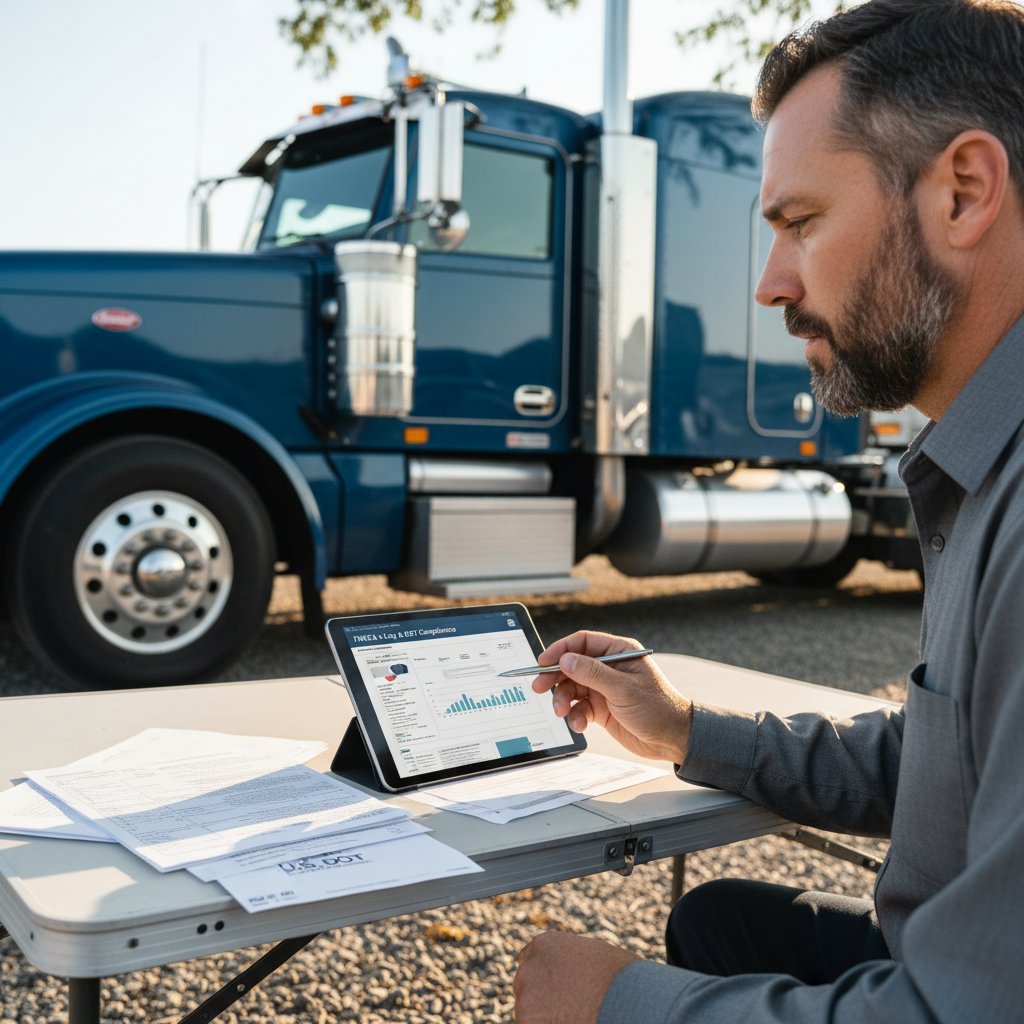
Starting a trucking company and obtaining your own authority is a massive step toward independence. But before you can move your first load, you face one significant hurdle: securing commercial truck insurance.
For a New Authority, this process is often the most expensive and confusing part of the startup phase. You aren't just looking for a policy; you are looking for a partner who understands that cash flow is tight and margins are critical.
One wrong move—like underinsuring your cargo or missing a filing—can shut your business down before it even starts. This guide is your comprehensive resource for understanding commercial truck insurance quotes. We will break down exactly what you need to get a quote, how your specific truck type impacts your rate, and how to navigate the complex world of compliance across 47 states without overpaying.
What You Need to Get a Commercial Truck Insurance Quote
To get a quote that is accurate and to avoid "bait and switch" pricing—you need to provide a complete operational profile. Insurers analyze data to predict risk. The more transparent and organized you are, the faster you can get your filings (BMC-91X) processed and your trucks on the road.
1. Business and Authority Details
Your business structure defines your risk profile. Insurers need to know:
- Business Name & Address: Your "garaging address" is critical. A truck parked in a high-crime metro area will have a higher premium than one parked in a rural secure lot.
- DOT & MC Number: If you are a New Authority, your lack of history is a risk factor. However, having your paperwork in perfect order demonstrates professionalism. Learn more about preparing your FMCSA authority application.
- Years in Business: While you may be a "New Authority," if you have prior experience in logistics or fleet management, ensure your agent knows.
2. Driver Information & Safety History
Your drivers are your biggest asset and your biggest liability. You must provide:
- Personal Details: Legal name, Date of Birth, and Driver's License Number.
- MVR (Motor Vehicle Record): Insurers will pull the MVR for every driver. They are looking for "shock losses"—major accidents, DUIs, or excessive speeding tickets. Maintaining a clean DOT record is crucial for protecting your margins.
- Experience Level: For a New Authority, hiring drivers with 2+ years of CDL experience can significantly lower your insurance costs compared to hiring rookies.
3. Vehicle Specifics
You cannot get a quote without knowing exactly what you are driving. You will need the Year, Make, Model, VIN, and Current Mileage for every unit.
- Value: You must state the "Cost New" or current value. Under-insuring means you won't be able to replace the truck after a total loss; over-insuring means you are wasting money on premiums. The choice between new versus used trucks affects your insurance costs.
Why Is All This Information Important for An Accurate Quote?
You might wonder why we ask for so many details upfront. It isn't just paperwork; it's precision. Every detail helps us evaluate your operation's risk profile and find the right coverage—nothing more, nothing less.
With accurate information, you achieve four critical business goals:
- 1. You avoid overpaying for unnecessary coverage: We don't sell you "fluff." We sell you what matches your actual risk. Check out our guide on 10 levers to pull to lower your premiums.
- 2. You prevent gaps in protection: Accurate vehicle values and cargo descriptions ensure that when a claim happens, the check actually clears.
- 3. You ensure compliance: State and federal trucking regulations are strict. Correct data ensures your filings (like the MCS-90) are not rejected. Stay informed about new DOT regulations affecting your insurance.
- 4. You get the most accurate quote the first time: No surprises, no hidden fee adjustments later on.
Truck Categories: How Vehicle Type Impacts Insurance
The type of equipment you operate is one of the primary factors in your commercial truck insurance quote. Different trucks carry different risks, turning radiuses, and blind spots.
1. Tractor Trailers (Semi-Trucks)
The backbone of the industry. Insurance for Class 8 vehicles is the most complex due to the massive weight (80,000 lbs) and potential for catastrophic damage. Quotes for semi-trucks heavily depend on whether you are running Over-the-Road (OTR) or Regional routes.
2. Box Trucks (Straight Trucks)
Often used for last-mile delivery, moving, or regional freight. While generally cheaper to insure than semis due to lower weight, box trucks often operate in tight urban environments, increasing the risk of minor "fender bender" claims which can drive up premiums over time.
3. Hot Shot Trucks
Typically heavy-duty pickup trucks (Ram 3500, Ford F-350) pulling flatbed trailers. Hotshot insurance is a specialized niche. Because these setups often haul time-sensitive, expedited freight, insurers look closely at the driver's ability to manage tight schedules safely.
4. Dump Trucks
These vehicles face unique risks: tipping over on uneven ground, windshield damage from flying debris, and heavy wear and tear. Insurance here focuses heavily on General Liability and Physical Damage due to the rough nature of construction sites.
5. Tow Trucks
Tow operators require specialized "On-Hook" coverage to protect the vehicle they are towing. A standard cargo policy will not cover a customer's car if it is damaged while being towed.
6. Commercial Pickup Trucks
Used for smaller deliveries or service industries. While they look like personal vehicles, if they are used for business, they require a commercial policy. Relying on personal auto insurance here is a recipe for a denied claim.
Mandatory vs. Essential Coverage: What Do You Actually Need?
When requesting a trucking insurance quote, you will be presented with a menu of options. Here is how to distinguish between what is required by law and what is required for business survival. For a comprehensive breakdown, read our guide on 6 critical coverages for owner-operators.
The "Must-Haves" (Mandatory)
- Primary Auto Liability: This is the core of your policy. It pays for bodily injury and property damage you cause to others.
- The Requirement: The FMCSA demands a minimum of $750,000 for general freight. However, most brokers will not work with a New Authority unless you have $1,000,000 in coverage. Do not buy the minimum if you want access to quality load boards. Learn more about truck liability insurance requirements.
The "Business Savers" (Highly Recommended)
- Motor Truck Cargo: This covers the freight you are hauling. If you dump a load of electronics on the highway, you are liable. Coverage typically ranges from $100,000 to $250,000 depending on the cargo type (General vs. Hazmat).
- Physical Damage: This covers your truck.
- Collision: Pays for repairs if you hit another vehicle or object.
- Comprehensive: Pays for non-collision events like theft, fire, vandalism, or hitting a deer. If your truck is financed, your lender will require this.
The "Gap Fillers" (Situational)
- General Liability (GL): Protects your business from lawsuits involving non-driving activities, such as a driver slipping at a truck stop or slander/libel issues.
- Non-Trucking Liability (NTL): Essential for fleets or New Authorities who sometimes use their trucks for personal reasons. It covers the truck when you are off the clock and not under dispatch.
Serving New Authorities Across 47 States
Regulations, road conditions, and insurance requirements vary by state. Whether you are hauling timber in the Pacific Northwest or produce out of Florida, we have the localized expertise to get you compliant. We are proud to offer commercial truck insurance quotes in 47 states.
Southern Region
- Alabama, Arkansas, Florida, Georgia, Kentucky, Louisiana, Mississippi, North Carolina, South Carolina, Tennessee, Texas, Virginia, West Virginia.
Midwest Region
- Illinois, Indiana, Iowa, Kansas, Michigan, Minnesota, Missouri, Nebraska, North Dakota, Ohio, South Dakota, Wisconsin.
Western Region
- Arizona, California, Colorado, Idaho, Montana, Nevada, New Mexico, Oregon, Utah, Washington, Wyoming.
Northeast & Mid-Atlantic
- Connecticut, Delaware, Maine, Maryland, New Hampshire, New Jersey, New York, Pennsylvania, Rhode Island, Vermont.
Factors That Influence Your Insurance Quote
Why does one New Authority pay $12,000 a year while another pays $20,000? Insurers use complex algorithms to determine your rate. Understanding what affects your truck insurance costs in 2025 can help you make smarter decisions.
1. Credit History (Personal and Business)
Insurance companies have data proving that business owners with higher credit scores are less likely to file claims. A strong credit score can significantly discount your premium.
2. Cargo Type
What you haul matters.
- Low Hazard: Dry goods, household items, plastic, building materials. (Lower Rates)
- High Hazard: Chemicals, fuel, cars, electronics. (Higher Rates)
3. Operating Radius
- Local/Regional: Driving familiar routes within a 500-mile radius is considered lower risk.
- Long-Haul (OTR): Crossing state lines and driving into unfamiliar territory increases exposure to accidents, theft, and fatigue, resulting in higher premiums.
4. Common Mistakes That Increase Your Costs
Many truckers unknowingly increase their premiums by making avoidable errors. Learn about the top 5 mistakes that increase insurance costs and how to avoid them.
Frequently Asked Questions
With modern providers, if you have your VINs, driver info, and authority details ready, you can often get a quote within the same business day. However, for New Authorities, underwriting may take slightly longer to verify your filings.
Yes. In fact, you must have insurance in place before the FMCSA will activate your authority. You will get the policy, the insurer will file the BMC-91X, and then your authority will go active.
Absolutely. As a New Authority, you are often the primary driver. Your personal speeding tickets or accidents from the last 3-5 years will directly impact your commercial rate.
Don't panic. Review the denial letter carefully and follow our guide on what to do when your claim is denied to dispute the decision effectively.
The Logrock Difference: Support for the New Authority
At Logrock, we know that getting your commercial truck insurance quote is just the first step in a long journey. You are building a business, and you need partners who understand compliance, cash flow, and the reality of the road.
We don't just help you find insurance; we help you manage the paperwork that keeps your business legal. From IFTA filings to DOT compliance, we handle the red tape so you can focus on growing your fleet from one truck to ten. Discover how to start your trucking company fast, easy, and compliant.
We also understand that starting a trucking business is hard—but the right partners make it easier. That's why we're here to support you every step of the way.
Ready to launch your trucking business? Looking for the right insurance provider? We've got you covered.