
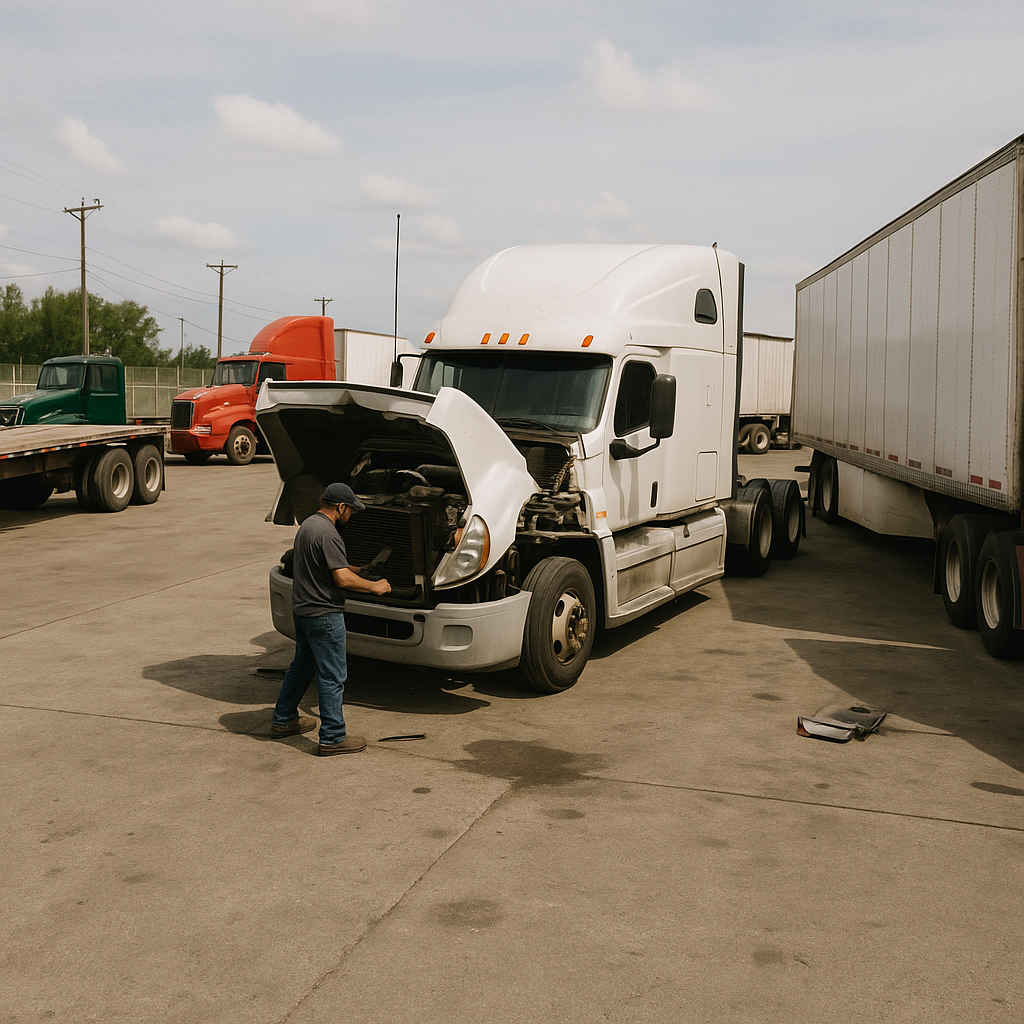

If you’re searching for commercial vehicle accident insurance, you’re usually trying to solve a real problem fast: what pays after a crash, what doesn’t, and whether your setup actually fits trucking. For owner-operators and small fleets, the answer depends on the policy structure, the truck’s use, and whether state rules or FMCSA requirements apply.
This guide breaks down commercial auto coverage in plain language, with a trucking-first focus. It separates personal auto from commercial trucking realities, explains how claims usually move after a wreck, and shows where gaps tend to show up.
What Commercial Vehicle Accident Insurance Means#
Commercial vehicle accident insurance is the coverage that responds when a business-use vehicle is involved in a crash, but what actually pays depends on the policy parts attached to that vehicle and how it’s being used. In trucking, the big mistake is assuming “my truck is insured” means every accident scenario is covered the same way.
A commercial auto policy is insurance built for vehicles used in business operations rather than personal driving. A personal auto policy is insurance designed for private, non-business use and usually has limits and exclusions that don’t fit trucking work.
For an owner-operator, the label on the vehicle isn’t enough. A pickup used to visit job sites, a straight truck making local deliveries, and a tractor running for-hire freight can all fall under very different insurance setups even if each one is “commercial” in everyday speech.
Commercial auto vs personal auto#
Commercial vehicle accident insurance usually means coverage under a business auto or trucking policy, not your personal car policy. If a vehicle is being used to haul freight, operate under authority, serve a business regularly, or carry exposures beyond normal personal driving, personal auto coverage often isn’t built for that risk.
How trucking use changes coverage#
A motor carrier is a business that transports property or passengers and may be subject to federal or state transportation rules. In trucking, coverage isn’t just about damage to the truck. It’s also about third-party injury claims, property damage, filings, cargo-related exposures, trailer use, and whether the truck was under dispatch, deadheading, or off duty.
Who this guide is for#
This guide is for owner-operators and small fleets running one to five trucks, whether they’re operating interstate or intrastate. If you’re trying to understand liability, collision, comprehensive, bobtail, trailer issues, or what happens after a crash, this is the part that matters.
What Commercial Vehicle Accident Insurance Covers#
Commercial vehicle accident insurance usually covers third-party liability claims and, if you buy them, physical damage coverages like collision and comprehensive. Some policies can also include medical benefits, UM/UIM, hired auto, non-owned auto, and rental-related coverage, but those add-ons vary by state, vehicle, and policy form.
The core idea is simple: one part protects you against claims from others, and other parts protect your own vehicle or related exposures. The exact setup depends on the vehicle type, business use, cargo, operating territory, and policy endorsements. For plain-language insurance definitions, the NAIC is a good baseline reference.
Liability coverage#
Liability coverage helps pay for bodily injury or property damage claims you cause to other people. In trucking, this is the part tied most closely to regulatory requirements, contracts, and major claim severity.
If your truck rear-ends a passenger car, damages another trailer, or causes an injury claim, liability coverage is the policy section that may respond, subject to fault, limits, and policy terms. This doesn’t repair your own truck.
Collision and comprehensive#
Collision coverage helps pay to repair or replace your vehicle after a crash with another vehicle or object, subject to the deductible. Comprehensive coverage helps pay for non-collision losses such as theft, vandalism, fire, or certain weather damage, again subject to policy terms and deductible.
In trucking, these are often discussed together as physical damage coverage, which protects your own equipment. Physical damage is separate from liability. A driver can be fully covered for liability and still have no coverage for damage to his own truck if collision and comprehensive weren’t purchased.
Medical payments, PIP, and UM/UIM#
Medical payments coverage helps with certain medical costs after an accident, regardless of fault, where offered. PIP, or personal injury protection, is broader no-fault medical and related benefits required or offered in some states. UM/UIM means uninsured/underinsured motorist coverage, which may help when the at-fault driver has no insurance or not enough insurance.
These coverages vary a lot by state and policy type. For truckers, they’re worth reviewing carefully instead of assuming they mirror what a personal car policy might include.
Hired, non-owned, and rental exposures#
Hired auto coverage applies to certain vehicles your business rents, leases, or borrows for business use. Non-owned auto coverage applies to liability from vehicles your business uses but doesn’t own, such as an employee’s vehicle used for company errands.
This is where many operators get surprised. If a business occasionally rents a truck, borrows a vehicle, or has someone using a personal vehicle for company work, standard owned-auto coverage may not fill that gap by itself. That’s when it makes sense to stop guessing and
Also watch tools, loose equipment, and freight-adjacent property. Those items may have low sublimits, special conditions, or no coverage at all under the auto policy.
What Is Not Covered#
Commercial vehicle accident insurance does not cover every loss involving a business vehicle. Common gaps include excluded drivers, unauthorized use, intentional damage, policy-specific exclusions, and property exposures that belong under different coverage forms instead of auto insurance.
A lot of frustration after a crash comes from assuming “vehicle insurance” means everything tied to the trip is covered. In trucking, that assumption causes expensive surprises.
Common exclusions#
Policies commonly exclude intentional acts, racing, fraud, or use outside the policy’s stated operations. They can also restrict coverage for drivers not listed or not acceptable under underwriting guidelines, depending on the policy structure.
If the truck was being used in a way the policy didn’t contemplate, coverage can get complicated fast. That’s why accurate vehicle use, radius, cargo, and driver information matter before a claim ever happens.
Cargo, tools, and contents limits#
Motor truck cargo insurance covers the freight being hauled when that coverage is purchased and the loss fits the policy terms. It is not the same as auto liability or physical damage.
Likewise, chains, binders, tools, spare parts, electronics, and business contents may not be fully covered under the truck’s physical damage coverage. Many of those items need separate review.
Personal use gaps#
A bobtail policy, often called non-trucking liability in everyday trucking use, is liability coverage for certain non-business driving when the truck isn’t under dispatch. It does not cover paid hauling.
On the other side, using a personal vehicle for business doesn’t automatically move that vehicle into the commercial policy. Personal and business use need to be lined up with the right policy language.
Trailer and non-owned equipment gaps#
Trailer interchange coverage applies when you have a written trailer interchange agreement and are responsible for someone else’s trailer. Non-owned trailer physical damage applies to certain trailer damage exposures when you don’t own the trailer and no interchange agreement applies.
Many owner-operators think “the trailer is covered because I’m pulling it.” That’s often wrong. If you swap trailers, borrow them, or pull shipper or carrier equipment, review that exposure directly.
Who Needs Commercial Vehicle Accident Insurance#
Any business using vehicles beyond normal personal driving usually needs commercial vehicle accident insurance, and trucking operations often need a more specialized setup than a standard business auto policy. Whether coverage is required, and in what form, depends more on use, weight, cargo, and authority than on whether the vehicle is casually called a truck.
Owner-operators and small fleets are the clearest fit. If you run one truck under your own authority, lease on, operate multiple units, or use vehicles regularly for business, personal auto usually isn’t designed for that exposure.
Owner-operators#
An owner-operator is a driver who owns or controls the truck used in his business. Some operate under their own authority. Others lease on to a motor carrier and follow that carrier’s insurance requirements for certain coverages.
The insurance setup can be very different between those two situations. One owner-operator may need filings and primary liability tied to his operation, while another may mainly need physical damage and limited non-business-use protection outside dispatched work.
Small fleets#
A small fleet is typically a business operating a handful of trucks under one company structure. Once you have multiple vehicles, multiple drivers, or mixed use, policy review gets more important because one-size-fits-all assumptions break down.
Personal vehicles used for business#
Even if the vehicle isn’t a semi, business use still matters. A pickup, van, or car used for regular company work may need commercial coverage because the exposure is different from commuting or personal errands.
Trucking operations and filing context#
Federal and state rules are not the same thing. FMCSA rules apply in specific interstate motor carrier situations, while states can have their own intrastate insurance requirements. For federal carrier registration context, start with the FMCSA.
How Coverage Is Scoped for Trucking Operations#
Trucking coverage is scoped by carrier type, vehicle weight, cargo, and where you operate, so two similar-looking trucks can need very different insurance structures. Your state minimum isn’t automatically your federal minimum, and your federal requirement isn’t universal across every trucking operation either.
This is where a lot of misinformation starts. The right question isn’t “what do truckers need?” It’s “what does this operation need, based on how it runs?”

Carrier type#
A for-hire carrier transports property for someone else for payment. A private carrier transports its own property as part of its business.
That distinction matters. Under 49 CFR Part 387, for-hire interstate carriers hauling general freight in vehicles over 10,001 lbs must carry at least $750,000 in public liability. Other operations can be different depending on commodity and use.
Vehicle weight and class#
Weight changes the compliance picture. Under the federal framework, vehicles under 10,000 lbs can fall under different minimums than heavier for-hire interstate units, and heavy trucking exposures are underwritten differently even outside strict filing rules.
Cargo and operating radius#
Hauling general freight is not the same as hauling autos or hazardous materials. Hazmat means hazardous materials subject to stricter transportation rules and much higher liability requirements in many cases.
Operating radius matters too. Local intrastate work, regional interstate freight, and long-haul operation can be priced and structured differently because claim patterns and compliance obligations differ.
Interstate vs intrastate use#
Interstate commerce means transportation crossing state lines or tied to trade between states. Intrastate commerce means transportation entirely within one state, though state law can still make that more complicated than it sounds.
If you operate interstate, confirm your registration and status through SAFER. If you’re intrastate, check your state Department of Insurance or transportation agency because state minimums may be lower, higher, or differently structured than federal rules.
What Happens After a Commercial Vehicle Accident#
After a commercial vehicle accident, the basic process is to secure the scene, report the loss quickly, preserve evidence, and let the insurer sort the claim into liability, physical damage, or other related claim tracks. What gets paid, and how fast, depends on fault, documentation, policy terms, deductibles, and whether separate coverages apply.
This part feels chaotic in real life, but the structure is usually predictable. The better your documentation, the fewer surprises later.
Immediate scene steps#
First, handle safety and emergency reporting. Then document what you can: vehicle positions, damage, plate numbers, driver information, witness details, trailer information, and photos of the scene.
If cargo, refrigeration, or a borrowed trailer is involved, note that right away. The claim may not be just one claim.
How a claim is opened#
A liability claim starts when another party alleges injury or property damage you caused. A physical damage claim starts when you’re asking the policy to pay for your own truck or scheduled equipment, subject to deductibles and terms.
A cargo or trailer-related claim may run alongside those, depending on what was damaged and which coverage applies. One crash can trigger multiple policy sections or even multiple policies.
What the insurer may request#
Adjusters may ask for the police report, photos, the driver’s statement, dispatch details, repair estimates, bills of lading, maintenance records, telematics, dashcam footage, and proof of who owned the trailer or cargo. They may also review whether the driver and trip fit the covered operation shown on the policy.
How liability and damage are evaluated#
The insurer looks at fault, damages, statements, and policy language. Liability questions focus on who caused the accident and what injuries or property damage resulted. Physical damage questions focus on the truck’s value, the repair scope, and the deductible.
If you find out after the crash that a trailer wasn’t covered, the driver wasn’t listed correctly, or the use wasn’t described accurately, that’s when a bad assumption turns into a real bill. If you’re not sure your current setup matches your operation,
How Limits, Deductibles, and Cost Usually Work#
Liability limits, physical damage deductibles, and the details of your operation all affect commercial vehicle accident insurance cost, so there is no universal price for a policy. Higher limits usually cost more, but the right choice depends on filings, contracts, vehicle value, cargo, territory, and how much risk your business can absorb.
This is why two owner-operators with similar trucks can see very different pricing. The policy is pricing the operation, not just the unit.
Liability limit choices#
A liability limit is the maximum amount the insurer will pay for covered third-party claims, subject to policy terms. In trucking, limit selection is shaped by federal filings, state rules, broker or shipper contract requirements, and the severity potential of the freight and route.
Most owner-operators hear shorthand about $750K or $1M and assume one number fits everybody. It doesn’t. Under federal rules, your minimum depends on carrier type, weight, cargo, and whether you’re operating interstate.
Collision deductibles#
A deductible is the amount you pay out of pocket before the insurer pays the covered remainder of a physical damage claim. If your collision deductible is $500 and you have a covered crash loss, you absorb the first $500 of repair cost and the policy pays the rest up to the covered amount.
That doesn’t mean the policy pays every dent in every situation. The loss still has to be covered, and the payment is still subject to valuation and policy terms.
Why quoted cost changes#
Your actual premium depends on your operation, cargo, radius, driving history, vehicle value, garaging location, loss history, limits, deductibles, and required filings. A $1,000,000 liability limit may cost more than a lower limit, but no honest answer exists without the full underwriting picture.
How to balance risk and budget#
Cheaper upfront isn’t always cheaper after a claim. A higher deductible lowers premium but increases out-of-pocket risk after damage. Lower limits may satisfy one requirement and still leave a gap against contracts or serious accident exposure.
How to Review a Policy Before You Need It#
The best time to fix a coverage problem is before a crash, not while a claim is open. A solid review means matching the policy to the actual operation, checking exclusions and endorsements, verifying filing needs, and comparing details that matter in a loss instead of comparing price alone.
For owner-operators, this review doesn’t need to be complicated. It just needs to be honest and specific.
Match coverage to operations#
Confirm what the truck really does. Is it for-hire or private? Interstate or intrastate? General freight, auto hauling, refrigerated freight, or something else? Are you using your own trailer, borrowed trailers, or a mix?
Check exclusions and endorsements#
Read driver limitations, use restrictions, and any endorsements affecting physical damage, non-business use, or trailer responsibility. Make sure collision and comprehensive are actually present if you expect your truck to be covered after a wreck, theft, or fire.
Verify filing and certificate needs#
If you run interstate for-hire, make sure your liability structure matches the applicable federal rules and filings. If you run intrastate, confirm what your state requires instead of assuming federal numbers apply across the board.
Compare policy details, not just price#
Review:
- Liability limit
- Collision deductible
- Comprehensive deductible
- Hired or non-owned auto language
- Trailer interchange or non-owned trailer physical damage
- Cargo-adjacent limitations
- Driver schedule and eligibility
- Territory and radius
Commercial Vehicle Accident Insurance FAQs#
Does an accident in a commercial vehicle affect insurance?#
Yes, an accident in a commercial vehicle can affect insurance by triggering a liability claim, a physical damage claim, or both, depending on what happened and what coverage was in force. The result depends on fault, deductibles, exclusions, claim severity, and whether the vehicle and use were properly described on the policy.
If you’re at fault, the liability side may pay for third-party injuries or damage up to the policy limit. If your own truck is damaged, collision may apply if you bought it. Even a not-at-fault accident can affect renewal review, underwriting questions, or future pricing depending on the loss details and carrier guidelines.
How much does a $1,000,000 liability insurance policy cost?#
A $1,000,000 liability insurance policy does not have one standard price because commercial vehicle accident insurance is priced around the operation, not just the limit. Vehicle class, business use, cargo, driving record, territory, filings, radius, and prior losses all influence cost.
For trucking, a $1,000,000 limit may be chosen because of contracts, broker requirements, or risk preference rather than because every operation legally needs it. The smart way to compare it is to review what extra protection the higher limit adds, what filings apply, and how the deductible and other coverages are structured around it.
What does commercial car insurance cover?#
Commercial car insurance usually covers third-party liability and can also cover your own vehicle through collision and comprehensive if those coverages are added. Depending on the state and policy, it may also include or offer UM/UIM, medical payments, PIP, hired auto, non-owned auto, and rental-related options.
For trucking, that’s only part of the picture. Freight, borrowed trailers, and non-business-use driving often require separate coverage review. Always check the policy’s exclusions, endorsements, covered drivers, and vehicle schedule rather than assuming it works like a personal auto policy.
What does $500 collision coverage mean?#
A $500 collision amount usually means you have a $500 collision deductible, not a $500 maximum payout. After a covered collision loss, you pay the first $500 and the insurer pays the remaining covered repair or value amount, subject to the policy terms.
For example, if covered repairs total several thousand dollars, the deductible is your share before insurance responds. But if the loss isn’t covered, or if damage falls outside the policy terms, the deductible doesn’t create coverage by itself. In trucking, deductible choice should match what you can realistically pay out of pocket after a wreck.
Do I need commercial coverage if I use a personal vehicle for work?#
Yes, you may need commercial coverage if you use a personal vehicle for business on a regular basis, because personal auto insurance is often designed for private use, not business exposure. The answer depends on how the vehicle is used, who drives it, what it’s carrying, and whether the business owns or directs the use.
For trucking, the issue is even more important because hauling freight, operating under authority, or using a vehicle in a transportation business can trigger exposures far beyond normal personal driving. Don’t assume your personal policy and your business activity line up without reviewing both.





