
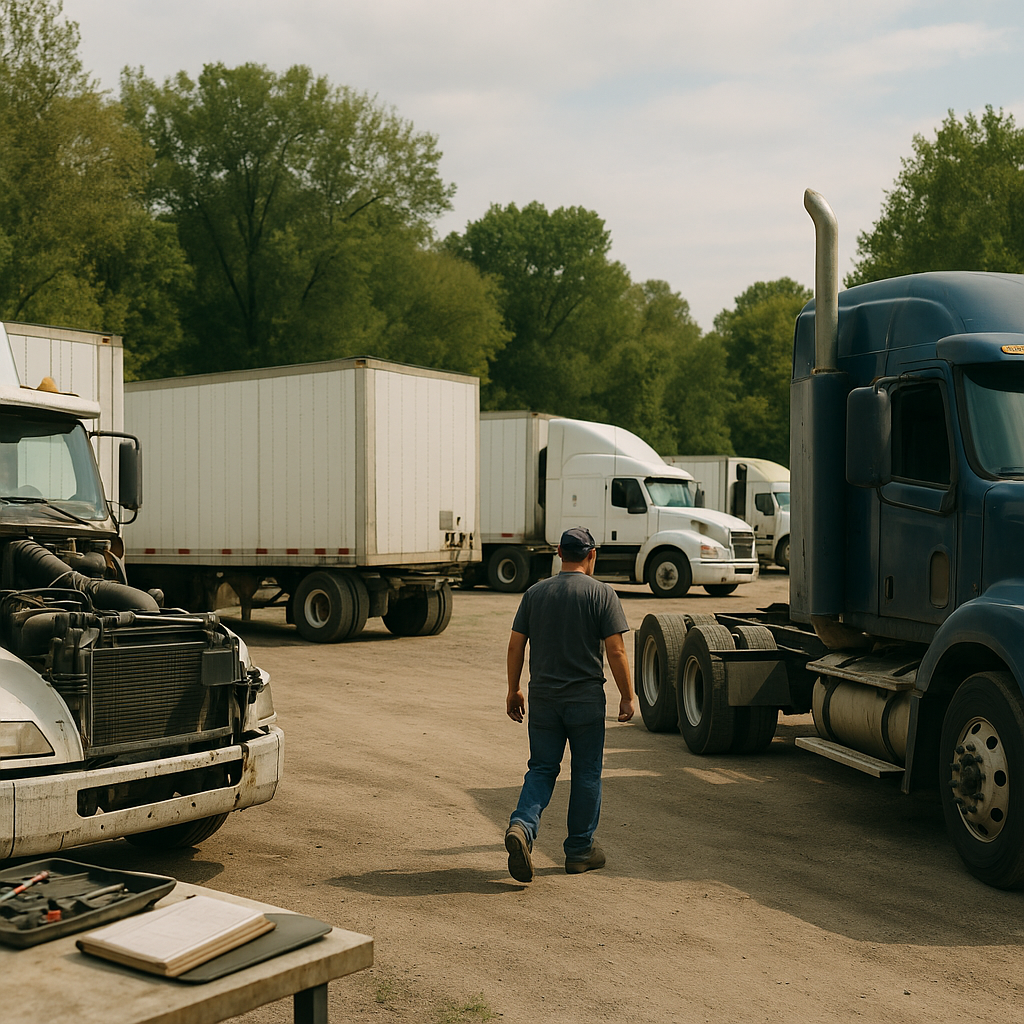

Farm truck insurance in Michigan can work well when a truck is used mainly for your own agricultural operation. The confusion starts when that same truck also runs public roads, hauls beyond the farm, or takes loads for someone else. That’s where a farm-use policy, personal auto policy, and commercial trucking policy stop meaning the same thing.
This guide breaks down where farm truck insurance fits, where it doesn’t, and what Michigan operators should check before they buy the wrong policy.
What Farm Truck Insurance Means in Michigan#
Farm truck insurance in Michigan usually means coverage for a vehicle used primarily in agricultural work tied to your own farm operation. It is not a blanket label for any truck owned by a farmer, and it does not automatically cover general business hauling or for-hire freight.
A farm-use policy is insurance written around vehicles used in the normal operation of a farm. A commercial auto policy is insurance for vehicles used in business on public roads, with terms built around business use rather than household use.
In plain terms, the key question is not “Do you own a farm?” It’s “What does this truck actually do?”
Farm-use truck vs. personal pickup#
A personal pickup is insured around household driving, commuting, and personal errands. A farm truck may still look like a pickup, but if it hauls feed, seed, tools, fencing, or equipment as part of farm operations, the insurer usually needs to rate it for that use.
For example, a pickup used to move feed between two fields you own is different from the family truck that only goes to town and back. Same vehicle type, different insurance problem.
Farm-use truck vs. commercial trucking#
A for-hire hauling operation means you are transporting property for someone else in exchange for money. That is a major line between farm use and trucking use.
Say you own a grain truck and use it only for your own crops, your own inputs, and your own equipment. That may fit farm-oriented coverage. If that same truck starts hauling loads for a neighbor for pay, or regularly runs loads that function like freight service, it may need commercial coverage instead.

Do You Need Farm Truck Insurance or Commercial Coverage?#
You need farm truck insurance when the truck’s use stays tied to your own agricultural operation, and you may need commercial coverage when the truck starts acting like a business vehicle on public roads beyond normal farm use. The deciding factors are ownership, what the truck hauls, who the loads belong to, and whether any trip becomes for-hire or outside the farm’s scope.
Start with a few basic questions. Who owns the truck: you personally, the farm, or a separate business? What does it haul: your own feed, grain, livestock, seed, or equipment, or someone else’s property? Does it stay tied to your farm, or does it take on outside hauling jobs?
When farm use is not enough#
Farm use often stops being enough when the truck regularly operates off-farm in ways that look like ordinary commercial transport. A trip to a local elevator with your own grain may still fit the farm operation. Repeated hauling for others, delivery work, or broader business use may not.
That’s where commercial auto coverage starts to matter. If the truck carries property that needs separate protection in transit, you may also need motor truck cargo insurance.
Signs the truck has crossed into commercial use#
A truck has likely crossed into commercial use when one or more of these are true:
- You haul loads for other people for pay
- The truck serves a separate business besides the farm
- Drivers use it like a regular road unit, not an occasional farm vehicle
- The truck makes frequent public-road trips with heavier or higher-value loads
A practical example: hauling your own seed from a supplier back to your farm is one thing. Hauling a neighbor’s seed, then charging for transport, changes the use in a way underwriting will care about.
Why the wrong policy creates gaps#
The wrong policy creates problems when a claim happens and the insurer finds the truck was used differently than disclosed. That can mean disputed coverage for an accident on a public road, denied damage to hauled property, or questions about whether the trip was even eligible under the policy.
That’s the part operators usually find out too late, after a wreck, a load loss, or a roadside review. If you’re not sure where your truck falls,
What Farm Truck Insurance Usually Covers#
Farm truck insurance usually covers liability for damage or injuries you cause, plus optional protection for damage to the truck itself. The exact package depends on the carrier, the vehicle, and how the truck is used on and off public roads, so the policy has to match the truck’s real job.
The liability coverage part of a policy pays when you cause bodily injury or property damage to others. Physical damage covers damage to your own truck, typically through collision and comprehensive causes, depending on the policy setup. The NAIC offers plain-language guidance on how auto policy coverages and exclusions work.
Liability protection#
Liability is the part people notice only after something goes wrong. If a farm truck backs into a gate at a supply yard, clips another vehicle leaving a field entrance, or causes damage on a county road, liability coverage is the section built to respond.
If you want a deeper breakdown of liability insurance basics, it helps to understand what the policy pays for and where limits matter.
Physical damage and theft#
A truck doesn’t have to be brand new to justify protecting it. If the vehicle has real replacement value, expensive body work, or specialized farm use that would be hard to replace quickly, physical damage coverage may matter.
Physical damage usually includes collision for crash damage and comprehensive for things like theft, vandalism, fire, or certain weather losses. A dented grain truck used only a few weeks a year may be rated differently from a newer pickup that runs hard all season and sits outside year-round.
Farm-related add-ons#
Some carriers may offer add-ons or package features for towing, service, or attached equipment exposures. But these vary a lot, and the details matter more than the label.
That’s why “farm truck insurance” should be treated as a starting point, not a guarantee that every farm-related problem is covered.
What Farm Truck Insurance Does Not Cover#
Farm truck insurance does not automatically cover every use just because the vehicle is farm-owned. Coverage can be limited or denied when the truck is used for delivery work, for-hire hauling, undisclosed business activity, or exposures that belong on a trucking policy instead.
This is where people get burned by assumptions. A farmer-owned truck leaving the property is not automatically covered for any trip, any cargo, or any driver.
Excluded uses#
Common trouble starts when the truck is used for something outside the policy’s stated purpose. Delivery work, regular hauling for others, and side-business use can all create a mismatch between the policy and the actual risk.
A good example is a farm pickup that starts hauling landscaping materials for a second business in the offseason. Ownership didn’t change, but the insurance need did.
Off-farm hauling#
Off-farm hauling is not always excluded, but it often gets limited by how the policy is written and how the use was described. Taking your own livestock or grain to market may be treated very differently from hauling another farm’s products for compensation.
Common misunderstanding traps#
The biggest traps are cargo loss, trailer damage, and mixed-use business activity. If the truck is pulling a trailer, carrying goods for others, or doing work outside the farm’s disclosed scope, the policy may leave holes you only notice during a claim.
Michigan Rules: CDL, State Requirements, and Federal Triggers#
Whether you need a CDL for a farm truck in Michigan depends on how the vehicle is built and operated, not just the word “farm” on the title or plate. State licensing, registration, vehicle weight, and how the truck moves on public roads all matter, and once the operation starts looking like regulated trucking, federal rules may matter too.
A CDL is a commercial driver’s license required for certain heavier vehicles and combinations. GVWR means gross vehicle weight rating, the manufacturer’s maximum rated weight for the vehicle. USDOT refers to the U.S. Department of Transportation, and FMCSA is the Federal Motor Carrier Safety Administration.
Do you need a CDL?#
The short answer is maybe. Farm ownership alone does not decide it. Vehicle weight, trailer setup, air brakes, trip type, and available exemptions all matter under 49 CFR Part 383 and related state rules.
Michigan drivers should check current Secretary of State guidance and not rely on coffee-shop advice. For a plain-English primer on CDL requirements, start with the weight and use questions before you assume a farm exemption applies.
Michigan registration and insurance basics#
Michigan registration, titling, and driver licensing basics run through the Michigan Secretary of State. How the truck is registered and who operates it can affect what kind of insurance makes sense.
State minimum auto rules and practical underwriting rules are not the same thing. A truck may be legally registered and still be poorly insured for the way it’s actually used.
When federal rules start to matter#
Federal rules usually start to matter when the truck operates like a regulated commercial vehicle, especially on public roads in interstate or for-hire activity. The FMCSA sets federal motor carrier rules, and if an operation crosses into trucking, those requirements can be very different from ordinary farm use. You can verify federal operating status through SAFER and review federal rules through FMCSA.
Under 49 CFR Part 387, for-hire interstate carriers hauling general freight in vehicles over 10,001 lbs must carry at least $750,000 in public liability. That does not mean all farm trucks need that limit. Requirements vary by carrier type, vehicle weight, cargo, and whether the operation is interstate or intrastate. If your use starts resembling regulated freight movement, review commercial truck insurance requirements before assuming a farm policy still fits.
What Affects Farm Truck Insurance Cost#
Farm truck insurance cost in Michigan depends on how risky the truck looks to the insurer in real life. The biggest drivers are vehicle value, repair cost, annual miles, road use, territory, driver history, trailer use, and whether the truck stays in lower-risk farm service or acts more like a commercial road unit.
This is why “farm truck insurance is always cheaper” is too simple. It can be less expensive in some cases, but only when the usage and exposure really are lower.
Vehicle value and repair cost#
A newer diesel pickup with expensive sensors, body panels, and financing attached usually costs more to protect than an older farm truck with modest value. The more it costs to repair or replace, the more that can affect the premium.
If two farms use similar trucks, but one is a basic older grain unit and the other is a late-model heavy pickup with high physical damage exposure, you should expect different pricing.
Driving radius and use frequency#
A truck that stays near the farm and sees limited road miles often presents a different risk than one that regularly runs long distances on state highways. More miles usually mean more exposure to accidents, weather, theft, and road claims.
A lightly used grain truck that mainly moves during harvest may rate differently from a pickup hauling tools and loaded equipment all over the county, several days a week.
Driver history and farm operations#
Underwriting looks at who drives the truck, how clean the driving record is, and whether the operation uses hired drivers or family only. It also looks at the farm’s overall exposure, including trailers, public-road use, and whether the truck’s duties stay agricultural.
That’s why one operator may see farm-use coverage make sense while another, with similar land and similar equipment, ends up needing a more commercial setup. Your actual premium depends on your operation, cargo, radius, driving history, and other factors.
How to Get the Right Quote for a Michigan Farm Truck#
The fastest way to get a usable quote is to describe the truck the way it is really used, not the way you hope it can be classified. Gather the VIN, garaging location, annual miles, driver list, ownership details, and a plain description of what the truck hauls and where it goes.
A VIN is the vehicle identification number used to identify the exact truck. Underwriting is the insurer’s process for evaluating risk and deciding whether and how to offer coverage.
Information to gather before shopping#
Have these details ready before you talk to an agent:
- VIN and year, make, and model
- Garaging address in Michigan
- Who owns the truck
- Who drives it
- Estimated annual miles
- Whether it pulls a trailer
- Whether it ever hauls outside your farm operation
The better your description, the less likely the quote is to be based on the wrong use class.
Questions to ask an agent#
Ask direct questions. Does this policy cover trips to elevators, auctions, suppliers, or repair shops? Does it cover hired drivers? What happens if the truck sometimes hauls mixed-use loads? Is there any exclusion for hauling for others or for side-business activity?
These questions do more than compare options. They force a real eligibility review.
When to review eligibility carefully#
Be especially careful if the truck leaves the farm regularly, is used seasonally in different ways, or sometimes carries property that isn’t tied to your own farm. A simple quote that ignores those facts can look fine on paper and fail in a claim.
Ways Michigan Farm Operators Can Avoid Buying the Wrong Policy#
The best way to avoid the wrong policy is to match coverage to actual use, then update it when that use changes. Farm ownership by itself does not decide the right policy; the insurer needs a clear picture of where the truck goes, what it hauls, and whether it ever crosses into business use outside the farm.
Start with a simple self-check. Is the truck used only for your own agricultural operation? Does it stay out of for-hire hauling? Have seasonal changes, hired drivers, trailers, or equipment upgrades changed the risk since last renewal?
Mixed-use trucks are where most mistakes happen. A truck may be farm-only in spring, then spend fall running heavy road miles, then pick up side work in winter. That can change the insurance picture fast.
Before you renew or switch, write down the truck’s real use over the last year and compare it to what the policy application says. If those don’t match, fix that first.
FAQ#
Is it cheaper to insure a farm truck?
Sometimes, yes, but only when the truck truly has lower-risk use. A farm truck that is driven less, stays close to the farm, and is used mainly for your own agricultural operation may be less expensive to insure than a truck used heavily on public roads. But that is not automatic.
Cost still depends on the truck’s value, repair cost, driver history, miles, trailer use, and whether the insurer agrees the use is actually farm-related. If the truck starts doing broader business work or hauling for others, the premium may change because the risk changed.
What is the best insurance company for farms?
There is no one best company for every farm truck in Michigan. The better question is which carrier correctly understands your truck’s real use and is willing to insure that use clearly, without vague assumptions.
A good fit depends on whether the truck stays in your own farm operation, how often it runs public roads, what it hauls, and whether you need extras like physical damage or broader commercial coverage. Compare insurers on eligibility, exclusions, claim clarity, and how well the policy matches the truck’s job, not just on a headline price.
Do you need a CDL to drive a farm truck in Michigan?
Maybe. A CDL depends on the vehicle’s weight, configuration, and how it is operated, not simply on the fact that it is owned by a farm. Some farm vehicles may fall under exemptions in certain situations, while others do not.
That’s why Michigan operators should verify current rules through the Michigan Secretary of State and review the federal CDL framework under 49 CFR Part 383. If the truck is heavier, pulls certain combinations, or operates beyond a narrow farm-use pattern, assume nothing and confirm before you put a driver in the seat.
How much does farm insurance cost per year?
There is no single annual number that fits every Michigan farm truck. Annual cost varies too much by truck value, age, territory, annual miles, driver list, garaging, physical damage choices, and whether the policy is truly farm-use or needs to be written more like commercial auto.
For example, an older truck used mainly during harvest may rate very differently from a newer pickup driven year-round on public roads. The cleanest way to estimate annual cost is to give an accurate use description first, because classification drives price almost as much as the truck itself.
Can a farm truck stay on a personal auto policy?
Sometimes for very limited personal use, but usually not if the truck is materially used in the farm operation. Once a pickup or larger truck is regularly hauling feed, seed, tools, equipment, or products as part of the farm, the insurer needs to know that.
A personal auto policy is built around household driving, not business exposures tied to agricultural work. If the truck is used on the farm and on public roads for farm tasks, ask whether it belongs on a farm-use or commercial-style policy instead. The risk is not just paying too much. It’s finding out after a claim that the use was misclassified.





