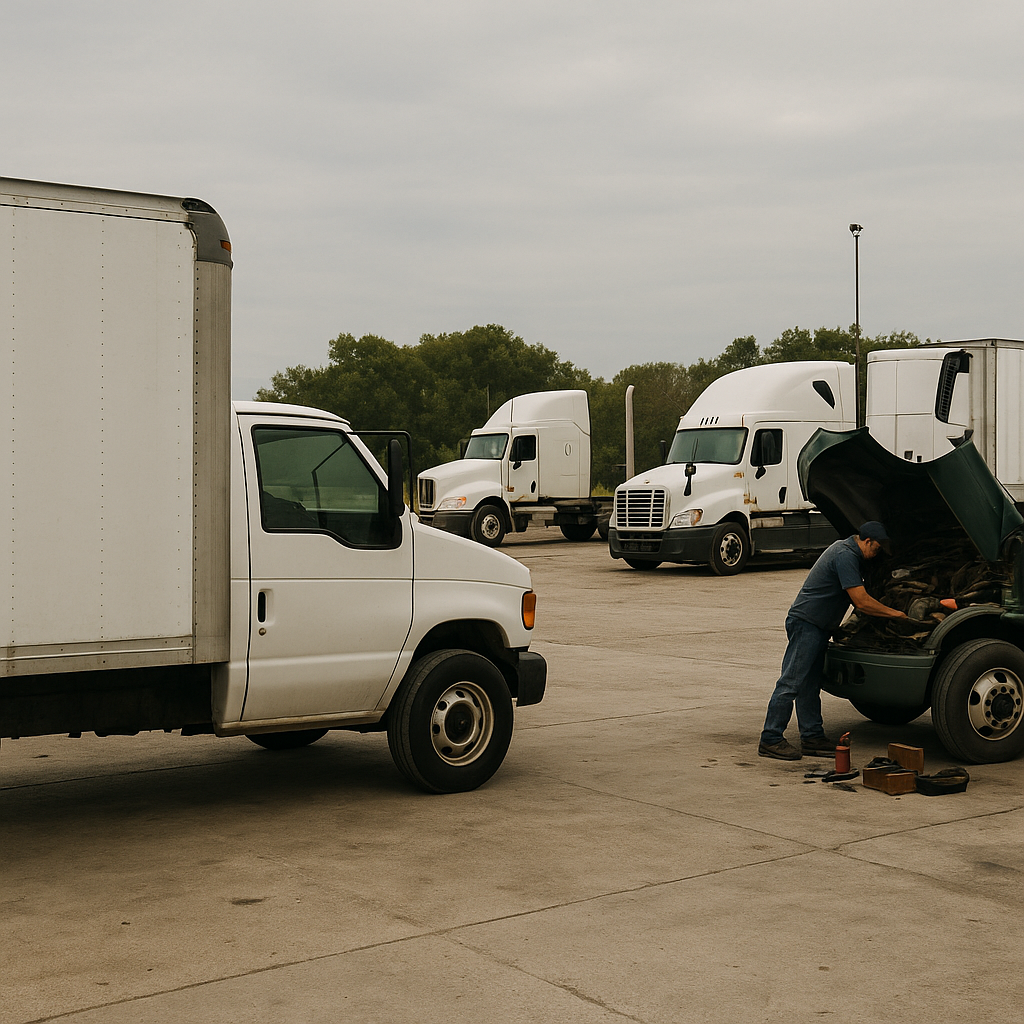
A non-CDL box truck is generally a straight truck that stays under the federal CDL weight threshold of 26,001 pounds for its weight and use. It can still need commercial insurance and DOT compliance, including a $750,000 minimum for for-hire interstate general freight over 10,001 pounds (49 CFR Part 387).
A lot of first-time owners get tripped up here. They see “non-CDL” in a truck listing and assume that means personal-auto style rules, no business filings, and easy insurance. That’s where expensive mistakes start.
This guide breaks down what actually makes a box truck non-CDL, how big you can go, where state rules can change the answer, what kind of work these trucks usually do, and what insurance you may need before you book your first load.
👉 Ready to save on your box truck insurance?
Watch the video below for a quick overview of box truck insurance rules, how much it costs, and practical ways to save. Or give us a call: (704) 290-3630
What Counts as a Non-CDL Box Truck?#
A non-CDL box truck is a box truck that does not trigger commercial driver license requirements under the weight and use rules that apply to that trip. In plain terms, the label depends on GVWR and operating facts, not what a dealer calls the truck in an ad.
GVWR means gross vehicle weight rating, or the maximum loaded weight the manufacturer says the truck is designed to carry safely. That’s the number you need to check first, because CDL rules key off rated weight, not just body length or how the truck looks.
GVWR, not marketing labels#
A dealer can call something a “non-CDL box truck” because it was built to fit under a common weight threshold. But that description is only a shortcut. The real answer is on the door sticker, spec sheet, and registration details.
A 26-foot box doesn’t automatically mean CDL or non-CDL. Body length matters less than the truck’s rated weight, how it’s configured, whether it tows, and what rules apply in the state or interstate operation.
The 26,001 lb federal threshold#
Under FMCSA rules and the CDL standards in 49 CFR Part 383, a CDL is generally required when the vehicle or combination meets the applicable weight and class triggers, including a gross vehicle weight rating or gross combination weight rating of 26,001 pounds or more in the covered scenarios.
GCWR means gross combination weight rating, or the maximum rated weight of the power unit plus any trailer. That matters if the box truck is towing, because a truck that looks non-CDL by itself can cross into CDL territory when the combination rating changes.
For many readers, the practical takeaway is simple: if the truck’s setup stays below the applicable CDL threshold, it may qualify as non-CDL. If it hits or exceeds that threshold, or the combination changes the classification, you need to stop guessing and verify the exact rule.
Why state rules still matter#
Federal CDL framing is the starting point, especially for interstate operations. But states can apply their own intrastate rules, exemptions, and special licensing requirements for certain uses.
That means a box truck can be non-CDL under a broad federal reading and still raise a state-level issue for local use, special cargo, towing, or passenger work. Before buying a truck around one route or one contract, check the state’s DMV or DOT guidance instead of relying on a seller’s label.
Which Box Truck Sizes Usually Do Not Require a CDL?#
Most non-CDL box trucks are trucks configured to stay under the applicable CDL weight threshold, often in the common cutaway or straight-truck ranges used for local and regional delivery. The important point is that legality follows the truck’s GVWR and combination setup, not the box length by itself.
Common non-CDL size ranges#
In the real world, many trucks marketed for non-CDL use are built to stay just under the key rating threshold. That’s why you’ll often see larger box lengths advertised as non-CDL options even though a shorter truck from another build could be rated differently.
GVW means gross vehicle weight, or what the truck actually weighs when loaded for a trip. That’s different from GVWR, which is the manufacturer’s rating. The license question usually starts with the rating, while safety and loading decisions also depend on actual loaded weight.
So when people ask, “Which box truck does not require a CDL?” the practical answer is: the one whose rated weight and operating pattern stay below the CDL trigger under federal and state rules. Not the one with a certain box length on a sales lot.
Where the line gets blurry#
The “largest non-CDL box truck” question sounds simple, but it isn’t. Two trucks with similar bodies can have different chassis, ratings, payload limits, and towing setups.
That’s why blanket promises get drivers in trouble. The biggest legal non-CDL box truck is the biggest truck that still stays under the applicable threshold for that exact operation.
Sleeper, towing, and add-on features#
A sleeper berth, liftgate, or cargo feature doesn’t automatically make a truck CDL or non-CDL. Those features matter because they add weight, change payload, and can push the truck into a different real-world use case.
Towing is where people most often get burned. A truck that qualifies as non-CDL by itself may not stay there once you add a trailer and the combination rating changes. If you’re planning a sleeper build, liftgate, or trailer setup, verify the full spec before you buy.

State Rules, Exemptions, and Edge Cases#
State rules can change how a non-CDL box truck is treated for intrastate work, exemptions, or special operating categories. Federal rules set the baseline, but your state DMV or DOT may have extra requirements that matter before you buy, register, or dispatch the truck.
Federal vs. state licensing rules#
Interstate trucking usually starts with federal definitions and FMCSA guidance. Intrastate work can bring in state-specific licensing rules, route restrictions, and exceptions that don’t show up in a generic ad or forum answer.
That’s why a truck described as non-CDL in one state may not fit the same way in another operating pattern. Check your own state DMV or DOT before assuming the label transfers cleanly.
Intrastate-only operations#
If you plan to stay inside one state, you still need to verify what that state expects for licensing, registration, and commercial use. Some states treat certain combinations, business uses, or local classes differently than a simple interstate summary would suggest.
A USDOT number is a federal identifier used to track carriers and commercial vehicles subject to DOT oversight. Even if the truck is non-CDL, you may still need a USDOT number depending on your operation, vehicle use, and state rules.
Special exceptions to check before buying#
Edge cases usually show up around towing, passenger moves, and special cargo. A non-CDL box truck used for one kind of local delivery may be straightforward, while the same truck used in a different business model may trigger more rules.
Verify the truck against the route, the load, and the state. Use your state DMV or DOT for licensing questions, and use SAFER if you need to verify carrier status or operating information tied to federal registration.
Non-CDL Box Truck Jobs and Business Use Cases#
Non-CDL box truck jobs usually center on local delivery, regional runs, dedicated routes, and business-to-business freight that fits the truck’s legal weight and cargo profile. The best opportunities depend less on the non-CDL label and more on what freight you can legally haul, who you’re hauling for, and what the customer requires.
Common job types#
Most non-CDL box truck work falls into a few practical buckets:
- Local delivery for retailers, wholesalers, or service businesses
- Dedicated contract routes for commercial accounts
- Regional freight that fits the truck’s weight and cargo limits
- Seasonal overflow work tied to moving inventory or events
Some of these are company-driver jobs. Others are owner-operator setups where you’re responsible for the truck, insurance, compliance, and contracts.
E-commerce and last-mile work#
A lot of searchers are really asking about e-commerce and final delivery work. That’s a real use case, but it’s not automatically a fit for every insurance market or trucking business model.
Some delivery models look more like courier or last-mile operations than traditional for-hire trucking. That distinction matters because insurance appetite, coverage structure, and operational rules can change fast when the work is residential-heavy, time-sensitive, or platform-driven.
If you’re trying to sort out whether your planned operation fits a standard trucking policy or needs a different setup,
Freight, regional, and local delivery#
For owner-operators, local and regional freight can be a cleaner fit than chasing every load type you see online. Load dimensions, dock access, customer contracts, and cargo handling rules can matter more than whether the truck is technically non-CDL.
That also applies to pay expectations. Non-CDL box truck pay varies by contract type, region, cargo, route density, and whether you’re a company driver or running your own authority. The truck class alone doesn’t tell you what the work is worth.
Insurance for a Non-CDL Box Truck#
A non-CDL box truck still needs commercial insurance when it’s used for business, and the right coverage depends on carrier type, cargo, route, and whether the operation is for-hire or private. Non-CDL only answers a license question; it does not make a work truck eligible for personal auto coverage.
Why non-CDL still needs commercial coverage#
A box truck hauling goods for a business is still a commercial vehicle even if the driver doesn’t need a CDL. That’s the mistake that causes denied claims and bad quotes.
Auto liability is the coverage that pays when your truck causes injury or property damage to others. If you’re a for-hire interstate carrier, federal financial responsibility rules under 49 CFR Part 387 may apply based on carrier type, weight, and cargo.
That scope matters. Under 49 CFR Part 387, for-hire interstate carriers hauling general freight in vehicles over 10,001 pounds must carry at least $750,000 in public liability. If the operation is under 10,000 pounds, the federal minimum can be different. Auto haulers and hazmat operations have different minimums as well.
Core policies to consider#
Most non-CDL box truck operators looking at business insurance should at least understand these coverages:
- Auto liability for damage or injury you cause to others
- Motor truck cargo for covered damage to freight you’re hauling
- Physical damage for damage to your truck from collision or other covered causes
- General liability for certain non-driving business risks, where the operation calls for it
Motor truck cargo is coverage for the customer’s freight while you’re transporting it, subject to the policy’s terms and exclusions. Physical damage is coverage for damage to your own truck, usually including collision and comprehensive-type causes when written together.
If the truck is financed, physical damage may be required by the lender. If you’re hauling for brokers or direct shippers, cargo and higher liability limits may be required by contract even when the legal minimum is lower.
Cargo type and operating scope#
Cargo changes everything. General merchandise, temperature-sensitive goods, higher-theft items, or special handling freight can all affect what coverage you need and what an insurer will accept.
A MC number is an FMCSA operating authority number used for certain for-hire interstate operations. If you’re running your own for-hire authority, crossing state lines, or hauling regulated freight, your insurance setup will look different than a private business moving its own goods.
Trailer use matters too. If you’re pulling someone else’s trailer, interchange and trailer physical damage questions can come into play. If you’re not sure which coverages fit your operation,
How to Start a Box Truck Business Without a CDL#
You can start a box truck business without a CDL if the truck and operation qualify as non-CDL, but you still need to line up the business, insurance, and compliance pieces correctly. The safest path is to choose the freight and operating model first, then buy the truck that fits that plan.
Check your operating plan first#
Start with the basics: what will you haul, for whom, how far, and across which states? Those answers shape the license question, insurance needs, and whether you need a USDOT number, operating authority, or both.
If you’re planning to haul for others for pay, don’t skip the authority and compliance side just because the truck is non-CDL. “No CDL required” does not mean “no trucking rules.”
Pick the right truck and weight class#
Match the truck to the work instead of chasing the biggest box you can find. A truck built right up against the weight threshold may still be a poor fit if your actual payload, liftgate, sleeper, or towing plan leaves no room for the loads you want.
That applies to loads advertised as “non-CDL box truck loads” too. The contract may be legal for the truck on paper but still impractical once payload, cube, route, and insurance requirements are factored in.
Line up registration, insurance, and paperwork#
Before spending money, confirm:
- The truck’s GVWR and any combination rating if you will tow
- Whether your work is for-hire or private
- Whether you’ll operate interstate or intrastate
- What cargo you’ll haul
- What insurance the shipper, broker, or contract requires
- Whether your state adds any licensing or registration conditions
A quick check here saves a lot of pain later. Buying the wrong truck first is one of the fastest ways to waste money in this segment.
What to Check Before You Buy or Quote a Non-CDL Box Truck#
Before you buy or quote a non-CDL box truck, verify the rated weight, intended cargo, route scope, and insurance fit for the exact operation. The truck has to match the work, not just the ad copy.
GVWR and payload#
Check the door sticker, manufacturer specs, and any planned add-ons. A sleeper, liftgate, reefer setup, or towing package can change the real usefulness of the truck even if the listing still says non-CDL.
Cargo contract requirements#
Some brokers, shippers, and dedicated accounts ask for more than the legal minimum. They may require specific liability limits, cargo limits, or equipment specs before they’ll tender freight.
Insurance fit and operating limits#
Make sure the policy matches how the truck will actually be used. A quote built for one cargo type or one radius can fall apart if the real operation is broader, heavier, or more specialized than described.
LogRock specializes in trucking insurance for owner-operators and small fleets. If you want help scoping the operation before you bind coverage, use the basics above as your filter first.
FAQ#
Which box truck does not require a CDL?
A box truck usually does not require a CDL when its GVWR, or its combined rating if towing, stays below the applicable CDL threshold and the operation does not trigger another licensing rule. In practical terms, that means you need to look at the truck’s door sticker and full configuration, not just the body length or dealer description. A truck marketed as non-CDL may qualify in one setup and not in another. State intrastate rules can also add wrinkles, so verify with your DMV or DOT before you buy.
What is the largest non-CDL box truck?
The largest non-CDL box truck is the largest one that still stays under the applicable CDL weight threshold for that exact operation. There is no one-size-fits-all body length answer because two trucks with similar boxes can have different chassis ratings, payload capacities, and towing configurations. A sleeper, liftgate, or trailer plan can also change the picture. If you’re shopping for the biggest possible non-CDL unit, focus on GVWR and any combination rating first, then confirm state and route-specific rules before committing.
What’s the biggest non-CDL box trucking could you do?
The biggest non-CDL box truck work you can usually do is local or regional delivery and freight that fits the truck’s legal weight, cargo, and route limits. That can include dedicated business routes, local retail delivery, commercial distribution, and some regional freight lanes. But “biggest” is not just about box size. It also depends on payload, cargo handling, customer requirements, and whether the route crosses state lines. A larger non-CDL truck may still be limited by contracts, insurance requirements, or practical loading constraints.
Can you start a box truck business with no CDL?
Yes, you can start a box truck business without a CDL if the truck and operating model qualify as non-CDL under the rules that apply to you. But you still need to handle the real business setup: entity formation if needed, registration, insurance, cargo fit, route planning, and any DOT or authority filings tied to your operation. If you plan to haul for others for pay, the compliance side matters even when no CDL is required. Start with the freight plan first, then match the truck and coverage to it.
Does non-CDL mean I can insure a box truck on a personal auto policy?
Usually no. If the box truck is being used for business, delivery, or hauling goods, it typically needs commercial insurance rather than a personal auto policy. Non-CDL only describes the driver’s license side of the question. It does not change the fact that the vehicle may be a commercial unit with business-use exposure. Depending on the operation, you may need auto liability, cargo, physical damage, and possibly general liability. Your actual premium depends on your operation, cargo, radius, driving history, and other factors.