
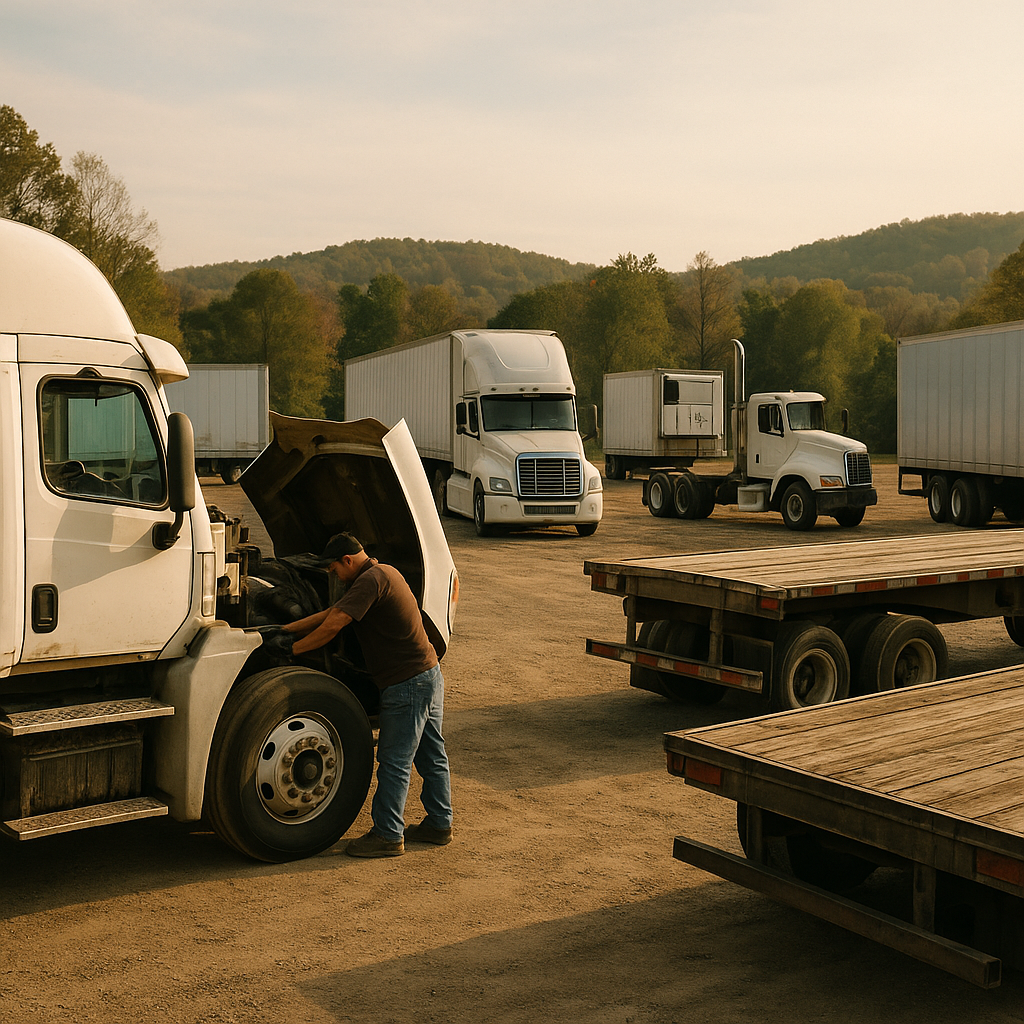

Semi truck insurance North Carolina buyers usually have three questions: what coverage they actually need, which rules come from North Carolina versus FMCSA, and why quotes can look so different. If you run under your own authority or manage a small fleet, getting those three right matters more than chasing a flashy price.
North Carolina Semi Truck Insurance Basics#
Semi truck insurance is commercial insurance built for a tractor used in trucking operations, not a personal auto policy and not a generic business auto policy for light vehicles. In North Carolina, the right setup depends on how you operate, what you haul, whether you run intrastate or interstate, and whether you’re an owner-operator or a small fleet.
A lot of confusion starts with the term itself. "Semi truck insurance" usually means a package of trucking coverages tied to a for-hire operation, not just one policy line. If you want a broader foundation first, these commercial truck insurance basics help frame the moving parts.
What counts as semi truck insurance#
A semi truck policy usually starts with coverage for a tractor used to haul freight for business. That can include auto liability, cargo, physical damage, and other trucking-specific pieces depending on your setup.
What it does not mean is personal car insurance with higher limits. Personal auto policies aren’t built for paid freight hauling, filed authority, or the day-to-day risk of a working tractor.
Who this guide is for#
This guide is for North Carolina owner-operators and small fleets with 1 to 5 trucks, especially for-hire trucking operations. It’s built for people trying to sort out real trucking insurance questions, not broad consumer auto advice.
If you’re leased on, running your own authority, or adding a second truck, your coverage needs can change fast. The right answer usually comes from your business model, not from what another driver said at a truck stop.
Why North Carolina adds extra questions#
North Carolina rules matter, but federal trucking rules may also apply if you operate in interstate commerce or hold operating authority. That’s where people mix up state minimums, federal financial responsibility, and insurance filings.
The key questions are simple: what coverage does your operation need, which filings apply, and what facts are driving the price your underwriter comes back with.
What Coverage a North Carolina Semi Truck Policy Usually Includes#
A North Carolina semi truck policy usually includes a mix of liability protection, cargo protection, and equipment protection, with add-ons based on how the truck is used. The right combination depends on whether you’re hauling for hire, what kind of freight you move, and whether the truck is working, parked, or off dispatch.
The National Association of Insurance Commissioners offers general insurance terminology at naic.org, but trucking coverage needs more precise scoping than standard consumer insurance definitions.
Auto liability#
Auto liability pays for bodily injury and property damage you cause to others in a covered accident while operating the truck. For trucking, this is the coverage tied most directly to legal and regulatory requirements.
A lot of owner-operators start here because it’s the coverage brokers and shippers ask about first. If you want a deeper breakdown of auto liability coverage, it’s worth understanding before you compare any quote.
Motor truck cargo#
Motor truck cargo covers a customer’s freight if it’s damaged or lost during transit, subject to the policy terms. If a load shifts, gets wet, or is damaged in an accident, this is the part people usually mean when they say "cargo coverage."
That doesn’t mean every load is covered the same way. The freight class matters, exclusions matter, and the policy has to match what you actually haul. A good primer on motor truck cargo coverage can help you spot gaps before a claim proves they were there.
Physical damage#
Physical damage covers your truck itself, usually through collision and comprehensive or fire and theft with combined additional coverage. If your tractor gets hit while parked at a truck stop, or you back into an object at a shipper, this is the coverage that usually responds for your equipment.
Truck value, deductible choice, financing terms, and parking habits all affect how this part is built. More on physical damage coverage matters if your tractor is a big part of your business survival.
Non-trucking liability and related add-ons#
Non-trucking liability, often called bobtail by drivers even when that isn’t technically precise, covers certain non-business use of the truck when you’re not under dispatch. It does not cover paid hauling.
Other common trucking options include trailer interchange and non-owned trailer physical damage, but they are not interchangeable. Trailer interchange usually requires a signed interchange agreement, while non-owned trailer physical damage is often what many non-intermodal owner-operators actually need. Not every North Carolina truck needs every add-on, and forcing extra coverage into a quote can make a policy look more complete than it really is.
North Carolina and FMCSA Requirements: What Actually Applies#
North Carolina insurance rules and FMCSA insurance requirements are not the same thing, and treating them like they are causes expensive mistakes. State rules can affect registration and intrastate operation, while federal rules come into play based on carrier type, vehicle weight, cargo, and whether you operate interstate under authority.
State minimums versus federal trucking rules#
The shortest version is this: your state minimum is not automatically your federal minimum. Under 49 CFR Part 387, for-hire interstate carriers hauling general freight in vehicles over 10,001 pounds must carry at least $750,000 in public liability, while other operations can require different minimums based on commodity and vehicle type.
That means "all truckers need $750K" is wrong. Under 10,000 pounds is different. Auto haulers are different. Hazmat is different. The FMCSA lays out the interstate authority side at fmcsa.dot.gov, and those federal rules don’t disappear just because a driver heard a lower number tied to a state requirement.
When filings matter#
Insurance filings are proof sent by the insurer to satisfy certain regulatory requirements tied to operating authority or state rules. In practice, filings usually matter when a carrier is operating under authority and needs insurance proof accepted by the right regulator.
This is where a lot of North Carolina operators get tripped up. Owning a truck isn’t what triggers every filing issue. The operating setup does. If you’re trying to sort out FMCSA filing basics, focus on whether you’re for-hire, whether you operate interstate, and what authority you’re using.
A wrong assumption here can waste days. A driver may think, "I have liability, so I’m good," but the policy may not support the filing needed for the operation they actually plan to run.
Who is responsible for proof of insurance#
The insurer generally handles the filing when one is required, but the motor carrier is responsible for making sure the operation is set up correctly and the right coverage is in place. If the carrier type, cargo, or authority status is wrong in the application, the policy can be mismatched even if the paperwork looks complete.
A USDOT number is the identifier used for safety monitoring, and an MC number is the operating authority identifier used for certain for-hire interstate operations. Those details matter because underwriting and filing decisions often flow from them.
How Much Semi Truck Insurance Costs in North Carolina#
Truck insurance in North Carolina can vary widely because pricing depends on the operation, not just the truck. Your premium usually changes based on driving history, cargo, radius, authority, equipment value, prior losses, and how underwriters view the overall risk of your business.
Main price drivers#
An MVR, or motor vehicle record, is the driver’s official driving history used by underwriters to evaluate risk. Underwriting is the insurer’s process for reviewing your operation and deciding whether to offer coverage, on what terms, and at what premium.
For a North Carolina owner-operator, some of the biggest drivers are:

- driver history and years of CDL experience
- operating radius and where the truck runs
- cargo type and whether it’s viewed as higher risk
- truck age, value, and repair cost
- authority type and time in business
- prior claims, losses, and safety controls
A clean owner-operator hauling general freight on a predictable route can look very different from a two-truck fleet hauling tougher freight across a wider radius. Same state, very different risk.
Why monthly payments vary#
Monthly pricing often feels inconsistent because not all quotes include the same thing. One quote may include broader cargo terms, lower deductibles, physical damage on a higher-valued tractor, or the filings needed for your authority. Another may look lighter because the scope is lighter.
That’s why "cost per month" questions can be misleading. A lower monthly number doesn’t mean it’s the right policy if the quote is missing a coverage part you actually need or if the operating class was entered wrong.
Examples of quote differences#
Picture two North Carolina operators. One runs a day cab, hauls ordinary freight, has a clean MVR, and stays on a tighter regional schedule. The other runs a more expensive sleeper, has a prior loss, travels farther, and hauls freight that underwriters flag as a tougher class. Their quotes shouldn’t match, and they usually won’t.
The same thing happens at fleet level. A small fleet with documented maintenance, tighter dispatch controls, and clear driver screening can look more stable to underwriting than a similar-size operation with inconsistent records. Your actual premium depends on your operation, cargo, radius, driving history, and other factors.
How to Compare Truck Insurance Quotes Without Buying the Wrong Policy#
The safest way to compare truck insurance quotes is to match coverage scope before you compare price. If two quotes have different limits, deductibles, exclusions, filings, or hauling classes, they are not really competing quotes even if the truck and driver are the same.
Match limits and deductibles first#
Start with the basics. Check auto liability limits, cargo limits, physical damage deductibles, and whether the quote includes the same add-ons across the board.
If one quote has a higher deductible on physical damage or narrower cargo terms, it may look cheaper without actually being a better fit. Compare covered risk, then compare premium.
Check exclusions and scope#
A cheaper policy can backfire if it excludes the class of hauling you do, limits where you operate, or doesn’t fit your owner-operator or small-fleet setup. This is especially common when someone gets quoted under a broad "commercial auto" label that isn’t truly built for for-hire semi operations.
If you’re checking authority details or carrier status, verify them through FMCSA SAFER. SAFER is FMCSA’s system for reviewing carrier safety and authority-related information, and it helps confirm you’re looking at the right operation profile.
Compare filings and service, not just price#
If two proposals differ, compare what is covered before comparing what is quoted. Filing support, turnaround time, and whether the market actually writes your trucking class matter just as much as the premium line.
A quote that ignores a filing need or misses a scope issue can become your problem later. For North Carolina trucking, "cheap" gets expensive fast when the policy was wrong from the start.
What North Carolina Owner-Operators and Small Fleets Can Do to Lower Risk#
Lowering insurance risk usually comes from running a cleaner operation, not from gimmicks or mystery shortcuts. In practice, underwriters respond better to stable drivers, documented maintenance, clear operating patterns, and fewer surprises in the account.
Safety habits that affect underwriting#
Clean MVRs matter. So do maintenance records, driver qualification files, and basic safety routines that show the truck is being run like a business.
If you have a small fleet, consistency matters even more. Underwriters notice when one truck follows one process and another truck follows none.
Vehicle and operation choices#
Newer or better-maintained equipment can reduce some kinds of risk. So can clearer lanes, tighter dispatch controls, and avoiding freight classes that don’t match your actual appetite or experience.
When to review your policy#
Review your policy when you add trucks, change cargo, switch authority setup, sign a new lease arrangement, or start running different routes. A policy that fit six months ago can become the wrong policy after one business change.
When a North Carolina Trucking Policy Is Not a Fit#
Not every trucking class fits every market, and screening that early saves time. Some operations fall outside LogRock’s writing appetite, including intermodal, household goods movers, last-mile or final-mile as a primary class, driveaway, and certain bundled non-trucking liability situations.
Common out-of-scope classes#
Those classes often need different underwriting treatment or a different market. That doesn’t make them bad risks by default, but it does mean a standard owner-operator semi quote may not fit.
Why scope matters before quoting#
Scope matters because the wrong class code can produce a quote that looks usable until the operation gets reviewed more closely. That’s wasted time for the carrier and the broker.
How to avoid wasted quote requests#
Before you request terms, confirm what your business actually is: who you haul for, what you haul, where you run, and whether you’re for-hire under your own authority. That one step filters out a lot of bad-fit quotes.
How to Request a Quote for Semi Truck Insurance in North Carolina#
A faster, cleaner quote starts with accurate operating details. Have your truck information, operating authority status, hauling type, driver details, loss history, and current coverage information ready before you apply.
What information to have ready#
Useful quote data includes the tractor’s year, make, value, VIN, where it runs, what it hauls, and who drives it. If you run under your own authority, have your USDOT and MC details handy too.
An owner-operator insurance checklist can help you gather the right info before you start. That cuts down on back-and-forth and lowers the chance of getting quoted for the wrong setup.
How to speed up quoting#
Be specific about cargo, radius, garaging, and whether you need filings. "General freight" and "all over" might feel easier to say, but vagueness slows underwriting down.
What happens after you apply#
After the application is reviewed, underwriting may ask follow-up questions to confirm scope, drivers, equipment, or filings. The more accurate your first submission is, the easier it is to compare real options instead of reworking the quote from scratch.
FAQ#
How much is truck insurance in North Carolina?
Truck insurance in North Carolina varies based on the operation more than the zip code alone. Underwriters look at the truck, the driver’s MVR, CDL experience, cargo type, operating radius, authority status, loss history, and requested coverages. A single owner-operator with clean history and simpler freight can be priced very differently from a small fleet with prior losses or tougher hauling classes. Monthly quotes also differ because one policy may include broader limits, lower deductibles, or extra coverages and filings that another quote leaves out.
Do I need both North Carolina insurance and FMCSA coverage?
Sometimes yes, but they are not the same thing. North Carolina can have its own insurance expectations for operating in the state, while FMCSA-related requirements apply based on your carrier type, vehicle weight, cargo, and whether you operate interstate under authority. A for-hire interstate carrier may need federal financial responsibility that goes beyond what someone loosely calls a "state minimum." The right answer depends on how your trucking business is set up, not just where the truck is registered.
What filings do owner-operators usually need?
Owner-operators don’t all need the same filings because filings are tied to operating setup, not just truck ownership. If you run under your own authority, your insurer may need to submit proof connected to that authority. If you’re leased on to another carrier, the filing picture can look different because the motor carrier’s insurance arrangement may drive part of the requirement. The safest move is to confirm your authority status, for-hire role, and interstate or intrastate operation before assuming a filing is or isn’t needed.
What coverages do most semi truck owners in North Carolina buy?
Most semi truck policies start with auto liability, then add other coverages depending on the business model. Many for-hire owner-operators also need motor truck cargo, physical damage for the tractor, and sometimes non-trucking liability or trailer-related protection. The exact package depends on what you haul, whether the truck is financed, if you pull non-owned trailers, and how you operate between dispatched loads. Not every truck needs every add-on, and buying mismatched coverage is a common mistake.
How do I know if a quote is missing something important?
Start by checking whether the quote matches your actual operation. Confirm the hauling class, operating radius, liability limit, cargo terms, physical damage deductible, and any needed filings. Then look for exclusions that narrow where or how the truck can be used. A quote can look attractive simply because it covers less, excludes your freight class, or was built on the wrong operating profile. If two quotes are different, compare what each policy covers before comparing what each one costs.





