
A storm can damage your tractor, ruin the freight, and shut down your week — and each part may fall under a different coverage. Truck insurance for natural disasters isn’t one special policy. It’s usually a mix of coverages, deductibles, and exclusions that decide what gets paid after flood, hail, fire, wind, or tornado damage.
What natural-disaster coverage means for trucks#
Truck insurance for natural disasters usually means a bundle of optional protections, not a single policy with that name. In trucking, you have to separate damage to the truck, damage to the freight, and liability for damage to other people or property. Whether a loss is covered depends on the policy form, the deductible, the exclusion list, and what actually caused the damage.
A commercial auto policy is the insurance policy built for business vehicle use, including trucking operations, rather than personal driving.
When drivers say they want “disaster coverage,” they’re often talking about weather damage to the tractor or trailer. That usually points to physical damage coverage, which is insurance for damage to your own truck, subject to the coverages you chose and the deductible you agreed to pay first.
Truck damage vs. cargo damage vs. liability#
Truck damage means damage to the tractor or scheduled trailer itself. Cargo damage means loss to the freight you’re hauling. Liability means damage or injury your operation causes to someone else.
That distinction matters because one storm can trigger all three. Hail may dent the hood and fairings, floodwater may damage the load, and a blown-over trailer may damage another vehicle or building.
A deductible is the amount you pay out of pocket on a covered claim before insurance starts paying.
Why FMCSA requirements are not the same as disaster protection#
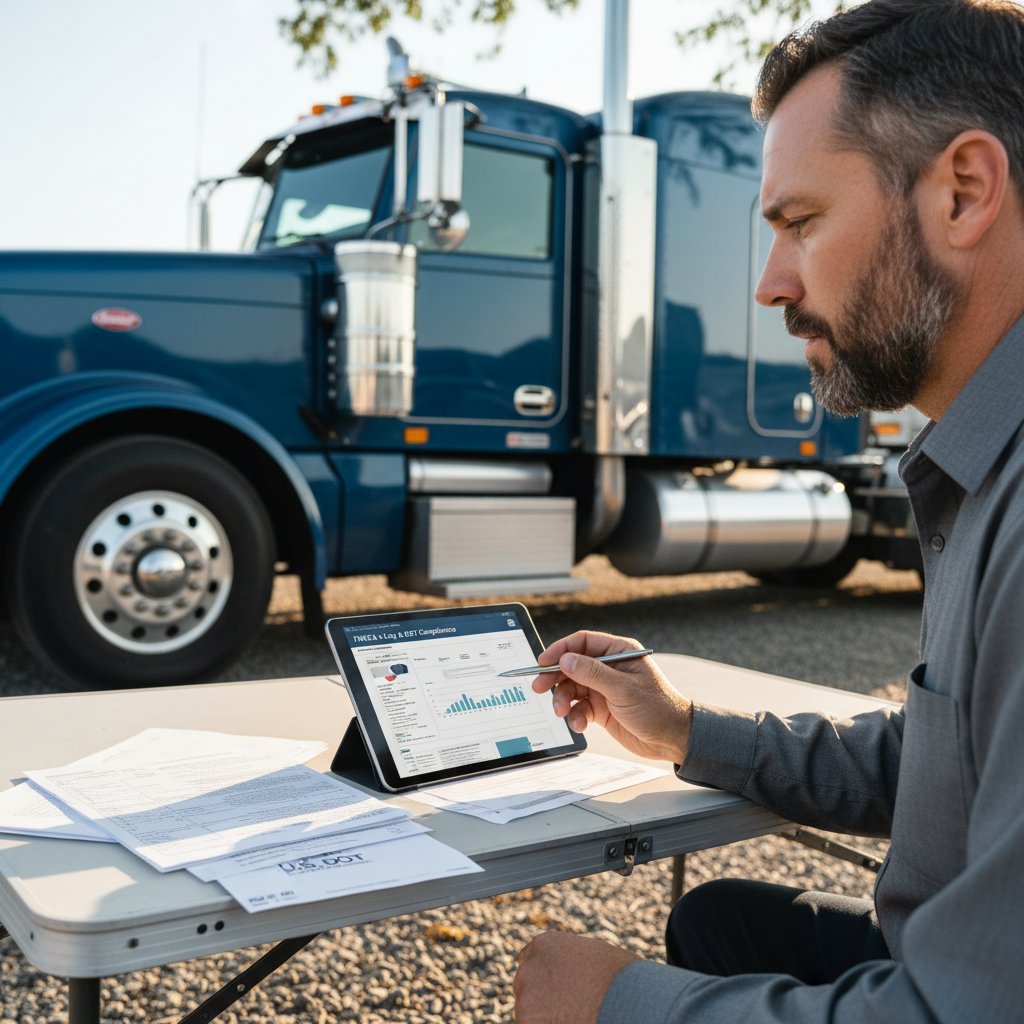
FMCSA-required liability protects the public, not your truck from weather. Under FMCSA rules and 49 CFR Part 387, for-hire interstate carriers hauling general freight in vehicles over 10,001 lbs must carry at least $750,000 in public liability, but that requirement is about financial responsibility to others, not flood or hail damage to your equipment.
An MCS-90 is a federal endorsement that helps satisfy motor carrier financial responsibility rules for public liability; it is not physical damage coverage for your truck.
So yes, you can be fully legal to run and still have no coverage for storm damage to your own tractor. If you want protection for weather-related damage, you need to review the optional coverages attached to the policy, not just the FMCSA filing or your SAFER record at SAFER.
If you’re looking at a storm-exposed operation and you’re not sure whether your current policy actually protects the truck, cargo, or both,
Which coverages may respond after floods, hail, wind, fire, or tornadoes#
After floods, hail, wind, fire, or tornadoes, the main coverage for damage to the truck itself is usually physical damage, especially the comprehensive side of it. Cargo losses are handled separately, and refrigerated freight can add another layer if temperature control fails during the event. The exact outcome still depends on policy language, exclusions, and the facts of the claim.
Physical damage: collision, comprehensive, fire and theft, and CAC#
Comprehensive coverage is the part of physical damage that usually covers non-collision losses such as hail, fire, theft, vandalism, and certain weather events, subject to the policy terms.
Collision coverage is the part of physical damage that covers damage when your truck hits another vehicle or object, or rolls over.
In trucking, physical damage often shows up as Collision plus Comprehensive, or Fire and Theft with CAC. CAC means combined additional coverage, a package that can include broader named causes of loss depending on the policy form. LogRock writes Physical Damage as Collision/Comprehensive/Fire & Theft plus CAC.
That matters in a disaster because the facts can change which part responds. Hail damage to a parked tractor may point to comprehensive. A wind event that blows you into a guardrail may involve collision. Fire damage may be covered if the fire itself is the cause of loss, even if the event started during a broader storm. Plain-language insurance definitions from NAIC are useful here because the label on the coverage matters less than the policy wording and exclusions.
Cargo coverage and when freight losses may be excluded#
Cargo coverage is insurance for the freight you haul for others, not for the tractor or trailer itself.
A lot of drivers miss this. They assume if the truck is covered after a storm, the load must be covered too. That’s not how it works. A cargo claim depends on the cargo form, the commodity, the cause of loss, and any exclusions or sublimits.
For example, water damage to boxed freight after a trailer breach may be handled differently than spoilage of refrigerated goods after a power or unit failure. Certain commodities can be restricted. Some weather-related freight losses can turn into disputes over packing, delay, temperature records, salvage, or whether the cargo was already compromised before the event.
Reefer and refrigeration breakdown in weather events#
Reefer breakdown is coverage designed for refrigerated freight losses caused by failure of the refrigeration unit or temperature-control system, subject to the policy terms.
This can matter when the weather event doesn’t just damage the trailer — it knocks out the reefer unit, interrupts power, or causes a temperature excursion that ruins the load. If you haul temperature-sensitive freight, reefer breakdown may be as important as cargo coverage because the truck can survive the event while the load doesn’t.
For owner-operators running produce, frozen goods, or pharmaceuticals, the key question isn’t only “Did the storm damage the truck?” It’s also “Did the temperature hold, and can I prove it?”
What is usually not covered#
Natural-disaster claims usually fail when the damage turns out to be mechanical breakdown, wear and tear, neglect, or long-term deterioration instead of a direct covered peril. A storm near the truck doesn’t automatically make every later problem a covered loss. Insurers look hard at cause of loss, maintenance condition, and timing.
Mechanical failure versus disaster damage#
A covered peril is a specific cause of loss the policy agrees to insure against, subject to exclusions and conditions.
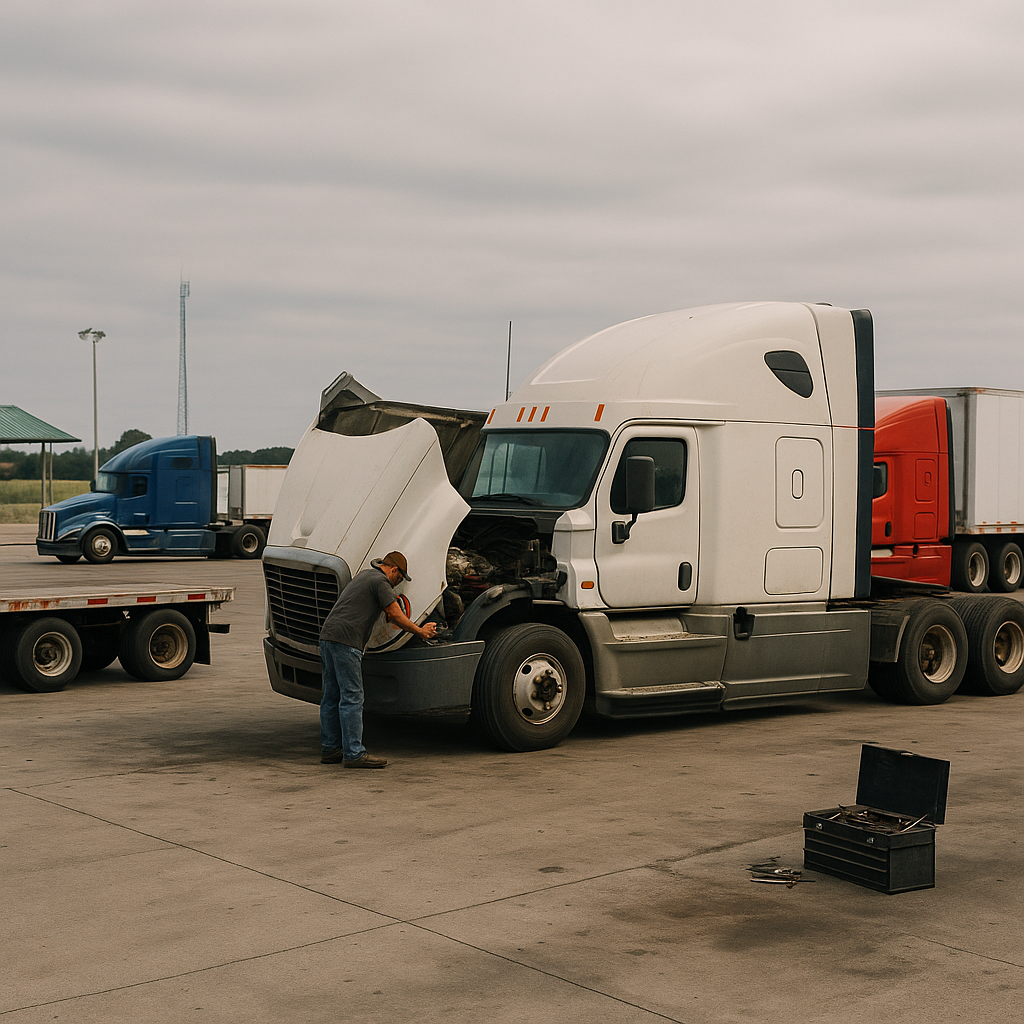
If your engine fails the day after a flood or fire, that does not automatically mean insurance pays. The question is what caused the failure. If water ingestion from a documented flood event damaged the engine, coverage may be analyzed very differently than if the engine had a pre-existing mechanical problem that happened to show up after bad weather.
This is where drivers get frustrated. They know the weather event happened, but the claim turns on whether the event directly caused the loss or just happened before an unrelated breakdown.
Wear and tear, neglect, and pre-existing problems#
Policies commonly exclude normal wear and tear, rust, corrosion, gradual deterioration, and mechanical breakdown that isn’t tied to a covered peril. Guidance from Washington state’s insurance regulator lines up with the general rule most drivers run into: comprehensive-type protection often covers sudden external damage, not maintenance issues or old damage discovered after the fact.
That means a storm can expose a weak seal, old wiring problem, or existing roof leak without converting it into a covered claim. If the damage grew because the truck sat unattended or temporary protection wasn’t used when it was safe to do so, the insurer may ask whether neglect made the loss worse.
Water intrusion, corrosion, and delayed maintenance issues#
Water claims get messy fast. If floodwater enters the engine, electronics, or cab, documentation matters. If corrosion shows up weeks later, the insurer may investigate whether it ties back to the original covered event or to delayed cleanup and maintenance.
A total loss is a claim where the cost to repair the truck meets or exceeds the insurer’s threshold for treating it as economically impractical to fix.
The sooner you report the claim and document the truck’s condition, the easier it is to separate direct storm damage from long-term deterioration.
How trucking coverage differs from personal auto or homeowners concepts#
Trucking insurance follows commercial rules, business use, and cargo-specific exposures that don’t match personal auto or homeowners policies. That’s why advice from car insurance articles often leads owner-operators the wrong way. In trucking, the policy has to match the operation, the equipment, the freight, and whether you run interstate or intrastate.
Why personal auto assumptions cause coverage mistakes#
A personal auto policy is built around private driving, not for-hire freight movement. So when someone says, “My car insurance covered hail, so my truck policy should work the same way,” they’re skipping over the commercial policy form, scheduled equipment, filings, and freight-related exclusions.
The same goes for homeowners-style disaster thinking. Truck damage, shop property, cargo, and lost income don’t all sit under one broad disaster umbrella. They’re usually split across different coverages, and some may not be insured at all.
How commercial truck policies are scoped by operation, cargo, and vehicle type#
Your trucking policy is scoped around what you do. That includes whether you’re for-hire or private, the truck’s weight, your operating radius, the type of cargo, and whether you cross state lines.
For example, FMCSA financial responsibility requirements under 49 CFR Part 387 apply differently depending on carrier type, weight, and commodity. Auto haulers and hazmat carriers face different minimum liability requirements than a for-hire interstate carrier hauling general freight. None of that automatically tells you whether hail damage to your hood or flood damage to your sleeper is covered.
State minimums versus trucking-specific insurance needs#
Your state minimum isn’t your whole trucking insurance picture. Intrastate carriers may need to follow state rules, while interstate for-hire carriers also have FMCSA requirements. But even when you meet every required liability limit, you may still have no physical damage, no cargo, and no reefer breakdown coverage.

That’s the trap. Drivers think “I’m legal” means “I’m protected.” In a natural disaster claim, those are two very different things.
Do you need physical damage coverage for a used truck?#
A used truck still faces the same hail, flood, fire, wind, and falling-object risk as a newer truck. The decision isn’t about the truck being old or new so much as whether you can afford to repair or replace it yourself after a loss. For financed trucks, the lender may decide part of that question for you.
Lender requirements versus owner-paid risk#
If the truck is financed, physical damage coverage is often required by the lender. If you own it outright, the choice becomes a risk-management decision.
Can you absorb a major repair bill after a storm? Can you replace the truck if floodwater totals it? If the answer is no, physical damage may still matter even on an older unit.
When older trucks still face weather exposure#
Older trucks don’t get a pass from hail. They still sit in yards, run through wildfire smoke, cross flood-prone routes, and take wind damage at truck stops.
The real question is the truck’s value versus your exposure. A lower-value unit may not justify the same deductible strategy as a newer one, but the weather risk is still real.
How deductibles affect the decision#
A bigger deductible lowers how much the policy pays on smaller claims because you absorb more of the loss yourself first. That can make sense if you want protection mainly from severe losses, not every dent or minor weather event.
You’re not choosing between “covered” and “uncovered” in the abstract. You’re choosing how much risk to keep and how much to transfer.
What to do after a storm or fire claim#
After a storm or fire, the best move is to protect people first, then preserve evidence and prevent further damage where it’s safe. Claims go smoother when you separate truck damage, cargo damage, and reefer issues from the start. The insurer will usually want proof of what happened, when it happened, and what the actual cause of loss was.
Immediate safety and loss prevention#
Start with safety. Move out of immediate danger if you can do so safely, call emergency services when needed, and follow any law enforcement or fire-scene instructions.
Then protect the truck and cargo from further damage. That might mean tarping an opening, relocating to a safer area, or arranging prompt towing. Don’t keep operating a flood-exposed or fire-damaged truck just to finish the run if doing so could worsen the loss or create a safety problem.
Documenting truck, cargo, and reefer damage#
Take wide and close photos of the tractor, trailer, tires, cab, roof, engine area, and any visible impact points. Add time-stamped notes on weather conditions, location, and what you observed right away.
For cargo, keep the rate confirmation, bill of lading, dispatch instructions, commodity details, and receiver communications. For reefer claims, save temperature logs, unit settings, fuel records, alarm data, and any service call notes. Repair estimates help, but don’t wait for every estimate before reporting the claim if the damage is obvious.
Working with your insurer on the cause of loss#
Insurers often ask for maintenance records because they need to separate storm damage from pre-existing issues. Keep PM records, recent repair invoices, inspection notes, and dispatch details ready.
It also helps to separate the file mentally into three buckets: truck, cargo, and liability. If the trailer wall was torn by wind, the load got wet, and debris from your unit damaged someone else’s property, that may involve different coverage parts and different adjuster questions.
Is disaster coverage worth it for your operation?#
Disaster coverage is worth a close look when weather exposure, downtime, repair costs, or cargo obligations could create a major financial hit. The right answer depends less on hype and more on where you run, what you haul, how the truck is financed, and how much loss your business could absorb. Premium matters, but coverage scope matters more when the storm actually hits.
When the risk is higher#
Risk goes up when your routes cross hail corridors, flood-prone regions, wildfire zones, hurricane exposure, or open areas with frequent wind events. It also goes up if you’re parked outside most nights, haul high-value freight, or rely on reefer equipment.
Downtime matters too. Even if the truck can be repaired, a week or two off the road can hurt cash flow fast for a one-truck operation.
How to compare quotes without overbuying#
Compare the actual coverage parts, not just the premium. Look at deductibles, excluded causes of loss, how the truck is valued at claim time, whether reefer breakdown is included, and how cargo is scoped.
The cheapest-looking option on paper can leave you self-insuring the exact loss you’re worried about. On the other hand, not every operation needs every add-on. If your routes changed, your truck aged, or your freight mix shifted, that’s a good time to review the policy and see what’s still relevant. If you want help sorting through that without guessing from forum advice,
Balancing downtime, deductible, and route exposure#
Think through three practical questions:
- If the truck is out of service after a storm, how long can your business carry the downtime?
- If a covered loss happens, how much deductible can you pay without creating a cash crunch?
- If a storm totals the truck, can you replace it without derailing the business?
Those answers usually tell you more than a generic “Is it worth it?” ever will.
Answering the most common disaster insurance questions#
Most disaster-insurance questions come down to one point: coverage depends on what was damaged and which coverage you actually bought. For trucks, that’s especially important because truck damage, cargo loss, and liability are usually separate. Engine failures are another common trap because the cause matters more than the timing.
Quick answers for cars versus trucks#
For cars, weather losses are usually associated with comprehensive coverage. For trucks, the same basic idea often applies to damage from hail, fire, flood, or falling objects, but the commercial policy form and scheduled equipment details matter more.
A basic liability-only policy generally won’t fix your own truck after a disaster. That’s true in personal auto, and it’s just as true in trucking.
What happens when the engine blows after weather#
An engine that blows after a storm isn’t automatically covered just because bad weather happened first. The insurer will look at whether the engine failed because of a covered event, such as documented water intrusion from a flood, or because of wear, neglect, corrosion, or a separate mechanical breakdown.
That’s why photos, service records, and fast reporting matter.
When disaster coverage makes practical sense#
Disaster-related truck coverage makes the most sense when one bad event would create a hit your business can’t absorb. That could mean a financed tractor, a high-value used truck you still depend on, reefer loads, storm-heavy lanes, or thin cash reserves that can’t handle downtime plus repairs.
The point isn’t to buy every option. It’s to understand which loss would actually put your operation in a bind.
FAQ#
What insurance covers natural disasters for cars?
For cars, weather-related damage is usually handled by comprehensive coverage, not basic liability. Comprehensive often applies to things like hail, flooding, fire, falling objects, or wind damage, but the claim still depends on the policy language, exclusions, and the facts of the loss. That’s the personal-auto version of the answer.
For trucks, the concept is similar but the policy is commercial, not personal. Damage to the truck itself usually points to physical damage coverage, while cargo loss and liability are separate. That’s why a trucker can’t safely rely on car-insurance advice when reviewing disaster exposure.
Will insurance cover natural disasters?
Insurance may cover natural-disaster damage, but only if the policy includes the right coverage for that type of loss. Basic liability usually covers damage you cause to others, not damage to your own truck after hail, flood, fire, or wind. For your own equipment, the answer often turns on physical damage coverage and the exact cause of loss.
In trucking, you also have to separate the truck from the freight. A storm can damage both, but truck damage and cargo loss are usually handled under different coverage parts. Always check deductibles, exclusions, and whether the event fits a covered peril.
Will insurance pay if your engine blows?
Usually not if the engine simply failed from wear, neglect, corrosion, or a mechanical problem. Insurance is more likely to respond only when the engine damage was directly caused by a covered event. For example, documented floodwater ingestion may be treated very differently from an engine that had an underlying issue before the storm.
That cause-of-loss question is where many claims turn. If the engine failed after weather moved through, the timing alone doesn’t prove coverage. Insurers often look at photos, inspection findings, maintenance records, and whether the truck was operated after exposure to water or fire damage.
Is disaster insurance worth it?
It can be worth it when one storm, fire, or flood would create a financial hit your operation can’t easily absorb. Think about your routes, where the truck is parked, whether the unit is financed, how expensive repairs would be, and what downtime would do to cash flow. For reefer operators, spoilage risk can make the decision even more important.
The better question isn’t whether disaster coverage is universally worth it. It’s whether your business can handle the loss without it. If replacing the truck, paying the deductible, or sitting idle for repairs would put the operation in trouble, reviewing physical damage, cargo, and reefer coverage makes practical sense.