
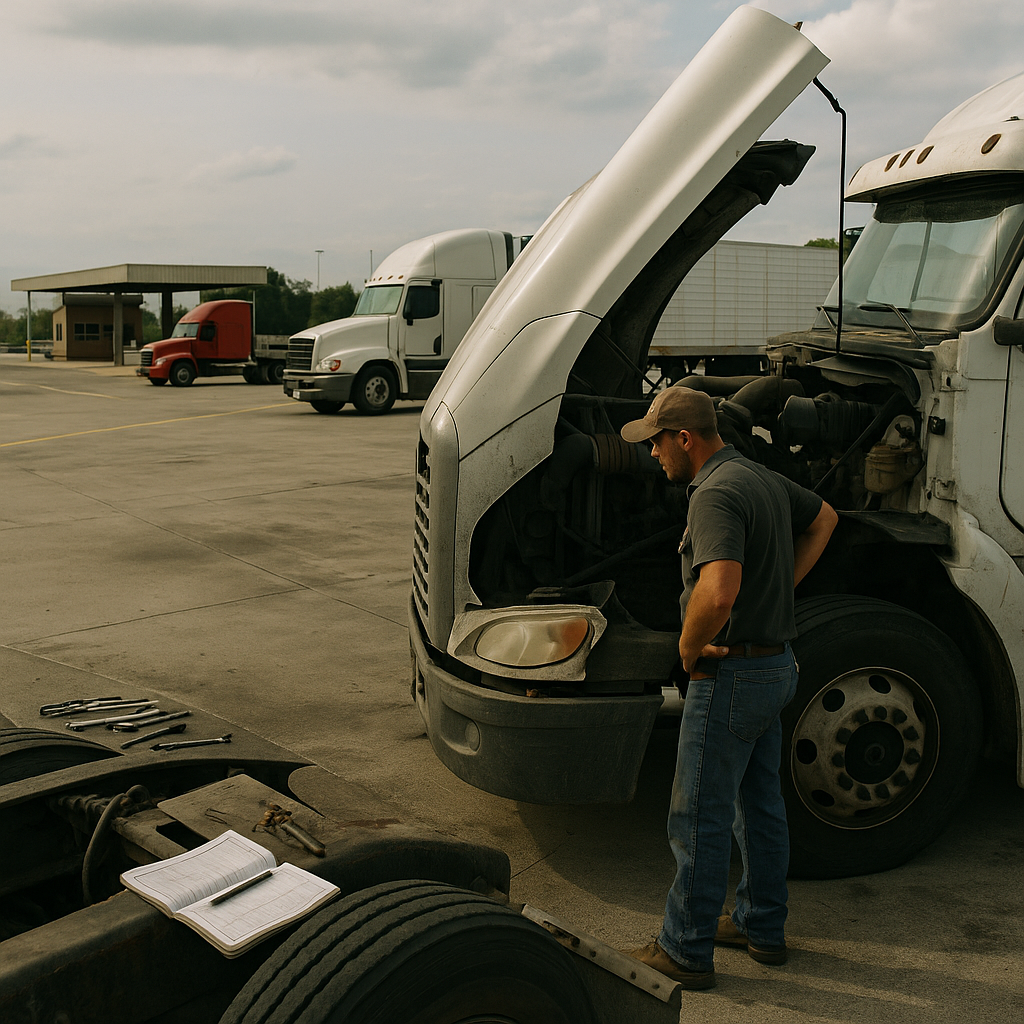

A truck physical damage insurance claim is about damage to your truck, not damage you cause to somebody else. If you’re an owner-operator or small fleet, knowing what the policy covers, what paperwork the adjuster needs, and how deductibles and lienholders affect payment can save a lot of back-and-forth.
What Truck Physical Damage Insurance Covers#
Truck physical damage insurance covers the insured truck itself when it suffers covered damage. It doesn’t pay third-party injury or third-party property damage claims. In plain language, it’s the part of the policy built to repair or pay for your truck after a covered loss.
Physical damage insurance is coverage for damage to the scheduled truck itself. If you’re trying to sort out physical damage coverage, the first thing to know is that it sits apart from liability and follows the truck listed on the policy.
Physical damage vs. liability#
Liability coverage pays for injury or property damage claims from other people after an at-fault loss. FMCSA rules focus heavily on financial responsibility for public liability, but that doesn’t mean the truck itself is covered for damage. FMCSA registration and operating authority issues are different from property coverage on the unit you own, finance, or lease; that’s where the confusion usually starts (FMCSA).
Bodily injury liability is coverage for injuries to other people when your truck operation causes a covered accident. Property damage liability is coverage for damage you cause to somebody else’s vehicle, building, cargo, or other property.
Collision and comprehensive coverage#
The two main parts are collision and comprehensive. Collision coverage pays for covered damage from a crash, like backing into a pole, hitting another vehicle, or rolling the truck. Comprehensive coverage pays for covered non-collision losses, such as theft, fire, vandalism, hail, wind, flood, or certain falling-object damage.
A lot of drivers call this “full coverage,” but that shortcut causes problems. Physical damage usually means collision plus comprehensive on the truck, while liability is still a separate part of the policy.
What is usually excluded#
Physical damage doesn’t cover every problem that happens to a truck. Normal wear and tear, mechanical breakdown, gradual deterioration, and losses outside the policy terms are commonly excluded.
Coverage also stays tied to the scheduled unit, the covered cause of loss, the stated deductible, and the policy wording. If the damage involves cargo, attached equipment, downtime, or a trailer you don’t own, different coverages may apply.
Who Typically Needs Physical Damage Coverage#
Physical damage coverage usually makes the most sense when the truck is a major business asset, financed, leased, or hard to replace out of pocket. Many owner-operators and small fleets buy it because one bad loss can turn into a repair bill or total-loss problem they can’t absorb easily.
Owner-operators#
If you own one truck and that truck is your income source, physical damage can be the line between a bad week and a business-ending hit. A deer strike, theft, fire, or collision may leave you paying for repairs yourself if you don’t carry coverage.
Small fleets#
For a small fleet, one damaged unit can affect dispatch, revenue, and customer service all at once. Even when the operation is only a few trucks, the exposure adds up fast because repair costs, storage fees, and downtime don’t wait.
Financed or leased trucks#
A lienholder is the lender with a legal financial interest in the truck until the loan is paid off. A loss payee is the person or business listed on the policy that may have a right to claim payment because of that financial interest.
If the truck is financed or leased, the lender or lessor often requires physical damage coverage and wants its interest shown on the policy. In many claims, payment may go jointly to you and the lienholder, or to the lienholder first, depending on the loss and ownership documents.
It’s also important that the policy matches the right operating entity and truck details. Basic carrier identity can be checked through FMCSA SAFER, which helps confirm the legal business tied to the operation.
What Counts as Proof of Physical Damage Insurance#
Proof of physical damage insurance usually means insurer-issued documents showing the truck, coverage dates, deductible, and the physical damage coverage in force. That is different from proof of loss, which is the information you submit after the damage happens to support the claim.
Proof of insurance documents#
A declarations page is the insurer-issued summary showing who is insured, which truck is covered, which coverages apply, the policy dates, and the deductibles. In most cases, that’s the cleanest proof of physical damage insurance.
The declarations page typically shows the unit, the VIN or vehicle identification number, policy term, named insured, and whether collision and comprehensive are on the truck. NAIC consumer guidance is helpful here because it treats the declarations page and deductible as standard policy-document basics (NAIC).
Policy details a claim examiner checks#
A claim examiner will usually verify the truck on the policy, effective dates, deductible, and whether the reported loss fits a covered type of claim. They’ll also check who owns the truck and whether a lender, lessor, or loss payee is involved.
When additional proof may be requested#
Before starting a truck physical damage insurance claim, gather your declarations page, VIN, unit number, current photos if you have them, title or lease paperwork, and a short written loss statement. If the truck is financed, have lender information ready too.
That package proves coverage exists. The next package proves what happened and how bad the damage is. Mixing those up slows claims down.
How to File a Truck Physical Damage Insurance Claim#
A truck physical damage insurance claim usually moves faster when you handle five things in order: make the scene safe, document the loss, notify the insurer quickly, send complete support documents, and stay on top of repairs and payment. Most delays come from missing details, not from the first phone call itself.
Step 1: Make the scene safe#
Start with safety. Move the truck if you can do it safely, call emergency services if anyone is hurt, and contact law enforcement when the situation calls for a police report.
If the truck can’t be driven, ask about towing and where it should go. Storage charges can build quickly, so don’t let the unit sit somewhere expensive longer than necessary.
Step 2: Document the loss#
Take wide and close photos of all damage, the roadway or lot, skid marks, debris, weather conditions, and anything else that explains what happened. Get photos before cleanup or temporary repairs if possible.
Write down the date, time, location, what the truck hit or what hit the truck, and who was there. If another party was involved, get names, contact info, insurance details, and witness information.
Step 3: Notify the insurer#
Report the loss as soon as you reasonably can. Whether you’re looking for a truck physical damage insurance claim online or by phone, the key is giving complete facts early so the adjuster isn’t forced to chase basics later.
A simple delay turns into a bigger problem when the truck is sitting in storage, the shop is waiting, and nobody has approved the next step. If you’re not sure how to scope the coverage before a loss or after one,

Step 4: Submit supporting documents#
Send the documents the adjuster asks for in one batch if you can. That often includes photos, police report if there is one, driver statement, title or lease papers, repair estimate, towing invoice, and location of the truck.
If the loss is theft, fire, vandalism, or weather-related, expect different follow-up questions. A theft claim may need keys, theft-report details, or device records; a fire loss may trigger origin-and-cause questions.
Step 5: Track repair and payment#
Don’t authorize major repairs blindly. Confirm whether the insurer wants an inspection first, whether the shop is approved, and how supplements will be handled if hidden damage shows up later.
Stay in contact with the shop, the adjuster, and any lender on the file. The faster everyone has matching paperwork, the less likely the claim is to stall.
What Physical Damage Claims May Cover by Loss Type#
Physical damage claims can look very different depending on what caused the loss. Collision, theft, fire, vandalism, hail, and flood don’t get handled the same way, and related costs like towing or storage may depend on endorsements, limits, and the exact policy wording.
Collision losses#
A collision claim usually involves impact damage from a crash with another vehicle or object, or an upset or rollover. The adjuster will focus on photos, statements, repair estimates, and whether the damage lines up with the reported event.
Theft and fire#
Theft and fire claims often need more proof because the truck may be missing, heavily damaged, or hard to inspect right away. Keys, location records, police reports, maintenance history, and ownership papers can matter more here than in a simple fender-bender.
Vandalism and weather#
Vandalism, hail, wind, flood, and falling-object losses usually run through comprehensive rather than collision. The question is less about fault and more about whether the damage was caused by a covered non-collision peril.
Towing and related costs#
Towing, storage, rental reimbursement, downtime, and accessories are where many drivers get surprised. Some of those costs may be covered, limited, or excluded depending on endorsements and policy language.
If the issue is damage to freight rather than the truck itself, that’s a different problem than physical damage and points toward truck cargo insurance. Final payment also depends on the deductible, valuation method, and whether the truck is repairable or a total loss.
How Deductibles, Lenders, and Leases Affect Claim Payment#
Claim payment isn’t based on damage alone. Your deductible, the truck’s value, and any lender or lease interest can all change where the money goes and how much actually reaches you after a covered loss.
Deductible basics#
A deductible is the amount you absorb before the policy pays on a covered claim. If you carry a higher deductible, your out-of-pocket share is larger before insurance responds.
That matters most on moderate losses. A claim can be covered and still leave you paying part of the repair bill directly to the shop.
Loan and lease payoff questions#
If a lender or lessor has a listed interest, the insurer may include that party on the payment or direct funds according to the ownership documents. That doesn’t mean the claim was denied; it means another party has legal rights in the truck.
Gap between repair cost and payout#
Actual cash value is the truck’s value at the time of loss after age, condition, and depreciation are considered. If repairs exceed that value, the claim may be handled as a total loss instead of an open-ended repair job.
That’s where financed trucks can get tricky. The payout may satisfy the lender first, and you may still have a balance or other out-of-pocket costs depending on the loan, lease terms, deductible, and truck value.
Common Claim Mistakes That Delay Payment#
Most delayed truck physical damage insurance claims come from preventable mistakes. The usual pattern is late notice, thin documentation, or repair decisions made before the adjuster has enough to approve the file.
Waiting too long to report#
Report the loss quickly. Waiting makes facts harder to verify and can run up towing or storage bills.
Missing documentation#
Missing photos, weak damage notes, incomplete estimates, and no ownership papers all create back-and-forth. Give the adjuster the truck details, the story of the loss, and the invoices in one clean package.
Repairing before approval#
Emergency steps to protect the truck may be necessary, but major repairs should usually wait for claim direction. Unauthorized work can create disputes about what damage came from the loss and what didn’t.
Confusing coverage types#
A common frustration is reporting a cargo, liability, or mechanical issue as if it were physical damage. Before authorizing work, confirm the deductible, covered cause of loss, and any endorsements that change what the policy pays.
Physical Damage Insurance vs. Liability Coverage#
Physical damage and liability coverage solve different problems. Liability pays for injury or property damage claims from other people, while physical damage pays for covered damage to your own truck. They are not interchangeable, and one does not automatically include the other.
Under 49 CFR Part 387, federal financial responsibility rules address public liability, not repair coverage for your truck. If you’re sorting out related coverages, non-trucking liability is different again, and general liability for truckers handles separate non-auto business exposures.
FAQ#
What is physical damage insurance for trucks?
Physical damage insurance for trucks is coverage for the insured truck itself when it suffers covered damage. It usually includes collision for crash-related damage and comprehensive for non-collision losses like theft, fire, vandalism, hail, or some weather damage. It does not pay for injuries to other people or damage you cause to someone else’s property. That’s liability coverage. For owner-operators and small fleets, physical damage is mainly about protecting the truck as a business asset and reducing how much repair or replacement cost has to come out of pocket after a covered loss.
What is $100000 /$ 300000 bodily injury liability?
Those numbers describe liability limits for injuries to other people, not physical damage coverage for your truck. In plain language, the first number is typically the maximum available for one injured person in a covered accident, and the second is the maximum available for all injured people combined in that same accident. Those limits sit on the liability side of the policy. They don’t tell you whether your truck has collision or comprehensive, and they don’t describe what the insurer would pay to repair your truck after a covered crash, theft, or fire.
What is proof of physical damage insurance?
Proof of physical damage insurance is usually an insurer-issued document showing the truck is covered for physical damage during a specific policy period. Most often, that means the declarations page listing the named insured, truck details, VIN, effective dates, collision and comprehensive coverage, and deductibles. Sometimes another insurer-issued evidence document can help, but the declarations page is usually the clearest record. Keep in mind that proof of coverage is not the same as proof of loss. After damage happens, the insurer may also ask for photos, repair estimates, title or lease papers, and a written statement about what happened.
What are the two types of physical damage insurance?
The two main types of physical damage insurance are collision and comprehensive. Collision covers damage from a crash, such as hitting another vehicle, backing into an object, or rolling the truck. Comprehensive covers non-collision losses, including theft, fire, vandalism, hail, wind, flood, and some falling-object events, depending on the policy wording. Most coverage questions come down to matching the cause of loss to the correct part of the policy. That’s why a deer strike, for example, may be handled differently from a sideswipe or a backing accident.
Is physical damage insurance the same as full coverage?
Not exactly. In trucking, “full coverage” is casual shorthand, not a precise policy term. Drivers often use it to mean the truck has liability plus collision and comprehensive, but policies can still have deductibles, exclusions, valuation limits, and endorsement gaps. A truck may have physical damage but no coverage for cargo, downtime, certain equipment, or a non-owned trailer. That’s why it’s better to look at the declarations page than rely on the phrase “full coverage.” For claim purposes, what matters is which specific coverage applies, what caused the loss, and what deductible and policy terms control payment.





