
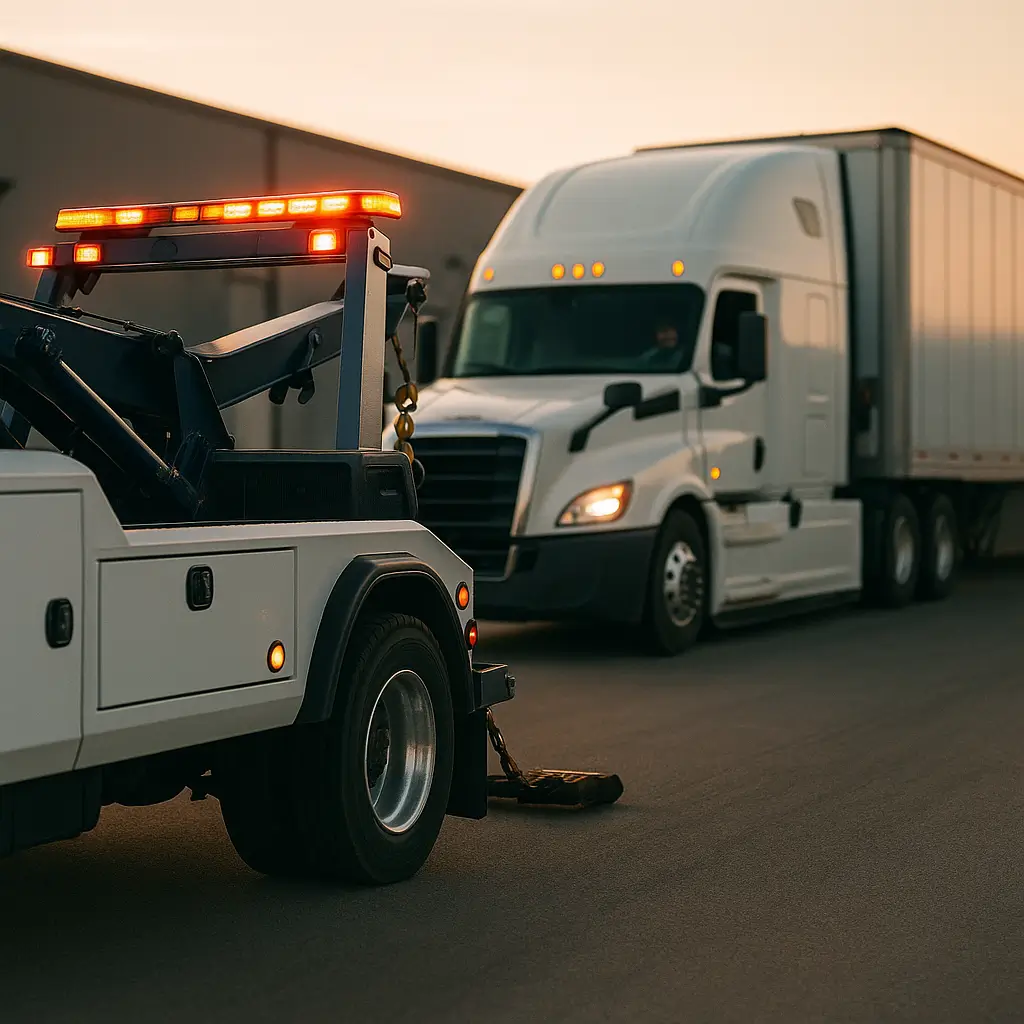

Learn 2026 tow truck insurance costs by truck type, key coverages like on-hook and garagekeepers, state requirements, and proven ways to lower premiums.
Tow truck insurance can make or break your cash flow because towing is high-frequency, high-exposure work—and one on-hook claim can get expensive fast. For many small towing operators in 2026, tow truck insurance commonly runs $4,000 to $15,000+ per truck per year, with light-duty often around $350–$750/month and heavy-duty commonly $800–$2,500/month.
Pricing swings based on territory (ZIP/metro), losses, driver MVRs, radius, truck class/value, and whether you do impounds, repos, or storage. This guide breaks down what you actually need (and what you can skip), what drives tow truck insurance cost in 2026, and how to lower premiums without gambling your business.
Key Takeaways: Essential Tow Truck Insurance
- Expect towing to price higher than standard commercial auto because roadside exposure and vehicles-in-your-care (on-hook/garagekeepers) drive claims.
- The cheapest policy is rarely the best value if it’s missing on-hook, has the wrong class code, or can’t satisfy rotation/contract requirements.
- Premiums are driven by controllables (drivers, claims frequency, safety process, deductibles) and non-controllables (state, litigation environment, theft, repair costs).
- Your fastest savings usually come from reducing claim frequency, tightening driver standards, and quoting early with clean, consistent underwriting info.
Table of Contents
Reading time: 10 minutes
- What Is Tow Truck Insurance (and why it’s different)
- 2026 Tow Truck Insurance Cost Benchmarks
- Average Premiums by Truck Type and Operation
- Tow Truck Insurance Requirements by State (TX, CA, FL, PA examples)
- Tow Truck Insurance Coverage Types (what you actually need)
- What Factors Affect Tow Truck Insurance Rates the Most?
- Real-World Cost Examples (1 truck to fleet)
- How to Reduce Tow Truck Insurance Premiums (2026 checklist)
- Frequently Asked Questions
- Why Logrock (and what a good quote process looks like)
- Conclusion & Next Steps

What Is Tow Truck Insurance (and Why It’s Different From Standard Commercial Auto)?
Tow truck insurance is commercial auto insurance designed for towing exposures and typically includes towing-specific coverages like on-hook and (when you store vehicles) garagekeepers. If you’ve bought commercial auto before, the big difference is simple: you’re not just driving a truck—you’re loading, securing, transporting, and sometimes storing somebody else’s vehicle under stress, in traffic, and often on the shoulder.
If you underbuy coverage to “save money,” you don’t save money—you just move the blow-up to the day you have a loss, lose a rotation spot, or can’t meet a contract requirement.
If you’re starting or growing a towing business, this overview covers what you need to know before buying coverage:
1) Towing-specific risks insurers price in
What it is (plain English): the day-to-day reality that makes towing riskier than many other commercial fleets.
- On-hook exposure: customer vehicles can get damaged while being loaded, strapped, towed, or offloaded.
- Roadside hazards: shoulder work, low visibility, distracted drivers, and tight time pressure.
- Tight maneuvering: parking lots, private property, garages, and accident scenes.
- Higher confrontation risk: especially with repossessions and impounds.
2) Who needs it
Who it’s for: tow truck insurance isn’t just for “big towing companies”—it’s for anyone operating a tow unit on public roads and handling customer vehicles.
- Solo owner-operators running a wheel-lift, rollback/flatbed, or medium-duty unit
- Roadside assistance operators
- Impound / rotation / municipal contractors
- Heavy-duty recovery and rotator operators
- Tow yards storing vehicles overnight
If you’re just getting started, our tow truck insurance 101 guide covers the three critical coverages every towing operator needs.
Quick quote prep (saves time and prevents “surprise” audits): list truck type, radius, services (roadside/impound/repo/storage), driver MVRs, and the last 3–5 years of losses.
2026 Tow Truck Insurance Cost Benchmarks (National Averages + Realistic Ranges)
Tow truck insurance in 2026 commonly ranges from $4,000 to $15,000+ per truck per year, with light-duty often $350–$750/month and heavy-duty often $800–$2,500/month. These are planning ranges—not guarantees—because your final premium depends on limits, territory, driver records, loss history, and whether you carry the towing-specific pieces (especially on-hook and garagekeepers).
For a more detailed monthly breakdown, see our tow truck insurance cost per month guide.
2026 benchmark ranges (per truck)
Use this table for budgeting, then tighten the estimate with your exact radius, service mix, and loss runs.
| Tow Operation / Truck Class | Lower Range | Typical Range | Higher Range |
|---|---|---|---|
| Light-duty (wheel-lift / flatbed) | $350/mo | $450–$750/mo | $900+/mo |
| Medium-duty | $500/mo | $650–$1,100/mo | $1,400+/mo |
| Heavy-duty / rotator / recovery | $800/mo | $1,200–$2,500/mo | $3,000+/mo |
Why premiums stay under pressure in 2026
- Parts + labor inflation: both tow trucks and customer vehicles cost more to repair.
- Higher claim severity: medical costs and litigation push payouts up.
- Higher vehicle values: even “regular” cars can be pricey to replace.
- More tech in vehicles: ADAS sensors can turn minor damage into a major bill.
What “full coverage” usually means in towing: auto liability + physical damage + on-hook/towing, and often separate policies for general liability, garagekeepers, and workers’ comp (depending on your setup).
Average Premiums by Tow Truck Type and Operation
Average tow truck insurance pricing is primarily determined by truck class (light/medium/heavy), service mix (roadside vs impound/repo/storage), radius, and driver quality, not just the number of trucks you own. This is also where many owners get burned: they describe the business one way, underwriting classifies it another way, and then the audit hits.
1) Light-duty vs medium-duty vs heavy-duty
What it is: your truck class and equipment value drive both liability severity and physical damage cost.
- Light-duty: usually the most “affordable” (relative to towing), especially if you avoid repos/impound.
- Medium-duty: climbs as weight, exposure, and equipment value climb.
- Heavy-duty/rotator: can be the highest due to big-dollar property damage and higher limits that contracts often demand.
- Running heavy-duty recovery or rotator equipment comes with its own set of requirements. See our full breakdown of recovery truck insurance costs and coverage.
2) Roadside assistance vs impound/tow yard vs repossession
What it is: your service mix is the underwriting story.
- Roadside assistance: frequent stops, shoulder risk, quick hookups.
- Impound/rotation + storage: yard risk, custody control, more endorsements and COI requirements.
- Repossession: higher confrontation risk and claim disputes.
- Repo operators have unique exposure that most standard towing policies don’t fully address. See our guide to tow truck insurance for small repo businesses.
3) Single truck vs fleet pricing
What it is: fleets can be rated per unit, but also judged on loss ratio and safety management.
A small fleet with bad losses can price worse than a one-truck operator with clean history. A fleet with strong driver standards, training, and documentation can earn better structure over time.
Underwriter-ready info (send this to get accurate quotes)
- VIN + stated value: or loan/lease docs if financed
- Garaging ZIP + operating radius: be honest to avoid audit surprises
- Driver list + MVR summaries: include hire dates and experience
- Service mix: roadside vs impound vs repo vs heavy-duty recovery
- Prior losses: don’t hide them—carriers will pull loss runs
Tow Truck Insurance Requirements by State (TX, CA, FL, PA examples)
Tow truck insurance “requirements” usually come from two places: state minimum auto liability laws and contract/rotation list requirements, which commonly demand higher limits like $1,000,000 CSL plus towing-specific coverage. In plain terms, buying the minimum might keep you legal, but it can still leave you un-hireable for rotation work, municipal contracts, or certain motor clubs.
For federal registration context, FMCSA’s Getting Started with Registration page explains how to determine whether a USDOT Number and operating authority are required.
1) State minimum liability vs what contracts actually require
What it is: states set minimum auto liability; customers and partners set business requirements.
What contracts often ask for:
- Higher auto liability limits: often $1M CSL (contract-dependent)
- COIs with specific wording: additional insured, primary/noncontributory, etc. (when required)
- On-hook and/or garagekeepers limits: matched to vehicle values you handle and store
2) Example state snapshots (cost drivers, not statutory promises)
These are cost-behavior examples—always verify your current state and local requirements with your agent and contract documents.
- Texas (TX): metro density and claims activity can push costs up; rural-only operations often price differently than Houston/Dallas work.
- California (CA): often higher due to repair costs, dense exposure, and claim severity trends.
- Florida (FL): market volatility and underwriting scrutiny can be heavier in high-claim or high-theft areas.
- Pennsylvania (PA): rates can vary by metro vs non-metro; winter exposure can matter.
- Georgia operators can find state-specific cost and coverage details in our tow truck insurance Georgia guide.
3) Interstate operations: when federal rules can matter
What it is: if you cross state lines regularly or operate under DOT authority for certain setups, you may face additional filing or documentation expectations depending on how your business is structured.
If your operation crosses state lines or requires federal motor carrier authority, review the FMCSA operating authority requirements. FMCSA also publishes specific guidance on when tow trucks are subject to federal financial responsibility coverage. Don’t guess—confirm your authority, filings, and certificate requirements with your agent based on your exact operation.
What Types of Coverage Do Tow Trucks Need? (Core Policies Explained)
Most towing businesses need a core stack of coverage: auto liability plus towing-specific protection like on-hook, and many also need physical damage, general liability, and garagekeepers if vehicles are stored on-site. The “right” package depends on what you tow, where you tow, whether you store vehicles, and what your contracts require.
1) Auto liability (the foundation)
What it is: pays for injuries and property damage you cause while operating the tow truck.
Why it matters: it’s the first thing states and contracts check, and serious injury claims can exceed minimum limits fast.
2) Physical damage (comprehensive + collision) for the tow truck
What it is: covers your tow truck if it’s stolen, vandalized, or wrecked.
Pro tip: choose a deductible you can actually pay after a loss; a higher deductible can reduce premium, but only if your cash reserves can support it.
3) On-hook / towing coverage (your signature towing exposure)
What it is: covers damage to a customer’s vehicle while it’s being towed or transported (on your hook/bed).
Common pitfalls: limits too low for modern vehicle values, exclusions for certain vehicle types/conditions, and disputes over pre-existing damage.
Claims-prevention move that also helps renewals: require drivers to take timestamped photos before hookup and after drop, plus quick notes on existing damage.
Operators who tow semis or heavy commercial vehicles should also review semi truck towing insurance requirements, since on-hook limits for those loads can be substantially higher.
4) Garagekeepers / tow yard coverage (if you store vehicles)
What it is: covers customer vehicles while on your premises (fire, theft, vandalism, weather—depending on the form).
If you store vehicles overnight, you’re exposed even when your trucks are parked.
5) General liability (non-auto business risk)
What it is: covers claims not caused by operating the tow truck, like slip-and-fall and premises liability.
6) Workers’ comp (if you have employees)
What it is: covers employee injuries on the job, and requirements vary by state and employee classification. The U.S. Department of Labor directs private employers to their state workers’ compensation officials for current state-specific requirements.
What Factors Affect Tow Truck Insurance Rates the Most?
Tow truck insurance rates are driven most by claims history, driver MVRs, territory/ZIP and radius, truck class/value, and service mix, with limits and deductibles shaping the final premium. You can’t control the entire market, but you can control your operation—and underwriters reward documented risk management over time.
1) Claims history (frequency hurts faster than people expect)
What it is: prior claims, even small ones, tell a story about how often things go wrong.
Multiple small claims can damage pricing and eligibility as much as one big loss, especially for high-volume roadside operators.
2) Driver MVRs + experience
What it is: tickets, accidents, DUI history, and years of commercial driving experience.
Operational tip: run MVRs on a schedule—not just at hire—because driver risk changes.
3) Territory (ZIP code) + radius
What it is: where you garage and where you operate.
Dense metro exposure, theft frequency, and local claim/litigation trends are major pricing levers. Don’t understate radius to “get a cheaper quote”—that’s how audits and coverage disputes happen.
4) Service mix and classifications
What it is: roadside-only vs impound vs repo vs heavy-duty recovery.
Misclassification is one of the most common reasons premiums jump after binding or at audit.
5) Equipment value and customization
What it is: rotators, winches, specialty rigs, and higher stated values.
Underwriter-ready checklist (use this at renewal)
- List every service you do (don’t “forget” repos/impounds)
- Updated driver roster + MVR review notes
- Loss runs + what you changed to prevent repeats
- Truck values and equipment list
- Yard address + security (fencing, lighting, cameras) + typical storage count
Real-World Tow Truck Insurance Cost Examples (Single Truck to Fleet)
Real-world tow truck insurance pricing examples typically fall into predictable bands based on truck class, driver quality, losses, and whether you do impounds/repo/storage, even though every state and carrier rates differently. The scenarios below are illustrative to show what changes the price.
For additional cost benchmarks across operation types, see our full towing insurance cost breakdown.
Example 1: 1-truck light-duty rollback, local radius, clean history
- Operation: roadside + private tows, no storage
- Drivers: owner only, clean MVR
- Likely range: $450–$750/month depending on state/metro, limits, deductibles, and on-hook limit
Example 2: 3 trucks mixed light/medium-duty, some impounds + short-term storage
- Operation: rotation work + short-term yard storage
- Drivers: 4–6 drivers, mixed experience
- Likely range: $2,000–$6,000/month total depending on garagekeepers limits, loss history, and territory
Example 3: Heavy-duty + rotator, recovery focus, prior loss
- Operation: heavy recovery, occasional interstate response
- Drivers: multiple drivers, one prior at-fault loss
- Likely range: $1,500–$3,000+/month per truck (heavy-duty is where pricing can get steep fast)
How to Reduce Tow Truck Insurance Premiums (2026 Checklist)
Reducing tow truck insurance premiums in 2026 usually comes from lowering claim frequency, tightening driver controls, documenting every tow, and quoting early (30–60 days before renewal) with accurate classifications. “Cheap tow truck insurance” is rarely magic shopping; it’s running a tighter operation that underwriters can trust.
Before diving into the cost-reduction checklist, here’s a quick overview of the most common mistakes towing operators make:
1) Tighten driver qualification (and enforce it)
- Set a hard line on major violations and patterns of risky driving
- Do ride-alongs and yard training before solo work
- Write an SOP for hookup, straps, spotter use, and shoulder safety
2) Reduce on-hook disputes with documentation
- Take timestamped photos before hookup and after drop
- Document pre-existing damage (scrapes, dents, suspension issues)
- Get customer signatures when it makes sense and is safe to do so
3) Use safety tech that underwriters respect
- Dash cams to defend liability claims
- GPS/telematics to verify speed, routes, stops, and coaching opportunities
- Driver coaching tied to real events (hard braking, rapid acceleration, speeding)
4) Choose deductibles like a business owner
Don’t buy a deductible you can’t afford, and don’t overpay for a tiny deductible if you almost never claim. Your deductible strategy should match your cash reserves and how often you actually file losses.
5) Quote early and stay continuously insured
Start marketing the account 30–60 days before renewal and avoid lapses; continuous coverage usually improves carrier options and leverage.
6) Audit your classifications and radius before the insurer does
Make sure the policy matches what you really do (repo/impound/storage/heavy recovery) and where you really go, so audits don’t create surprise premiums or coverage arguments.
Frequently Asked Questions
Tow truck insurance in 2026 commonly costs $4,000–$15,000+ per truck per year, with many light-duty operators landing around $350–$750 per month and heavy-duty recovery commonly $800–$2,500 per month. The biggest pricing drivers are territory (garaging ZIP and metro exposure), claims history, driver MVRs, operating radius, and service mix (roadside vs impound/repo/storage). Limits and towing-specific coverages matter too—missing or under-limiting on-hook and garagekeepers can make a “cheap” policy useless when a customer vehicle gets damaged.
Most tow truck operations need auto liability, physical damage (comprehensive and collision), and on-hook/towing coverage, and many also need general liability and garagekeepers if vehicles are stored at a yard. Auto liability is the foundational requirement most states and contracts check first, while on-hook is the towing-specific coverage that protects customer vehicles while they’re being transported. If you store vehicles overnight, garagekeepers becomes critical because losses can happen when trucks aren’t moving (theft, fire, vandalism, weather—depending on form). If you have employees, workers’ comp requirements vary by state and job class.
You can reduce tow truck insurance premiums by lowering claim frequency and tightening underwriting documentation, especially by improving driver controls and quoting early. The most reliable steps are: set and enforce driver standards (MVR checks at hire and on a schedule), use written hookup/strap/spotter SOPs, require timestamped before-and-after photos to reduce on-hook disputes, and add dash cams or telematics to defend liability claims. Also, shop renewals 30–60 days in advance and avoid lapses, because continuous coverage usually improves carrier options. Finally, confirm your classifications, radius, and services are accurate so audits don’t trigger surprise premiums.
The biggest factors in tow truck insurance rates are claims history, driver MVRs and experience, territory/ZIP and operating radius, truck class and stated value, and service mix (impound, repo, and storage typically increase exposure). Underwriters also price the structure of your policy—higher limits, lower deductibles, and broader forms cost more, while stronger controls can improve eligibility and renewals. In towing, frequency matters: a string of small backing or hookup claims can hurt pricing fast. Accurate classification is critical too, because misclassifying repo/impound/storage is a common reason carriers re-rate or non-renew.
Yes — even if your operation is roadside-only (jump starts, tire changes, lockouts), you’re still operating a commercial vehicle on public roads under time pressure and in high-risk locations like highway shoulders. Standard commercial auto insurance may not cover towing-specific operations or the liability exposure of working around disabled vehicles. Most carriers will classify your work as towing regardless and require a towing policy. The real question isn’t whether you need it — it’s what limits and endorsements match your specific service mix.
On-hook coverage protects a customer’s vehicle while it’s actively being transported on your truck — from hookup to drop-off. Garagekeepers coverage protects customer vehicles while they’re stored or parked at your facility (yard, lot, or impound area) even when your trucks aren’t moving. If you tow but don’t store vehicles, you likely need on-hook but not garagekeepers. If you run a tow yard or hold impounded vehicles overnight, both are critical because a fire, theft, or storm event at your lot can expose you to major liability for vehicles in your custody.
A lapse — even a short one — can have real consequences: your operating authority may be suspended if you’re required to maintain continuous insurance filings, your next carrier may treat you as a higher risk at renewal, and you may lose rotation-list eligibility or contract standing that requires active coverage. Some carriers also require a new application rather than a reinstatement if coverage lapses beyond a certain window. The safest approach is to set up reliable payment reminders and start shopping your renewal 30–60 days early so you don’t create a gap between policies.
Yes, but it becomes harder and more expensive. Most standard carriers have strict eligibility rules around major violations and multiple at-fault accidents and may decline or surcharge heavily. If your record has issues, you may need a specialty or non-standard market that prices for that risk, usually with higher premiums or more restrictive policy terms. The cleaner your driver roster is — not just you, but any employees — the better your eligibility and pricing.
A practical starting point is to match your on-hook limit to the value of the most expensive vehicle you’d realistically haul in a single tow. If you handle luxury cars, high-end SUVs, or commercial vehicles, a low on-hook limit may leave you underinsured. Heavy-duty operators hauling semis or specialty equipment often need substantially higher limits. Also check your contracts, because motor clubs, rotation lists, and municipal agreements may specify minimum on-hook limits.
Why Logrock (and What a Good Tow Quote Process Looks Like)
A reliable tow truck insurance quote process is built on consistent underwriting data and apples-to-apples comparisons, not “quick numbers” that change after binding or audit. Most towing operators want three things: a quote that matches how they actually work, coverage that holds up when a call goes bad, and COIs that satisfy contracts without endless back-and-forth.
For a quick strategic recap, watch Towing Business Survival: The REAL Playbook for Success.
A disciplined quote process (that reduces surprises)
- Describe operations accurately: services, radius, yard/storage details
- Lock the coverage structure: liability, physical damage, on-hook, garagekeepers, GL
- Quote apples-to-apples: same limits and deductibles across carriers
- Plan renewals early: so you’re not shopping under pressure
Conclusion: Get the Right Tow Truck Insurance for Your Operation
Tow truck insurance is expensive for a reason: towing claims are frequent, and severity can be brutal. The good news is you can still improve pricing and eligibility by running tighter driver controls, documenting every tow, and carrying the towing-specific coverages your operation actually needs.
Key Takeaways:
- Cost drivers: truck class, territory/state, drivers, claims, radius, and service mix move pricing the most.
- Make-or-break coverages: on-hook is critical for towing, and garagekeepers is critical if you store vehicles.
- Fastest savings: reduce claim frequency, tighten driver standards, and quote 30–60 days early with accurate classifications.
If you want, pull your current dec page, driver list, and a plain-English service description (roadside/impound/repo/storage). Quote it correctly, then compare options with the same limits and deductibles.
If you’re trying to get an accurate quote on tow truck insurance — or just want to make sure your current policy actually holds up for your operation — LogRock can help. Tell us about your trucks, drivers, and service mix and we’ll walk you through your options, identify potential gaps, and get you a quote that matches how you actually work.
Talk to LogRock and Get a Quote




