
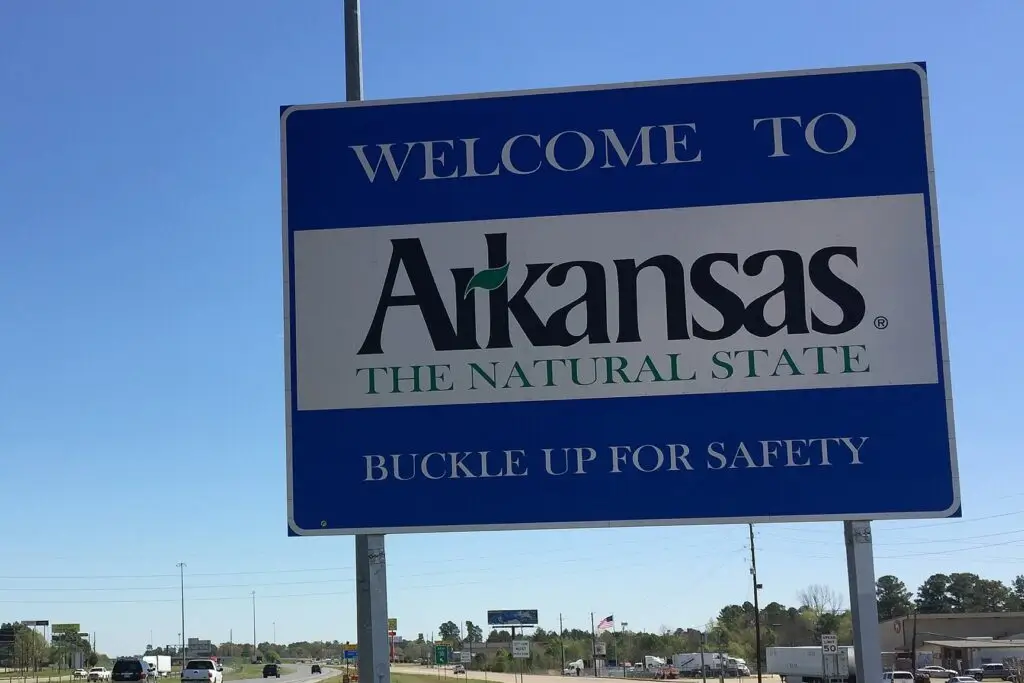
Commercial truck insurance in Arkansas typically costs $9,000–$16,000 per year, depending on truck type, liability limits, ARDOT filings, cargo, radius, and driver history.

From the distribution hubs in Little Rock to the winding logging routes of the Ozarks, Arkansas is a state where trucking is the backbone of the economy. Whether you are hauling poultry, retail goods, timber, construction material, or general freight, the “Natural State” offers steady freight opportunities for owner-operators and small fleets.
However, operating in Arkansas also means understanding state-level requirements. Arkansas has its own Intrastate Authority system for for-hire carriers operating wholly within the state, and your insurer may need to file proof of liability coverage before that authority stays active. Interstate carriers also need to understand federal financial responsibility rules under 49 CFR Part 387.
In Arkansas, the average commercial truck insurance premium typically lands between $9,000 and $16,000 per year. This guide breaks down realistic Arkansas cost ranges, liability limits, state and federal filing requirements, and the coverage decisions that keep your authority active and your trucks rolling.
Table of Contents
Reading time: 8 minutes
Key Takeaways: Arkansas Truck Insurance Costs
- The Price Tag: Expect to pay around $14,200 annually for a semi truck with a clean record and standard $1M liability.
- Monthly Breakdown: A typical owner-operator pays roughly $1,100/month for liability and $250/month for Physical Damage.
- The ARDOT Factor: Intrastate for-hire carriers must obtain Intrastate Authority and file Form E to prove liability coverage.
- Logging Risks: Timber haulers face specific challenges; while liability is standard, Physical Damage rates can be higher due to off-road risks, severe weather, and rollover exposure in the Ozarks.
Real Numbers: Estimated Costs by Truck Type
The following estimates represent the average annual cost for Auto Liability with a $1M limit for a driver with a clean record in Arkansas. Arkansas is generally more affordable than higher-cost neighboring states, but Physical Damage rates can move higher when severe weather, off-road work, or logging exposure is part of the operation.
| Vehicle Type | Limit $300,000* | Limit $500,000 | Limit $750,000 | Limit $1,000,000 (Standard) |
|---|---|---|---|---|
| Hotshot | $6,200 | $7,500 | $8,800 | $10,200 |
| Box Truck | $5,000 | $6,200 | $7,200 | $8,500 |
| Dump Truck | $6,800 | $8,200 | $9,500 | $11,000 |
| Semi Truck | $9,000 | $10,800 | $12,500 | $14,200 |
| Tow Truck | $6,500 | $7,800 | $9,000 | $10,500 |
Last updated: June 2026.
Want a quick overview of what Arkansas owner-operators are actually paying in 2026? Watch this first:
LogRock Reality Check: While Arkansas rules may allow lower liability limits for certain intrastate operations, almost all brokers and contracts will mandate $1,000,000 liability. Don’t buy the lowest limit only to find yourself ineligible for better loads.
If your operation includes dually-and-trailer work, review hotshot insurance requirements before you compare quotes. If your business revolves around cargo exposure, review Cargo Insurance costs and common $100K requirements as well.
Liability Limits: Intrastate vs. Interstate
Arkansas rules change depending on whether you cross state lines. Intrastate carriers follow Arkansas requirements, while interstate carriers must also follow federal financial responsibility rules. Federal minimums under 49 CFR Part 387 set minimum liability levels for regulated interstate carriers.
Table 1: Intrastate Requirements (ARDOT Only)
For trucks that never leave Arkansas, such as hauling logs from Pine Bluff to Texarkana, AR.
| Vehicle Weight / Type | Minimum Liability Limit | Filing Required? |
|---|---|---|
| Freight < 26,000 lbs | $300,000 CSL | Yes (Form E) |
| Freight > 26,001 lbs | $750,000 CSL | Yes (Form E) |
| Hazmat (Gas/Oil) | $1,000,000–$5,000,000 | Yes (Form E) |
| Passenger (1–15 seats) | $1,500,000 CSL | Yes (Form E) |
| Household Goods (Movers) | $300,000 + Cargo Insurance | Yes (Form E + Form H) |
Note: “CSL” means Combined Single Limit. Intrastate for-hire carriers must apply for authority through ARDOT Motor Carrier Services.
Table 2: Interstate Requirements (FMCSA / Federal)
For trucks that cross state lines, such as Little Rock to Memphis, TN.
| Vehicle Weight / Type | Minimum Liability Limit | Filing Required? |
|---|---|---|
| Freight < 10,000 lbs | $300,000 CSL | No (unless Hazmat) |
| Freight > 10,001 lbs | $750,000 CSL | Yes (BMC-91X) |
| Hazmat (Gas/Oil/Explosives) | $1,000,000–$5,000,000 | Yes (MCS-90) |
| Passenger (16+ seats) | $5,000,000 CSL | Yes (BMC-91X) |
Before diving into filing details, make sure you understand exactly what Auto Liability covers:
Arkansas Requirements & Critical Filings
To operate legally, your insurance agent must submit specific electronic forms to ARDOT or the FMCSA, depending on whether you operate intrastate, interstate, or both.
- Form E: This is the most critical document for Arkansas intrastate carriers. It proves to ARDOT that you have the minimum liability insurance required. Without this, your Intrastate Authority can be revoked.
- Form H: Mandatory for Household Goods Movers to prove they have cargo insurance to cover customer property.
- Intrastate Authority: Any for-hire carrier operating solely in Arkansas must register. Private carriers hauling their own goods are generally exempt from this authority requirement but still need to follow safety and insurance rules.
- MCS-90: The federal endorsement proving financial responsibility for regulated interstate carriers, including environmental restoration obligations in certain claims.
If you operate interstate or need federal registration, FMCSA provides current USDOT guidance through its Do I Need a USDOT Number? resource, and carrier status can be checked in the FMCSA SAFER system.
Frequently Asked Questions
Yes, many Arkansas intrastate commercial motor vehicle operators still need a USDOT number. FMCSA’s USDOT guidance lists interstate operations and certain intrastate operations as requiring registration, and Arkansas points carriers to FMCSA’s USDOT process for determining whether a number is required. If you haul for others inside Arkansas, you may also need Arkansas Intrastate Authority.
If your insurer cancels your Form E filing — even for a missed payment — ARDOT can receive an electronic cancellation notice and your Intrastate Authority may be suspended or revoked until proof of active coverage is restored. Keep your agent’s contact information on hand, avoid payment lapses, and confirm reinstatement before running intrastate for-hire loads again.
Physical Damage is not required by Arkansas law or ARDOT. It is the coverage that helps repair or replace your own truck after an accident, theft, fire, vandalism, or severe weather event. If you have a loan or lease, your lender will usually require it. In Arkansas, severe weather and off-road exposures can make this coverage especially important for semi trucks, dump trucks, and timber operations.
By law, cargo coverage is often tied most directly to specific operations such as household goods moving, but for general freight, almost every shipper or broker will contractually require at least $100,000 in Cargo Insurance before they let you load their goods. Always compare the limit, deductible, theft conditions, and commodity exclusions before binding.
Dump trucks in Arkansas often operate on rural, unpaved roads or in mountainous terrain such as the Ozarks and Ouachitas. That can increase rollover, body damage, and off-road exposure compared with flatter local delivery operations. This is one reason Physical Damage can price higher for some Arkansas dump truck accounts.
Your driving record has a major impact on Arkansas truck insurance pricing. At-fault crashes, speeding tickets, out-of-service violations, and CSA patterns can move you out of preferred markets and into higher-risk pricing. A clean MVR, stable CDL history, and strong inspection record are some of the most reliable ways to stay near the lower end of the ranges shown above.
Yes. Timber and logging operations in the Ozarks and Ouachita mountains can involve off-road travel, shifting loads, rural routes, and higher rollover exposure. Confirm that your policy fits logging operations specifically, including any off-road or loading-site exposure. Work with an agent who has experience placing timber and logging accounts rather than treating your operation like standard dry van freight.
Generally, private carriers hauling their own goods are treated differently from for-hire carriers hauling freight for others. Arkansas Intrastate Authority is aimed at for-hire intrastate operations, but you may still need a USDOT number and must carry required liability coverage. If you haul a load for a third party — even once — you may cross into for-hire territory and should confirm your authority and insurance setup before running the load.
The LogRock Difference: We Handle the ARDOT Filings
Getting your authority in Arkansas is straightforward until you miss a filing. ARDOT will not keep your intrastate permit active unless the right proof of insurance is posted correctly. At LogRock, we help with the details: identifying your operation type, confirming whether you need Arkansas intrastate authority, checking federal filing needs, and comparing carriers who understand the Arkansas market.
Not sure why your quote came in higher than these averages? These are the biggest factors that move the needle:
Conclusion & Get Your Arkansas Quote
Arkansas offers stable freight opportunities, but compliance with ARDOT and FMCSA requirements is not something to guess through. The right policy needs to match your operation: intrastate or interstate, for-hire or private, hotshot or logging, local delivery or long-haul.
Whether you’re running hotshots on I-40, hauling timber in the Ozarks, or building a local dump truck operation, Arkansas has specific rules that can make or break your authority if your filings aren’t right. At LogRock, we handle ARDOT Form E submissions, compare rates from carriers who understand the Arkansas market, and make sure your operation is covered before your first wheel turns.
.logrock-article-wrapper {
--logrock-bg-color: #F9FAFB;
--logrock-accent-color: #F5D329;
--logrock-text-color: #1C1C1E;
--logrock-answer-color: #1C1C1E;
--logrock-border-color: #E5E7EB;
}
.logrock-blog-content {
font-family: 'Rubik', -apple-system, BlinkMacSystemFont, 'Segoe UI', Roboto, sans-serif;
font-weight: 500;
background-color: var(--logrock-bg-color);
color: var(--logrock-text-color);
max-width: 800px;
margin: 0 auto;
padding: 3rem 1rem;
}
.logrock-blog-content .logrock-subtitle {
font-size: 20px;
font-weight: 400;
color: #4B5563;
line-height: 1.5;
margin-bottom: 2rem;
font-style: italic;
}
.logrock-blog-content h2 {
font-size: 24px;
font-weight: 500;
color: var(--logrock-text-color);
margin-top: 2.5rem;
margin-bottom: 1rem;
border-bottom: 2px solid var(--logrock-accent-color);
padding-bottom: 4px;
}
.logrock-blog-content h3 {
font-size: 20px;
font-weight: 500;
color: var(--logrock-text-color);
margin-top: 2rem;
margin-bottom: 0.75rem;
}
.logrock-blog-content p {
font-size: 16px;
font-weight: 400;
color: var(--logrock-answer-color);
line-height: 1.6;
margin-bottom: 1rem;
}
.logrock-blog-content ul {
font-size: 16px;
font-weight: 400;
color: var(--logrock-answer-color);
line-height: 1.6;
list-style-type: disc;
margin-left: 1.25rem;
margin-bottom: 1rem;
}
.logrock-blog-content li {
margin-bottom: 0.5rem;
}
.logrock-blog-content strong {
font-weight: 500;
color: var(--logrock-text-color);
}
.logrock-blog-content a {
color: var(--logrock-text-color);
text-decoration: underline;
transition: color 0.2s ease;
}
.logrock-blog-content a:hover {
color: var(--logrock-accent-color);
}
.logrock-toc {
background-color: #F9FAFB;
border-left: 4px solid var(--logrock-accent-color);
padding: 1.5rem;
margin: 2rem 0;
border-radius: 4px;
}
.logrock-toc h2 {
font-size: 20px;
margin-top: 0;
margin-bottom: 0.5rem;
border-bottom: none;
padding-bottom: 0;
}
.logrock-toc p {
margin-bottom: 1rem;
color: #6B7280;
}

.logrock-toc ul {
list-style-type: none;
margin-left: 0;
margin-bottom: 0;
padding-left: 0;
}
.logrock-toc li {
margin-bottom: 0.5rem;
}
.logrock-toc a {
color: var(--logrock-text-color);
text-decoration: none;
font-weight: 500;
transition: color 0.2s ease;
}
.logrock-toc a:hover {
color: var(--logrock-accent-color);
}
.logrock-blog-content table {
width: 100%;
border-collapse: collapse;
font-size: 16px;
margin-bottom: 1.5rem;
}
.logrock-blog-content th,
.logrock-blog-content td {
border: 1px solid var(--logrock-border-color);
padding: 12px;
text-align: left;
font-weight: 400;
line-height: 1.6;
vertical-align: top;
}
.logrock-blog-content th {
background-color: #F9FAFB;
font-weight: 500;
color: var(--logrock-text-color);
}
.video-responsive-wrapper {
position: relative;
padding-bottom: 56.25%;
height: 0;
overflow: hidden;
margin: 1.5rem 0;
border-radius: 8px;
}
.video-responsive-wrapper iframe {
position: absolute;
top: 0;
left: 0;
width: 100%;
height: 100%;
border: 0;
}
.logrock-cta-wrapper {
text-align: center;
margin: 2rem 0;
}
.logrock-cta-button {
display: inline-block;
background-color: var(--logrock-accent-color);
color: var(--logrock-text-color) !important;
font-weight: 500;
padding: 0.75rem 1.75rem;
border-radius: 8px;
text-decoration: none !important;
font-size: 16px;
transition: filter 0.2s ease-in-out;
}
.logrock-cta-button:hover {
filter: brightness(0.9);
}
#logrock-faq-container {
margin-top: 2rem;
}
.logrock-faq-item {
border: 2px solid var(--logrock-border-color);
border-radius: 8px;
margin-bottom: 1rem;
overflow: hidden;
transition: border-color 0.3s ease;
}
.logrock-faq-item:hover,
.logrock-faq-item.logrock-active {
border-color: var(--logrock-accent-color);
}
.logrock-faq-question {
width: 100%;
display: flex;
justify-content: space-between;
align-items: center;
padding: 1.25rem;
background-color: var(--logrock-bg-color);
border: none;
cursor: pointer;
text-align: left;
font-size: 16px;
font-weight: 500;
color: var(--logrock-text-color);
-webkit-tap-highlight-color: transparent;
}
.logrock-faq-question:focus,
.logrock-faq-question:active {
background-color: transparent !important;
outline: none !important;
box-shadow: none !important;
}
.logrock-faq-text {
flex: 1;
white-space: normal;
padding-right: 1rem;
}
.logrock-faq-icon {
font-size: 20px;
font-weight: 500;
color: var(--logrock-accent-color);
transition: transform 0.3s ease;
}
.logrock-faq-item.logrock-active .logrock-faq-icon {
transform: rotate(45deg);
}
.logrock-faq-answer {
max-height: 0;
overflow: hidden;
transition: max-height 0.4s ease-out;
font-size: 14px;
font-weight: 400;
color: var(--logrock-answer-color);
line-height: 1.6;
}
.logrock-faq-answer p {
font-size: 14px;
font-weight: 400;
line-height: 1.6;
padding: 0 1.25rem 1.25rem;
margin-bottom: 0;
}
.logrock-faq-item.logrock-active .logrock-faq-answer {
max-height: 700px;
}
@media (max-width: 640px) {
.logrock-blog-content {
padding: 1.5rem 0.75rem;
}
.logrock-blog-content .logrock-subtitle {
font-size: 18px;
}
.logrock-blog-content h2 {
font-size: 22px;
}
.logrock-blog-content h3 {
font-size: 18px;
}
.logrock-blog-content p,
.logrock-blog-content ul,
.logrock-blog-content li {
font-size: 15px;
line-height: 1.5;
}
.logrock-toc {
padding: 1rem;
}
.logrock-toc h2 {
font-size: 18px;
}
.logrock-toc a {
font-size: 15px;
}
.logrock-blog-content table thead {
display: none;
}
.logrock-blog-content table,
.logrock-blog-content tbody,
.logrock-blog-content tr,
.logrock-blog-content td {
display: block;
width: 100%;
}
.logrock-blog-content tr {
border: 1px solid var(--logrock-border-color);
margin-bottom: 1rem;
border-radius: 4px;
overflow: hidden;
}
.logrock-blog-content td {
border: none;
border-bottom: 1px solid #f0f0f0;
padding: 10px;
padding-left: 42%;
position: relative;
text-align: left;
font-size: 15px;
}
.logrock-blog-content td:last-child {
border-bottom: 0;
}
.logrock-blog-content td:before {
content: attr(data-label);
position: absolute;
top: 10px;
left: 10px;
width: 38%;
padding-right: 10px;
white-space: normal;
font-weight: 500;
color: var(--logrock-text-color);
text-align: left;
font-size: 14px;
}
.logrock-faq-question {
font-size: 15px;
padding: 1rem;
}
.logrock-faq-text {
padding-right: 0.5rem;
}
.logrock-faq-icon {
font-size: 18px;
}
.logrock-faq-answer p {
font-size: 14px;
padding: 0 1rem 1rem;
}
}
if (faqContainer) {
faqContainer.addEventListener('click', function (e) {
const questionButton = e.target.closest('.logrock-faq-question');
if (questionButton) {
const faqItem = questionButton.parentElement;
const isActive = faqItem.classList.toggle('logrock-active');
questionButton.setAttribute('aria-expanded', isActive ? 'true' : 'false');
}
});
}
});





