
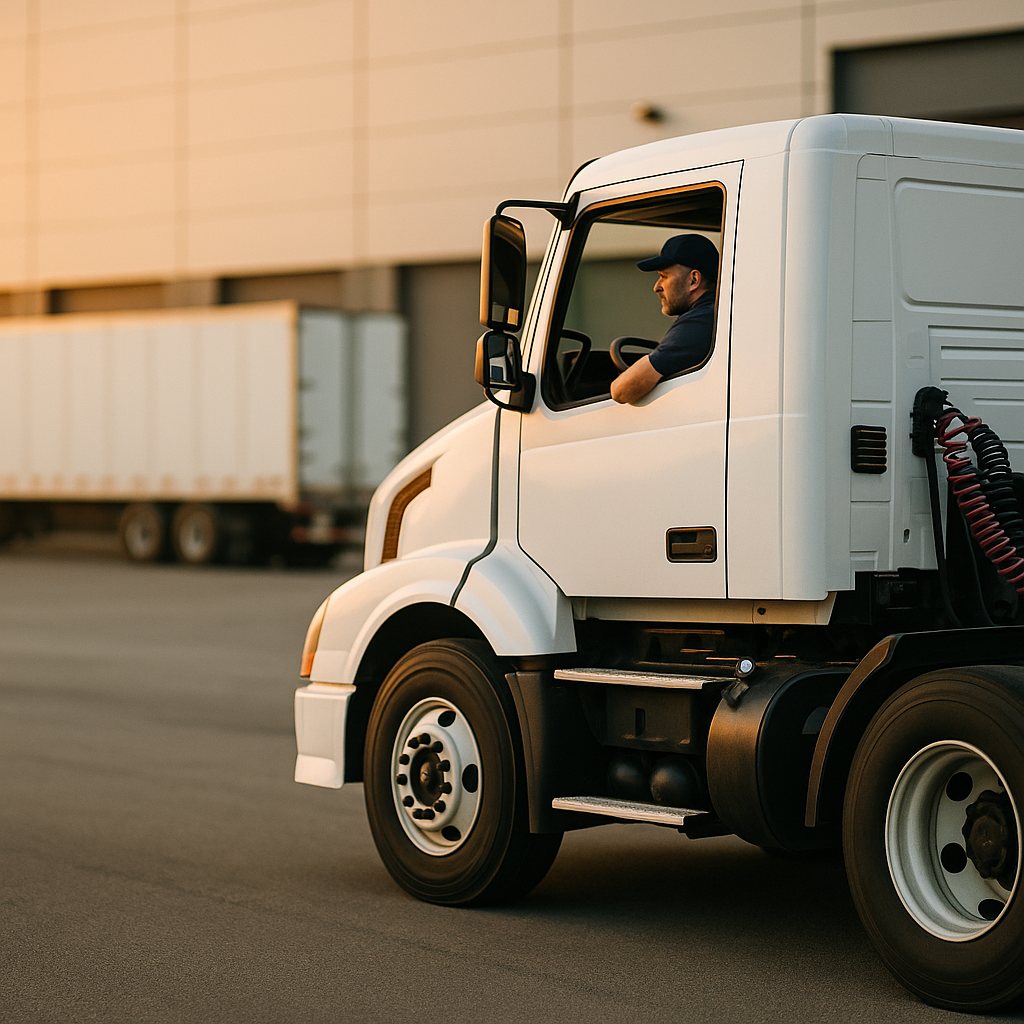

Bobtail insurance explained for owner-operators: what it covers (and doesn’t), when you need it, 2026 cost ranges, lease requirements, and bobtail vs non-trucking liability—get a quote.
Bobtail insurance is the coverage that can save an owner-operator when you’re driving the tractor with no trailer attached and a wreck happens at the worst possible time—like heading home, going to a shop, or moving around a yard.
Featured snippet answer: Bobtail insurance is liability coverage for an owner-operator while operating a tractor without a trailer (bobtail), typically when not under dispatch, and it helps pay for other people’s injuries and property damage after an at-fault accident (subject to policy definitions and exclusions).
Key Takeaways: Essential Bobtail Insurance
- Bobtail ≠ deadhead. Bobtail means no trailer. Deadhead means no load (you might still have a trailer).
- Bobtail insurance is usually liability-only. It commonly pays for their injuries and property damage—not repairs to your tractor.
- “Required” usually comes from your lease, not the FMCSA. Many motor carriers require bobtail or non-trucking liability for leased owner-operators.
- Wording matters more than price. A cheap policy that excludes your real-world use is wasted money.
Table of Contents
Reading time: 10 minutes
- What “Bobtail” Means (and Why Claims Get Denied)
- What Bobtail Insurance Covers (and Typical Scenarios)
- What Bobtail Insurance Does NOT Cover (Most Common Mistakes)
- Bobtail vs Non‑Trucking Liability vs Deadhead vs Unladen (Table)
- Is Bobtail Insurance Required in 2026? (Lease vs Legal)
- How Much Does Bobtail Insurance Cost in 2026?
- Temporary Bobtail Insurance: What’s Actually Possible
- How to Buy Bobtail Insurance (Owner‑Operator Checklist)
- Frequently Asked Questions
- Why Logrock: Straight Answers, Correct Paperwork, No Surprises
- Conclusion & Get a Quote

What “Bobtail” Means (and Why Claims Get Denied)
In trucking, “bobtail” means operating a tractor with no trailer attached, and coverage decisions often hinge on policy definitions like “under dispatch” and “in the business of the motor carrier.”
Bobtailing is simple in real life: no trailer behind you. Where drivers get burned is assuming “no trailer” automatically means “covered,” because claims aren’t decided by common sense—they’re decided by the exact words in your lease and policy.
If the carrier says you were “in business use” and your bobtail/NTL form excludes business use, you can land in the kind of gray area that turns into a denial or a nasty delay.
1) Bobtailing vs deadheading vs “under dispatch”
- Bobtail: Tractor only, no trailer.
- Deadhead: No load (empty)—you may still be pulling a trailer.
- Under dispatch: You’re operating in the service of a motor carrier (dispatch instructions, trip purpose, and lease terms matter).
Pro tip: When you ask an agent, “Am I covered bobtailing home?” don’t accept “yes” without adding: “Even if the carrier considers that business use—can you show me the policy wording?”
2) Why the definition matters more than the logo on your COI
A Certificate of Insurance (COI) is proof you have a policy, but it doesn’t override exclusions, definitions, or endorsements in the actual policy form.
If your lease requires bobtail (or specific limits and wording) and your COI doesn’t match what the carrier wants, you can get parked, lose loads, or get forced into a last-minute rewrite at a higher price.
What Bobtail Insurance Covers (and Typical Scenarios)
Bobtail insurance is typically third-party auto liability that pays for bodily injury and property damage you cause while driving a tractor without a trailer, when the trip isn’t covered by the motor carrier’s primary liability.
Most bobtail policies are designed to cover the “gap” when you’re off-dispatch, between work events, or operating in a way the carrier’s policy won’t respond to.
1) Third-party bodily injury + property damage (liability)
Bobtail liability is meant to pay for other people’s damages after an at-fault accident, including bodily injury claims, property damage, and often legal defense (depending on the policy).
- Bodily injury: Their medical bills, lost wages claims, and settlement/judgment amounts.
- Property damage: Their car, fence, building, or other property you damage.
- Defense costs: Many policies include defense, but it’s policy-specific—confirm in writing.
2) Real-world claim scenario (the one nobody budgets for)
A common bobtail claim scenario is dropping a trailer at a yard, driving tractor-only to a truck stop or shop, and causing an at-fault accident during that tractor-only trip.
You may not be hauling and may not be generating revenue in that moment, but you’re still operating a commercial tractor on public roads—and the financial exposure can climb fast once injuries are involved.
What Bobtail Insurance Does NOT Cover (Most Common Mistakes)
Bobtail insurance is generally liability-only and usually does not pay to repair your tractor, cover cargo, or pay your medical bills unless you carry separate coverages for those risks.
This is where owner-operators lose money—either by buying the wrong policy or expecting bobtail liability to pay for something it was never designed to cover.
1) Damage to your own tractor (usually not covered)
Repairs to your own tractor after a crash are typically handled by physical damage coverage (comprehensive and collision), not bobtail liability.
If your tractor is down, your revenue stops. If you’ve got a note on the truck, lenders often require physical damage coverage for a reason.
2) Cargo, trailer, and “the load” problems
Bobtail liability generally does not cover cargo claims, trailer interchange exposures, or damage to a trailer you’re responsible for under a separate agreement.
- Cargo: Separate motor truck cargo coverage.
- Trailer: Often a different coverage line (and the setup depends on who owns what).
- Under dispatch hauling: Typically should be handled by the carrier’s/your primary liability, depending on authority and agreements.
3) Your injuries as the driver
Bobtail liability is for third-party claims, not your own medical bills, so owner-operators often use occupational accident or workers’ comp arrangements for driver injury exposure.
If you’re out of the seat for weeks, the bills don’t stop—truck payment, insurance, household expenses, and everything else.
Want a quick “gap check” on your trucking insurance? If your lease says “bobtail required,” but your agent sold you “non-trucking liability,” you might be fine—or you might have a gap. Get it checked before you find out the hard way.
Bobtail vs Non‑Trucking Liability vs Deadhead vs Unladen (Comparison Table)
Bobtail, non-trucking liability (NTL), deadhead, and unladen are commonly mixed up terms, and insurers apply coverage based on dispatch status and “business use” definitions—not just whether you have a trailer.
Different carriers and insurers use these terms differently, which is exactly why you want the comparison in writing and matched to your lease.
Quick comparison table
| Term | Trailer attached? | Under dispatch? | Typical use case | What it’s really trying to cover | Common gotcha |
|---|---|---|---|---|---|
| Bobtail insurance | No | Typically no | Driving tractor-only to home, shop, fueling, picking up a trailer | Liability for injuries/damage you cause while tractor-only | Some policies restrict “business use” even if you’re bobtail |
| Non-trucking liability (NTL) | Maybe / depends | No (personal use) | Personal errands, off-duty use not in the carrier’s business | Liability while not in the business of the carrier | “Personal use” definitions vary; dispatch status matters |
| Deadhead (a situation) | Maybe yes | Often yes (between loads) | Moving empty to pick up the next load | Usually should be under the carrier’s/your primary liability if under dispatch | Drivers assume “deadhead = NTL”—not automatically true |
| Unladen liability | Varies | Depends | Older wording sometimes used as a synonym | Liability when not loaded | The term creates confusion; get the policy form explained |
Which one do you actually need?
The “right” coverage is the one that matches your lease requirement and how you actually use the tractor when you’re not hauling.
Being “kind of covered” is the same as being uncovered when the adjuster starts asking questions. If your carrier’s safety department is picky, ask for the requirement in writing: bobtail vs NTL, required limits, and whether commuting is considered business use.
Is Bobtail Insurance Required in 2026? (Lease vs Legal)
FMCSA requires interstate motor carriers to maintain minimum public liability insurance (often $750,000 for many for-hire property carriers, with higher minimums for certain hazardous materials), but bobtail insurance is typically a lease requirement—not an FMCSA filing in your name.
For most leased owner-operators, the practical reality is simple: your carrier may require bobtail or NTL so there’s no off-dispatch gap and no argument about who’s paying when an accident happens.
1) Legal requirement vs carrier/lease requirement
Primary auto liability is the “must-have” coverage tied to operating authority, while bobtail/NTL is most often required by the carrier lease to cover off-dispatch exposure.
Even if it’s not “federally required” for you personally, the carrier can still require it to reduce uninsured gaps, avoid claim disputes, and protect their shipper contracts.
2) What to look for in your lease agreement
Lease packets commonly specify required limits (often $1,000,000), certificate holder instructions, and when coverage must apply (commuting, shop trips, personal use).
- Limits: Don’t guess—match what’s written.
- Who must be shown on the COI: Certificate holder and any additional insured wording.
- When it applies: Home-to-terminal, shop runs, and yard moves are where disagreements happen.
Pro tip: Ask your carrier: “When I drop the trailer and bobtail to the house, am I considered under dispatch?” Get the answer in an email.
How Much Does Bobtail Insurance Cost in 2026?
In 2026, many owner-operators see bobtail/NTL liability priced around $20–$60 per month, but the final premium depends on garaging ZIP, limits, driving record (MVR), and claims history.
Bobtail is usually a smaller line item than primary liability and physical damage, but it still needs to match your lease and real use—because a denied claim costs a lot more than a slightly higher premium.
Typical cost range (realistic, not salesy)
A clean MVR and lower-risk garaging area can put you near the low end, while violations, metro garaging, higher limits, or strict lease wording can push you higher.
What changes your price the most (cost drivers)
| Cost driver | Why it matters | What you can do |
|---|---|---|
| Garaging state/ZIP | Rates reflect claim frequency/severity in the area | Garage where you actually operate; don’t “borrow” an address |
| Required liability limit | Higher limits typically cost more | Match the lease requirement; don’t guess |
| MVR (tickets/accidents) | Underwriters price driver behavior | Keep it clean; fix preventable violations |
| Claims history | Past losses can increase pricing | Document incidents and reduce small claims when possible |
| Continuous coverage | Lapses can trigger underwriting problems and higher rates | Avoid cancellations; pay on time; set reminders |
| Policy form / endorsements | Wording determines whether a claim is covered | Ask the agent to explain “business use” vs “personal use” |
Temporary Bobtail Insurance: What’s Actually Possible
Most bobtail/NTL coverage is written on a standard 6–12 month policy term, and true day-by-day or one-week bobtail policies are uncommon in the trucking market.
A lot of drivers ask for “one-week coverage” while switching carriers or waiting on paperwork, but insurers usually want a normal term and standard underwriting.
Most bobtail/NTL is written as a standard policy term
If you’re bridging time between carriers, you still need an effective date and proof of coverage before you move the tractor on public roads.
What to confirm if you need coverage fast
- Effective date/time: Same-day binding can be possible, but don’t assume.
- Cancellation terms: Understand fees and minimum earned premium rules.
- Commuting rules: Confirm whether home-to-terminal is excluded.
- COI requirements: Confirm the certificate holder and any additional insured wording.
How to Buy Bobtail Insurance (Owner‑Operator Checklist)
Buying bobtail insurance correctly means matching the lease-required limits (often $1,000,000) and confirming dispatch/business-use definitions so the policy responds to how you actually run.
Use this like a pre-trip: if you skip steps, it might look fine—until the moment you need it.
The 10-point checklist
- Read the lease requirement (don’t guess what they “probably mean”).
- Confirm required limits (often $1M).
- Ask: “Do you want bobtail or NTL specifically?”
- Clarify dispatch status rules (what counts as “in the business of the carrier”).
- Clarify commuting: home ↔ terminal covered or excluded?
- Confirm named insured (you/your LLC) and any additional insured wording.
- Make sure the COI lists the right certificate holder.
- Confirm the radius/territory matches reality.
- Verify exclusions for business use and “furtherance of commercial interests.”
- Keep proof of coverage accessible (phone + printed copy as backup).
Questions to ask your carrier and agent (copy/paste)
- “When I’m empty and going to pick up my next trailer, am I under dispatch?”
- “If I drop a trailer and bobtail to a shop, does your primary liability apply?”
- “Do you require bobtail, NTL, or either one? What exact endorsement wording?”
- “Do you need to be listed as additional insured on the COI?”
Want your bobtail/NTL priced correctly based on your lease? We’ll rate it the way an underwriter does: garaging ZIP, limits, use, and the form your carrier wants.
Frequently Asked Questions
These bobtail insurance answers use the standard industry meaning (tractor-only) and the most common lease setups for leased owner-operators, but your policy form controls the actual coverage.
Bobtail insurance is liability coverage for driving a tractor with no trailer attached, typically when you’re not under dispatch, and it pays for third-party bodily injury and property damage after an at-fault accident. In plain terms, it’s meant to cover off-dispatch tractor-only trips like going home, going to a shop, or moving between yards when the motor carrier’s primary liability may not apply. Coverage depends on the policy’s definitions of “business use,” “personal use,” and “in the business of the carrier,” so the same trip can be covered under one form and excluded under another.
Bobtail insurance typically covers third-party bodily injury and property damage (liability) you cause while operating the tractor without a trailer, and many policies also provide legal defense. It’s designed to respond when you’re tractor-only and the carrier’s primary liability isn’t clearly responsible—often because you’re not under dispatch. Bobtail liability usually does not pay to repair your tractor (that’s physical damage coverage), does not cover cargo, and does not pay your medical bills as the driver unless you carry separate coverages.
Bobtail insurance is most often required by a motor carrier lease, not by a bobtail-specific FMCSA rule, because FMCSA minimum public liability requirements are generally tied to the operating motor carrier’s authority. Many lease agreements require bobtail or non-trucking liability with specific limits (often $1,000,000) so there’s no off-dispatch gap and no fight about which insurer pays. The practical requirement is: if your lease says you must carry it, you can be parked or terminated for failing to provide a compliant COI.
Bobtail focuses on the tractor-only (no trailer) situation, while non-trucking liability (NTL) focuses on non-business/personal use when you’re not operating “in the business of the carrier,” even if a trailer is attached in some policies. The difference that decides claims is usually dispatch and business-use wording, not the label on the quote. If your carrier treats commuting or repositioning as business use and your NTL excludes business use, you can have a gap even when you’re off the load.
Why Logrock: Straight Answers, Correct Paperwork, No Surprises
A lease-ready setup means the policy form, limits (often $1,000,000), and COI wording match what the carrier requires, because paperwork mistakes can cost you days of revenue.
Owner-operators don’t need a lecture—you need coverage that matches how you actually operate.
- Correct coverage form: Bobtail vs NTL based on your lease and real-world use.
- Clean COIs: So you don’t lose a week over avoidable paperwork.
- No fluff: We’ll tell you what’s covered, what isn’t, and what to change before you sign.
Conclusion & Get a Quote
Bobtail insurance is tractor-only liability coverage that’s commonly required by lease agreements and can protect you during off-dispatch trips where the carrier’s primary liability may not respond.
It’s simple on the surface, but the money is in the definitions: dispatch status, business use, and what your carrier considers “in service of the carrier.” Match the form and limits to your lease, or you can buy a policy that looks right and fails when it matters.
Key Takeaways:
- Bobtail = no trailer; deadhead = no load (not the same).
- Bobtail insurance is usually liability-only (protects you from their claims, not repairs to your tractor).
- Most “requirements” come from the lease, so match the form and limits to what’s written.
If you want it set up the right way, get a quote using your carrier name, garaging ZIP, and how you use the tractor off-dispatch.





