
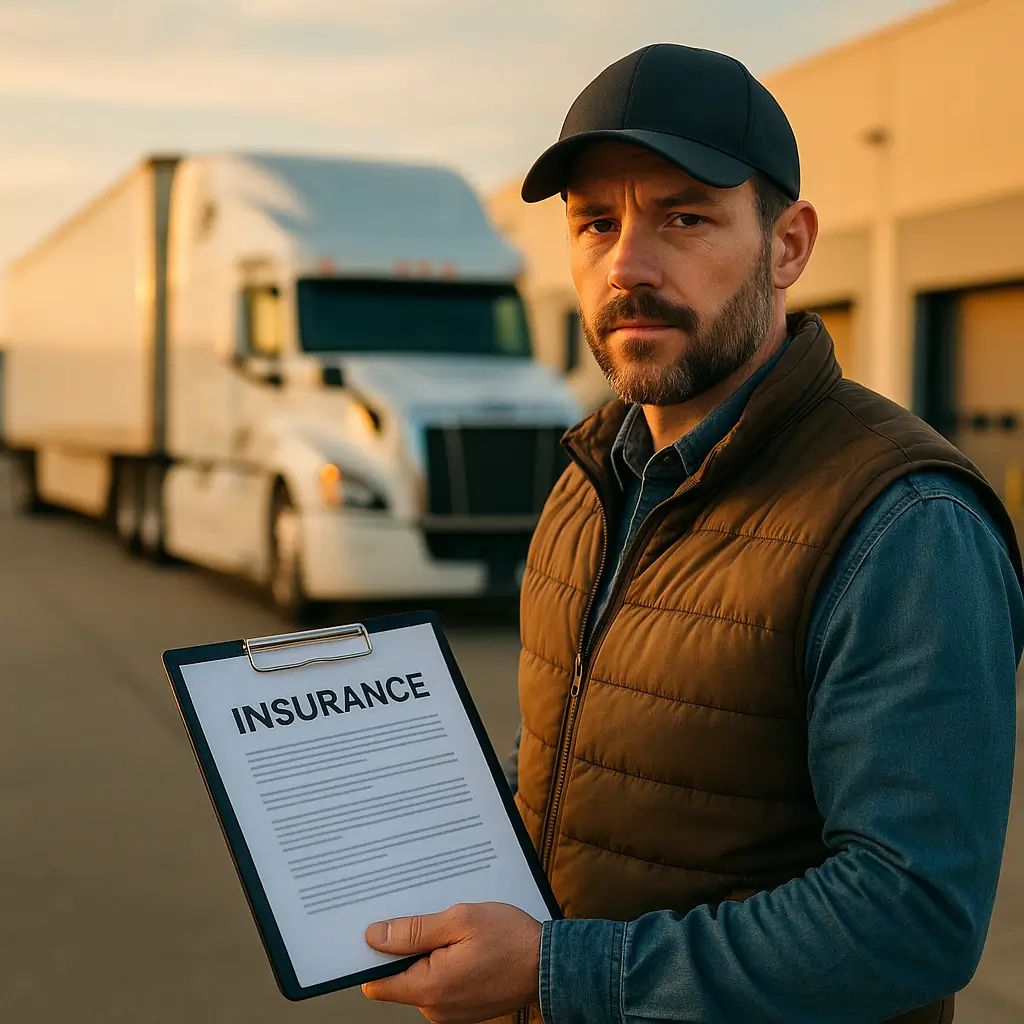

Compare 2026 commercial auto insurance quotes in Massachusetts, typical rate ranges, state requirements, coverage options, and a quote checklist.
Commercial auto insurance quotes Massachusetts shoppers typically see light-duty work vehicles land around $150–$350 per month per vehicle, while higher-risk uses like delivery, towing, passenger transport, or heavier units often run $500–$1,500+ per month. The fastest way to get an accurate quote is to match limits and driver lists across carriers, then submit VINs, garaging ZIP, mileage/radius, and prior losses up front.
Massachusetts pricing can feel “all over the map” because garaging location, stop-and-go miles, and contract-required limits can change a premium quickly. If you’re new to business vehicle coverage, start with Commercial auto insurance basics (what it covers and who needs it) to avoid quoting the wrong policy type.
Table of Contents
Reading time: 9 minutes
- Fast Answer: Typical Commercial Auto Quotes in Massachusetts (2026)
- What Impacts Your Massachusetts Commercial Auto Quote the Most
- Massachusetts Commercial Auto Requirements (Plus When Trucking Rules Apply)
- Step-by-Step: Get Commercial Auto Insurance Quotes in Massachusetts (Fast + Accurate)
- Frequently Asked Questions
- Conclusion: Get Quote-Ready, Compare Fairly, Bind with Confidence

Fast Answer: Typical Commercial Auto Quotes in Massachusetts (2026)
Most Massachusetts businesses see commercial auto quotes around $150–$350 per month per vehicle for light-duty work vehicles, while higher-risk operations or heavier units often range from $500–$1,500+ per month depending on garaging ZIP, driver records, and liability limits.
Quick “sanity-check” ranges (per vehicle, per month)
| Vehicle / Use Case | Low (clean risk) | Typical | High (higher exposure) |
|---|---|---|---|
| Pickup / contractor use | $120 | $200–$350 | $450+ |
| Cargo van / service van | $130 | $220–$400 | $550+ |
| Light delivery (local) | $180 | $300–$600 | $900+ |
| Box truck (local/regional) | $250 | $450–$900 | $1,500+ |
| Specialty (tow, passenger, high-value) | $300 | $700–$1,200 | $2,000+ |
Insuring a cargo or service van specifically? See cargo van insurance costs and coverage options. If you operate a tow truck, pricing and coverage structure can differ significantly — see our full guide to tow truck insurance. For pickup trucks used in contracting or service work, see our breakdown of pickup truck insurance costs to understand how commercial versus personal policies differ.
These numbers are planning ranges—not guarantees—because one change to limits, drivers, or garaging can force a re-rate. For broader benchmarking beyond Massachusetts, see Commercial auto insurance cost benchmarks (how pricing works).
What makes Massachusetts quotes feel “all over the map”
- Garaging location beats mailing address: a truck stored in Greater Boston often prices differently than the same truck stored in a lower-traffic ZIP.
- Stop-and-go miles drive frequency: more braking, more minor impacts, and more repair invoices.
- Limits can be the real culprit: contract-required limits (often $1,000,000) can move premium more than the vehicle itself.
What Impacts Your Massachusetts Commercial Auto Quote the Most
Commercial auto premiums in Massachusetts are primarily rated using driver MVRs, garaging ZIP, vehicle type/value, annual mileage/radius, prior losses (loss runs), and selected liability/physical damage limits, so missing or inconsistent data is a common reason quotes change after the first pass. If cost reduction is a priority, see affordable commercial auto insurance strategies for 9 ways to bring premiums down without cutting critical coverage.
If you want the “why” behind each rating lever (and which ones underwriters care about most), read What affects commercial auto insurance cost (rating factors).
Driver & business factors
- MVR: violations and at-fault accidents for every listed driver.
- Experience: newer commercial drivers usually cost more to insure.
- Prior insurance: lapses can trigger non-standard pricing.
- Claims history: loss runs (when available) shape eligibility and price.
- Years in business: newer operations may see fewer carrier options.
Vehicle & usage factors
- Garaging ZIP: where the vehicle is kept overnight is a major input.
- Mileage & radius: local service calls price differently than regional routes.
- Jobsite exposure: backing, loading/unloading, and tight lots increase loss potential.
- Upfits & value: service bodies, racks, and equipment can raise physical damage costs.
- Safety controls: dash cams/telematics may earn credits with some carriers.
For a plain-language walkthrough of how underwriters weigh each of these factors when pricing your policy:
Coverage selections that change price the fastest
- Liability limits: often the biggest premium lever for MA business autos.
- Physical damage: comp/collision and deductible choice can swing the quote.
- Uninsured/underinsured motorist: can matter in real-world claims outcomes.
- Optional add-ons: towing/roadside and rental reimbursement can help, but don’t overbuy.
Not sure how much liability your business actually needs? This video breaks down how to think about limit selection:
Market reality: commercial auto pricing has been pressured by repair cost inflation and claim severity trends across the U.S.; NAIC market and consumer resources offer helpful background on the line of business. Source: NAIC market data publications
Massachusetts Commercial Auto Requirements (Plus When Trucking Rules Apply)
Massachusetts requires proof of financial responsibility to register and legally operate vehicles, and driving uninsured can trigger serious penalties, but real-world business auto limits are often driven by contracts (GCs, shippers, brokers) rather than state minimums alone.
MA compliance basics (state-level)
- Registration and plates: expect to show proof of insurance as part of registration and ongoing compliance.
- Statutory framework: Massachusetts General Laws, Chapter 90 is a starting point for motor vehicle rules. Source: https://malegislature.gov/Laws/GeneralLaws/PartI/TitleXIV/Chapter90
- Minimum coverage summary: Mass.gov publishes consumer-facing minimum auto coverage information (confirm applicability to your vehicle class and commercial policy form). Source: https://www.mass.gov/info-details/massachusetts-minimum-auto-insurance-coverage
For a full breakdown of MA minimums by coverage type, see our guide to Massachusetts commercial auto insurance minimums. For vehicle-class-specific minimums, see Massachusetts commercial vehicle insurance. Massachusetts also offers consumer-facing insurance guidance through the Massachusetts Division of Insurance, which can help you understand your rights when comparing quotes or disputing a claim.
If you’re really shopping “commercial auto,” or you’re shopping trucking insurance
Many people searching for Massachusetts business auto quotes are actually insuring box trucks, dump trucks, tow trucks, hotshot rigs, or semi tractors, which can push the account into trucking-style underwriting and requirements.
If that’s you, use Commercial truck insurance in Massachusetts (box trucks, for-hire, heavier classes) so you’re not trying to force a “light commercial auto” quote onto a true trucking exposure.
If you’re starting to realize your operation may fall under trucking underwriting instead of standard commercial auto, this breakdown covers what auto liability looks like for new trucking authorities:
When federal (FMCSA) insurance filings may apply
FMCSA insurance filings may apply when you operate as a for-hire motor carrier, haul regulated freight, and/or cross state lines under FMCSA authority, and FMCSA publishes guidance on insurance filing requirements for regulated operations. Source: https://www.fmcsa.dot.gov/registration/insurance-filing-requirements
For a full breakdown of required forms and timelines, see FMCSA insurance filing requirements. For owner-operators specifically, see our full guide to FMCSA insurance requirements for owner-operators for a breakdown of required forms, eligibility thresholds, and filing timelines.
“Can I use a bond or cash deposit instead of insurance?”
Some jurisdictions allow alternative proof of financial responsibility, but it’s rarely a practical shortcut for small businesses because it can tie up cash, may not satisfy contracts, and still leaves you responsible for claims handling and legal defense.
- Cash flow impact: money locked in a deposit isn’t available for payroll, fuel, and repairs.
- Contract problem: many GCs, landlords, shippers, and brokers require an insurance certificate with specific limits.
- Claims handling: you still need a plan for defense costs, settlements, and administration.
If you’re considering alternatives, verify current Massachusetts rules through the Massachusetts RMV before relying on them for compliance.
Step-by-Step: Get Commercial Auto Insurance Quotes in Massachusetts (Fast + Accurate)
Accurate commercial auto quotes in Massachusetts usually require a complete submission that includes VINs, garaging address, driver roster details, operations/usage, and prior losses, and missing items (especially VINs and loss runs) are a top cause of delays and re-quotes.
Before you compare prices, make sure you’re comparing the same coverages and limits; this helps prevent “cheap vs expensive” confusion that’s really just different policy structure. Use Commercial auto insurance coverage guide (liability vs physical damage vs add-ons) to match policies line-by-line.
1) Quote-ready checklist (what carriers will ask for)
Business
- Legal business name, DBA (if any), FEIN
- Years in business + short description of operations
- Address + garaging address (if different)
Vehicles
- VIN for each vehicle
- Year/make/model + any upfits (service body, racks)
- Stated value (especially if you want comp/collision)
- Use type (service calls, delivery, jobsite), annual mileage, radius
Drivers
- Full roster of anyone who will drive (owner + employees)
- DOB, license info, years of experience
- Permission for MVR checks
Insurance history
- Current/expiring policy declarations page
- Prior claims and loss runs (when available)
- Any lapses in coverage (be ready to explain)
2) Build coverage the “business way” (simple decision flow)
- Start with your contract requirement: if the job requires $1M CSL, price that first.
- Then choose liability-only vs physical damage: financed or mission-critical vehicles usually need comp/collision in practice.
- Pick deductibles based on cash flow: a higher deductible only helps if you can actually pay it after a loss.
Before choosing liability limits, it helps to understand exactly what auto liability covers — and what it doesn’t:
3) Choose the shopping method that fits your operation
- Online/direct: fastest for simple classes (few vehicles, clean drivers, clear use).
- Independent agent/broker: strong option for multiple vehicles, delivery exposure, mixed driver experience, or non-standard risks — see 15 commercial insurance providers to compare to understand which carriers fit different risk profiles.
- Captive agent: can work well when that carrier fits your class; still compare structure and exclusions carefully.
4) How to get more affordable quotes without getting burned later
- Set driver standards: documented MVR checks and written driver rules reduce surprises.
- Use dash cams/telematics: ask whether the carrier gives measurable credits — see dash cam discounts for small trucking fleets for what to expect and how to qualify.
- Bundle smartly: bundling can help, but only when coverage matches the risk.
- Re-shop annually: especially after adding vehicles, changing radius, or changing operations.
If you have employees driving personal vehicles or rentals for work, don’t leave the gap unaddressed—see commercial car rental and hired auto coverage (HNOA) for the common coverage fix.
See how fast you can get a commercial auto quote through LogRock:
If you want a broader shopping workflow (including how to bundle and avoid gaps), use Commercial insurance quotes (how to shop + bundle) as your checklist for the whole account.
For multi-vehicle businesses, ask up front about Fleet insurance discounts (multi-vehicle strategies) so you don’t miss pricing structures that only appear at 2+ units.
Frequently Asked Questions
These FAQs summarize Massachusetts business auto pricing and compliance basics in plain language, with links to official sources where applicable.
Massachusetts requires proof of financial responsibility to register and legally operate vehicles, and the applicable minimums can vary by vehicle class, usage, and policy form. For the legal framework, Massachusetts General Laws Chapter 90 is a good starting point, and Mass.gov provides a consumer-facing summary of minimum auto coverage. In practice, many businesses must carry higher limits than the state minimum because general contractors, shippers, and brokers often require $1,000,000 liability (or more) on certificates of insurance. Sources: https://malegislature.gov/Laws/GeneralLaws/PartI/TitleXIV/Chapter90 and https://www.mass.gov/info-details/massachusetts-minimum-auto-insurance-coverage
The state minimum may satisfy registration requirements, but it rarely satisfies the people who write your checks. General contractors, property managers, shippers, and freight brokers routinely require $1,000,000 CSL (combined single limit) on certificates of insurance before you can work on a site or haul a load. Review every active contract you have — if any require higher limits, that number becomes your effective minimum, regardless of what the state sets. If you’re unsure what your contracts require, request the certificate of insurance section from each party before you quote. See Massachusetts commercial auto insurance minimums for a full breakdown by coverage type.
Commercial auto insurance in Massachusetts commonly quotes around $150–$350 per month per vehicle for light-duty work use, while delivery, towing, passenger transport, or heavier units often land around $500–$1,500+ per month. The biggest pricing drivers are garaging ZIP (where the vehicle is stored), driver MVRs, vehicle type/value, annual mileage and radius, prior losses (loss runs), and the liability limit you choose (or your contract requires). To benchmark outside MA and see how deductibles and limits move premium, review Commercial auto insurance cost benchmarks (how pricing works): https://www.logrock.com/commercial-truck-insurance/average-cost-commercial-auto-insurance/
You can usually get faster Massachusetts commercial auto quotes by submitting VINs, garaging address, driver roster (DOB and license info), operations description, mileage/radius, and prior insurance/claims history at the first request. Carriers frequently re-quote when the driver list changes, the garaging ZIP changes, or VINs and loss runs show up later, so “same limits, same drivers, same deductibles” is the key to a fair comparison. If you want to compare coverage structures line-by-line before you shop, use Commercial auto insurance coverage guide (liability vs physical damage vs add-ons): https://www.logrock.com/commercial-truck-insurance/commercial-auto-insurance/
Yes, discounts and pricing credits are often available for multi-vehicle accounts, paid-in-full billing, higher deductibles, and documented safety controls, but the exact savings depend on the carrier and risk class. If you have two or more vehicles, ask specifically about fleet pricing because the rating structure can change once you’re not a single-unit account. Also ask whether dash cams or telematics earn a real premium credit (some carriers give meaningful credits, others treat it as underwriting preference). For multi-vehicle strategies, see Fleet insurance discounts (multi-vehicle strategies): https://www.logrock.com/commercial-truck-insurance/cheap-fleet-insurance/
Personal auto policies often restrict or exclude business use, including jobsite driving, client visits, delivery work, or hauling tools and equipment. If an accident happens during a work-related trip, your personal insurer may dispute or deny the claim. A hired and non-owned auto endorsement or a commercial auto policy can help fill that gap, depending on whether the vehicle is owned by the business and how often it is used for work.
Standard commercial auto insurance covers the vehicle itself — not the tools, inventory, or equipment inside it. If a break-in, accident, or fire destroys tools stored in your work van or truck, your commercial auto policy typically will not pay to replace them. You’d need a separate inland marine or tools and equipment policy to cover that exposure. This is one of the most common gaps small contractors and service businesses discover after a claim.
Commercial auto insurance generally covers standard business vehicles such as pickups, cargo vans, service vans, and light-duty work trucks used for local or regional business activity. Trucking insurance usually applies to heavier vehicles, for-hire operations, box trucks, tow trucks, dump trucks, semi tractors, and operations that may require FMCSA authority or filings. The underwriting is different, so quoting the wrong class can create coverage gaps and re-quotes.
Garaging ZIP is one of the most important pricing inputs because carriers use it to estimate traffic density, accident frequency, theft exposure, and repair costs. A vehicle garaged in a dense urban ZIP can price higher than the same vehicle stored in a lower-traffic area with identical drivers and limits. Always provide the actual location where the vehicle is kept overnight, not just the mailing or billing address.
A lapse can create registration, plate, and underwriting problems. Massachusetts may take RMV action when required insurance is not active, and carriers often treat recent lapses as a risk signal that can lead to higher premiums, fewer options, or stricter payment terms. If you are changing carriers or having a billing issue, work on reinstatement or replacement coverage before the current policy cancels.
Yes, but your options may be narrower and pricing is often higher for operations with no prior commercial insurance history. Carriers use prior insurance as a proxy for risk management — a clean first policy with no claims can help you qualify for standard pricing at renewal. Be upfront about being a new operation and provide as much supporting detail as possible (business type, vehicle use, driver records) to help underwriters assess the risk accurately. See best trucking insurance for new authority for guidance on getting started.
No. FMCSA filings generally apply to for-hire motor carriers operating under federal authority, crossing state lines, or hauling regulated freight. A Massachusetts business using a pickup, cargo van, or box truck for local service work usually follows state commercial auto requirements instead. If you haul for brokers, operate heavier trucking equipment, transport passengers, or carry hazardous materials, confirm whether FMCSA filings apply before binding coverage.
Re-shopping annually at renewal is good practice for most Massachusetts businesses, but there are also trigger events that should prompt an immediate review: adding or removing a vehicle, hiring a new driver, changing your operating radius, winning a contract that requires higher limits, or experiencing a claim. Staying with the same carrier by default — without comparing — can mean overpaying as your risk profile improves. Re-quoting keeps you honest about what the market will offer. See commercial auto insurance rates and rating factors for context on how your profile evolves over time.
Conclusion: Get Quote-Ready, Compare Fairly, Bind with Confidence
Commercial auto insurance quotes in Massachusetts are most accurate when you submit complete driver/vehicle details and compare identical limits, deductibles, and usage across carriers. If you treat compliance minimums as the starting point (not the finish line) and build coverage around your contracts and operations, you’ll avoid the re-quote loop and the gaps that show up after a claim.
Key Takeaways:
- Use realistic planning ranges: roughly $150–$350/month for light-duty work vehicles, and $500–$1,500+/month for higher exposure or heavier units.
- Quote clean: VINs, garaging ZIP, driver list, and loss history reduce delays and surprise re-rates.
- Match coverage first: the cheapest quote often just has different limits, deductibles, or drivers listed.
If you’re ready to shop, start with a quote-ready submission and keep your comparisons apples-to-apples.
If you’re quoting commercial auto insurance in Massachusetts and want accurate numbers for your specific vehicles, drivers, and operations, LogRock can help you review your coverage needs, identify gaps, and compare your options. Talk to our team to ask questions and request a quote tailored to your business.
Speak with LogRock and request a quote




