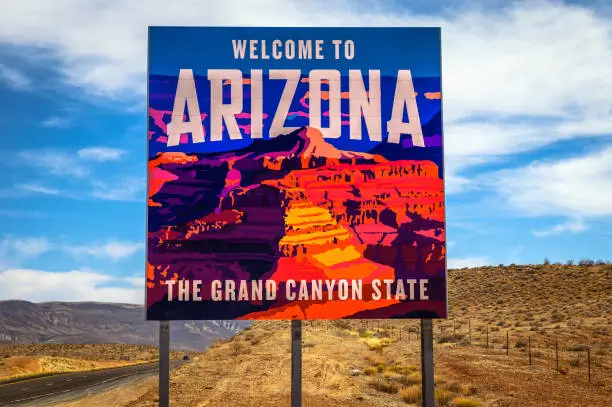
In Arizona, you aren’t just dealing with the FMCSA. You must also satisfy the Arizona Department of Transportation (ADOT), which enforces strict weight-based insurance limits. Additionally, the state offers unique “Envelope Permits” that allow heavy haulers to bypass frequent permitting hassles—but only if your insurance is set up correctly.
In Arizona, the average commercial truck insurance premium typically lands between $8,000 and $14,500 per year. This guide breaks down exactly what you need to pay to keep your authority active and your trucks legal.
Key Takeaways: Arizona Truck Insurance Costs
- The Price Tag: Expect to pay around $11,800 annually for a Semi-Truck with a clean record.
- Monthly Breakdown: A typical owner-operator pays roughly $1,000/month for Liability and $180/month for Physical Damage (due to high heat/tire blowout risk).
- The “Envelope” Factor: Arizona offers an annual Envelope Permit for non-reducible loads. Your policy must not exclude “Oversize/Overweight” operations to use this.
- Two Sets of Rules: ADOT enforces different liability limits for Intrastate (local) vs. Interstate (federal) carriers. See the tables below.
Real Numbers: Estimated Costs by Truck Type
Arizona can price below some higher-cost states, but rates still rise sharply when your lanes, garaging, or regular runs expose you to higher-loss territories such as California or Nevada.
| Vehicle Type | Limit $300,000* | Limit $500,000 | Limit $750,000 | Limit $1,000,000 (Standard) |
|---|---|---|---|---|
| Hotshot | $6,500 | $7,800 | $9,000 | $10,500 |
| Box Truck | $5,200 | $6,500 | $7,500 | $8,800 |
| Dump Truck | $7,200 | $8,800 | $10,000 | $11,500 |
| Semi Truck | $8,800 | $10,500 | $11,800 | $13,500 |
| Tow Truck | $6,000 | $7,500 | $8,800 | $10,200 |
Last updated: June 2026.
Watch our quick breakdown of Arizona owner-operator insurance costs for 2026:
LogRock Reality Check: While Arizona law allows $300,000 liability for intrastate trucks between 20,001 and 26,000 lbs, most brokers will not load you without $1,000,000 coverage. If you plan to cross the state line into New Mexico or Utah, you immediately trigger federal $750k+ requirements.
Liability Limits: Intrastate vs. Interstate
Arizona rules change depending on whether you cross state lines. We have broken this down into two tables to make it clear.
Table 1: Intrastate Requirements (Arizona DOT Only)
For trucks that never leave Arizona, ADOT sets the following motor carrier and permitting requirements for intrastate operations.
| Vehicle Weight / Type | Minimum Liability Limit | Filing Required? |
|---|---|---|
| Freight 20,001 – 26,000 lbs | $300,000 CSL | Yes (Intrastate Authority) |
| Freight > 26,001 lbs | $750,000 CSL | Yes (Intrastate Authority) |
| Passenger (1-8 seats) | $250,000 CSL | Yes |
| Passenger (9-15 seats) | $750,000 CSL | Yes |
| Passenger (16+ seats) | $5,000,000 CSL | Yes |
| Household Goods (Movers) | $300,000 CSL | Yes |
Note: “CSL” means Combined Single Limit. Intrastate carriers must obtain a USDOT number even if they don’t cross state lines.
Table 2: Interstate Requirements (FMCSA / Federal)
For trucks that cross state lines, federal requirements under 49 CFR Part 387 apply.
| Vehicle Weight / Type | Minimum Liability Limit | Filing Required? |
|---|---|---|
| Freight < 10,000 lbs | $300,000 CSL | No (Unless Hazmat) |
| Freight > 10,001 lbs | $750,000 CSL | Yes (BMC-91X) |
| Hazmat (Gas/Oil/Explosives) | $1,000,000 – $5,000,000 | Yes (MCS-90) |
| Passenger (16+ seats) | $5,000,000 CSL | Yes (BMC-91X) |
Not sure which limit is right for your operation? Here’s how to think about it:
Arizona Requirements & Critical Filings
To operate legally, your insurance agent must submit specific forms to ADOT.
- Intrastate Authority: If you operate a commercial vehicle > 10,001 lbs solely within Arizona, you must register for a USDOT number and mark it “Intrastate”.
- Envelope Permit: This is a unique Arizona annual permit for “non-reducible” loads (like heavy machinery) that exceed standard dimensions but fit within specific “envelope” limits. It covers the vehicle, not just a specific trip. Your insurance must be valid for heavy haul to use this.
- Class C Permit: Required for single trips that are oversize/overweight and do not fit the “Envelope” criteria (e.g., mobile homes or massive generators).
- Form E: While Arizona is modernizing its portal, Form E remains the standard proof of financial responsibility for for-hire carriers to maintain their operating authority.
Not sure how to register your USDOT number or what the process looks like? Here’s a full walkthrough:
Your Questions Answered: “People Also Ask” FAQs
It depends on whether you cross state lines. For intrastate-only Arizona operations, a semi truck over 26,001 lbs needs at least $750,000 CSL under ADOT rules. If you haul across state lines, federal FMCSA rules also commonly require $750,000 at minimum, while many brokers require a $1,000,000 policy to tender loads.
Brokers set their own contractual minimums, separate from what state or federal law requires. Even though Arizona permits certain intrastate carriers to operate with $300,000 in liability, nearly every freight broker will require $1,000,000 auto liability coverage in their carrier contract before tendering a load. This is a commercial standard driven by shipper agreements, broker liability exposure, and industry risk management practices — not a legal mandate. If you plan to source freight through load boards or a brokered network, treat $1,000,000 as your effective operating floor, regardless of what ADOT’s minimum requires.
Regular California exposure can increase your commercial truck insurance premium because carriers rate the lanes, traffic density, repair costs, claim severity, and litigation exposure connected to your operation. Confirm your declared operating territory matches your actual lanes and review endorsements for any state-specific restrictions.
An Arizona Envelope Permit is an ADOT permit for qualifying oversize or overweight vehicle/load combinations within prescribed envelope dimensions and weight calculations. It is valid only in Arizona and does not replace permits required by other states for interstate moves.
An Envelope Permit is an annual ADOT permit for vehicle-and-load combinations that stay within pre-set maximum dimensions and calculated weight envelopes. It covers ongoing operations — you don’t need to apply for each trip separately. A Class C Permit is a single-trip permit required when your vehicle or load exceeds the Envelope’s thresholds, such as when hauling a mobile home or an oversized industrial generator. If you run regular heavy-haul routes within Arizona, an Envelope Permit can significantly reduce your permitting workload — but only if your insurance policy does not exclude oversize or overweight operations.
No. Arizona’s Envelope Permit is issued by ADOT and applies only within Arizona. Oversize or overweight interstate moves require the permits and routing approvals required by every state you travel through.
Yes. Arizona requires commercial vehicles over 10,001 lbs GVW to obtain a USDOT number, even if they operate only within the state.
BMC-91X is an electronic proof-of-financial-responsibility filing submitted to FMCSA by an insurer for qualifying interstate for-hire authority. Confirm that the filing has been accepted before relying on it for active operating authority.
A Form E is a standardized certificate of financial responsibility that your insurance company files directly with ADOT on your behalf. It proves to the state that you meet the minimum liability requirements for your intrastate operating authority. Unlike a regular certificate of insurance (COI), which you can request and forward yourself, a Form E must be submitted by a licensed admitted carrier. Before you begin operating, confirm with your agent that the Form E has been received and accepted by ADOT — do not assume that binding coverage automatically triggers the filing.
A lapse can interrupt your ability to operate and may create a coverage-history issue at renewal. Keep close track of renewal dates and confirm that any required proof of financial responsibility remains active with the appropriate agency.
Cargo insurance is often driven by broker and shipper contracts rather than a universal Arizona requirement. Many freight opportunities request at least $100,000 in cargo coverage, while high-value freight may require more. Verify the required limit and exclusions before accepting a load.
Yes — commodity type is a meaningful rating factor. Produce from the Nogales corridor can expose carriers to temperature-related cargo disputes or perishable loss claims. Electronics and high-theft goods raise cargo insurance premiums. Construction materials for the semiconductor corridor may have specialized project requirements from shippers. Disclose your primary commodity to your agent before binding. Mismatched commodity declarations — where your policy lists one commodity but you’re regularly hauling another — are a common reason for coverage disputes when a cargo claim is filed.
Comprehensive coverage can help protect against covered non-collision losses such as theft, weather damage, or fire. Arizona heat and operating conditions can raise equipment exposure, so review your deductible and what your Physical Damage coverage includes.
Underwriters consider heat-related risks when pricing physical damage coverage in Arizona. High ambient temperatures accelerate tire wear and increase blowout frequency — both of which generate physical damage claims. Heat also stresses engine components and cooling systems. This is reflected in the physical damage estimate ($180/month) cited for Arizona operators, which runs higher than in cooler-climate states. Comprehensive coverage for theft and fire exposure is similarly elevated in desert operating environments. Discuss your garaging location, route profiles, and equipment age with your agent so your physical damage limits reflect your actual exposure.
If you’re leased to a motor carrier, your carrier’s policy typically covers you only while you’re operating under their dispatch. When you’re driving your truck outside of dispatch — heading home empty, running a personal errand, or moving the truck between locations — that coverage usually does not apply. Bobtail insurance (driving without a trailer) and non-trucking liability cover those gaps. Whether you need one or both depends on your lease terms. Review your lease agreement with your agent and ask specifically what the carrier’s policy covers and what it excludes during non-trucking use.
The LogRock Difference: We Speak ADOT
Before you request a quote, here’s what actually moves the needle on your premium:
Navigating ADOT’s “Envelope Permits” and Class C applications can be confusing. A simple error on your axle weight declaration can get you grounded at the Port of Entry. At LogRock, we handle the compliance heavy lifting. We ensure your Form E is filed correctly for intrastate work and help you understand which permits (Envelope vs. Class C) your specific load requires. We keep your paperwork cool, even when the highway is melting.
Conclusion & Get Your Arizona Quote
If you’re operating in Arizona — hauling produce through Nogales, running construction freight in the Phoenix metro, or managing ADOT permit requirements for heavy-haul routes — LogRock can review your coverage, confirm the right filings are in place, and compare quotes around your actual lanes and equipment.
Talk to our team to ask questions, identify any gaps, and request a quote built for your operation. Speak with LogRock and get your Arizona quote.