
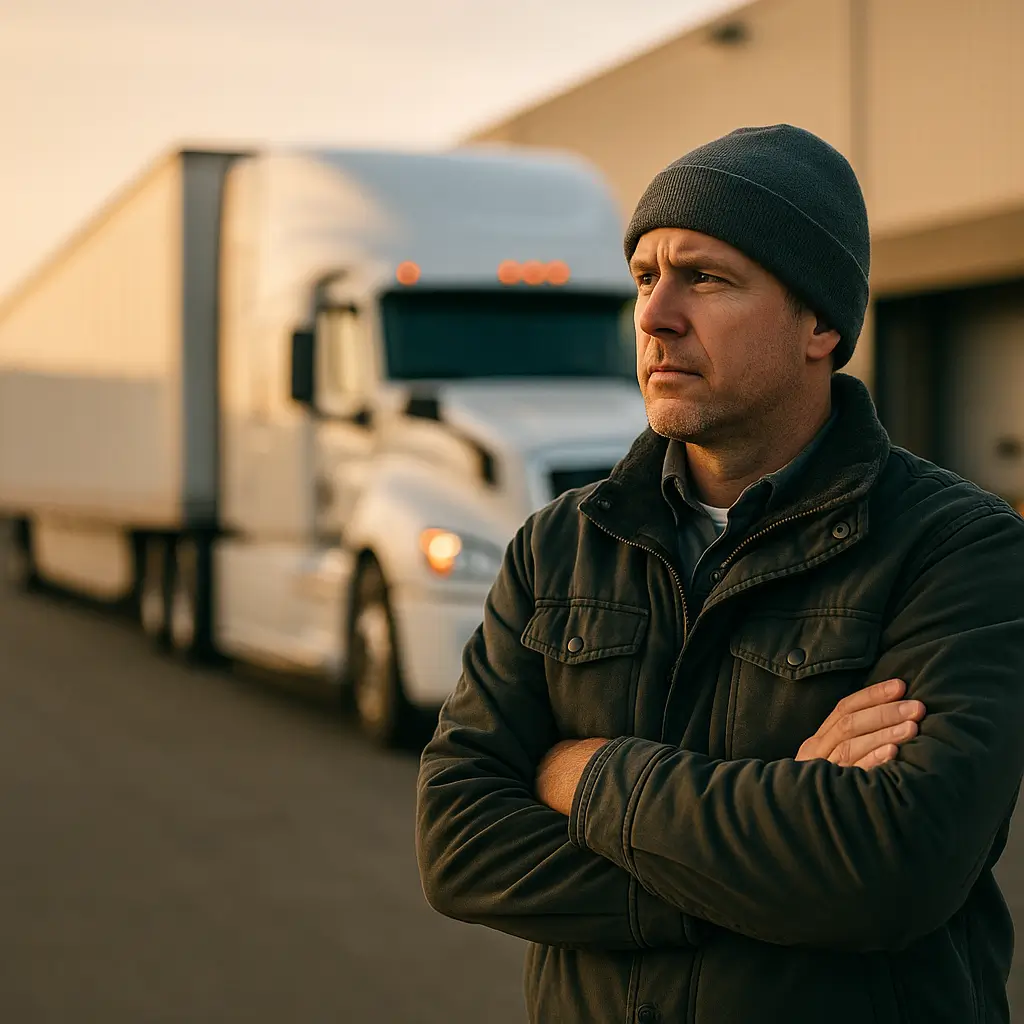

Learn Nebraska commercial auto insurance requirements, 25/50/25 minimums, UM/UIM rules, FMCSA differences, 2026 costs, and compliance steps.
Commercial auto insurance Nebraska rules usually start with a commonly referenced 25/50/25 liability baseline, but most businesses quickly outgrow “minimum” once you factor in jobsite contracts (often $1,000,000 CSL), UM/UIM decisions, and whether you trigger FMCSA requirements for interstate trucking (often $750,000 minimum for for-hire interstate property carriers). If you need a fast answer: buy limits that satisfy your contracts, match your real vehicle use, and confirm whether you’re intrastate-only or federally regulated.
If your numbers feel all over the place—especially for heavier units—use these Nebraska commercial truck insurance cost benchmarks to sanity-check pricing before you bind coverage.
Want a quick visual overview of what Nebraska truck insurance actually costs? Watch this:
Table of Contents
Reading time: 11 minutes

Commercial auto insurance Nebraska minimum requirements (limits, UM/UIM, proof)
Nebraska is commonly referenced as using a 25/50/25 liability baseline, but real-world commercial needs are usually driven by contracts (often $1,000,000 CSL), vehicle use (delivery/hauling/for-hire), and whether your operation triggers state or federal filings.
Here’s the business-owner version: state minimums keep you legal, but contracts and loss severity are what push most companies to higher limits.
1) What “commercial auto insurance” means in Nebraska (vs. personal auto)
Commercial auto insurance is a vehicle policy designed for business use—multiple drivers, employee drivers, business errands, deliveries, tools/equipment, and higher limits than a typical personal policy.
In practice, we see claim problems when a personal policy is used for business activity the carrier didn’t rate for (deliveries, hauling for pay, regular jobsite travel, or a clearly “work” vehicle). An adjuster doesn’t need a wrapped truck to spot commercial use—but ladders, tool racks, and invoices in the cab don’t help.
- Common trigger: A “personal” pickup used for deliveries, jobsite runs, or hauling equipment.
- Typical symptom: Coverage disputes around “business use” or driver listing.
- Best habit: If you change radius, cargo, or how you get paid, update the policy before you dispatch.
2) Nebraska minimum liability limits (the baseline) — and why “minimum” is rarely enough
Liability coverage pays for the other party’s injuries and property damage when you cause an accident, and it’s the core requirement behind most “minimum limits” discussions.
| Coverage | Common minimum reference | What it pays |
|---|---|---|
| Bodily injury (per person) | $25,000 | Injury to one person |
| Bodily injury (per accident) | $50,000 | Total injury per crash |
| Property damage | $25,000 | Damage to vehicles, buildings, fences, etc. |
Here’s why buying to the state minimum is usually the wrong move for commercial operators:
Why minimums fall short: a single ER visit plus imaging can chew through $25,000 faster than most people think, and multi-vehicle crashes can blow through $50,000 in minutes. Separately, many GCs, shippers, brokers, and property managers require $1,000,000 CSL (Combined Single Limit) even when the state baseline is lower.
3) UM/UIM in Nebraska: the coverage that protects your driver (and your revenue)
Uninsured/Underinsured Motorist (UM/UIM) coverage is what protects your people when the at-fault driver has no insurance (UM) or not enough insurance (UIM) to cover injuries.
Nebraska’s uninsured motorist rules are administered at the state level; the Nebraska Department of Insurance is the official reference point for current requirements and how UM/UIM must be offered.
For small fleets, UM/UIM is a business continuity decision: one uninsured crash can sideline your only driver, delay jobs, and create medical and wage-loss headaches. Don’t let this default without a real limit conversation.
For a deeper breakdown on choosing limits and what “matching” typically means in commercial policies, read: UM/UIM coverage for truck drivers.
Commercial auto insurance Nebraska: intrastate vs. interstate (when FMCSA rules apply)
FMCSA financial responsibility rules for interstate, for-hire motor carriers commonly start at $750,000 in public liability coverage for non-hazardous property under 49 CFR Part 387 guidance (and can be higher by operation/cargo), which is separate from Nebraska’s commonly referenced 25/50/25 baseline.
This is where Nebraska businesses get tripped up: “I have insurance” isn’t the same as “I have the right insurance and filings for this operation.”
4) Intrastate (Nebraska-only): what usually applies
Intrastate operation generally means your vehicles operate only within Nebraska borders, so your starting point is meeting state liability requirements and any contract-driven limit requirements.
Even intrastate-only businesses can still face strict onboarding requirements from customers: additional insured requests, waiver of subrogation, and clean certificates of insurance (COIs). “Intrastate” doesn’t automatically mean “simple.”
- Double-check if you’re: paid to haul for others, running hotshot lanes, hauling aggregate, or taking jobsite contracts.
- COI reality: Many customers won’t let you through the gate without $1M liability shown on the COI.
5) Interstate / regulated operations: when FMCSA minimums and filings can matter
Interstate or regulated motor carrier operations can require FMCSA-compliant limits and filings, and missing filings can stop you from staying active or booking loads even if you “have a policy.”
If you cross state lines, haul in interstate commerce, or operate as a regulated for-hire carrier, verify your setup before binding coverage: FMCSA insurance requirements for interstate motor carriers.
If you need a filing overview for proof/compliance conversations, this primer helps: BMC-91X filing for small carriers.
6) Special cases that change the “right” policy fast (hotshot, platforms, farm, leased-on)
Underwriting and compliance can change quickly based on radius, cargo type, who you haul for, and whether you’re for-hire, leased-on, or using app-based delivery/rideshare.
Examples we see in the real world:
- Hotshot: A pickup-and-trailer setup can still be rated like commercial hauling — see commercial auto liability for hotshot drivers for limits and filing context.
- Leased-on owner-operator: Primary liability depends on dispatch status and the lease agreement; don’t guess.
- Farm/ag use: “Farm plate” doesn’t remove liability exposure, and contracts can still require higher limits.
- Apps/platforms: Coverage can change by phase (app off vs. on-trip), and personal policies often exclude the exposure.
Any time you change radius, cargo, or who you haul for, update the policy first—because a claim will expose the mismatch.
Commercial auto insurance Nebraska costs, coverage options, and how to lower premiums
Commercial auto pricing is driven by measurable factors—driver MVRs, loss history, mileage, radius/territory, vehicle class, and liability limits—and heavier or for-hire operations often cost more than standard service fleets.
You don’t win by buying the cheapest policy; you win by buying coverage that doesn’t collapse at claim time, then cutting waste that doesn’t reduce risk.
7) What commercial auto insurance costs in Nebraska (and what actually moves the price)
Premium is basically the carrier’s forecast of claim frequency and severity based on your operation and your history.
Before diving into Nebraska-specific factors, it helps to benchmark against the average cost of commercial auto insurance nationally.
Not sure how high your limits should actually be? This covers how to think through that decision:
These factors commonly push price up:
- New venture: new entity, little insurance history, limited operational track record. If you’re a new authority, review FMCSA insurance requirements for owner-operators before you bind.
- Driver issues: violations, accidents, or inexperienced CDL/non-CDL drivers.
- More exposure: higher annual mileage, larger radius, metro territory (Omaha/Lincoln traffic patterns).
- Vehicle class/use: heavier units, towing, for-hire hauling, specialized work.
If you’re insuring heavier units, compare against this local pricing context: Nebraska commercial truck insurance cost benchmarks.
8) Coverage options beyond the minimum (where smart businesses spend money)
State-minimum liability only protects you from what you owe others, while optional coverages protect your vehicle, your cash flow, and your ability to keep working.
- Physical damage (comp/collision): protects your truck/van; lenders and leases often require it.
- Towing/roadside: especially important for heavier vehicles where a single tow can be a big invoice.
- Downtime planning: if one unit down stops revenue, plan for rentals/contingency.
If employees use personal vehicles for errands, site visits, or deliveries, consider plugging that gap with: Hired and non-owned auto (HNOA) liability coverage basics.
9) How to lower commercial auto insurance costs in Nebraska (without risky gaps)
Premium reductions are most reliable when they reduce expected losses (fewer crashes or less severe crashes), not when they remove coverage you actually need.
Practical moves that tend to work:
- Driver control: run MVRs, document training, set clear hiring standards.
- Truthful radius/miles: don’t claim “local” if you’re routinely running long lanes.
- Deductibles you can afford: higher deductibles can reduce premium, but only if cash reserves exist.
- Avoid lapses: cancellations can spike future premiums and reduce carrier options.
- Shop apples-to-apples: compare the same limits, the same deductibles, and the same use classification.
10) Nebraska compliance checklist (so you don’t get caught with the wrong proof)
A compliance checklist reduces denials and onboarding delays by making sure your COI, limits, drivers, and vehicle use match what you actually do before an accident, audit, or broker packet.
- List every vehicle and how it’s used (owned/leased/employee-owned; delivery; hauling; passengers).
- Confirm intrastate vs. interstate and whether you’re operating as a regulated motor carrier.
- Set liability limits based on contracts + real loss potential (many require $1M CSL).
- Choose UM/UIM limits intentionally and document the decision.
- Train drivers on accident reporting (photos, police report info, supervisor contact).
- Start renewals 45 days early so you’re not forced into bad last-minute choices.
Frequently Asked Questions
Nebraska commercial auto questions usually come down to four things: the commonly cited 25/50/25 baseline, whether UM/UIM is on the policy and at what limits, whether you’re intrastate vs. FMCSA-regulated, and whether your contracts require $1,000,000 CSL proof.
MVRs are one of the most direct levers on your premium. Each driver’s history — violations, accidents, license suspensions — gets priced into the policy. A single serious violation on a listed driver can push rates significantly, and some carriers may decline coverage if the MVR picture is poor enough. Running MVRs before you hire and before renewals lets you flag problems early, document training steps, and sometimes negotiate better rates by showing the carrier you’re managing driver risk proactively.
Nebraska is commonly cited as a 25/50/25 liability baseline (25,000 bodily injury per person / 50,000 per accident / 25,000 property damage), but many businesses must carry more to work. General contractors, property managers, shippers, and brokers frequently require $1,000,000 CSL shown on a COI before you can start a job or haul a load. If you’re operating as a regulated interstate carrier, federal minimums can apply (often $750,000 for for-hire interstate property carriers), so the “minimum” depends on your operation, not just your address.
CSL combines bodily injury and property damage into one pooled limit — so instead of $25K/$50K/$25K, you’d have, say, $1,000,000 to cover all damages from a single accident however needed. Most commercial contracts, GC agreements, and broker packets require CSL because it’s cleaner for their risk teams to verify. For businesses with vehicles that could cause serious multi-person injuries or significant property damage, CSL is generally the more practical format — and the one your certificate recipients will ask for. See CSL truck insurance for a deeper explanation.
You can hold a personal policy on the vehicle, but if you’re using it for business deliveries, hauling for pay, or regular jobsite runs, many personal policies restrict or exclude that activity. If a claim happens during business use, the adjuster’s investigation can expose the mismatch and create a coverage dispute. The safer approach is to match the policy to the actual business use and confirm the classification with your insurer. See commercial auto insurance for the business-use baseline.
UM/UIM protects your driver when the at-fault driver has no insurance (UM) or not enough insurance (UIM), and it’s one of the most common “regret gaps” we see in small fleets. Even when the other driver is clearly at fault, your medical costs, wage loss, and downtime can land on you if their coverage is missing or inadequate. The best practice is to choose UM/UIM limits intentionally (often aligned with your liability limit) and document the selection. For a plain-English explainer, use: UM/UIM coverage for truck drivers.
Not automatically. Standard commercial auto covers vehicles listed on the policy. If employees regularly use their personal vehicles for deliveries, site visits, or other business tasks, those trips may fall into a coverage gap — your commercial policy may not respond, and their personal policy may restrict business use. That’s what hired and non-owned auto (HNOA) coverage is designed to address. Review your actual exposure before assuming the commercial policy handles it.
Intrastate generally means you operate only within Nebraska and meet state liability rules plus any contract-required limits (often $1,000,000 CSL). Interstate (crossing state lines or operating in interstate commerce) can trigger FMCSA financial responsibility requirements and, for regulated carriers, proof/filings that brokers and shippers check before tendering freight. A policy can be “active” and still be wrong if it’s missing required endorsements/filings for your authority and operation type. If you’re unsure where you land, verify against: FMCSA insurance requirements for interstate motor carriers.
Some operations may be treated differently under specific Nebraska rules, but “exempt” rarely means “no liability exposure” for a business vehicle on public roads. Even if a state rule doesn’t force higher limits, your customers might: many contracts require $1,000,000 CSL, additional insured wording, and a COI that matches the job. For trucking operations, the bigger issue is whether you’re federally regulated; that’s when endorsements and filings become make-or-break for compliance. If you’re dealing with regulated carrier requirements, these references help: CSL truck insurance limits (FMCSA guide) and MCS-90 endorsement for owner-operators.
A COI that passes contractor and shipper review typically needs to show the right liability limit (often $1,000,000 CSL), the correct additional insured wording, and sometimes a waiver of subrogation — all matching what the contract specifies. The fastest way to get a usable COI is to have your agent confirm these details before you bind, not after a job is delayed because the COI didn’t match. Logrock can help structure coverage so your certificates clear the first time.
Why Logrock (and how we quote Nebraska commercial auto correctly)
Most commercial auto claim and onboarding failures come from avoidable mismatches—wrong class of use, wrong radius, missing drivers, missing additional insureds, or missing FMCSA filings for regulated operations.
Logrock’s approach is simple: we quote the policy based on how you actually operate, then we make sure your documentation is usable for brokers, job sites, and audits. If your operation requires filings, start with this primer so you know what you’re looking at: BMC-91X filing for small carriers.
Conclusion: get commercial auto insurance Nebraska can actually use
Nebraska commercial auto insurance gets straightforward when you treat it like a system: match the policy to real vehicle use, choose limits that survive real losses, and confirm whether you’re intrastate-only or FMCSA-regulated.
Key Takeaways:
- Minimum limits are a starting point: many contracts require $1,000,000 CSL, regardless of the state baseline.
- UM/UIM protects continuity: it keeps one uninsured crash from turning into months of downtime.
- Your operation drives compliance: interstate/regulatory status can trigger FMCSA limits and filings.
If you want quotes that hold up when a broker asks for a COI—or when a claim hits—get your operation reviewed and priced correctly.
Related reading: CSL truck insurance limits (FMCSA guide) and MCS-90 endorsement for owner-operators.
If you’re trying to figure out the right limits for your Nebraska operation — whether you’re intrastate-only or have FMCSA obligations — LogRock can review your setup, identify coverage gaps, and quote coverage that holds up when a broker pulls your COI or a claim hits. Talk to our team, ask questions, and get a quote based on how you actually operate.





